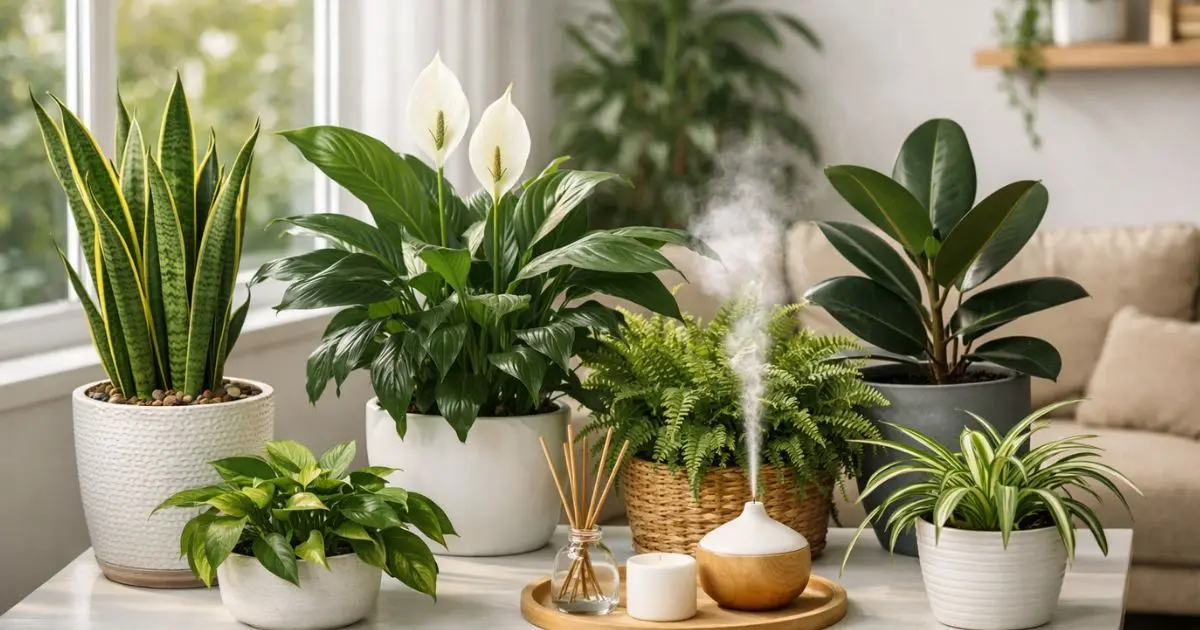
Indoor air quality is something many of us don’t think about often, but it plays a huge role in our health and well-being. Poor air quality can lead to allergies, headaches, and respiratory problems. One way to improve the air in your home is by adding indoor plants to improve indoor air quality. Plants not only make your space look beautiful, but they can also help filter toxins and boost your mood. In this article, we’ll explore the best indoor plants that purify the air and provide tips on how to care for them.
Why Indoor Air Quality Matters
Indoor air quality is important because we spend a significant amount of time indoors, whether at home or at work. Poor air quality can lead to a range of health issues, including:
- Respiratory problems like asthma
- Allergies triggered by dust or mold
- Fatigue and headaches
- Dry skin and eyes due to low humidity levels
Common indoor pollutants include dust, pet dander, VOCs (volatile organic compounds), and smoke. These pollutants can have long-term effects on your health if not addressed. Fortunately, indoor plants to improve indoor air quality can help remove many of these harmful substances from the air, making your environment healthier and more comfortable.
The Role of Indoor Plants in Air Purification
Plants purify the air in two ways:
- Absorbing pollutants: Through a process called photosynthesis, plants absorb carbon dioxide and release oxygen. But they do more than that—plants can absorb harmful chemicals from the air, such as formaldehyde, benzene, and trichloroethylene.
- Increasing humidity: Plants also release water vapor into the air through a process called transpiration. This helps increase humidity levels, which can improve comfort, especially in dry environments.
Studies show that having a few plants in your home can significantly improve air quality. NASA’s Clean Air Study, for example, demonstrated that plants like the snake plant and spider plant could remove common toxins in the air.
15 Best Indoor Plants for Air Quality
Here are some of the best indoor plants to improve indoor air quality. These plants are not only effective at purifying the air but also easy to care for!
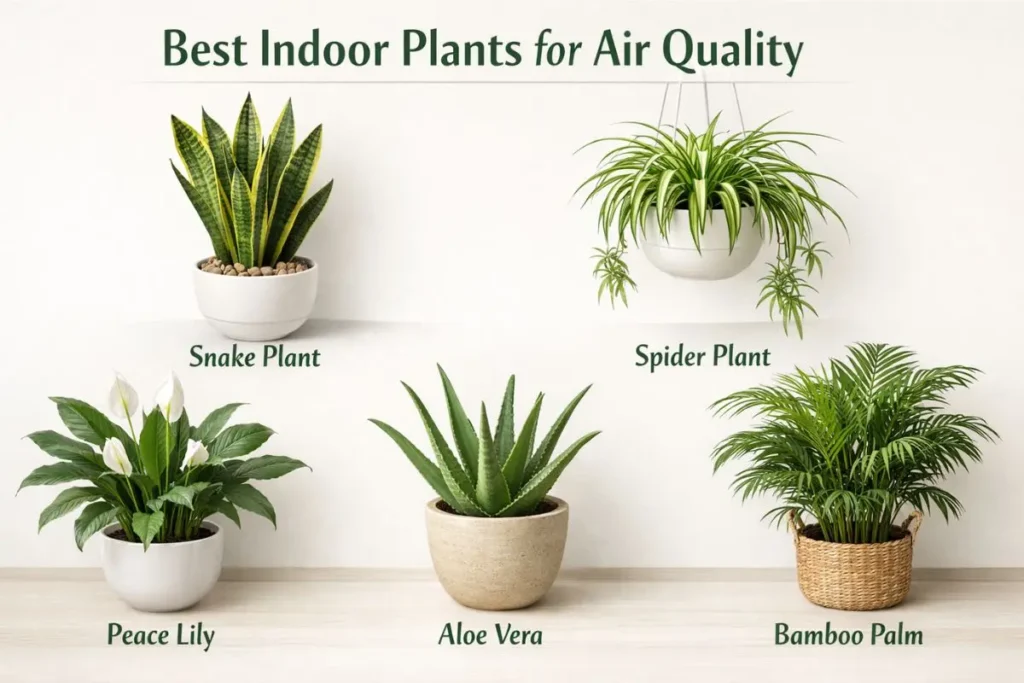
1. Snake Plant (Sansevieria)
- Air-Purifying Benefits: The snake plant is often considered one of the best air-purifying plants. It effectively removes toxins like formaldehyde, benzene, xylene, and trichloroethylene from the air. According to NASA’s Clean Air Study, this plant is excellent at filtering indoor air and has been shown to reduce harmful pollutants.
- Care Tips: The snake plant thrives in low light conditions and requires minimal water. It can go weeks without watering, making it perfect for beginners. Just ensure it is planted in well-draining soil to prevent root rot.
- Why It Works: It uses photosynthesis during the day and crassulacean acid metabolism (CAM) at night, meaning it continues to produce oxygen and clean the air even when it’s dark.
2. Spider Plant (Chlorophytum comosum)
- Air-Purifying Benefits: The spider plant is an excellent natural air purifier, known for removing carbon monoxide and formaldehyde from the air. It is often recommended for homes with pets and children because it’s non-toxic.
- Care Tips: This plant is extremely easy to care for and thrives in bright, indirect light. Water it regularly, but avoid overwatering. Let the soil dry out between waterings. It is also great for hanging baskets due to its trailing leaves.
- Why It Works: The spider plant’s long, arching leaves absorb and trap toxins, cleaning the air naturally. It also releases oxygen during photosynthesis, making it an ideal addition to any living space.
3. Peace Lily (Spathiphyllum)
- Air-Purifying Benefits: Peace lilies are highly effective at filtering out toxins such as ammonia, benzene, formaldehyde, and trichloroethylene. They are also known for their ability to increase humidity, making them a great choice for dry environments.
- Care Tips: Peace lilies prefer medium to low light and should be watered regularly. Keep the soil consistently moist, but avoid overwatering. They also benefit from misting to boost humidity levels.
- Why It Works: Peace lilies contain phytoremediation properties, which allow them to absorb harmful chemicals through their leaves and roots. Their ability to filter both air and increase moisture makes them perfect for improving indoor air quality.
4. Aloe Vera
- Air-Purifying Benefits: Aloe Vera is not only great for skin care but also for improving indoor air quality. It helps remove formaldehyde and benzene, both common indoor pollutants. It’s a great plant to have near windows because it thrives in bright, direct sunlight.
- Care Tips: Aloe Vera needs minimal water and well-draining soil. It should be watered deeply but infrequently, allowing the soil to dry out between waterings. The plant does well in warm, sunny spots, but be cautious not to overwater.
- Why It Works: Aloe Vera works by absorbing harmful chemicals through its leaves and storing them in its gel-filled tissue, providing a natural air purification system. Plus, its easy care makes it a popular choice for beginners.
5. Bamboo Palm (Chamaedorea seifrizii)
- Air-Purifying Benefits: Bamboo palms are effective at removing formaldehyde, benzene, and trichloroethylene from the air. They are also known for adding moisture to the air, making them an excellent choice for dry indoor spaces.
- Care Tips: Bamboo palms prefer indirect light and should be watered regularly. Keep the soil moist but not soggy, and make sure the plant has good drainage. Bamboo palms are relatively low-maintenance and do well in most indoor environments.
- Why It Works: The bamboo palm’s long fronds help capture toxins from the air, while its ability to add humidity can help maintain a healthier indoor climate. It also thrives in a variety of light conditions, making it suitable for most homes.
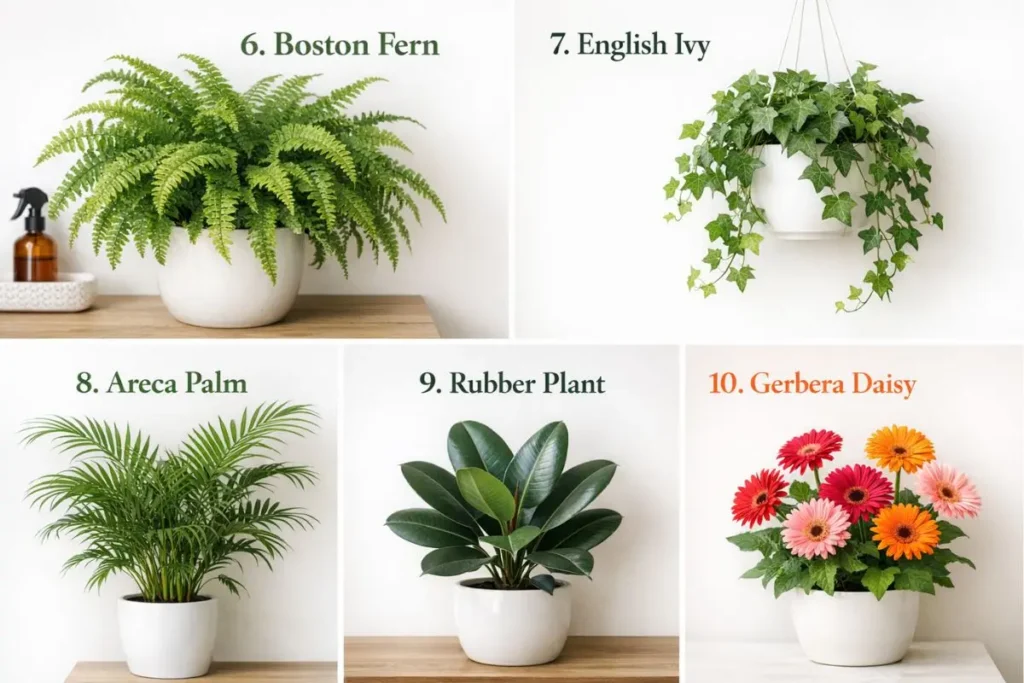
6. Boston Fern (Nephrolepis exaltata)
- Air-Purifying Benefits: Boston ferns are excellent at removing formaldehyde and other air toxins. They are particularly useful in bathrooms or kitchens due to their preference for high humidity levels.
- Care Tips: Boston ferns thrive in high humidity and indirect light. They require consistent watering, and the soil should be kept moist. Mist the leaves occasionally to provide extra humidity, and ensure the plant has good drainage.
- Why It Works: Boston ferns release moisture through transpiration, which helps purify the air. They also absorb airborne toxins, reducing pollutants that can be harmful to human health.
7. English Ivy (Hedera helix)
- Air-Purifying Benefits: English Ivy is known for its ability to remove airborne mold, formaldehyde, and other toxins. It’s a great option for damp environments, such as bathrooms or basements.
- Care Tips: English Ivy thrives in bright, indirect light and should be watered regularly. It can be grown in pots, hanging baskets, or trained along trellises or walls. Make sure the soil is well-drained and not too wet.
- Why It Works: English Ivy is an effective air purifier because of its climbing nature. It attaches to surfaces and absorbs toxins through its leaves, effectively purifying the air around it.
8. Areca Palm (Dypsis lutescens)
- Air-Purifying Benefits: The Areca palm is known for removing xylene, toluene, and formaldehyde from indoor air. It’s also excellent for increasing humidity, which can improve overall comfort in dry homes.
- Care Tips: The Areca palm prefers bright, indirect light and requires consistent watering. Keep the soil moist but well-drained, and avoid letting the plant sit in water.
- Why It Works: The Areca palm acts as a natural humidifier and air purifier by releasing moisture into the air and absorbing toxins. It’s an ideal plant for homes with dry climates or areas with limited humidity.
9. Rubber Plant (Ficus elastica)
- Air-Purifying Benefits: Rubber plants are fantastic at removing formaldehyde and other common indoor pollutants. They also thrive in a variety of environments, making them a versatile option for indoor spaces.
- Care Tips: Rubber plants thrive in bright, indirect light and prefer well-drained soil. Water them regularly, but ensure the soil dries out between waterings to prevent root rot.
- Why It Works: The large, glossy leaves of the rubber plant help trap and absorb airborne toxins, improving air quality. Their hardiness and low maintenance make them a popular choice for homes and offices.
10. Gerbera Daisy (Gerbera jamesonii)
- Air-Purifying Benefits: Gerbera daisies are known for removing benzene, formaldehyde, and trichloroethylene from the air. Their bright flowers not only add beauty but also help purify the indoor environment.
- Care Tips: Gerbera daisies need bright, direct sunlight and should be watered regularly. Ensure the soil drains well to prevent waterlogging. They need a warm environment to thrive.
- Why It Works: Gerbera daisies are great air purifiers because they absorb chemicals through their leaves and roots. Additionally, their vibrant flowers add a burst of color to any room while improving air quality.
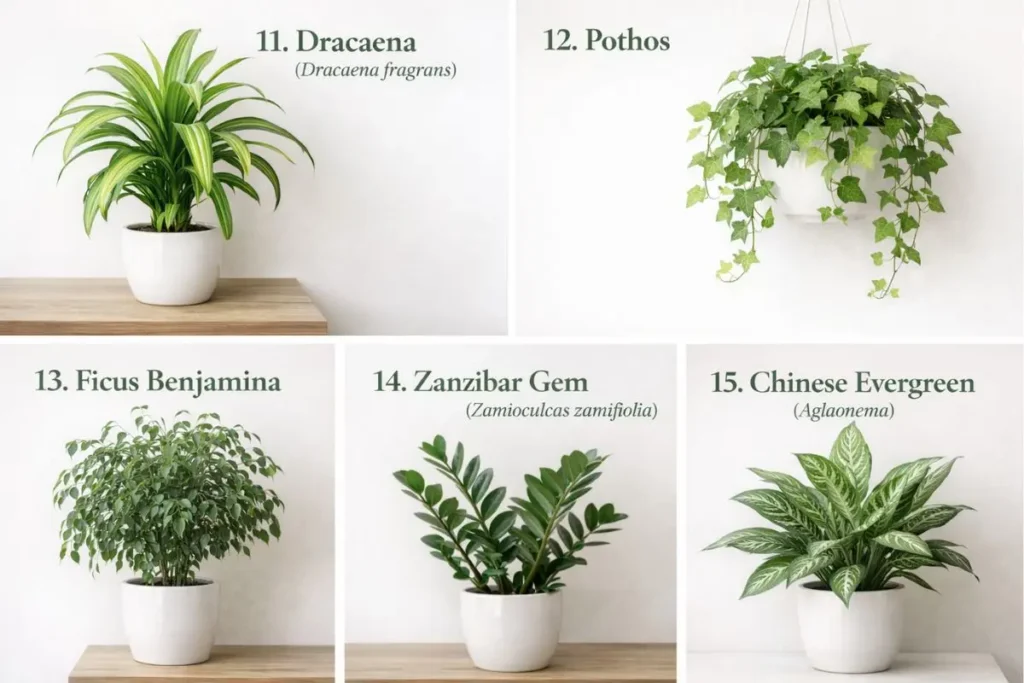
11. Dracaena (Dracaena fragrans)
- Air-Purifying Benefits: Dracaenas are great for removing formaldehyde, benzene, trichloroethylene, and xylene. They are commonly used to purify the air in both homes and offices due to their robust cleaning abilities.
- Care Tips: Dracaenas prefer indirect light and need to be watered moderately—allow the soil to dry out between waterings. Ensure the plant has well-drained soil to avoid root rot.
- Why It Works: Dracaena has large, thick leaves that trap airborne toxins and absorb them through their stomata (tiny pores). This natural air-cleaning process helps improve overall air quality in your indoor environment.
12. Pothos (Epipremnum aureum)
- Air-Purifying Benefits: Pothos, also known as Devil’s Ivy, is a low-maintenance plant that effectively removes formaldehyde, benzene, and xylene from the air. It is particularly useful in filtering out volatile organic compounds (VOCs).
- Care Tips: Pothos thrives in low to moderate light and can be watered infrequently—only when the soil is dry. It is a great choice for hanging baskets or training along shelves or walls.
- Why It Works: Pothos is an efficient air purifier because of its vigorous growth and ability to absorb pollutants through its long, cascading vines. Its adaptable nature makes it an excellent option for homes with different lighting conditions.
13. Ficus Benjamina (Weeping Fig)
- Air-Purifying Benefits: Ficus Benjamina is known for its ability to remove formaldehyde, xylene, and toluene from the air. It’s particularly effective in large rooms and is often used in commercial office spaces.
- Care Tips: Ficus Benjamina requires bright, indirect light and should be watered when the soil is dry to the touch. It also benefits from regular misting to maintain the humidity levels around the plant.
- Why It Works: The large, leathery leaves of the Weeping Fig absorb toxins efficiently and release oxygen, helping improve air quality. It also has a natural ability to adjust to various environments, making it suitable for indoor use.
14. Zanzibar Gem (Zamioculcas zamiifolia)
- Air-Purifying Benefits: Also known as the ZZ plant, the Zanzibar Gem is a powerful air purifier, removing formaldehyde, benzene, and toluene from indoor spaces. It’s particularly effective in environments where the air tends to become stagnant.
- Care Tips: The ZZ plant is highly resilient and can tolerate low light conditions. It’s drought-tolerant and only requires watering once every 2–3 weeks. Ensure the soil is well-draining to prevent root rot.
- Why It Works: The ZZ plant’s waxy leaves help absorb and trap toxins, releasing clean air into your space. Its ability to survive with little water and light makes it a low-maintenance option that cleans the air without much attention.
15. Chinese Evergreen (Aglaonema)
- Air-Purifying Benefits: The Chinese Evergreen is a highly effective plant for removing formaldehyde, benzene, and trichloroethylene. It is perfect for homes and offices where air quality improvement is needed, especially in spaces with limited natural light.
- Care Tips: Chinese evergreens prefer low to medium light and should be watered when the top inch of soil is dry. They can thrive in warmer temperatures, making them a great plant for indoors. Avoid overwatering as this can cause root rot.
- Why It Works: The Chinese Evergreen has thick, glossy leaves that absorb toxins and purify the air. Its ability to thrive in low light and its minimal care requirements make it one of the best plants for improving indoor air quality in challenging environments.