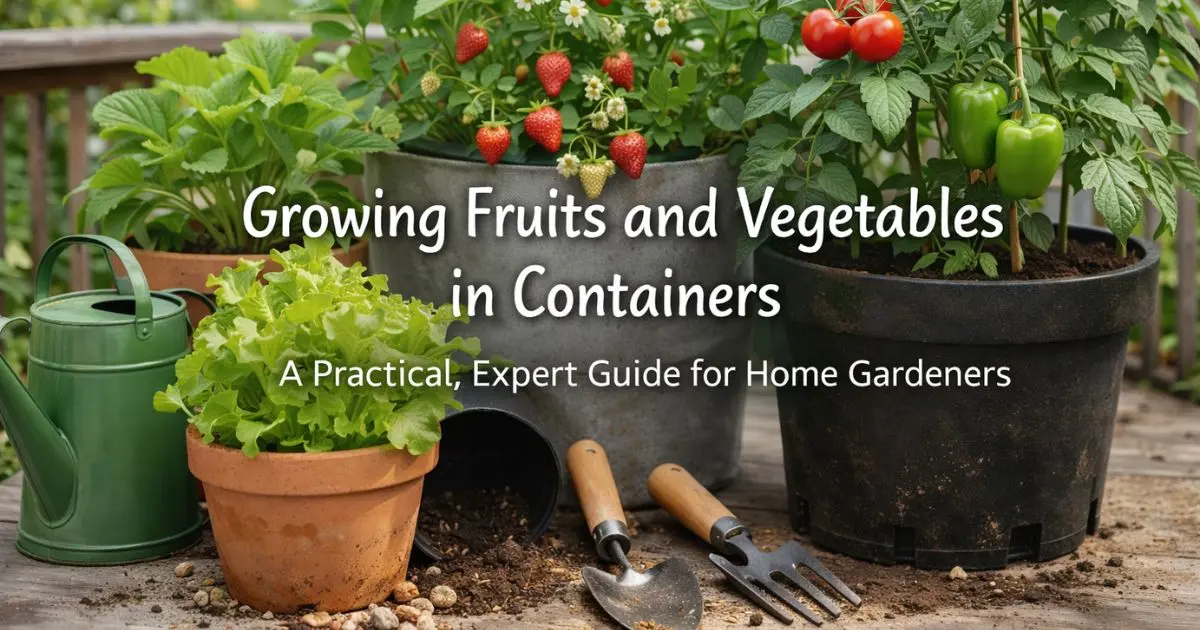
For home gardeners with limited space, container gardening offers a perfect solution. Grow fruits and vegetables on balconies, terraces, patios, or windowsills, whether you’re a seasoned gardener or a beginner. This guide covers everything from soil preparation to harvesting for successful container gardening. Let’s get started!
Container Gardening
Container gardening involves planting in pots, buckets, or other containers, instead of directly in the ground. This method is particularly beneficial for those with limited space, such as apartment dwellers or homeowners with small yards.
But it’s not just about saving space—containers offer several other advantages:
- Mobility: You can move plants to different spots based on sunlight or temperature.
- Better Control: Containers give you full control over the soil, watering, and fertilizing, which can lead to healthier plants.
- Protection: Plants in containers are often more protected from pests, diseases, and weeds.
With the right approach, you can grow an impressive range of fruits and vegetables in containers, even if you have just a small outdoor space.
Best Climate & Conditions
Container gardening works in nearly any climate, but understanding your local weather conditions is essential for success. Knowing your hardiness zone and the specific needs of each plant will guide your decisions on what to grow.
- Hot Climates: In regions with high temperatures (like parts of India or Pakistan), sun-loving plants such as tomatoes, cucumbers, and peppers will thrive. These crops love the warmth and are more drought-tolerant than other plants.
- Cooler Climates: For cooler environments, choose crops like spinach, lettuce, and peas, which are more resistant to lower temperatures.
Tip for Regional Adaptability: If you live in a climate with extreme temperatures, a microclimate can help. A sheltered spot near a wall or a small greenhouse can extend your growing season and improve plant health.
Preparing Soil for Containers:
Choosing the Right Soil
Soil is the foundation of any successful garden. In containers, you need a potting mix that allows for proper drainage while retaining enough moisture to nourish your plants.
- Soil Type: Use a lightweight potting mix designed for containers. It’s well-draining and typically includes ingredients like peat moss, perlite, and vermiculite, which help with aeration and moisture retention.
- pH Level: Most vegetables and fruits prefer slightly acidic to neutral soil (pH 6.0-7.0). Use a simple pH test kit to check your soil and adjust as needed by adding lime (to raise pH) or sulfur (to lower pH).
Organic Amendments for Better Growth:
- Compost: Add organic matter such as compost to enrich your soil, ensuring it’s nutrient-rich and promotes healthy root development.
- Worm Castings: This is a wonderful organic supplement that provides slow-release nutrients and improves soil structure.
The Planting Process:
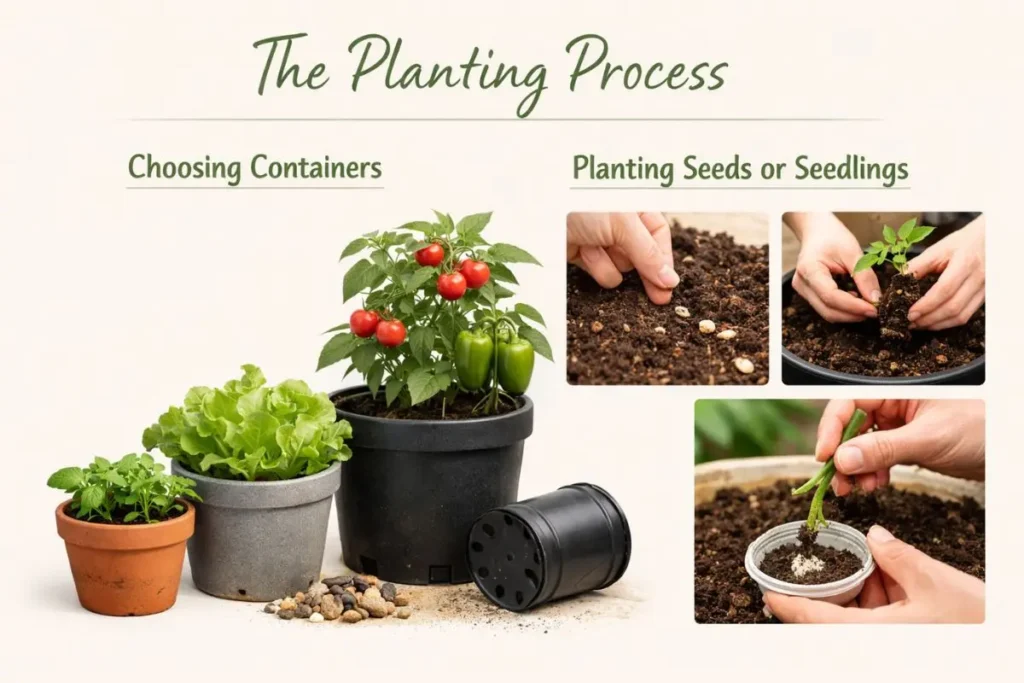
Choosing Containers:
Select containers based on the size of the plant’s root system. Here are a few guidelines:
- Smaller Plants (e.g., herbs): 6-8 inch containers.
- Medium Plants (e.g., lettuce, spinach): 10-12 inch containers.
- Larger Plants (e.g., tomatoes, peppers): 12-18 inch containers or larger.
Ensure your container has good drainage. A lack of drainage can lead to waterlogged soil and root rot, so always ensure that your container has adequate holes at the bottom.
Planting Seeds or Seedlings:
- Seeds: Plant at a depth twice the size of the seed. Space them according to the guidelines on the seed packet to give them room to grow.
- Seedlings: When transplanting seedlings, gently remove them from their pots and place them in the container. Keep the soil level the same as the original container to avoid planting too deep or too shallow.
- Cuttings: Many fruits and herbs can be propagated from cuttings. Before planting, dip the cut ends in rooting hormone to encourage root development.
Sunlight & Watering Tips:
Light Requirements
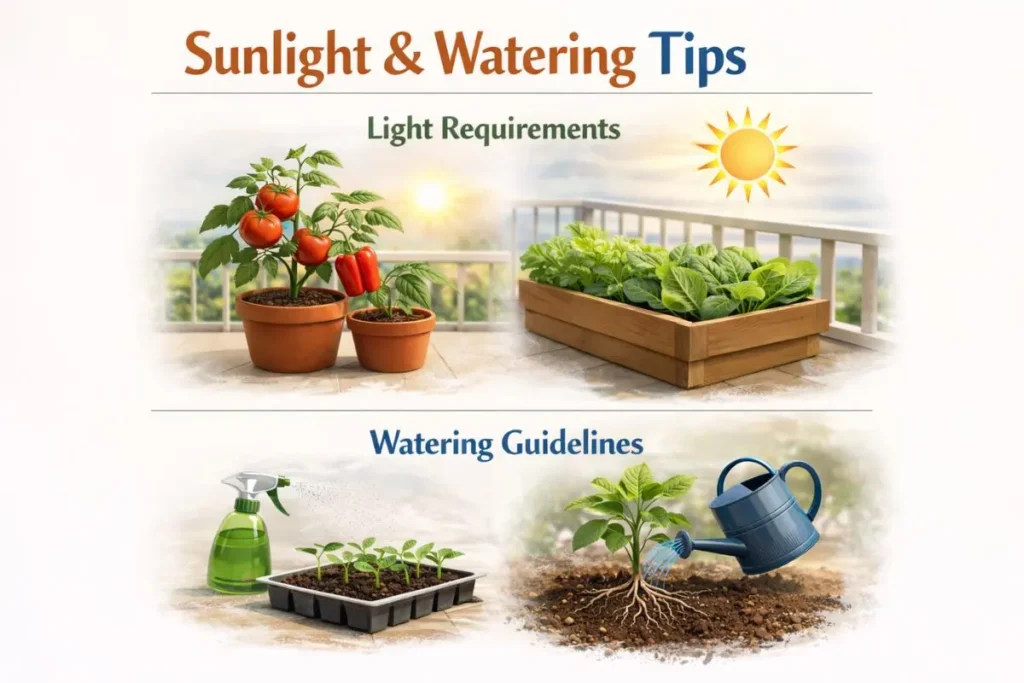
Most fruits and vegetables need around 6-8 hours of sunlight per day to thrive. If you’re growing on a balcony or terrace, place plants in a spot where they can soak up maximum sunlight. For example:
- Tomatoes and peppers: These plants need full sun to grow healthy and produce fruit.
- Leafy greens: Crops like lettuce and spinach can tolerate partial shade, especially in hot climates.
Watering Guidelines
- Seedlings: Keep the soil consistently moist, but not waterlogged, during the germination phase. A fine mist or gentle watering works best.
- Established Plants: Water deeply to reach the root zone. A good rule of thumb is to water when the top inch of soil feels dry. In hot weather, you may need to water daily, while cooler months require less frequent watering.
Fertilization and Nutrition:
Types of Fertilizers:
Plants in containers need regular feeding because nutrients get washed away with watering. Here’s what you can use:
- Organic Options: Compost, fish emulsion, or seaweed-based fertilizers are great for steady, slow-release nutrients.
- Synthetic Options: Balanced water-soluble fertilizers, like 10-10-10, can be applied according to the manufacturer’s instructions. Be careful not to over-fertilize.
Fertilizing Tips:
- Frequency: Apply fertilizer every 4-6 weeks during the growing season (spring to late summer).
- Over-Fertilization: Too much fertilizer can cause lush leaf growth at the expense of fruit or vegetable production. If you notice excessive leaves with few fruits, cut back on fertilizer.
Pruning, Training & Maintenance:
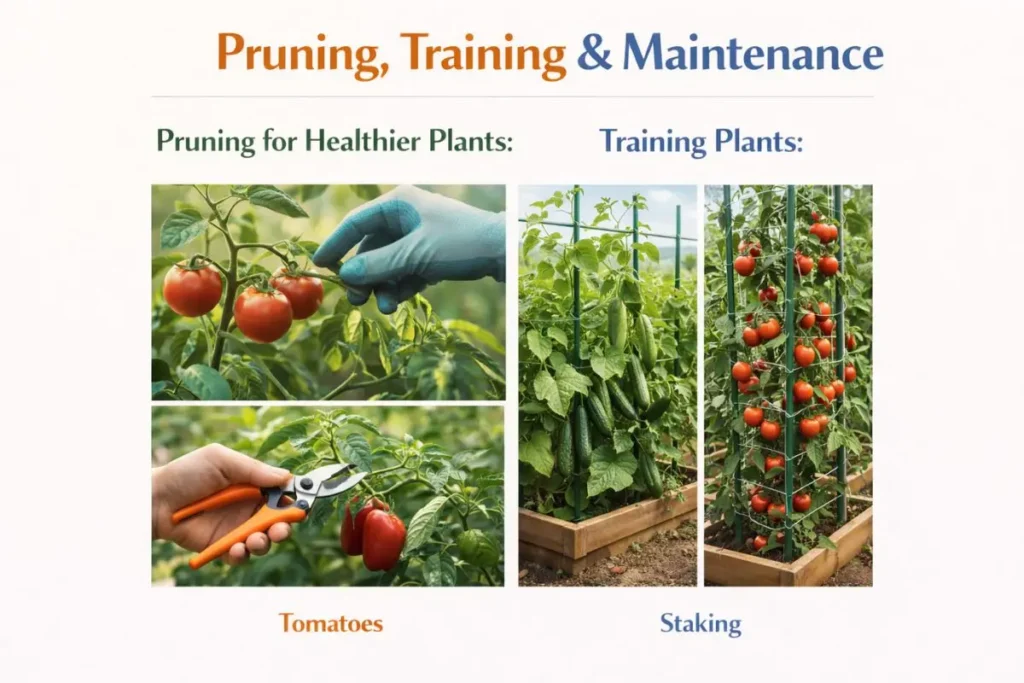
Pruning for Healthier Plants:
Pruning is essential to encourage plant health and productivity. For example:
- Tomatoes: Pinch off the side shoots (called “suckers”) to focus the plant’s energy on producing fruit.
- Peppers and Beans: Remove any dead or diseased leaves to allow more air circulation and prevent mold growth.
Training Plants;
- Trellising: Use vertical support for climbing plants like cucumbers and beans. This not only saves space but also keeps the plants healthier by preventing contact with the soil, which can harbor pests and diseases.
- Staking: Provide stakes or cages for tall plants like tomatoes to prevent them from sprawling and breaking under the weight of their fruit.
Seasonal Care & Growth Timeline:
Seasonal Tasks for Success:
- Summer Care: Ensure your plants get enough water during the hotter months, especially if they’re in full sun. Consider shading heat-sensitive crops like lettuce and spinach.
- Winter Care: If you live in a region with frost, move containers to a sheltered location or use frost covers. Water less frequently in winter, as plants are dormant or growing slowly.
Growth Milestones:
- Spring: Start seeds indoors or purchase seedlings. Begin fertilizing and watering as the plants establish their roots.
- Summer: Expect strong growth, with many fruits and vegetables beginning to set fruit or reach full maturity. Regularly check for pests.
- Fall: Begin harvesting mature crops and start preparing your garden for the next growing season.
Avoiding Mistakes & Myths:
- Using Regular Garden Soil: Garden soil can compact in containers, restricting root growth. Always use a specially formulated potting mix.
- Overwatering: Consistently soggy soil can lead to root rot. Always check the soil moisture before watering.
- Underestimating Container Size: Small containers can stunt plant growth. Choose a container that gives your plant enough room to grow.
Debunking Myths:
- You Can’t Grow Big Plants in Containers: Many fruits and vegetables, like tomatoes and peppers, can grow tall and strong in large containers.
- Only Expensive Fertilizers Work: You don’t need high-end fertilizers. Organic compost or DIY solutions often work just as well.
Harvesting & Long-Term Care:
Harvesting Tips:
- Tomatoes: Pick them when they’re fully ripe, and don’t wait for them to over-ripen on the vine.
- Peppers: Harvest when they’re fully colored (e.g., red, yellow, green).
- Herbs: Regularly harvest leaves, but leave enough behind for the plant to continue growing.
Long-Term Care
After harvesting, make sure to remove any dead leaves or plants. For perennials, such as strawberries, prune back dead foliage and cover with mulch during winter.
FAQ:
Q1: How often should I water my container plants?
Water when the top inch of soil feels dry. During hot weather, this could be daily; during cooler months, less often.
Q2: Can I grow fruit trees in containers?
Yes! Dwarf fruit trees like apples, figs, and citrus trees are perfect for containers.
Q3: How do I protect my container garden from pests?
Try natural remedies like neem oil or a mild soap spray. If pests persist, consider chemical treatments but follow instructions carefully.