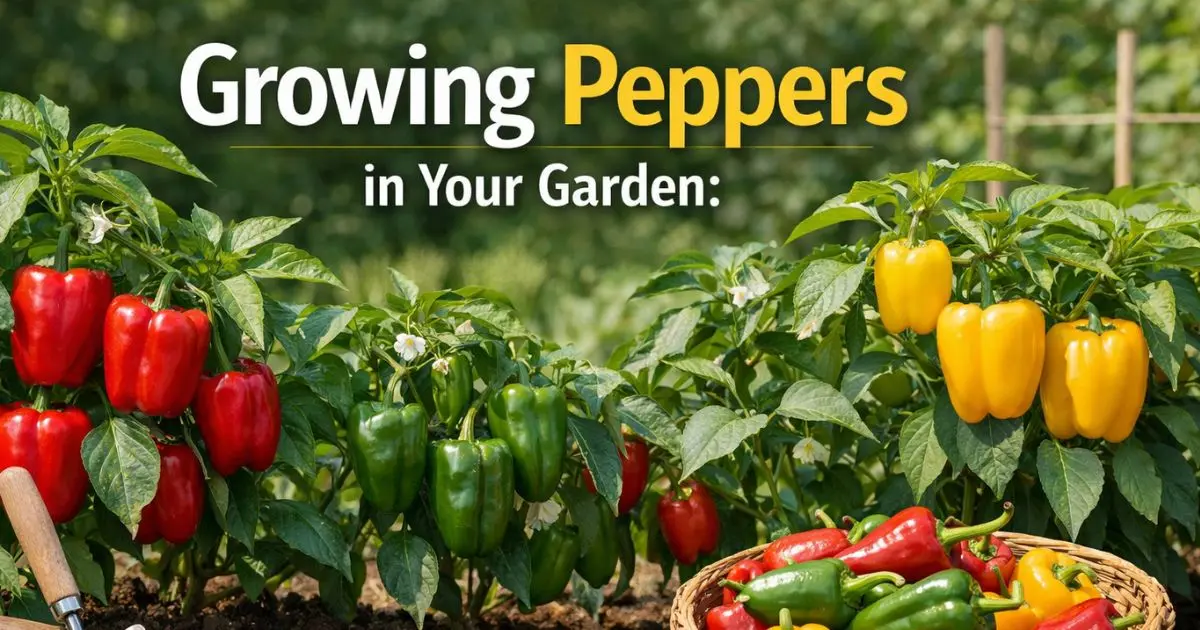
Peppers are one of the most rewarding plants to grow in your garden. They come in a variety of colors, sizes, and flavors—from the sweet bell peppers to the fiery hot habaneros. Whether you’re growing them in your backyard, a raised bed, or even in containers, peppers can thrive in many environments. This comprehensive guide will walk you through growing peppers in your garden and offer tips on selecting the right varieties, planting, maintaining, and harvesting them.
Why Grow Peppers in Your Garden?
Peppers are not just beautiful to look at—they’re also packed with vitamins and antioxidants. A single medium-sized bell pepper can provide over 200% of the recommended daily intake of Vitamin C. Additionally, hot peppers contain capsaicin, a compound linked to numerous health benefits, such as boosting metabolism and reducing inflammation.
- Rich in vitamins: Peppers are high in Vitamin A, C, and K, essential for maintaining eye health, boosting immunity, and promoting skin health.
- Boosts metabolism: Capsaicin found in hot peppers helps in fat burning, which is why they are often added to weight-loss diets.
Freshness and Flavor in Your Dishes
There’s nothing like the taste of freshly picked peppers straight from your garden. Homegrown peppers are far more flavorful than those bought at the store, and they can elevate the taste of many dishes like salsas, stir-fries, roasted veggies, and salads. Growing them yourself also means you’ll have access to the freshest ingredients whenever you need them.
Economic Benefits of Growing Peppers
- Cost savings: Peppers, especially the hot varieties, can be expensive at the grocery store. By growing your own, you can save a significant amount of money over the growing season.
- Sustainability: Growing your own peppers eliminates the carbon footprint associated with transporting store-bought produce.
Choosing the Right Pepper Varieties for Your Garden
Popular Pepper Varieties to Grow in Your Garden
Peppers come in various shapes, sizes, and levels of heat. Understanding the differences in pepper varieties will help you choose the ones best suited to your taste and garden environment:
- Sweet peppers: Bell peppers, banana peppers, padrón peppers.
- Hot peppers: Jalapeños, serrano peppers, habaneros, and ghost peppers.
- Specialty peppers: Cayenne peppers, chipotle, thai chili peppers.
Each pepper variety has different growing requirements, so make sure to research each one thoroughly.
Climate Considerations for Pepper Growth in the U.S.
Peppers thrive in warm temperatures, typically between 70°F and 85°F (21°C to 29°C). Peppers can be grown in most regions of the U.S., but they do best in areas with long, hot summers.
- USDA Hardiness Zones 4-10 are ideal for peppers.
- If you live in a colder zone, consider container gardening so you can move your plants inside during colder nights.
How to Choose for Your Garden
- Sweet peppers like bell peppers and banana peppers are ideal for beginners, as they are easy to grow and do not require extensive care.
- Hot peppers require more care but offer a higher yield and can be used in various spicy dishes, sauces, and even as preserves.
Preparing Your Garden for Growing Peppers
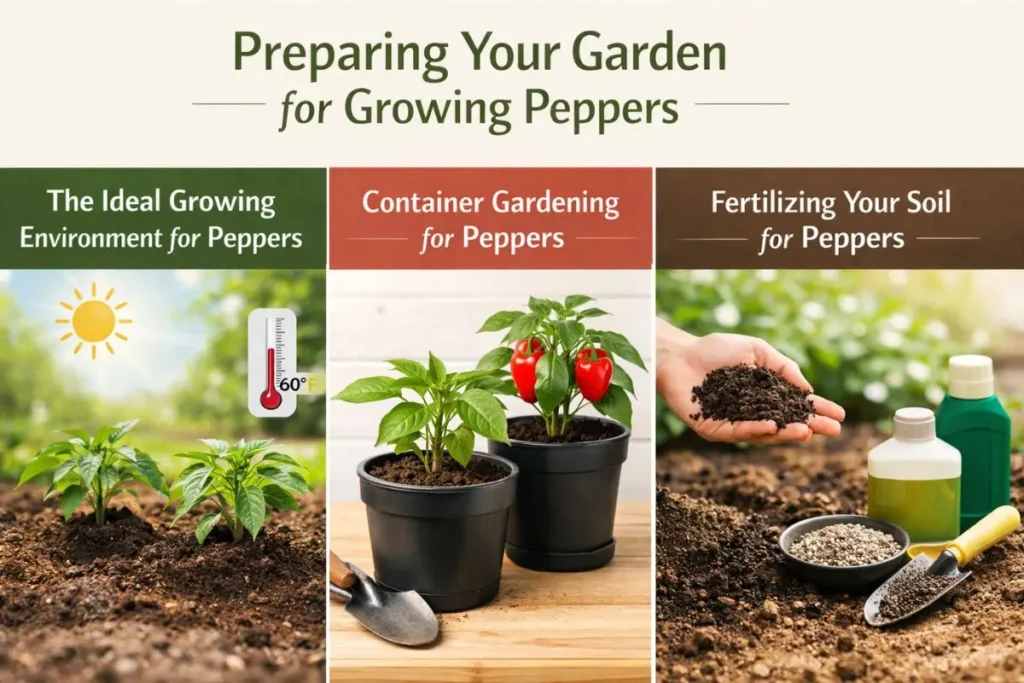
The Ideal Growing Environment for Peppers
Peppers are very particular about their growing conditions. Here’s what they need to thrive:
- Soil: Peppers prefer loamy, well-drained soil. Make sure your garden soil has a pH between 6.0 and 6.8.
- Sunlight: Peppers require at least 6-8 hours of direct sunlight daily to produce healthy fruit.
- Temperature: Avoid planting peppers when temperatures are below 60°F (15°C), as they can be damaged by frost.
Container Gardening for Pepper
For those with limited space, container gardening is an excellent option. Use containers that are at least 12-16 inches deep with good drainage. Ensure the containers are large enough to accommodate the root system. Using a high-quality potting mix will help retain moisture and provide the nutrients peppers need.
Fertilizing Your Soil for Peppers
Peppers are heavy feeders, meaning they need nutrients to thrive. Here’s how to fertilize:
- Pre-planting: Enrich the soil with compost or organic matter to improve fertility.
- During the growing season: Use a balanced fertilizer (with nitrogen, phosphorus, and potassium) once the plants start to flower.
Tip: If growing peppers in containers, use a slow-release fertilizer to avoid overfeeding.
Planting Peppers
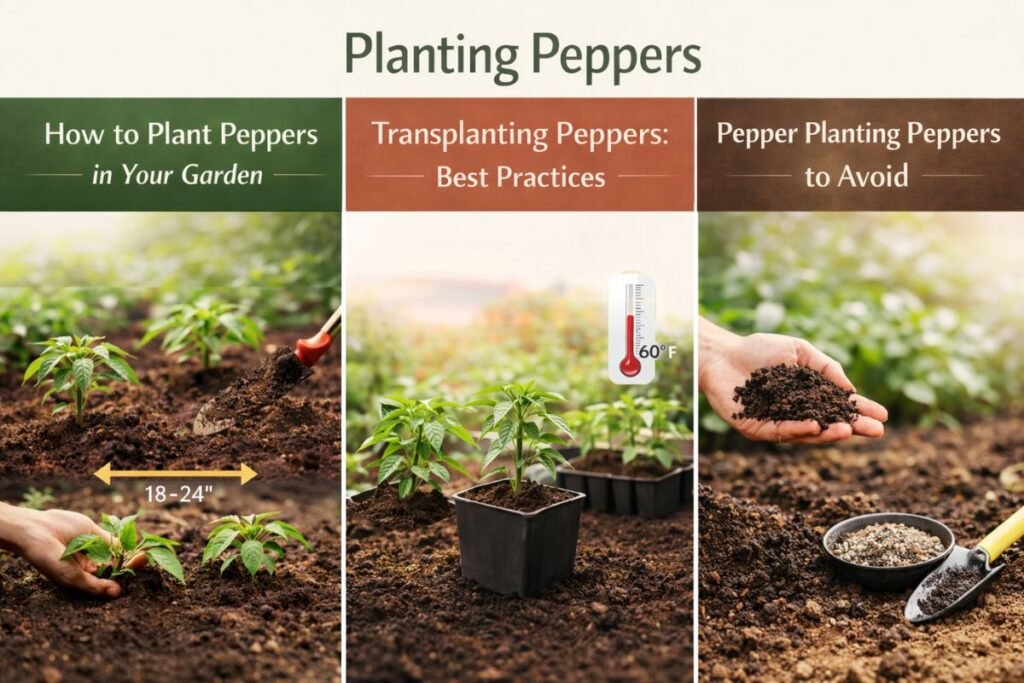
How to Plant Peppers in Your Garden
- Prepare the soil: Till the soil, ensuring it is well-drained and enriched with organic material.
- Spacing: Space your pepper plants about 18-24 inches apart to allow for air circulation and healthy root growth.
- Planting depth: Plant peppers at the same depth as they were in their pots, covering the roots gently with soil.
- Water thoroughly after planting, but avoid soaking the soil too much, as this can cause root rot.
Transplanting Peppers: Best Practices
- Hardening off: Gradually expose seedlings to outdoor conditions by placing them outside for a few hours each day before transplanting them into the garden.
- Timing: Transplant your seedlings when all danger of frost has passed, typically 2-3 weeks after the last frost date.
Pepper Planting Mistakes to Avoid
- Overwatering: Always ensure the soil is well-drained, as too much water can cause root rot.
- Wrong timing: Don’t plant peppers too early—wait until the weather is consistently warm and frost-free.
Companion Planting with Peppers
Best Companion Plants for Peppers
Companion planting is a great way to naturally deter pests and boost your pepper plant’s growth. Consider these companions:
- Basil: Helps repel pests like aphids and improves pepper flavor.
- Onions and garlic: These help deter pests like aphids and whiteflies.
- Tomatoes: Both peppers and tomatoes love the same growing conditions, making them perfect companions.
How Companion Planting Benefits Your Pepper Garden
- Reduces the need for chemical pesticides.
- Improves soil quality and pollination, resulting in healthier plants.
Managing Pepper Plant Stress
Common Stress Factors for Peppers
Peppers can become stressed by various factors, leading to stunted growth or poor fruit production:
- Water stress: Both underwatering and overwatering can cause problems. Always keep the soil consistently moist.
- Temperature fluctuations: Peppers dislike cold weather. Protect them from frost with row covers.
- Nutrient deficiencies: Nitrogen, potassium, and phosphorus deficiencies can stunt growth.
Solutions for Stress Management
- Use mulch to help retain soil moisture.
- Provide shade on very hot days and protect your peppers from wind.
Common Pepper Diseases and Their Solutions
Fungal and Bacterial Infections
Peppers can suffer from diseases like blight, powdery mildew, and root rot. Symptoms include yellowing leaves, wilting, and spotted or discolored fruit. Here’s how to manage them:
- Use fungicides or natural remedies like neem oil.
- Avoid overcrowding plants, as this can promote disease spread.
How to Treat Pepper Plant Diseases
- Remove affected parts of the plant and dispose of them properly.
- Ensure proper air circulation by spacing plants adequately.
How to Grow Peppers Indoors
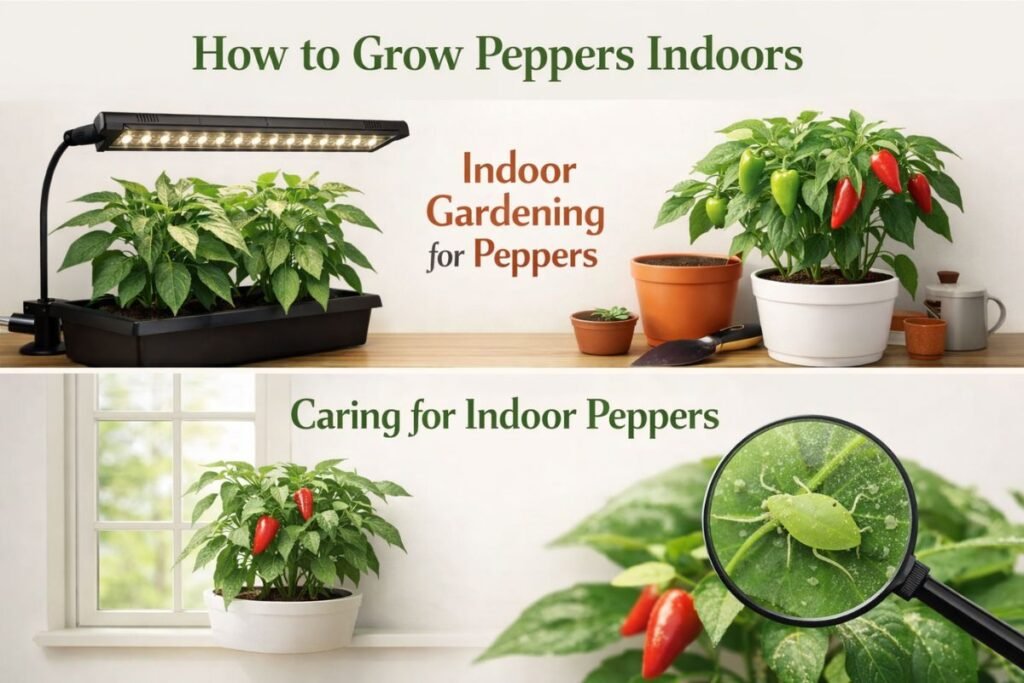
Indoor Gardening for Peppers
If you live in a cooler climate or lack outdoor space, peppers can be successfully grown indoors. Here’s how:
- Light: Use grow lights to provide at least 12-14 hours of light daily.
- Containers: Ensure containers are large enough and have good drainage.
- Watering: Indoor peppers require consistent moisture but need good drainage to prevent root rot.
Caring for Indoor Peppers
- Keep indoor peppers in a sunny window or use a grow light to simulate outdoor conditions.
- Monitor them for pests like spider mites and aphids, which are common indoors.
Advanced Tips for Experienced Pepper Grower
Grafting and Hybrid Peppers
Grafting can be used to combine the best traits of different pepper varieties. For example, grafting a disease-resistant rootstock onto a pepper plant can result in stronger, healthier plants.
Crop Rotation for Healthy Soil
Practice crop rotation to maintain soil health and prevent pest buildup. Avoid planting peppers in the same spot for more than two years in a row to reduce the risk of soil-borne diseases.