Houseplants are vital for photosynthesis, helping them thrive. Over time, dust, pollutants, and pests affect their health. Cleaning houseplant leaves regularly keeps them vibrant, boosts health, and enhances your indoor garden’s look.
Properly cleaning plant leaves removes dust and debris, helping your plants absorb more light, stay pest-free, and grow stronger.
This guide offers expert tips and techniques for effective plant leaf cleaning.
Why Cleaning Your Plant Leaves Matters:
The leaves of a plant are much more than just a decorative feature; they play a central role in the plant’s survival. The process of photosynthesis relies heavily on the leaves’ ability to absorb sunlight, which is then used to produce food for the plant. Dust, dirt, and grime build-up on leaves can block this essential sunlight, reducing the plant’s ability to synthesize nutrients. This leads to slower growth, a lack of vibrancy, and sometimes, leaf burn or deformation due to excess heat trapped by the dust.
Additionally, debris can attract pests like aphids, spider mites, and mealybugs, which thrive in dusty conditions. By regularly cleaning your plants, you not only keep them looking their best but also reduce the risk of infestations. Moreover, plants that receive regular care and cleaning tend to have better overall health, are more resistant to disease, and can produce larger, healthier blooms or fruits if applicable.
Tools You’ll Need:
Before starting, gather the following tools to ensure your cleaning process is as effective and gentle as possible:
- Soft microfiber cloth or towel: Microfiber is ideal because it attracts dust without scratching delicate leaves.
- Spray bottle with water: A fine mist will gently clean the leaves without over-saturating them.
- Mild dish soap: Useful for plants with sticky residue or minor pest issues. Avoid harsh chemicals.
- Small, soft brush (like a paintbrush or toothbrush): Essential for getting into the crevices of complex leaf structures.
- Leaf shine (optional): Some gardeners like to give their plants a polished look with a natural, non-toxic leaf shine spray. Use this sparingly.
Step-by-Step Guide to Cleaning Plant Leaves:
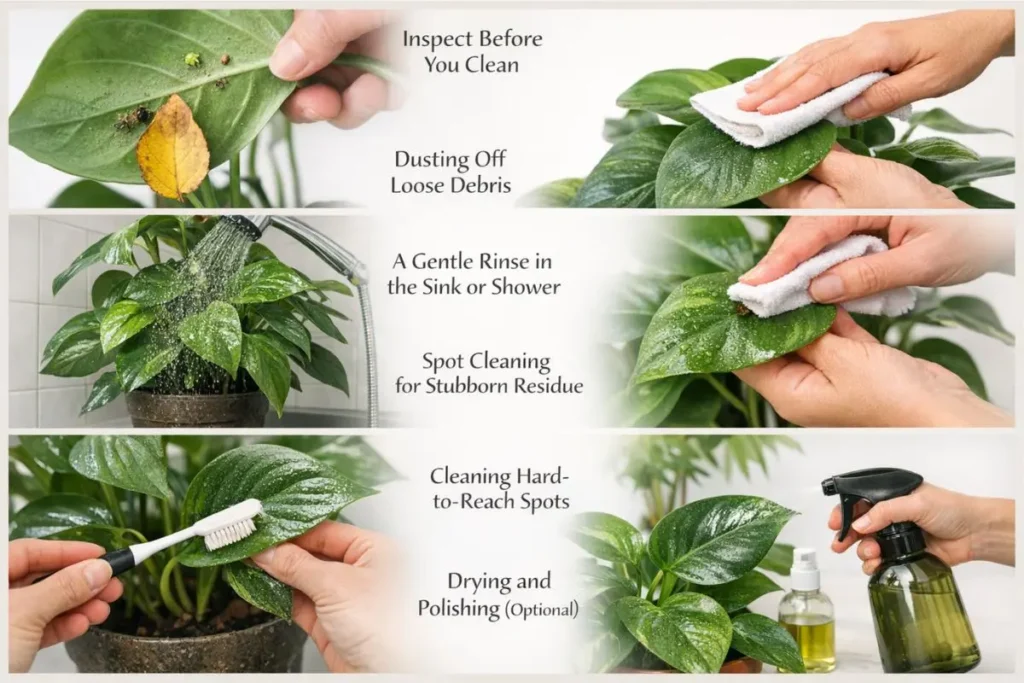
1. Inspect Before You Clean:
Before you begin cleaning, take a moment to inspect the plant’s overall health. Look for:
- Pests: Tiny bugs like aphids or mealybugs might be hiding under the leaves or along the stem. You might even see small webs, which could indicate spider mites. If pests are found, it’s important to treat them before you clean, as the cleaning process could spread the infestation.
- Damaged or Dead Leaves: Remove any dead, yellowing, or diseased leaves. This not only improves the plant’s appearance but also helps prevent rot.
- Soil Conditions: If the plant’s soil is too wet or too dry, it might need to be adjusted before cleaning. Over-watering and soggy leaves can lead to mold or fungal growth.
2. Dusting Off Loose Debris:
The simplest and quickest method of cleaning is to dust off the loose debris. This can be done by gently wiping the leaves with a soft cloth or microfiber towel. If you have a larger plant, like a rubber tree or ficus, use a soft brush or even a vacuum cleaner (with a gentle nozzle attachment) to remove dust without damaging the leaves.
For plants with a lot of leaves, like ferns, or those with rough textures (such as ivy), use a small paintbrush or toothbrush to gently flick off dust. This helps you get into the nooks and crannies without causing damage.
3. A Gentle Rinse in the Sink or Shower:
For larger or sturdier plants, a gentle rinse can work wonders. Move the plant to a sink or shower and use lukewarm water to wash off any remaining dirt. You want to avoid using cold or hot water, as temperature extremes can stress the plant.
- Positioning: Hold the plant at its base (or pot) and gently direct water over the leaves.
- Watering Technique: For a fine mist, use a gentle spray bottle or shower nozzle. Let the water trickle over the leaves, washing off the dust. Avoid soaking the soil to prevent root rot.
4. Spot Cleaning for Stubborn Residue:
Occasionally, plants may develop sticky residues, especially if pests have been present. This is often a sign of honeydew, a sugary substance left behind by aphids or mealybugs. To clean sticky spots:
- Use a cloth dampened with water and a tiny amount of mild soap (preferably a non-toxic, plant-safe dish soap). Gently rub the affected areas to break down the sticky film. Always test this on one leaf first to ensure no adverse effects.
- Sticky residue from sap: For plants like ficus or rubber trees, sap can accumulate. If left unchecked, it can harden and attract dust. A damp cloth can be used to gently remove the sap.
5. Cleaning Hard-to-Reach Spots;
If your plant has dense foliage, like many tropical varieties, or intricate leaf veins (such as on a monstera), cleaning the undersides of leaves can be tricky. For these situations, a soft toothbrush works wonders. You can use it to gently scrub between leaf veins, along the stem, or any hard-to-reach spots where dust collects.
6. Drying and Polishing (Optional):
After cleaning, allow your plant to dry naturally in a well-ventilated area. Avoid using towels to dry the leaves as they can cause friction or accidental damage. If you prefer your plants to have a glossy shine, use a leaf shine spray made from natural ingredients. However, this step isn’t necessary for plant health.
Be cautious with commercial leaf shines, as overusing them can block the pores (stomata) on the leaves, which are essential for gas exchange. Use leaf shine sparingly and only on plants that need it, like those with waxy or smooth leaves.
Special Care for Different Types of Plants:
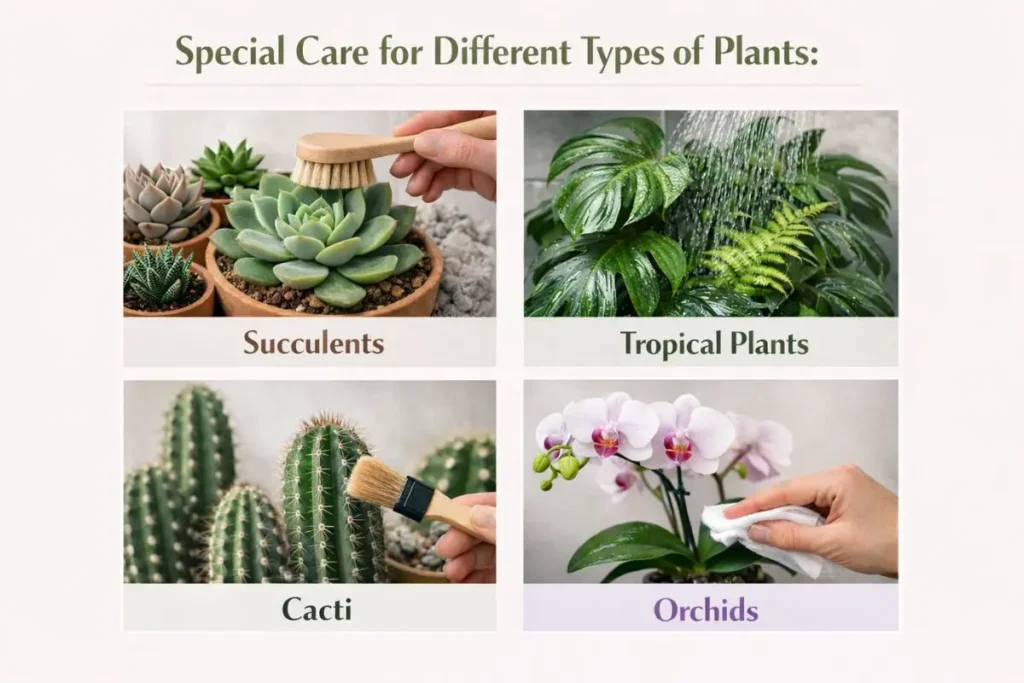
Every plant is unique, and so are its cleaning needs. Here’s a breakdown of cleaning techniques for some of the most popular houseplants:
- Succulents: These plants have thick, waxy leaves that can trap moisture. Use a dry brush or microfiber cloth to gently dust them. Excess moisture can cause rot in the leaves.
- Tropical Plants: For plants like ferns or philodendrons, which appreciate humidity, you can afford to use more water. A gentle rinse in the shower is an effective way to keep them clean.
- Cacti: These plants need minimal water. Instead of rinsing them, use a soft brush to remove dust from the spines and leaves.
- Orchids: Orchids have delicate leaves and can be sensitive to over-watering. Use a dry cloth or soft brush for dusting, and avoid any soaking.
Mistakes to Avoid When Cleaning Plant Leaves:
- Using Harsh Chemicals: Never use products not designed for plants. Harsh chemicals can harm your plant’s health by damaging the leaf surface or inhibiting photosynthesis.
- Over-Watering: When rinsing plants, avoid letting water sit on the leaves for too long. This can encourage fungal diseases.
- Neglecting to Inspect: Always inspect your plants for pests while cleaning. The process of cleaning allows you to catch issues early, before they become serious problems.
- Not Cleaning Regularly: A lot of gardeners clean their plants once and forget about it. Regular cleaning ensures your plants get the best light and stay pest-free.
Seasonal Cleaning:
Just like we adjust our gardening practices for different seasons, your cleaning routine should evolve as well. Here’s what you should focus on:
- Spring and Summer: Plants are in active growth during these months. Clean the leaves more frequently to help them capture maximum light and stay healthy.
- Autumn and Winter: With reduced sunlight and lower humidity, you might clean less often. However, check your plants for dust, and don’t overwater, as humidity can cause mold growth in some plants.
Pests to Watch for While Cleaning:
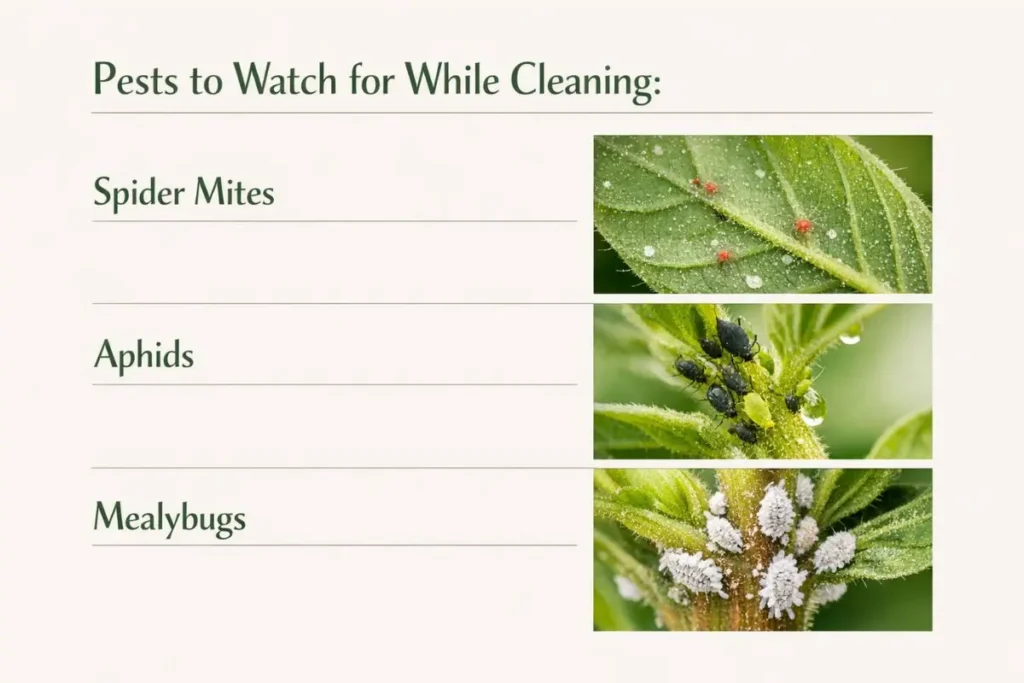
While cleaning, it’s the perfect opportunity to check for pests:
- Spider Mites: These tiny pests often appear on the underside of leaves and may leave webbing. You might also notice small white or yellow specks. If you find them, wipe the leaves with a damp cloth or treat with neem oil.
- Aphids: Small and soft-bodied, aphids can be green, yellow, or even black. They leave behind sticky honeydew. Wash them off with water or spray with insecticidal soap.
- Mealybugs: Mealybugs look like cotton-like clumps on the plant. They tend to congregate in the leaf axils or on the stems. Use a cotton swab dipped in rubbing alcohol to remove them.
FAQS:
1. Can I clean all my houseplants the same way?
Most plants can be cleaned similarly, but some, like succulents, require drier methods. Always consider the plant type before cleaning.
2. How often should I clean my plant leaves?
Aim for every 2-3 weeks, especially during high-dust seasons. However, if you spot pests or dirt buildup, clean sooner.
3. Is leaf shine necessary for plants?
Leaf shine is optional and should be used sparingly. It can give plants a glossy look, but excessive use can clog leaf pores and reduce respiration.