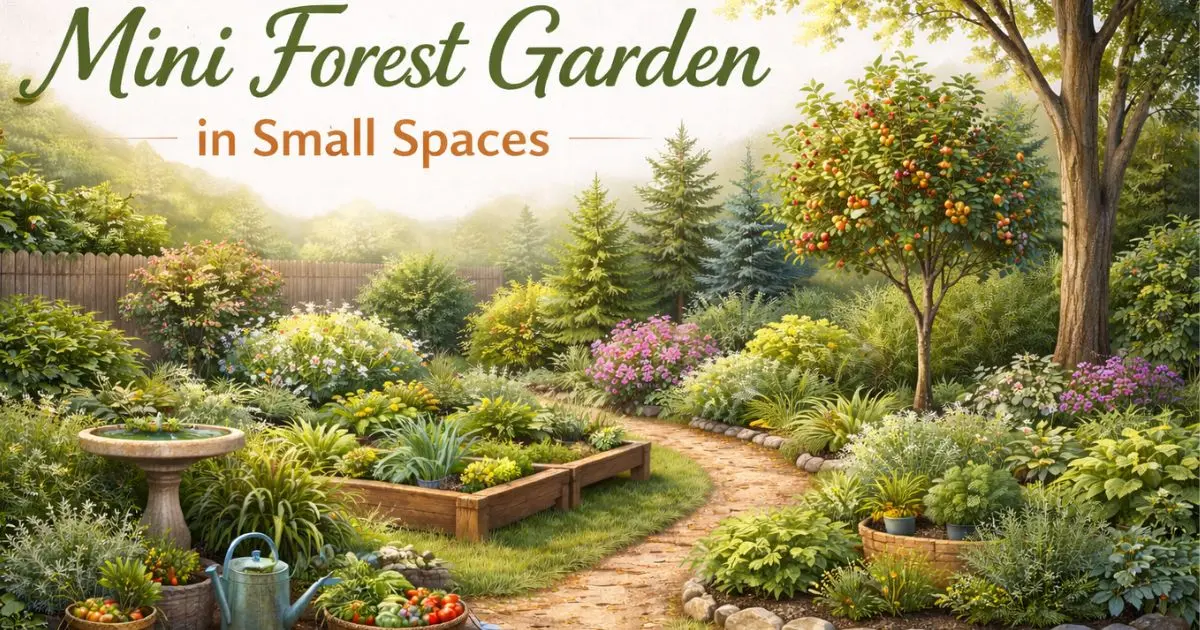
Ever dream of transforming your small backyard or terrace into a lush, green retreat? It’s possible! A mini forest garden is a compact, nature-filled space where you can grow a variety of plants in layers, just like a real forest. You can create this beautiful and sustainable environment in your own space, even if it’s small. Here’s a simple, easy-to-follow guide to help you build your very own mini forest garden.
What Is a Mini Forest Garden?
A mini forest garden is a small garden designed to look like a real forest. It has different layers of plants, such as tall trees, smaller shrubs, ground covers, and flowers. Each layer works together, creating a natural, self-sustaining system that needs little care once it’s established.
Why You Should Plant a Mini Forest Garden:
- Low Maintenance: Once you plant it, your mini forest garden will take care of itself.
- Sustainability: Using plants that last for many years means less work for you.
- Biodiversity: You’ll attract different kinds of plants, animals, and insects, helping the environment.
- Relaxation: A green space can help you feel calm and connected to nature, giving you a peaceful escape from daily life.
Let’s get started on how to make your own mini forest garden!
Picking the Right Plants: Climate and Space:
The first step is choosing the right plants for your mini forest garden. The plants you select should suit your local climate, whether you’re in a cooler or warmer area.
Best Plants for Different Climates:
- Cool Climates (Zones 5-8): If you live in a temperate zone, you can grow many trees and shrubs like oak, birch, and maple. These trees will create a nice structure for your garden.
- Warm Climates: If you live in a warmer area, such as parts of India or Pakistan, choose plants that can tolerate heat and dry conditions. Trees like neem or moringa are perfect for hot climates.
Creating Microclimates in Small Spaces:
In smaller spaces, such as a balcony or a small backyard, you can create little “microclimates.” These are small areas with different sunlight and temperature conditions.
- For Sun-Loving Plants: Place them in spots where they can get lots of sunlight.
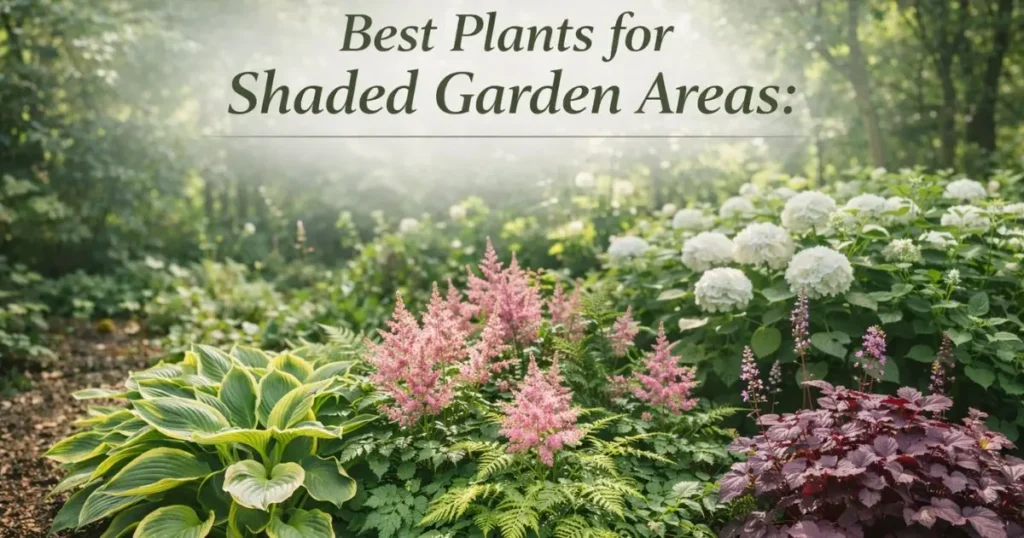
- For Shade-Loving Plants: Plant them in areas with some protection, like under taller trees or near walls that block the sun.
Preparing Your Soil: The Key to Healthy Plants:
Good soil is essential for a healthy garden. In a mini forest garden, soil should be rich, moist, and able to drain well.
Soil Type & pH:
- Loamy, Well-Drained Soil: Use soil that is rich in organic material and drains well. If you have clay soil, add compost or mulch to improve its texture.
- pH Level: Most forest plants prefer slightly acidic to neutral soil (pH 6-7). You can adjust the pH with compost if needed.
Organic Matter:
Add organic materials like compost or well-rotted manure to make the soil richer and help it retain moisture. These materials also help your plants get the nutrients they need.
Drainage:
Make sure the soil can drain well, especially if you’re planting in containers. Good drainage prevents water from collecting and hurting the plants’ roots. Add gravel to the bottom of containers or raised beds to improve drainage.
Planting Your Mini Forest Garden: Creating Layers:
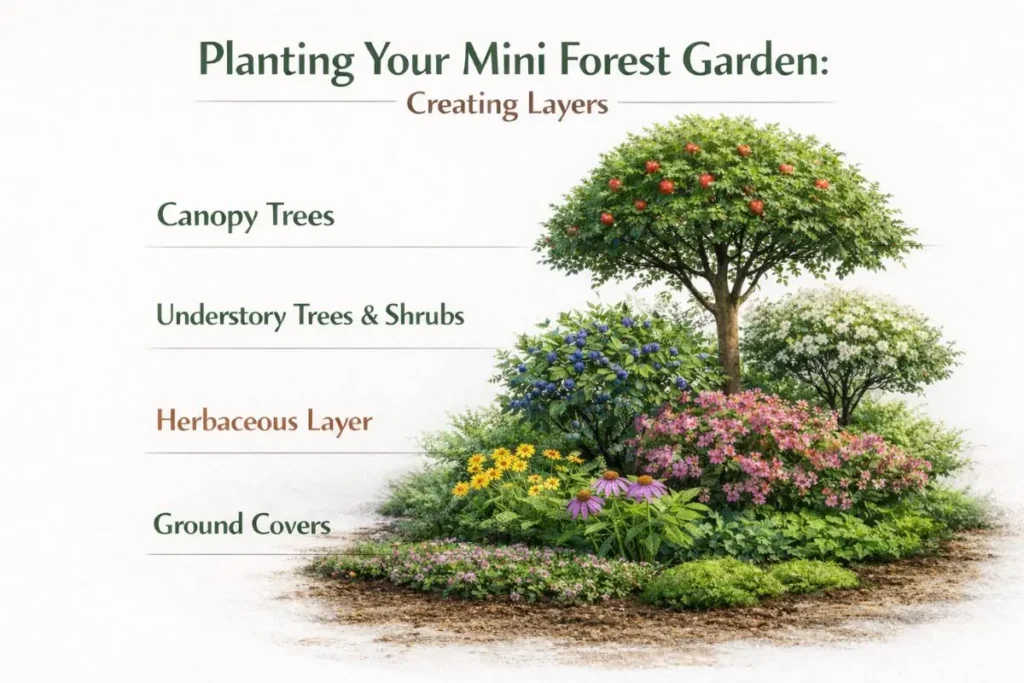
A mini forest garden mimics a real forest with different layers of plants. Here’s how to set it up:
The Layers of Your Garden:
- Canopy Trees: The tallest trees, like small fruit trees or ornamental trees, should be placed in the middle or at the back.
- Understory Trees & Shrubs: These smaller plants fill in the middle layers, such as berry bushes or flowering shrubs.
- Herbaceous Layer: This includes flowers, herbs, and plants that grow close to the ground. They’ll thrive in the shade of taller plants.
- Ground Covers: These low-growing plants help prevent weeds and keep the soil moist. Examples include creeping thyme or moss.
Steps for Planting:
- Plan the Layout: Decide where each plant should go, keeping in mind its sunlight and space needs. Place taller plants at the back and smaller plants in front.
- Spacing: Leave enough room for each plant to grow to its full size.
- Digging: Dig a hole for each plant that’s twice as wide as its root ball.
Tips for Success:
- Use Native Plants: Native plants are best suited to your local climate and will need less care.
- Mix Different Plants: Include a variety of plants—trees, shrubs, and flowers—to create a more natural and balanced ecosystem.
Sunlight & Watering: Keeping Your Forest Healthy:
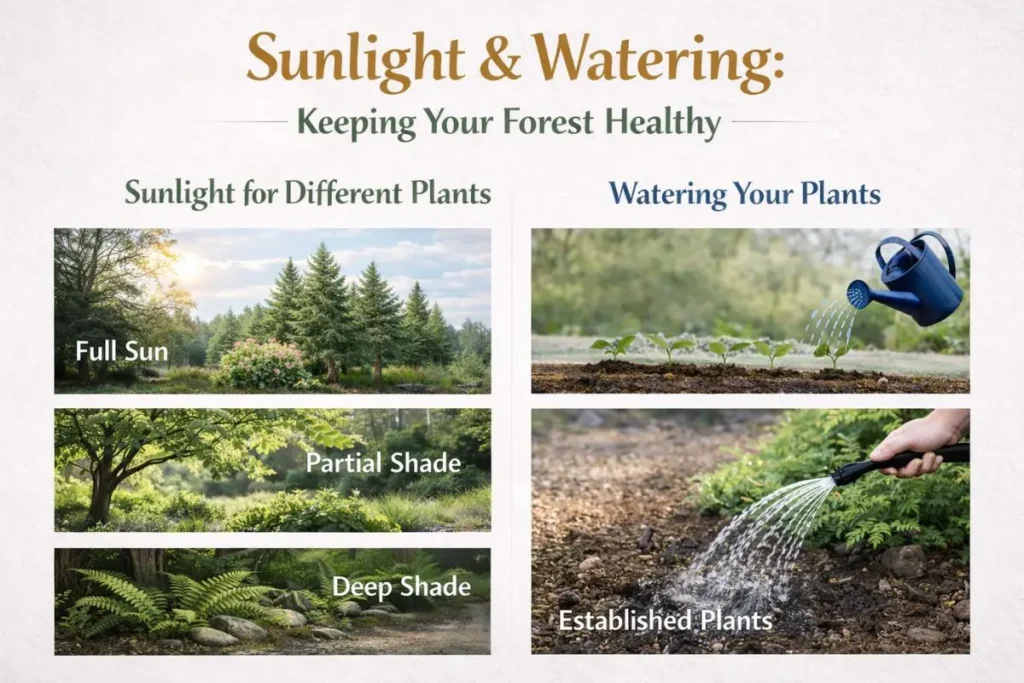
Proper sunlight and watering are important for plant health. Here’s what you need to know:
Sunlight for Different Plants:
- Full Sun: Place trees and shrubs that need full sun in the brightest parts of your garden.
- Partial Shade: Some plants, like smaller shrubs or herbs, need only a little sunlight. Plant them where they’ll get some shade.
- Deep Shade: Plants like ferns and moss prefer areas with little or no sunlight.
Watering Your Plants:
Water your plants according to their age and size:
- For Seedlings & Young Plants: Water them regularly to keep the soil moist but not soggy.
- For Established Plants: Water deeply once a week. Increase watering in hot weather.
Test the soil to make sure it’s not too dry before watering.
Fertilization Tips:
Your plants need the right nutrients to grow strong and healthy. Here’s how to feed them:
- Organic Fertilizers: Use compost, bone meal, or organic plant food to feed your plants.
- Synthetic Fertilizers: If you prefer, you can use a balanced fertilizer (10-10-10) during the growing season.
- When to Fertilize: Apply fertilizers in early spring and mid-summer, when plants are growing the most.
Tips:
- Always follow the recommended amount of fertilizer to avoid harming your plants.
- If you’re unsure, organic options like compost are always a safe bet.
Pruning & Caring for Your Forest: Keeping Plants in Shape:
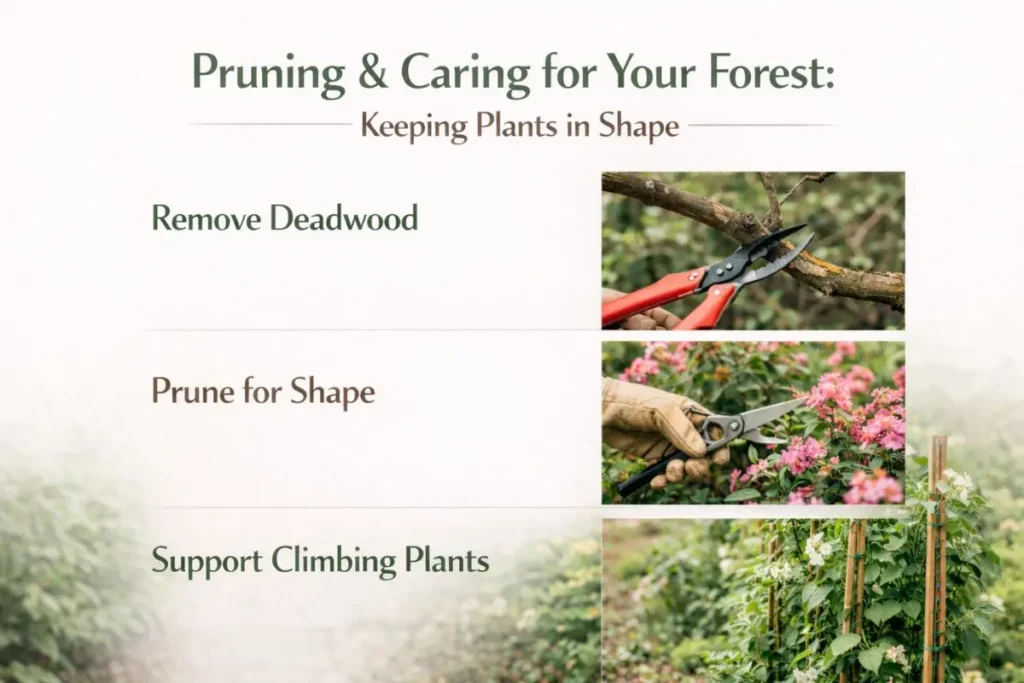
Pruning is important to keep your plants healthy and prevent them from becoming overgrown.
- Remove Deadwood: Regularly remove dead branches to improve air circulation and keep your plants healthy.
- Prune for Shape: Trim shrubs and flowers in early spring to encourage new growth.
- Support Climbing Plants: Use stakes or trellises to help climbing plants grow vertically and not crowd the other plants.
Seasonal Care:
Each season brings different needs for your mini forest garden. Here’s how to care for it year-round:
Spring & Summer:
- Spring: Prune dead branches, fertilize, and check for pests.
- Summer: Water your plants regularly and apply mulch to keep the soil moist.
Fall & Winter:
- Fall: Add extra mulch to protect your plants in the cold weather. Trim overgrown plants.
- Winter: If you have tender plants, protect them from frost with burlap or move them to sheltered areas.
Common Mistakes to Avoid:
- Overcrowding: Give each plant enough space to grow.
- Overwatering: Too much water can harm plants. Always check the soil before watering.
- Not Preparing Soil Properly: Healthy soil is key. Don’t skip this step!
Managing Pests & Diseases:
Even a mini forest garden can have pests or diseases. Here are a few tips:
- Aphids: Use neem oil or simply wash them off with water.
- Mildew: Improve air circulation and water your plants properly.
- Slugs: Set up traps or hand-pick them in the morning.
Enjoying Your Garden:
Once your plants are established, you’ll enjoy watching them grow. Here’s how to maintain and harvest from your garden:
- Harvesting: Pick fruits or vegetables when they are ripe. Use clean, sharp tools.
- Long-Term Care: Keep an eye on your plants and prune or water as needed.
FAQS:
1. Can I create a mini forest garden on my terrace or balcony?
Yes, with containers, raised beds, and strategic plant placement, a mini forest garden can thrive on a terrace or balcony.
2. How do I choose the right plants for a mini forest garden?
Select a mix of trees, shrubs, and ground covers suited to your climate and space, prioritizing native plants.
3. How often do I need to water my mini forest garden?
Water regularly for new plants and deeply once a week for established ones, adjusting for weather.
4. What should I do if I have pests in my mini forest garden?
Use natural methods like neem oil or hand-picking pests, and ensure good air circulation to prevent infestations.