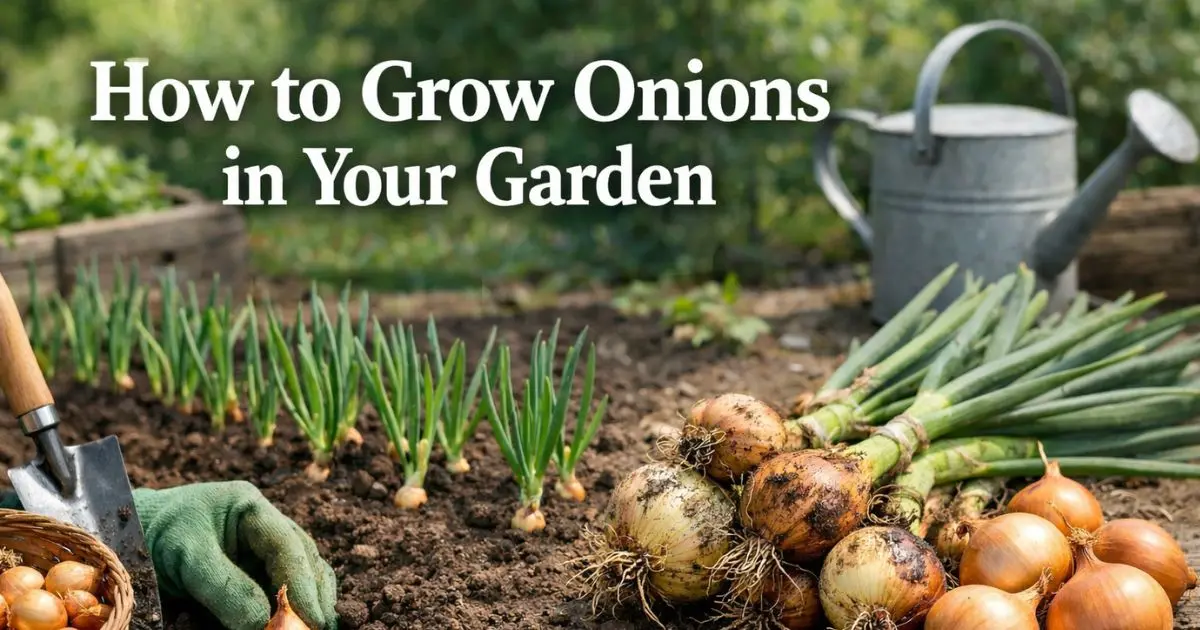
Growing onions in your garden is easy and rewarding. Start by choosing the right variety for your climate and soil, and plant them in well-drained, fertile soil. Whether you use seeds, sets, or transplants, ensure proper spacing and depth. Regular care, including watering, weeding, and fertilizing, is essential for healthy growth. Watch for pests and diseases, and once the onions mature, harvest and cure them for storage. With these steps, you’ll enjoy a successful onion harvest from your own garden.
Choose the Right Onion Variety for Your Garden
The first step in growing onions is selecting the right variety. There are different types of onions to choose from, each suited to different climates and purposes. Selecting the right type is essential for a good harvest.
Common Onion Varieties:
- Yellow Onions: These are the most widely grown onions, known for their versatility. They store well and have a strong flavor, making them perfect for everyday use.
- Red Onions: These are known for their vibrant color and slightly sweeter flavor. They’re commonly used raw in salads, sandwiches, and salsas.
- White Onions: These have a milder flavor compared to yellow onions, making them ideal for dishes like salsas or stir-fries.
- Sweet Onions (e.g., Vidalia, Walla Walla): These onions are mild and sweet, perfect for grilling, caramelizing, or using in salads.
Day-Length Types of Onions:
- Long-Day Onions: These require long daylight hours to form bulbs, making them perfect for northern regions with longer summers.
- Short-Day Onions: These onions need fewer daylight hours, ideal for southern regions with shorter growing seasons.
- Day-Neutral Onions: These onions are adaptable to most regions and do not require long or short days.
Tip:
If you’re unsure about which variety to plant, check with your local garden center for recommendations based on your climate. Prepare Your Soil
Onions thrive in well-prepared soil. Soil preparation is one of the most important steps to ensure your onions grow healthy and strong. Onions require soil that is rich in nutrients, drains well, and retains moisture.
Soil Requirements:
- Soil Type: Onions prefer loose, loamy soil. Avoid heavy clay soils, as they can hold too much water and cause bulbs to rot.
- Soil pH: Onions prefer a soil pH between 6.0 and 7.0 (slightly acidic to neutral). You can buy a pH testing kit from a garden center. If your soil is too acidic, add lime to raise the pH.
- Organic Matter: Add compost or well-rotted manure to enrich the soil and improve drainage. Aim for at least 2–3 inches of organic material mixed into the top 6 inches of soil.
- Depth: Loosen the soil to a depth of 2–3 inches to allow onion roots to spread easily and grow strong.
Tip:
Onions don’t like to compete with weeds, so make sure to clear your garden bed of any unwanted plants before planting.
Planting Your Onions
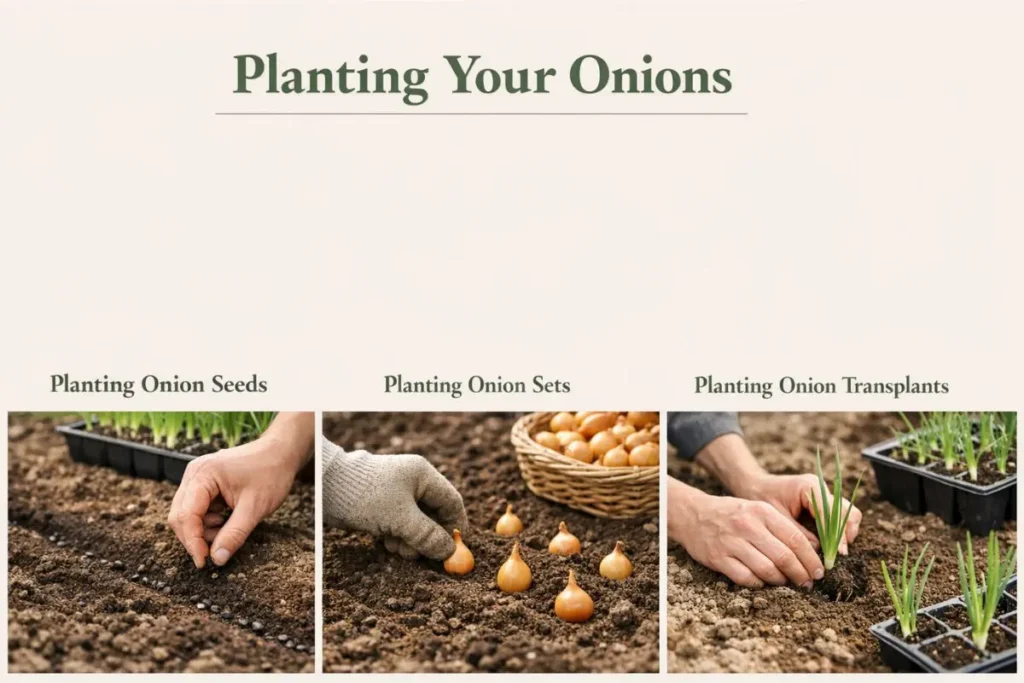
Onions can be grown from seeds, sets, or transplants. The planting method you choose will depend on your experience level and the time you have available.
Planting Onion Seeds
- When to Plant: Start seeds indoors about 8–10 weeks before your last expected frost date. For a spring planting, sow the seeds indoors in late January or early February. For direct sowing, plant seeds directly outdoors in late March or early April.
- How to Plant: Plant seeds ¼–½ inch deep in rows spaced 12–18 inches apart. Once the seedlings emerge, thin them to 3–4 inches apart to avoid overcrowding.
Planting Onion Sets (Best for Beginners)
- What Are Onion Sets?: Onion sets are small, immature onion bulbs that are grown specifically for planting. They are ideal for beginners since they’re easier to handle than seeds.
- When to Plant: Plant onion sets in early spring (April), after the last frost.
- How to Plant: Place the sets 1–2 inches deep and space them 4–6 inches apart in rows. The pointed end of the set should be facing upward.
Planting Onion Transplants
- When to Plant: Transplants are young onion plants grown in nurseries. Plant them 8–10 weeks after the last frost, around early April.
- How to Plant: Set transplants 1–2 inches deep, spacing them 4–6 inches apart.
Care for Your Onion Plants
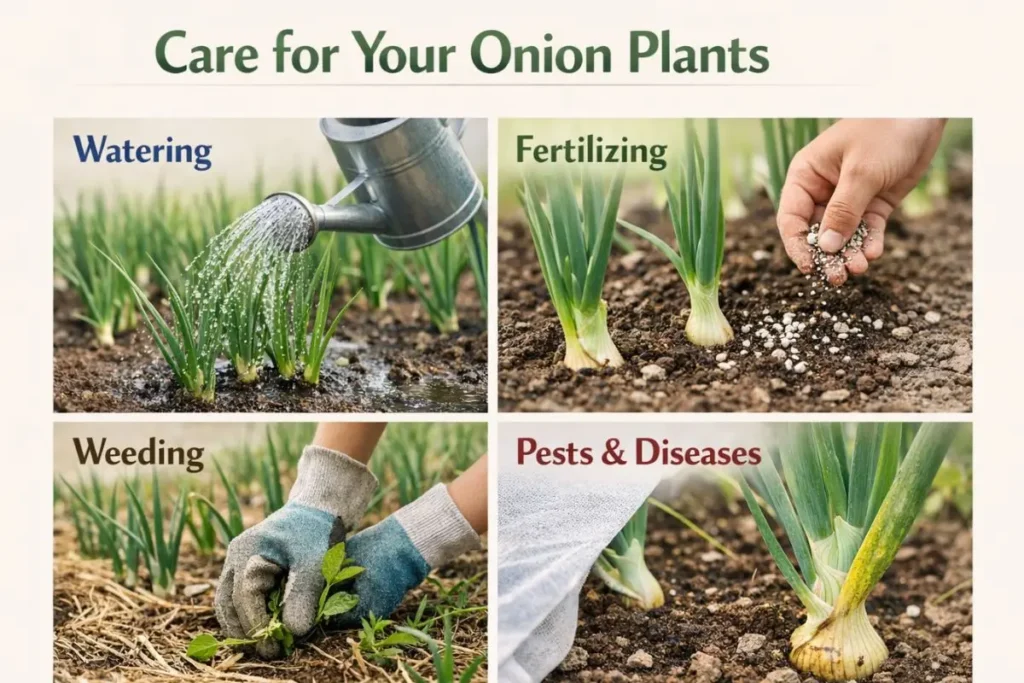
Once your onions are planted, proper care will help them grow strong and healthy. Here’s what you need to do:
Watering
- Onions need consistent moisture to grow well, but they don’t like their roots sitting in water. Water deeply once a week, ensuring the soil stays moist but not soggy.
- Shallow Roots: Since onions have shallow roots, it’s crucial to keep the soil moist at the surface, especially during dry periods.
Fertilizing
- Onions are heavy feeders. Use a balanced fertilizer at planting and side-dress with nitrogen fertilizer in mid-May and late June to promote strong growth.
- If you’re using compost, apply it at planting time to add natural nutrients.
Weeding
- Keep the onion bed free from weeds, as they compete for water and nutrients. Mulching with organic materials like straw or grass clippings helps keep weeds down and conserves moisture.
Pests and Diseases
- Onion Flies: These pests are common and can damage the bulbs. Use row covers to keep them off your onions.
- Fungal Diseases: Watch for yellowing leaves, which could indicate a fungal infection. Avoid overhead watering to prevent water from splashing onto the leaves.
Harvesting Your Onions
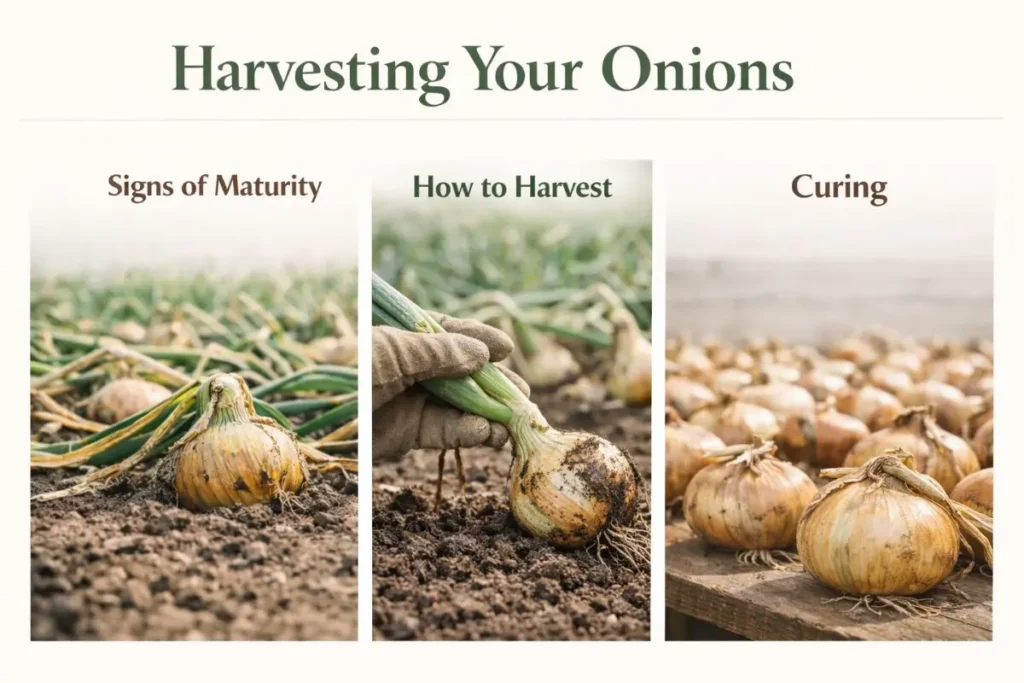
Knowing when to harvest your onions is crucial for achieving the best flavor and storage potential.
Signs of Maturity
- The tops of the onions will begin to fall over and turn yellow or brown. This is a clear sign that they are ready for harvest.
- If you notice that the bulbs are large and firm, it’s time to pull them from the soil.
How to Harvest
- Gently pull the onions from the soil by their tops. Be careful not to damage the bulbs, as this can affect their storage life.
Curing
- After harvesting, lay the onions out in a well-ventilated, dry area for 2–3 weeks to cure. This process helps the skins dry and harden, making the onions last longer.
Storing Your Onions for Long-Term Use
Onions are best stored in a cool, dry, and dark place. Here’s how to properly store your onions after harvesting:
- Curing: Once the onions are dry, trim the roots and cut off the tops, leaving about 1 inch of stem.
- Storage: Store onions in mesh bags, baskets, or hanging braids in a cool (32°F-40°F), dry place. Make sure they are well-ventilated to avoid rot.
Tip:
Avoid storing onions in plastic bags, as this can trap moisture and cause them to rot.
Common Onion Growing Issues
Sometimes, despite your best efforts, you may face some challenges. Here’s how to troubleshoot common issues:
- Yellowing Leaves: Could indicate overwatering or a nutrient deficiency. Ensure proper watering and check for signs of disease.
- Small Bulbs: Likely due to overcrowding, insufficient sunlight, or late planting. Thin your onions early and ensure they get plenty of light.
- Pests: Onion flies or aphids are common pests. Use natural pest control methods such as neem oil or insecticidal soap.
Tips for Growing Bigger and Better Onions
Want to grow larger, healthier onions? Here are some expert tips:
- Thin Regularly: Thin onions as they grow to ensure each plant has enough room for the bulb to form.
- Consistent Care: Regular watering and fertilization are key to growing large, healthy bulbs.
- Choose Larger Varieties: Some onion varieties, like Sweet onions or Spanish onions, produce larger bulbs.