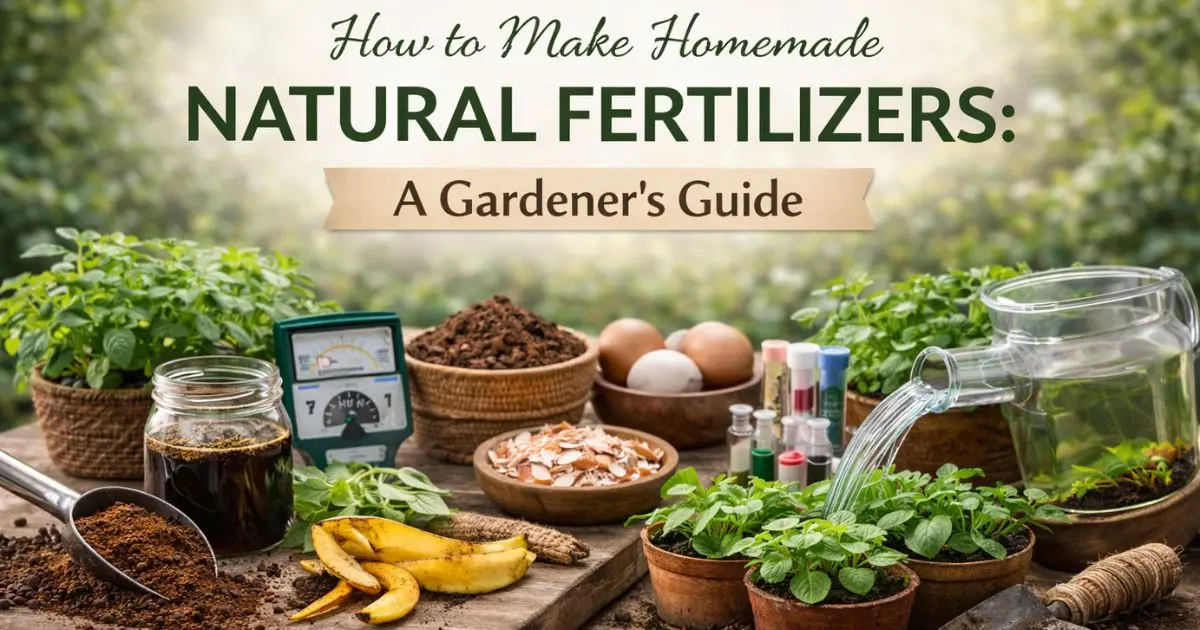
Gardening isn’t just about planting — it’s about giving your plants the best possible care so they can thrive. One of the most effective and eco-friendly ways to do this is by using homemade natural fertilizers. Not only do these fertilizers nourish your plants, but they also reduce your environmental impact and save you money. Let’s dive into the world of natural fertilizers and show you how to make your own at home!
Why You Should Make Your Own Natural Fertilizers
Homemade fertilizers are an excellent alternative to store-bought chemical fertilizers. They’re often made from kitchen scraps, which means you’re recycling and reducing waste while also nourishing your garden. Plus, these fertilizers are more gentle on the soil, encouraging a healthy ecosystem of beneficial organisms. So, instead of spending money on chemical products, why not give your plants the natural boost they deserve with ingredients you already have?
Common Ingredients for Homemade Fertilizers
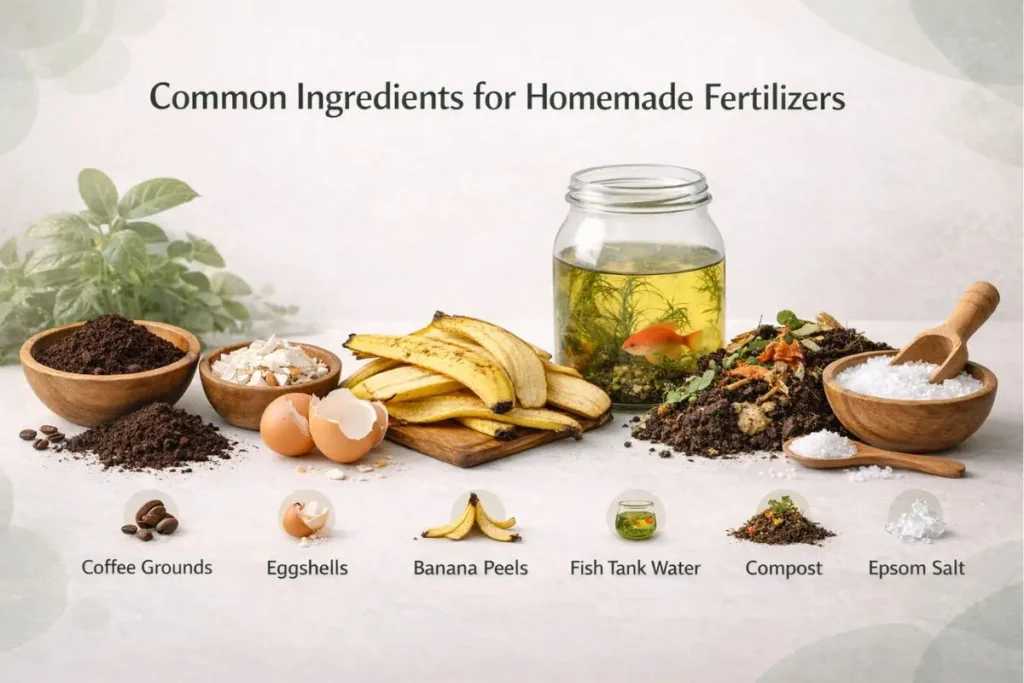
Before you start mixing your homemade fertilizers, let’s look at some ingredients that can work wonders in your garden:
- Coffee Grounds: Rich in nitrogen, coffee grounds are a great choice for improving soil texture and plant growth.
- Eggshells: Full of calcium, eggshells are perfect for strengthening plant cell walls and preventing blossom end rot.
- Banana Peels: These are packed with potassium, which supports flowering and fruit production.
- Fish Tank Water: If you own an aquarium, the nutrient-rich water is fantastic for watering your plants.
- Compost: The backbone of organic gardening, compost provides a balanced mix of nutrients and healthy microorganisms.
- Epsom Salt: This mineral contains magnesium, a vital nutrient for plant growth.
5 Simple Homemade Fertilizer Recipes You Can Try
Here’s how to turn these everyday ingredients into plant food. These recipes are easy to make and will keep your plants healthy and strong.
1. Banana Peel Fertilizer
Banana peels are full of potassium, an essential nutrient that helps your plants grow, bloom, and fruit.
- What You Need: Banana peels
- How to Use: Cut the banana peels into small pieces and bury them in the soil around your plants. Alternatively, you can make a banana peel tea by soaking the chopped peels in water for a few days and using that to water your plants.
- Best For: Fruit and flower-bearing plants like tomatoes, peppers, and roses.
2. Eggshell Fertilizer
Eggshells are an excellent source of calcium, which is vital for strong roots and preventing diseases like blossom end rot.
- What You Need: Eggshells
- How to Use: Collect your eggshells, crush them, and sprinkle the pieces around your plants. You can also mix them into your compost for long-term use.
- Best For: Plants like tomatoes, peppers, and any other crops that benefit from extra calcium.
3. Coffee Ground Fertilizer
Coffee grounds are a natural fertilizer that provides nitrogen, an essential nutrient for leafy growth.
- What You Need: Used coffee grounds
- How to Use: Sprinkle the used coffee grounds around the base of your plants. If you compost, you can add them to your compost pile as well.
- Best For: Acid-loving plants such as roses, azaleas, and blueberries.
4. Fish Tank Water Fertilizer
If you have an aquarium, the water is full of nutrients like nitrogen and phosphorus that your plants will love.
- What You Need: Fish tank water
- How to Use: Use the water from your fish tank to water your plants. It’s a great natural fertilizer that’s rich in nutrients.
- Best For: All plants, especially houseplants and leafy greens.
5. Compost Tea Fertilizer
Compost tea is a liquid fertilizer made by steeping compost in water. It’s a powerful way to feed your plants.
- What You Need: Mature compost
- How to Use: Fill a container with compost, add water, and let it steep for a few days. Strain the mixture and use the liquid to water your plants.
- Best For: All plants, particularly those that are heavy feeders like tomatoes, beans, and squash.
How to Apply Your Homemade Fertilizers
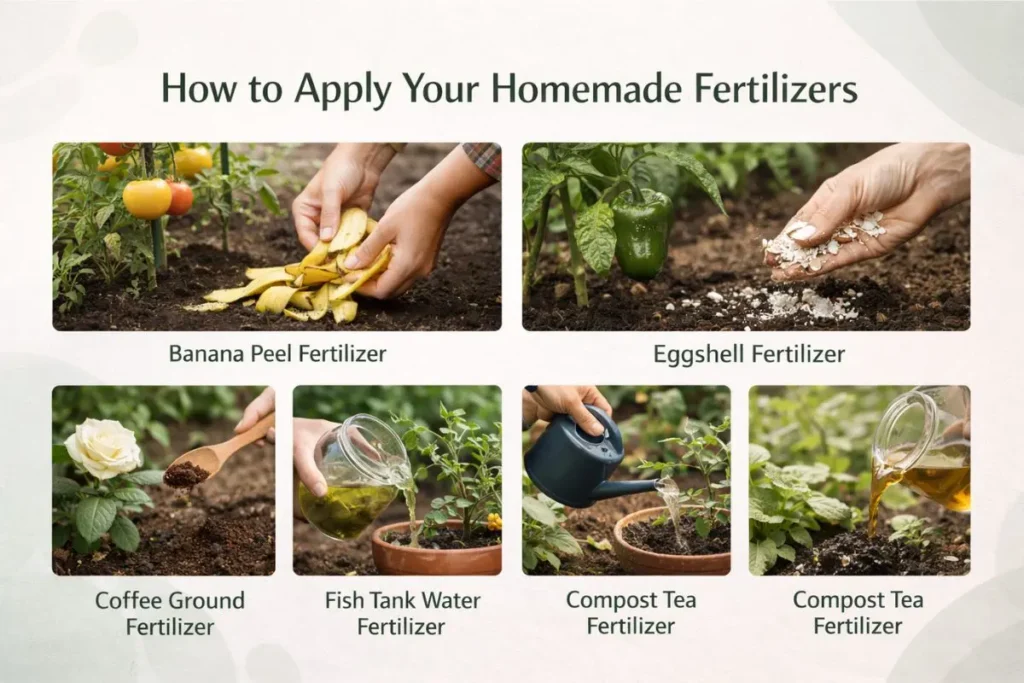
Knowing how to make fertilizers is only half the battle — knowing when and how to apply them is just as important.
- Banana Peel Fertilizer: Apply during the growing season, especially when plants are flowering or fruiting. It’s a slow-release fertilizer, so it will continue to nourish your plants over time.
- Eggshell Fertilizer: Use every 2–3 months to keep your plants’ calcium levels steady. It’s especially important for fruiting plants.
- Coffee Ground Fertilizer: Apply once a month. Coffee grounds provide a nitrogen boost, but too much nitrogen can be harmful, so be careful not to overdo it.
- Fish Tank Water Fertilizer: Use every 2–3 weeks. The nutrients in fish tank water are gentle but effective, making it perfect for regular watering.
- Compost Tea Fertilizer: Apply every 2–4 weeks during the growing season. It’s gentle but rich in nutrients, ideal for boosting plant health.
Practical Tips for Using Homemade Fertilizers
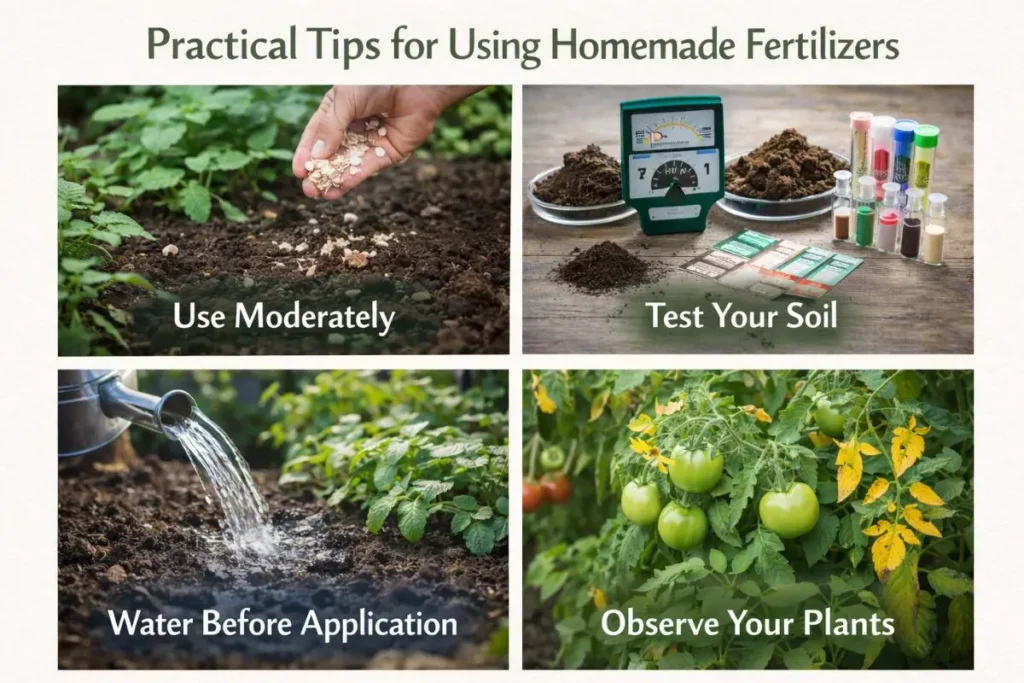
- Use Moderately: While homemade fertilizers are great, too much of a good thing can harm your plants. Always apply in moderation.
- Test Your Soil: Before applying, check your soil’s pH and nutrient levels. Knowing what your soil needs will help you choose the right fertilizers.
- Water Before Application: Always water your plants before applying fertilizer to prevent root burn.
- Observe Your Plants: Watch how your plants respond to the fertilizers. If you notice any issues, like yellowing leaves or poor growth, adjust the amount you’re applying.
Common Mistakes and Misconceptions
Here are some common errors and easy solutions to ensure your homemade fertilizers work to their full potential:
- Over-Fertilizing: More fertilizer doesn’t always mean more growth. Over-fertilizing can harm your plants by burning their roots or causing nutrient imbalances. Stick to the recommended application rates.
- Ignoring pH Balance: Some fertilizers, like coffee grounds, can alter the pH of your soil. Make sure the plants you’re fertilizing prefer acidic conditions before applying.
- Using Fresh Compost: Always allow compost to mature before using it as a fertilizer. Fresh compost can be too hot and may burn your plants.
- Not Monitoring Plant Health: Pay attention to your plants’ health. If they’re not responding well to a particular fertilizer, it might be a sign that it’s not suited to their needs.
Pests, Diseases, and Maintenance
Even though homemade fertilizers can give your plants a boost, pests and diseases can still be an issue. Here’s how to keep them under control:
- Pests: Look out for aphids, caterpillars, and slugs. You can control them with natural remedies like neem oil or diatomaceous earth.
- Diseases: Fungal infections like powdery mildew can be a problem in humid conditions. Prevent these by ensuring good air circulation around your plants and watering at the base, not over the leaves.
- Maintenance: Keep your garden tidy by removing dead leaves, spent flowers, and debris. Regular pruning also helps prevent the spread of diseases and pests.