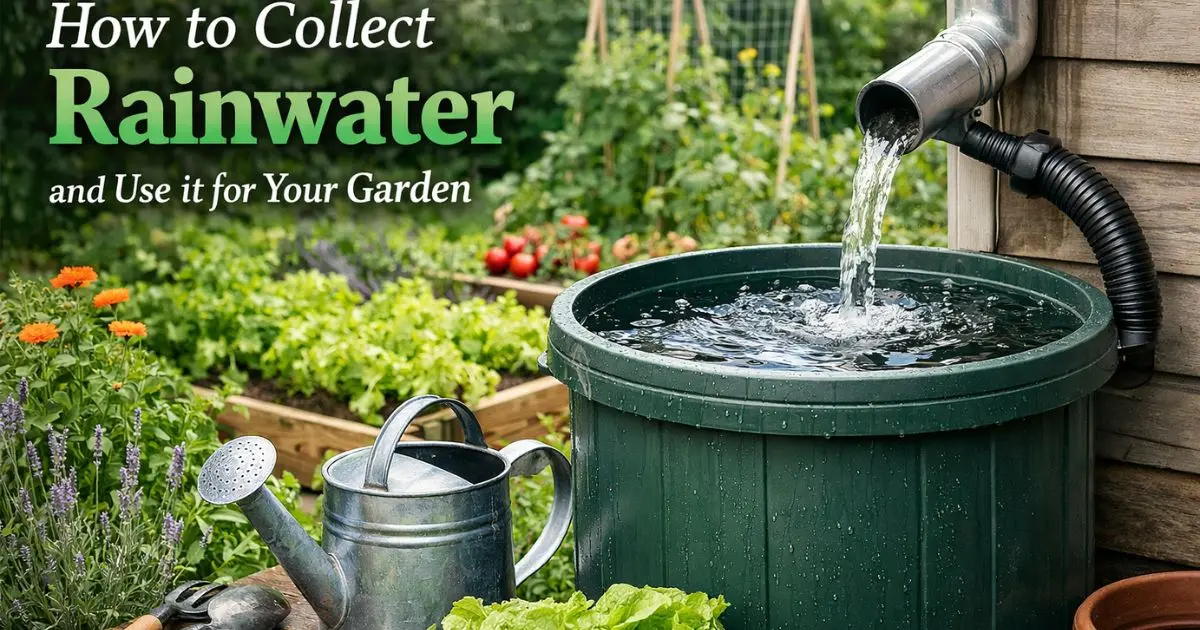
Rainwater harvesting is one of the easiest and most sustainableways to water your garden. Not only does it reduce your dependence on tap water, but it also helps you nurture your plants naturally, free from the chemicals often present in municipal water systems. If you’re looking for a way to conserve water, save money, and keep your garden thriving—this guide is for you!
Why Rainwater Is Perfect for Your Garden
As gardeners, we’re always looking for ways to nurture our plants without harming the environment. Collecting rainwater is a fantastic, eco-friendly method that aligns perfectly with sustainable gardening practices. Rainwater is naturally soft and free of salts and chemicals, which means it’s gentler on your plants, helping them grow stronger and healthier.
Whether you’re growing a vegetable garden, ornamental flowers, or houseplants, using rainwater can provide them with all the moisture they need while protecting them from harmful chemicals that can accumulate in tap water. Plus, collecting rainwater is simple, cost-effective, and a great way to help the environment.
Climate & Growing Conditions:
Ideal Rainwater Harvesting Conditions
The beauty of rainwater harvesting is that it works for any gardener, regardless of your climate, but the amount of rain you get will obviously affect how much water you can collect.
- Tropical & Subtropical Climates: Rainwater collection is highly efficient in areas with frequent rainfall. The warm temperatures combined with regular showers create ideal conditions for rainwater harvesting.
- Arid & Semi-arid Climates: Even if you live in a region with less rainfall, you can still make use of the water that does fall. In these areas, rainwater harvesting systems are an essential way to conserve water for drought periods.
Microclimates and Rainwater Collection
In places like Pakistan or India, where you can experience both monsoon rains and long dry seasons, collecting rainwater can significantly reduce your reliance on scarce water resources during the dry months. You can adapt your setup depending on your local climate and rainfall patterns.
How to Collect Rainwater:
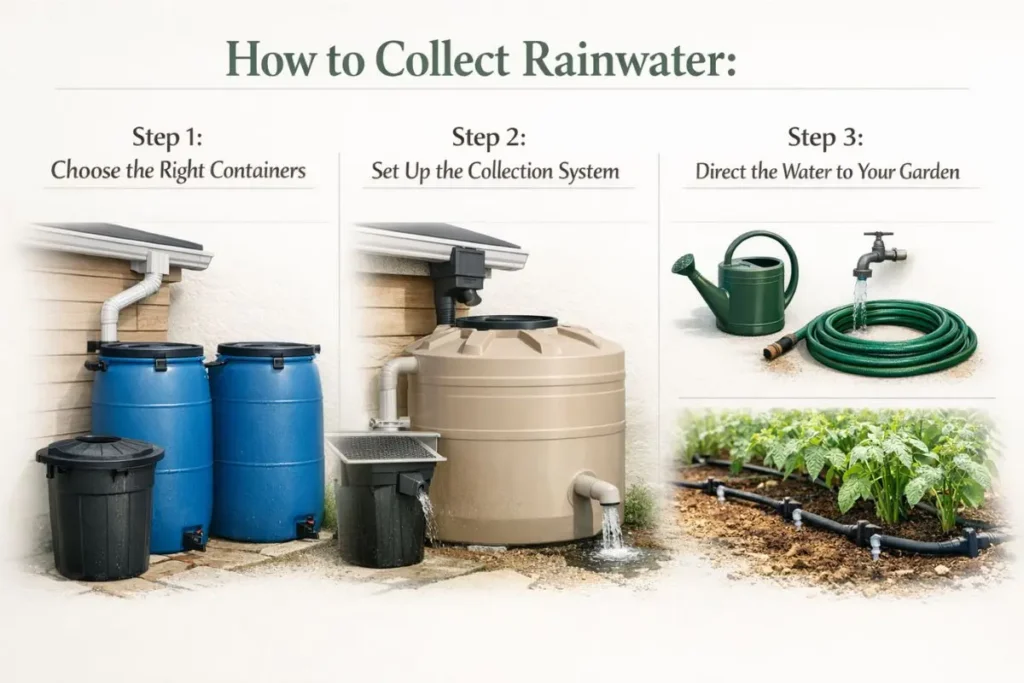
You don’t need to be an expert to start collecting rainwater. Here’s a simple guide to get you going:
Step 1: Choose the Right Containers
The first thing you’ll need is a container or rainwater collection system. There are a few options depending on your needs:
- Rain Barrels: These are ideal for smaller gardens and can be placed directly under downspouts to catch rainwater from your roof. Choose food-grade plastic barrels to ensure your water is free from harmful chemicals.
- Rainwater Tanks: If you have a larger garden or live in an area that experiences heavy rainfall, you may want a larger storage tank. These can hold hundreds of gallons and are ideal for year-round collection.
- DIY Systems: If you’re feeling crafty, you can create your own rainwater system using large trash cans or containers. Just make sure they have a tight-fitting lid to prevent contamination from debris or mosquitoes.
Step 2: Set Up the Collection System
- Install Gutter Diverters: The water runs off your roof into gutters. Install a gutter diverter to direct water into your collection container. This ensures clean water by filtering out debris before it reaches your barrel or tank.
- Mesh Screens or First-Flush Diverters: Prevent debris from clogging your rainwater tank by using mesh screens. Additionally, a first-flush diverter can be installed to discard the first batch of water after a rain, which may contain dirt or other contaminants from the roof.
Step 3: Direct the Water to Your Garden
Once you’ve collected rainwater, you need to move it to your garden. Here are two common methods:
- Watering Can or Hose: You can use a watering can to water your plants or attach a hose directly to your rain barrel.
- Drip Irrigation: For more efficiency, consider setting up a drip irrigation system that delivers rainwater directly to the roots of your plants, reducing evaporation and water waste.
Watering with Rainwater:
While using rainwater in your garden is great, it’s important to understand the specific needs of your plants.
Watering Seedlings to Mature Plants
- Seedlings: They require gentle watering—so a watering can or a slow-drip system is ideal to avoid disturbing the soil.
- Established Plants: Watering deeply is essential for strong root growth. A rainwater tank with a drip irrigation system will help you achieve deep watering without wasting water.
Timing and Frequency
- Morning Watering: The best time to water your garden is early in the morning. This allows the plants to absorb the water before the heat of the day sets in.
- Regular Watering: During dry spells, you may need to water your plants once every two to three days. Check the soil moisture before watering to avoid overwatering.
Soil Considerations
Rainwater is typically “softer” than tap water because it contains fewer salts and chemicals, making it perfect for most plants. However, if you’re in an area with very little rainfall, make sure to monitor soil moisture and adjust your watering schedule accordingly.
Benefits of Using Rainwater for Your Garden
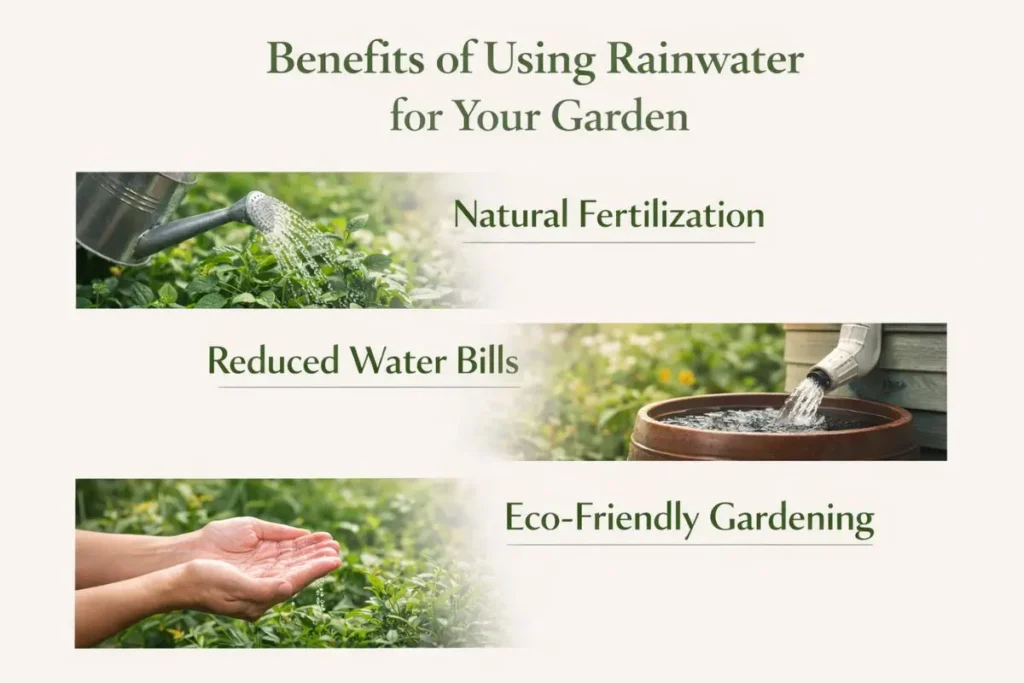
Natural Fertilization
Rainwater contains trace nutrients like nitrogen, which plants love. It also doesn’t contain chlorine, fluoride, or salts, which are often present in tap water and can harm sensitive plants over time.
Reduced Water Bills
By collecting rainwater, you can reduce your water consumption from municipal sources, which means lower water bills. This is especially beneficial for gardeners with large landscapes or those living in drought-prone areas.
Eco-Friendly Gardening
Using rainwater helps conserve local water supplies, especially in areas that experience water shortages. You’re reducing your carbon footprint by relying less on pumped water, and you’re helping preserve precious natural resources.
Seasonal Care for Rainwater Systems
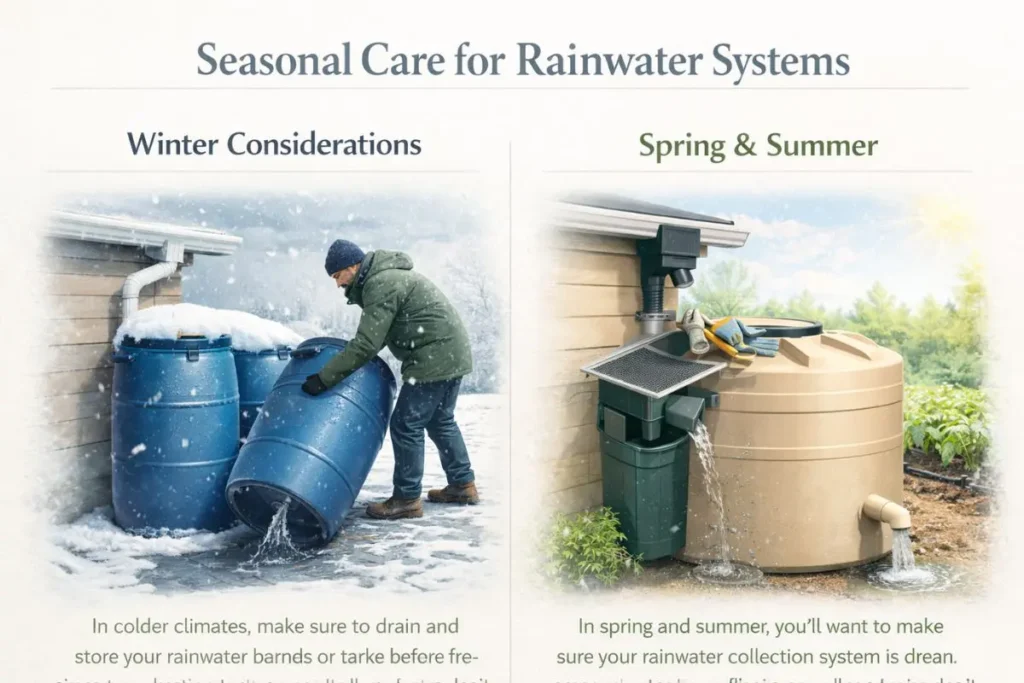
Winter Considerations
In colder climates, make sure to drain and store your rainwater barrels or tanks before freezing temperatures set in. If you don’t, the water can freeze inside the system, potentially damaging the container or plumbing.
Spring & Summer
In spring and summer, you’ll want to make sure your rainwater collection system is clean and ready to handle the increased rainfall. Check for any debris or mold growth and ensure that all filters are clear.
Common Mistakes
While rainwater harvesting is relatively straightforward, there are a few common mistakes you should watch out for:
Mistake 1: “I Don’t Need a Diverter or Filter”
Some gardeners skip the first-flush diverter or mesh screens, thinking they’re unnecessary. But debris can quickly spoil your rainwater, making it harder for your plants to thrive. Always ensure your system has adequate filtration.
Mistake 2: “I Can Use Any Container”
Not all containers are suitable for rainwater storage. Plastic containers that aren’t food-grade can leach harmful chemicals into your water. Always use food-safe plastic or rainwater-specific containers to keep the water clean.
Mistake 3: “I Don’t Need to Monitor My Watering”
Rainwater is soft, but it still needs to be used correctly. Over-watering or under-watering can stress your plants. Monitor the soil and adjust your watering schedule based on what your plants need.
The Myths of Rainwater Collection
Myth 1: “Rainwater is Always Clean”
While rainwater is much cleaner than tap water, it can still pick up dust and pollutants from the air or your roof. That’s why a first-flush diverter is so essential—ensuring only the cleanest water reaches your plants.
Myth 2: “Rainwater Collection Only Works in Wet Areas”
Rainwater harvesting works even in drier climates. In fact, collecting rainwater is often more important in areas with little rainfall. Even small amounts of rain can add up over time, providing valuable water for your garden.
FAQS
How much water can I collect from rain?
The amount of water you can collect depends on the size of your roof and the rainfall in your area. For example, 1 inch of rain on a 1,000-square-foot roof will yield about 600 gallons of water.
Do I need to clean my rainwater system?
Yes! It’s a good idea to clean your rainwater system at least once a year. Check for debris in the gutters, filters, and first-flush diverters to ensure clean water.
Can I use rainwater indoors?
Rainwater can be used for indoor plants or even for cleaning. However, if you’re planning to drink it, make sure it’s properly filtered and purified first.