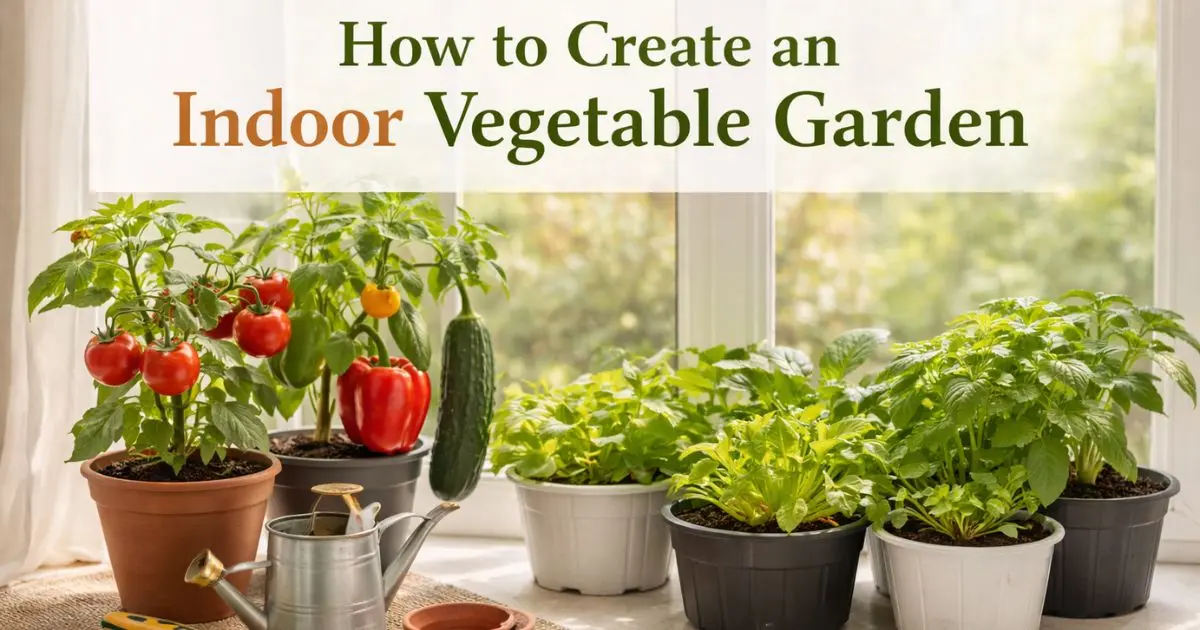
Gardening is not just about outdoor spaces; with a bit of creativity and care, you can transform any indoor space into a flourishing vegetable garden. Picture harvesting fresh tomatoes, herbs, or even leafy greens from your own kitchen or living room. Whether you’re limited to a small terrace or have a spacious indoor garden, growing your own veggies indoors can be easy and rewarding. This guide will walk you through everything you need to know to start your very own indoor vegetable garden.
Ideal Conditions for Growing Vegetables Indoors
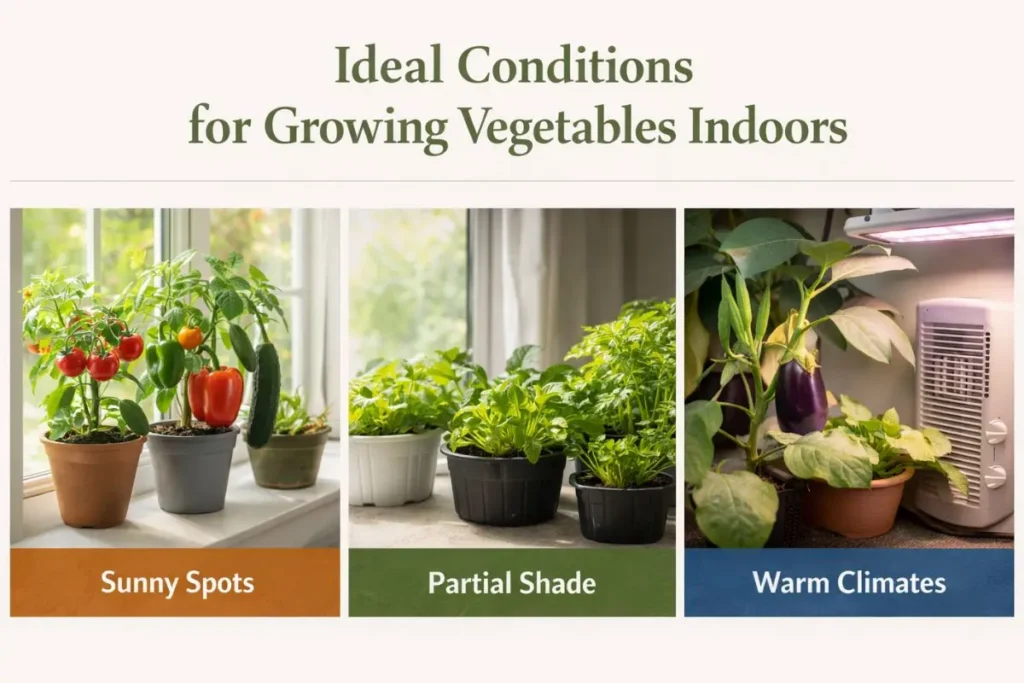
When it comes to growing vegetables indoors, your home’s natural environment plays a key role. Luckily, indoor spaces tend to have stable temperatures, which is great for many plants. However, every indoor garden has its own microclimate, and understanding yours is crucial.
If you have a south- or west-facing window, that’s your sweet spot for sun-loving veggies like tomatoes, peppers, and cucumbers. They thrive on plenty of direct sunlight—at least 6 hours a day. On the flip side, leafy greens like spinach and lettuce do just fine in partial shade, making them perfect for those dimmer spots in your home.
For those living in warmer climates like India or Pakistan, where temperatures are typically high, you’ll find that warm-weather crops such as okra and eggplant thrive indoors. The key here is ensuring they receive enough sunlight and warmth to perform well.
Adjusting for Different Climates
In cooler climates, you may need to give your indoor vegetables a little extra care during the colder months. A space heater or heating mat can help maintain optimal temperatures when it’s too cold outside. You’ll also need to supplement your sunlight with grow lights during shorter days.
Finding the Right Soil for Your Indoor Garden
The foundation of any successful vegetable garden is healthy soil. For indoor gardening, you need a well-draining potting mix rich in nutrients. A mix of peat, perlite, and compost is perfect for most vegetables. It ensures that the soil drains well and provides the plants with all the nutrients they need to grow strong and healthy.
Soil pH: Vegetables prefer slightly acidic to neutral soil (pH 6.0–7.0). You can easily test your soil’s pH using a home pH test kit. If the soil is too acidic, mix in some lime to balance it; if it’s too alkaline, a bit of sulfur will do the trick.
Drainage: Make sure that your containers have good drainage holes. Without proper drainage, your plants could suffer from root rot. You can mix perlite or vermiculite into your potting soil to ensure it drains well.
Planting: How to Set Your Vegetables Up for Success
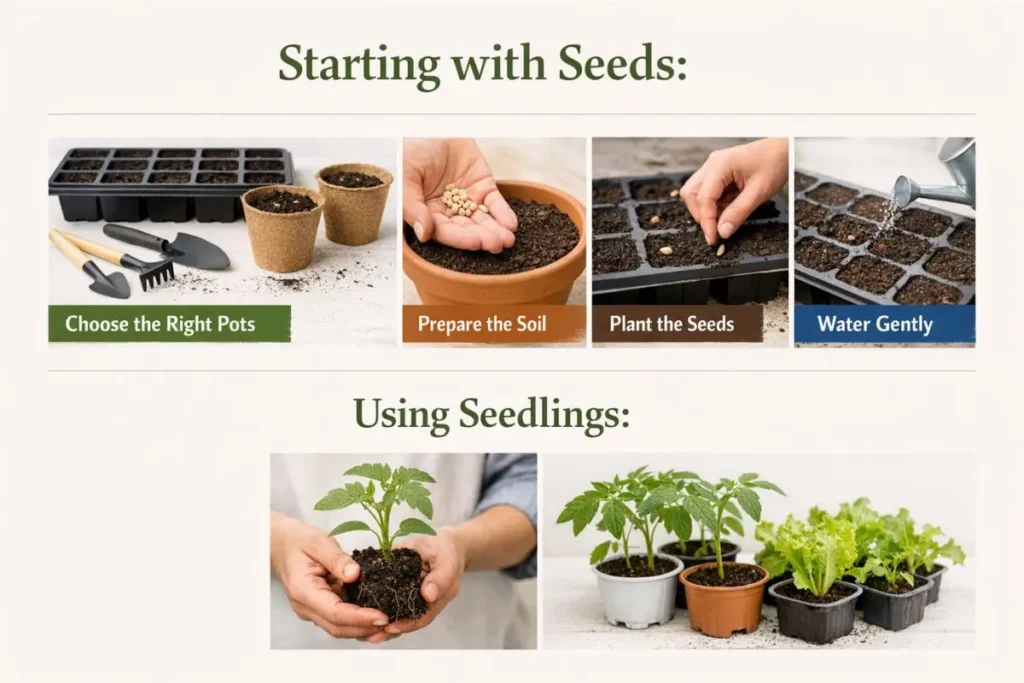
Whether you’re starting from seeds or using young seedlings, the planting process is pretty straightforward. Here’s how you can plant your vegetables indoors for the best results:
Starting with Seeds:
- Choose the Right Pots: Use shallow trays or small pots with drainage holes to start your seeds.
- Prepare the Soil: Fill your pots with a well-draining potting mix and press it down lightly.
- Plant the Seeds: Follow the seed packet instructions for the ideal planting depth (usually around 1/4 inch deep).
- Water Gently: After planting, water gently, keeping the soil moist but not waterlogged.
Using Seedlings:
For seedlings, make sure to plant them at the same depth they were in their original containers. Water them thoroughly after planting to help them settle into their new home.
Watering & Sunlight:
Sunlight:
Most vegetables need at least 6 hours of sunlight per day to thrive. Position your plants near a south-facing window or use grow lights to make sure they’re getting enough light. During the darker months, using artificial lights will help keep your plants happy and productive.
Watering:
Watering is crucial but can be tricky. The goal is to keep the soil consistently moist without making it soggy.
- For Seedlings: Keep the soil moist like a wrung-out sponge. Water when the top inch of the soil starts to feel dry.
- For Growing Plants: Water deeply once a week. During hotter months, you may need to water more often.
- For Mature Plants: By now, your veggies should require less frequent watering. Water only when the top inch of soil feels dry.
Feeding Your Plants:
Indoor vegetables need nutrients to grow strong, and fertilizers can help provide them. Organic options like compost, worm castings, or fish emulsion offer slow-releasing nutrients, while synthetic fertilizers act more quickly.
Types of Fertilizers:
- Compost: Slow-release, nutrient-rich, and great for long-term soil health.
- Fish Emulsion: Perfect for leafy greens, offering a gentle nutrient boost.
- Synthetic Fertilizers: Use a balanced 10-10-10 mix for general-purpose feeding.
When and How to Fertilize:
- Frequency: Apply fertilizer every 4–6 weeks. Avoid over-fertilizing as it can harm the plant and soil.
- Application Tips: Always water your plants before applying fertilizer to avoid burning the roots.
Pruning and Training:
Pruning and training your indoor vegetables is essential for healthy growth. Remove dead or yellowing leaves to prevent disease and encourage new growth. Support taller plants like tomatoes and cucumbers with stakes or cages to keep them upright.
Tips for Pruning:
- Tomatoes: Pinch off the tops of young plants to encourage branching.
- Cucumbers: Train them to grow vertically with a trellis.
- Leafy Greens: Trim the older leaves to allow fresh leaves to grow.
Seasonal Care:
Indoor vegetable gardens need specific care throughout the year.
Summer:
During the hot months, ensure your plants aren’t exposed to extreme heat. Use sheer curtains to protect them from direct sunlight.
Winter:
In winter, supplement natural sunlight with grow lights and use a humidifier if the air in your home is dry.
Spring & Rainy Season:
In spring, reduce watering if your plants are getting enough moisture from rain. Be mindful of high humidity and air circulation.
What to Expect Month-by-Month
- Month 1 (Planting): Seedlings are getting used to their new home. Keep them warm and well-lit.
- Month 2-3 (Growth): Vegetative growth is in full swing. Continue feeding and watering.
- Month 4-5 (Maturity): Flowers or fruits begin to appear. Watch for pests and continue regular care.
- Month 6 (Harvest): You’ll start harvesting your veggies, enjoying the fruits of your labor.
Common Mistakes and Gardening Myths
- Over-watering: Always check the soil before watering to avoid root rot.
- Incorrect Pot Size: Make sure your pots are large enough for the plants’ roots.
- Ignoring Pests: Always inspect your plants for signs of pests, especially aphids or whiteflies.
Busting Common Myths:
- “Indoor plants don’t need much light.” Even indoors, most plants require substantial sunlight or grow lights.
- “All vegetables grow well in containers.” Some vegetables, like large tomatoes or melons, need more space than small pots provide.
Pest Control:
How to Tackle Pests and Diseases
- Aphids: Remove them with a strong water spray or use neem oil.
- Whiteflies: Use sticky traps or insecticidal soap to keep them under control.
Organic Solutions:
- Neem oil, garlic spray, and insecticidal soap are all great ways to handle pests without resorting to chemicals.
Harvesting:
- Tomatoes: Wait until they’re fully colored before harvesting. Cut them off with pruning shears.
- Lettuce: Harvest by picking outer leaves, leaving the center to continue growing.
Ongoing Care:
Keep monitoring your plants for pests and signs of nutrient deficiencies to ensure they continue producing.
FAQ:
Q: How much space do I need?
Even a small windowsill can be enough for growing veggies like lettuce, herbs, and peppers.
Q: Can I grow vegetables all year round?
Yes, with the right care, many vegetables can thrive indoors year-round.
Q: Do indoor vegetables need special fertilizers?
You can use both organic and synthetic fertilizers. Just be sure not to over-fertilize.