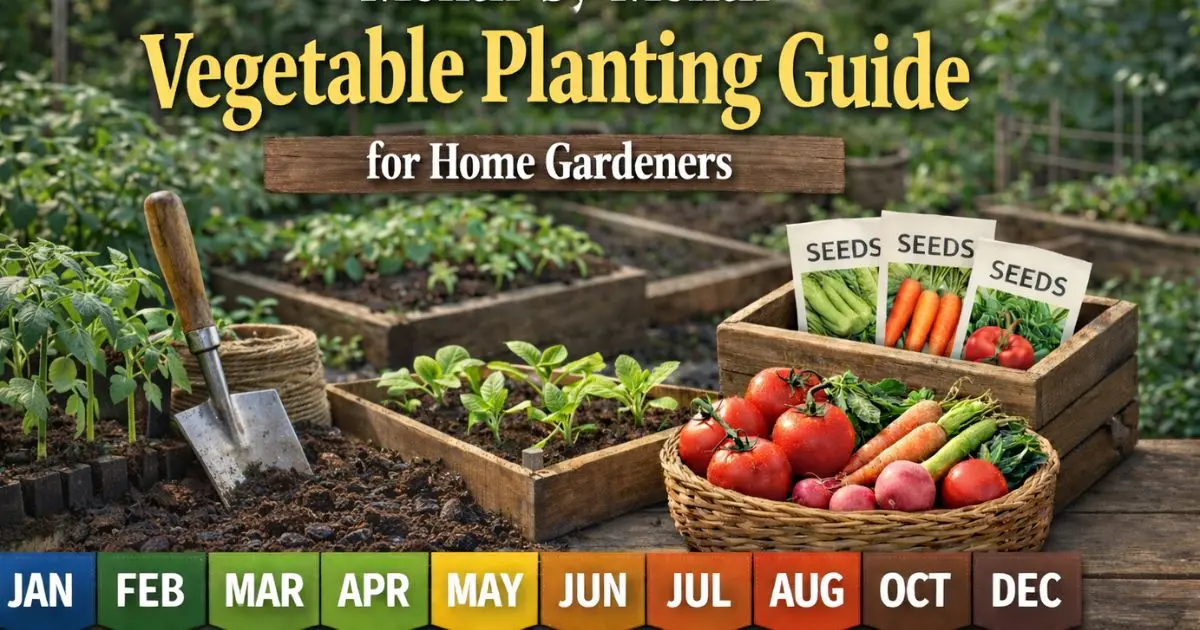
Gardening is one of the most fulfilling hobbies, especially when you’re growing your own food. If you’re a home gardener with a backyard or terrace, you have the opportunity to cultivate fresh, healthy vegetables right at your fingertips. This comprehensive guide will help you plant, care for, and harvest vegetables month by month, offering expert advice, practical tips, and clear instructions to make your gardening journey a success.
Why Grow Vegetables at Home?
There’s something deeply satisfying about growing your own food. Home-grown vegetables taste better, cost less, and are free from the pesticides and chemicals often found in store-bought produce. Plus, it’s an activity that connects you to nature, gives you fresh air, and provides a sense of accomplishment.
By growing vegetables at home, you can take pride in knowing exactly where your food comes from, and it doesn’t get fresher than picking a tomato right off the vine or harvesting crisp lettuce for your salad.
Climate and Growing Conditions:
Before you jump into planting, it’s essential to understand your garden’s climate. Knowing your region’s growing season, temperature range, and the specific needs of each vegetable will ensure your plants grow strong and healthy.
Ideal Climate Zones for Vegetable Growing
Vegetables generally fall into three categories based on their climate preferences:
- Cool-season vegetables: These include crops like lettuce, peas, spinach, and broccoli. They thrive in cooler weather and are best planted early in spring or late in fall.
- Warm-season vegetables: Crops like tomatoes, peppers, beans, and squash require heat and should be planted once the last frost has passed.
- Tropical vegetables: Crops such as sweet potatoes, okra, and eggplant love hot and humid conditions, which are ideal for regions like Pakistan and India.
Microclimates and Garden Zones
In addition to overall climate, every garden has microclimates. A microclimate is a localized area within your garden that may have slightly different growing conditions than the rest. For example, a sunny corner might be perfect for heat-loving crops like tomatoes, while a shaded area could be ideal for leafy greens like spinach. Understanding these microclimates will allow you to plant vegetables where they’ll thrive.
Soil Preparation:
Soil is the lifeblood of your garden. To give your vegetables the best chance to succeed, it’s essential to prepare your soil properly.
Soil Type and pH
Most vegetables thrive in loamy soil, which balances moisture retention and drainage. This type of soil is ideal for growing a wide range of vegetables.
- Soil pH should generally be between 6.0 and 7.0 for most vegetables. To test your soil’s pH, you can use a soil test kit. If your soil is too acidic (below 6.0), add lime to raise the pH. If it’s too alkaline (above 7.0), incorporate compost or sulfur to lower the pH.
Organic Amendments
Amend your soil with organic matter like compost, well-rotted manure, or leaf mold to improve soil structure and nutrient content. Aim to add about 2-3 inches of organic material to the top 6 inches of soil before planting.
Planting Guide: Step-by-Step Instructions
Now that your soil is prepared, it’s time to plant! Whether you’re sowing seeds, planting saplings, or using cuttings, follow these guidelines for successful planting.
Planting Seeds
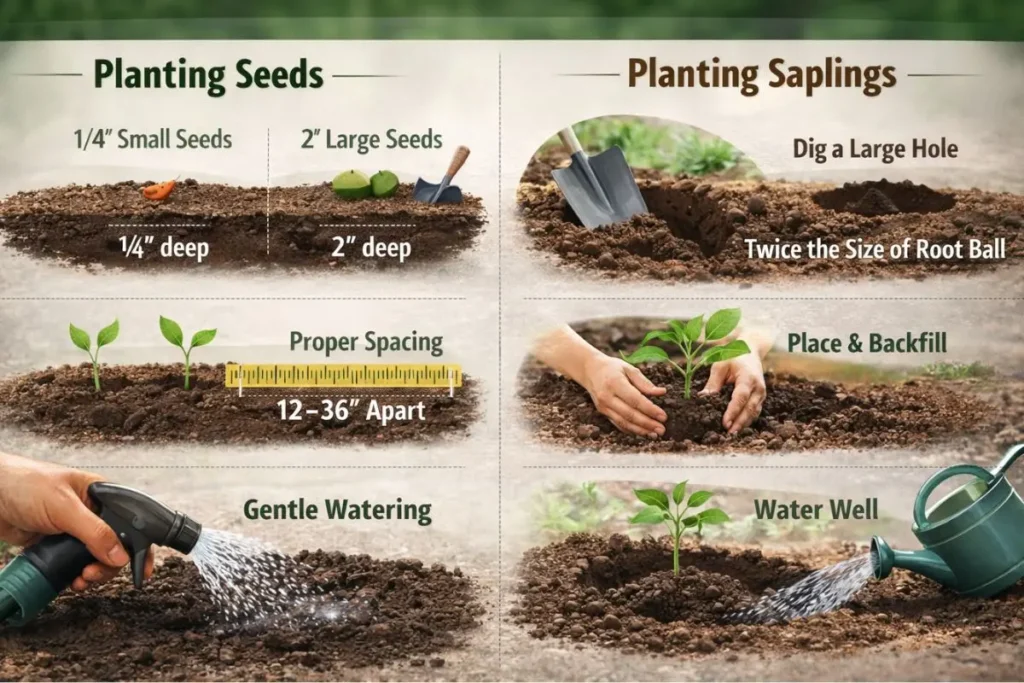
- Depth and Spacing: The planting depth varies depending on the size of the seed. For small seeds like carrots, plant them about 1/4 inch deep. Larger seeds, like beans, should be planted 2 inches deep. Be sure to check the seed packet for specific recommendations.
- Spacing: Proper spacing is crucial for plant health. Most vegetables need between 12–36 inches between rows, depending on their size.
- Watering: After planting, water gently to keep the soil moist but not soaked. Use a fine spray to avoid disturbing the seeds.
Planting Saplings
For saplings or young plants, follow these steps:
- Digging the Hole: Dig a hole that is twice the size of the root ball. This will give the roots plenty of room to spread out.
- Placing the Plant: Remove the sapling from its container, place it in the hole, and backfill with soil. Make sure the plant is level with the surrounding ground.
- Watering: Water well to settle the soil around the roots and eliminate air pockets.
Sunlight and Watering:
Sunlight and water are the building blocks of healthy plants. Without them, even the best soil and care won’t yield results.
Sunlight Requirements for Vegetables
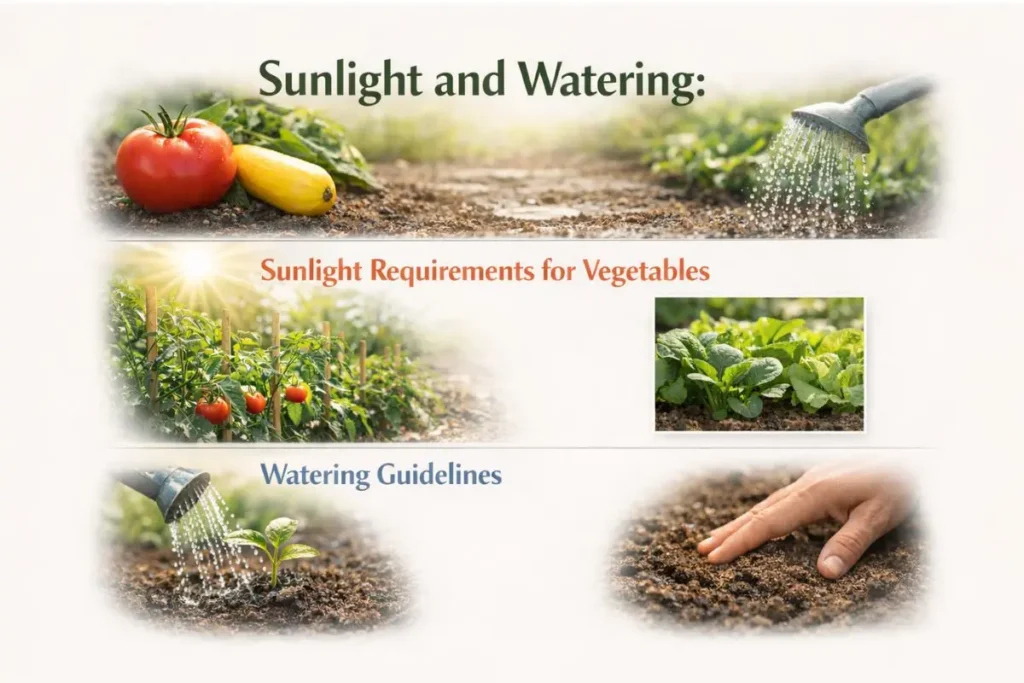
- Most warm-season vegetables like tomatoes, peppers, and squash require full sun—at least 6–8 hours of direct sunlight daily.
- Cool-season crops like spinach, lettuce, and peas can tolerate partial shade and may even benefit from it during the hottest part of the day.
Watering Guidelines
- For seedlings: Keep the soil consistently moist, but not waterlogged. Water when the top 1 inch of soil feels dry.
- For established plants: Water deeply, ensuring the soil reaches the root zone. A good guideline is to water once a week deeply, especially during dry spells. The soil should feel like a wrung-out sponge—moist but not soggy.
Tip: Water early in the morning to prevent fungal diseases and help plants use the moisture effectively.
Fertilization:
Just like us, vegetables need nutrients to thrive. Proper fertilization ensures that your plants have the fuel they need to grow big and healthy.
Organic vs. Synthetic Fertilizers
- Organic fertilizers like compost, fish emulsion, or bone meal release nutrients slowly and improve soil health over time.
- Synthetic fertilizers provide a quick nutrient boost but can burn plants if used improperly. Always follow the recommended dosage and application instructions.
- When to Fertilize
- Before planting: Mix compost or a balanced fertilizer into the soil before planting to give your vegetables a strong start.
- During the growing season: Apply a side dressing of fertilizer midway through the growing season, especially for heavy feeders like tomatoes and peppers.
Mulching and Moisture Control:
Mulch is a gardener’s best friend. Not only does it enhance the appearance of your garden, but it also provides numerous benefits for your plants.
Benefits of Mulch
- Moisture retention: Mulch helps keep the soil moist by reducing evaporation.
- Weed suppression: It acts as a barrier to prevent weed seeds from sprouting.
- Temperature regulation: Mulch helps keep the soil cool during hot summer months and insulates it during winter.
How to Apply Mulch
- Types of mulch: Use organic mulch such as straw, grass clippings, or wood chips. These decompose over time, enriching your soil.
- How much to apply: Spread a 2- to 3-inch layer of mulch around your plants, keeping it a few inches away from the plant stems to prevent rot.
Pruning and Training:
Pruning and training your plants properly helps them grow stronger and more productive.
Pruning Tips
- Tomatoes: Remove side shoots (suckers) to improve airflow and focus the plant’s energy on fruit production.
- Cucumbers: Prune the side shoots to encourage vertical growth and reduce crowding.
Training Plants
- Peas and beans: Use a trellis or stakes to train the plants to grow upward, saving space in the garden.
- Tomatoes: Use stakes or cages to keep the plants upright and avoid diseases by promoting good air circulation.
Seasonal Care:
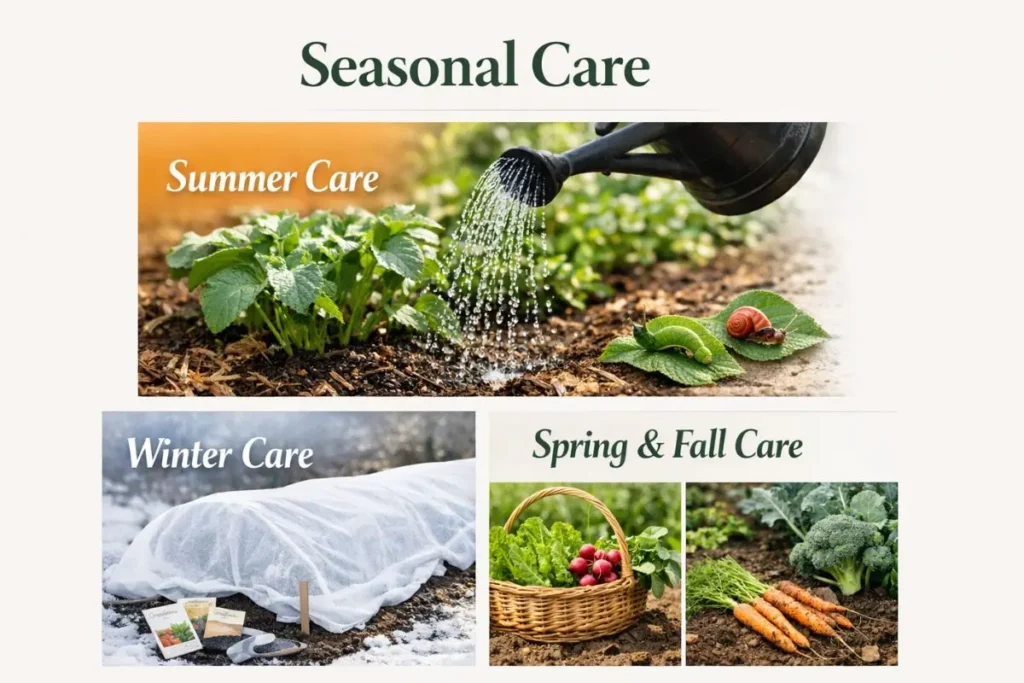
Each season requires different tasks, and knowing what to focus on at each time of the year ensures success.
Summer Care
- Watering: Deep watering is essential, especially during heat waves.
- Mulching: Keeps the soil cool and retains moisture.
- Keep an eye on pests like aphids, caterpillars, and snails.
Winter Care
- Row covers can protect plants from frost.
- Plan for the next planting season by ordering seeds and improving soil health.
Spring and Fall Care
- Spring: Plant cool-season vegetables like peas, lettuce, and radishes. Prepare soil for warm-season plants.
- Fall: Plant fall vegetables like broccoli and carrots, and clean up spent crops to avoid
What to Expect Each Month
January to February
- Start seeds indoors for early crops like onions and lettuce.
- Prepare your garden beds by adding compost or organic matter to the soil.
March to April
- Plant cool-season crops outdoors (peas, lettuce, radishes).
- Harden off seedlings by gradually introducing them to outdoor conditions.
May to June
- Plant warm-season crops like tomatoes, peppers, and cucumbers.
- Keep an eye out for pests and diseases.
July to August
- Water deeply during hot weather to keep plants hydrated.
- Harvest tomatoes, peppers, beans, and other summer crops as they ripen.
September to October
- Plant fall crops like kale, broccoli, and carrots.
- Clean up the garden to prepare for winter.
November to December
- Protect tender plants from frost using row covers.
- Plan and order seeds for the next gardening season.
Common Mistakes to Avoid
- Overwatering: Plants need moisture, but too much water can suffocate the roots. Make sure the soil is well-drained and only water when necessary.
- Crowding: Plants need space to grow. Overcrowded plants are more susceptible to diseases.
- Neglecting pests: Early intervention is key. Regularly inspect your plants for pests.
Pests and Diseases:
Common Pests
- Aphids: Tiny, soft-bodied insects that suck plant sap. Wash them off with a blast of water or use insecticidal soap.
- Caterpillars: Hand-pick them off your plants or use an organic pesticide.
Diseases to Watch For
- Powdery Mildew: A fungal disease that thrives in humid conditions. Water at the base of the plant and avoid overhead watering.
- Blight: Remove infected leaves immediately to prevent it from spreading.
Harvesting Your Vegetables
The timing of your harvest can make a huge difference in the flavor and quality of your vegetables. For most vegetables, harvest in the morning when temperatures are cooler and plants are fully hydrated.
Be sure to handle plants gently during harvesting, using sharp scissors or pruners to cut fruits and leaves. Over-harvesting can stress plants, so be mindful of how much you take at once.