In today’s world, conserving water in the garden is not only a matter of practicality but also one of necessity. As gardeners, it’s our responsibility to ensure our plants thrive while using fewer resources. This guide provides you with expert-approved tips and techniques for Water-Smart Gardening. From choosing the right plants to perfecting your watering it, this article has you covered.
Water Conservation Starts with the Right Plants
Select Water-Efficient Plants
The foundation of a water-efficient garden begins with selecting the right plants. Look for drought-tolerant varieties that can thrive with minimal water once established. For example, succulents like aloe vera and agave store moisture in their leaves, making them ideal for dry gardens. In regions with high temperatures, plants such as lavender and rosemary can also flourish with less frequent watering.
Understanding Your Garden’s Microclimate
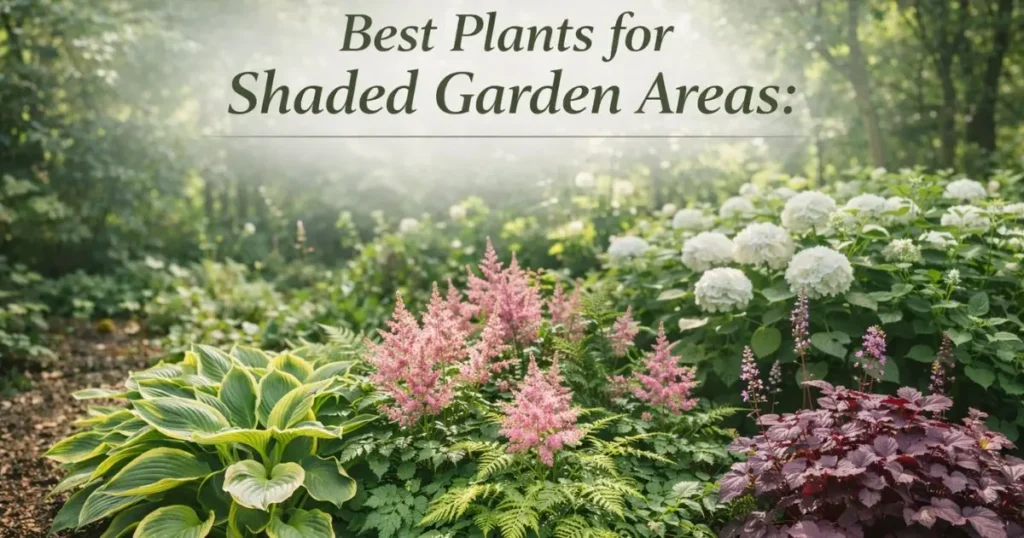
Each garden has its own microclimate, which can greatly affect how much water your plants need. For instance, areas near walls or fences tend to be warmer, while shaded spots may retain moisture longer. Before planting, assess different parts of your garden and place drought-resistant plants in sunny, wind-exposed areas where they’ll thrive with less water.
Crafting the Perfect Soil for Water Efficiency
Soil Type & Structure Matters
Loamy, well-drained soil is your best friend when it comes to retaining water. Sandy soil, on the other hand, drains too quickly and may require extra organic matter to help it hold moisture. Adding compost, organic mulch, or well-rotted manure will improve the soil’s moisture-retention capacity.
Balance Your Soil’s pH and Drainage
For optimal water conservation, keep your soil pH balanced around 6 to 7. This ensures that your plants absorb nutrients effectively without wasting water. Also, make sure the soil drains well to avoid waterlogging. Adding mulch on top can also help retain moisture, regulate soil temperature, and prevent weeds from using up precious water.
Watering Techniques That Save Water
The Power of Deep Watering
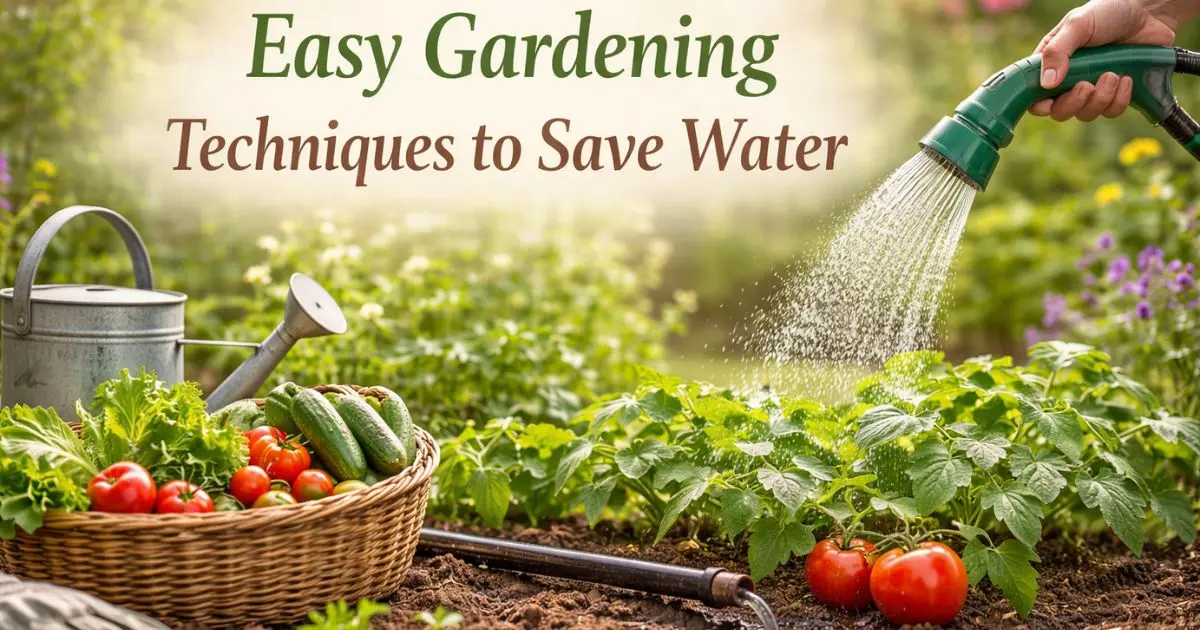
Watering correctly is one of the most important aspects of conserving water. A deep watering routine is better than frequent, shallow watering, as it encourages your plants to grow deeper roots that are better equipped to access moisture deep within the soil.
- For Seedlings: Water lightly, ensuring the soil stays moist but not soaked.
- For Established Plants: Once plants are well-established, water deeply but less frequently (once every 3-4 days).
- For Mature Plants: Water once a week or more, depending on weather conditions. Check soil moisture by feeling the soil with your finger — it should feel like a wrung-out sponge when it’s time to water.
Maximize Water Efficiency with Mulch
Why Mulch Is a Gardener’s Best Friend
Mulching is one of the simplest yet most effective ways to conserve water in the garden. Mulch acts as a barrier that slows water evaporation, keeping your soil moist longer. It also helps to moderate soil temperatures and prevents weed growth, which competes for water.
- Organic Mulch: Use materials like leaves, straw, or wood chips, which gradually decompose and improve soil health.
- Inorganic Mulch: Gravel or pebbles are perfect for heat-loving plants and can help retain moisture around plant roots.
Choosing the Right Fertilization
How its Affect Water Conservation
Both organic and synthetic fertilizers can play a role in water conservation. Organic fertilizers release nutrients gradually, making them ideal for plants in water-efficient gardens. On the other hand, synthetic fertilizers might cause a quick nutrient boost but can lead to nutrient runoff if used in excess.
Timing and Method
Apply fertilizers at the beginning of the growing season to give your plants a good start. Use slow-release fertilizers to avoid wastage and over-fertilization. Over-fertilizing plants can lead to excess water usage, so it’s important to apply the right amount at the right time.
Pruning and Plant Training:
Efficient Pruning Techniques
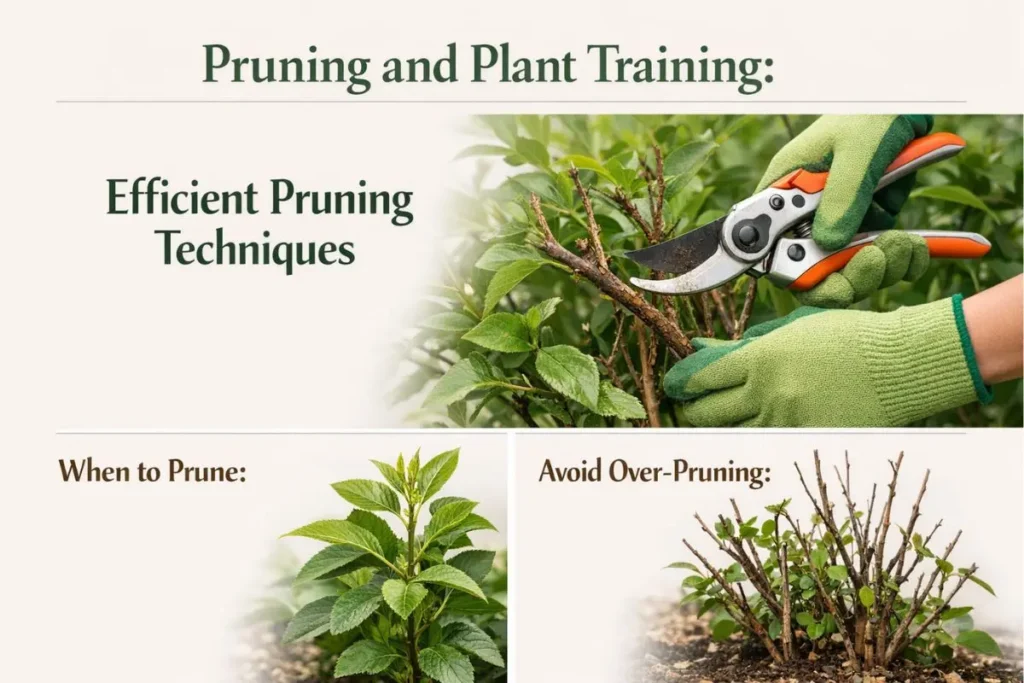
Proper pruning can help your plants use water more effectively by ensuring they maintain a healthy structure. Removing dead or diseased branches allows water to flow more efficiently through the plant.
- When to Prune: Prune your plants early in the growing season to encourage strong, healthy growth.
- Avoid Over-Pruning: Removing too much foliage can stress your plants and make them more dependent on water.
Adjusting to the Seasons:
Watering During Hot Summer Months
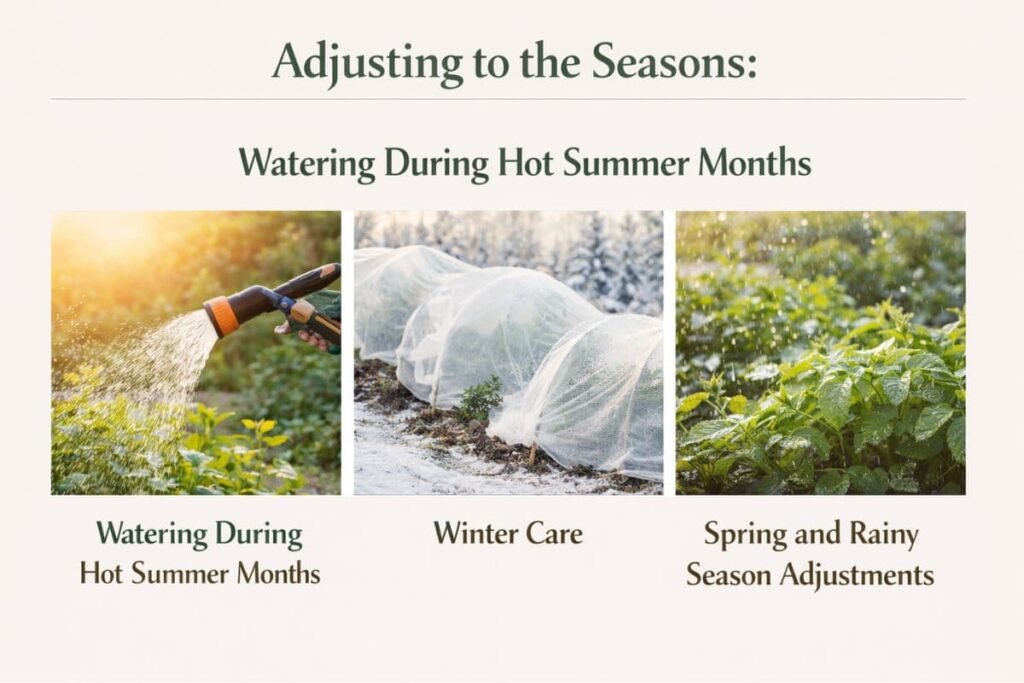
Summer heat can make water conservation even more important. Water your garden early in the morning or late in the evening when evaporation rates are lower. This ensures that your plants get the water they need without losing it to the sun.
Winter Care
During winter, you don’t need to water as often, but make sure to protect your plants from frost. Use row covers to shield them from cold winds and temperature drops.
Spring and Rainy Season Adjustments
During the rainy season, avoid over-watering, as your plants might be getting enough water from the rainfall. Adjust your watering schedule accordingly.
Common Mistakes to Avoid
Overwatering vs. Underwatering
- Overwatering: Many gardeners make the mistake of watering too much. This can lead to shallow roots and root rot, making plants more susceptible to stress.
- Underwatering: While less common, underwatering can also harm your plants. The key is to find the right balance.
Fertilizer Missteps
Over-fertilizing plants can waste water and cause nutrient imbalances. Stick to the recommended dosage, and be cautious about applying fertilizers during very hot or rainy periods.
Protecting Your Garden from Pests and Diseases
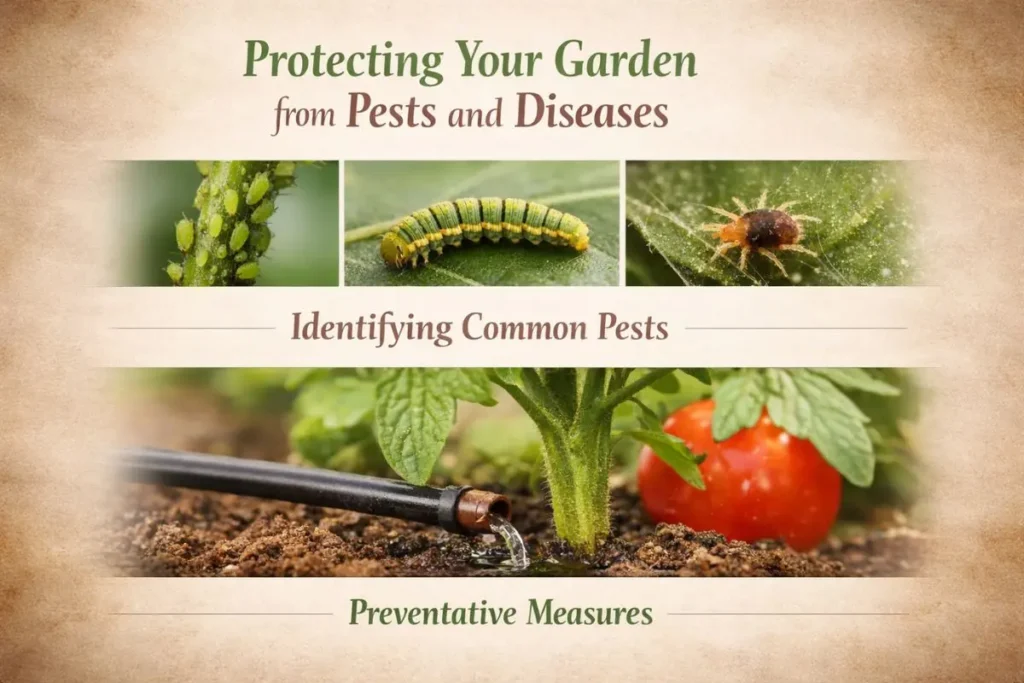
Identifying Common Pests
Pests like aphids, caterpillars, and spider mites are common in water-efficient gardens. To control them, use natural remedies like neem oil or insecticidal soap. Ensure that plants have good air circulation to prevent fungal diseases.
Preventative Measures
Prevent diseases by watering directly at the roots, using drip irrigation, and avoiding overhead watering, which can encourage mold and mildew growth.
Harvesting and Long-Term Care
Harvesting with Care
Once your plants are ready to harvest, ensure that you handle them gently to avoid damaging them and wasting water. Pick fruits and flowers at their peak to get the most out of your garden.
Long-Term Plant Care
Long-term care includes occasional pruning, replenishing mulch, and making sure that your soil remains healthy. Even in water-efficient gardens, a little bit of extra care can go a long way.