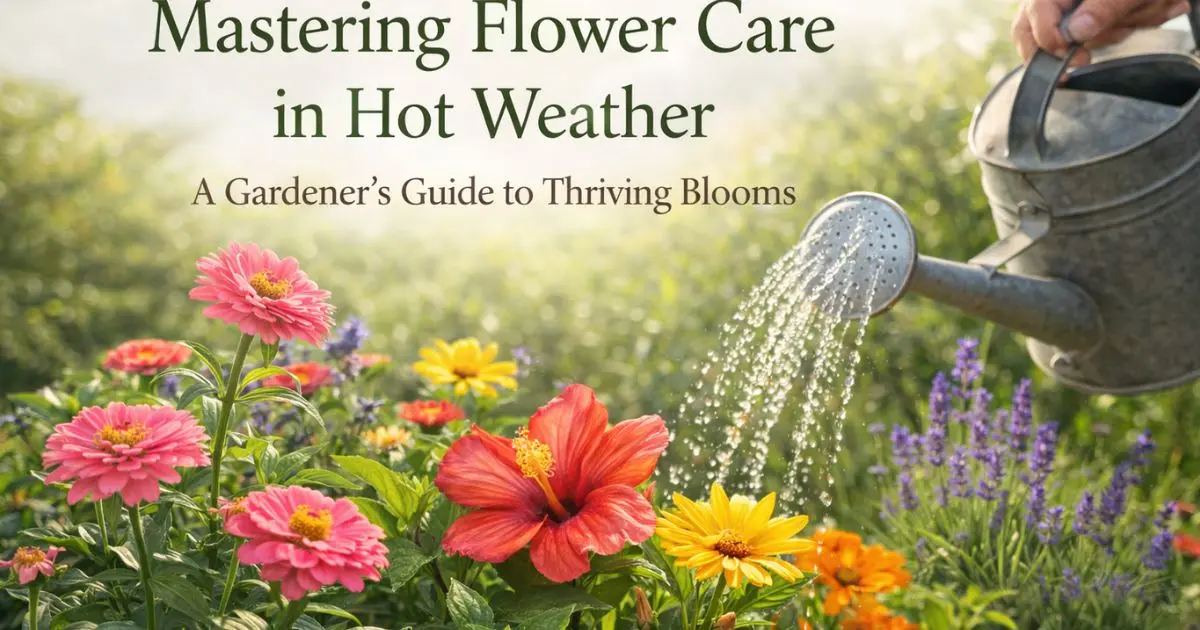
Summer heat can be both a blessing and a challenge for gardeners. While flowers bloom, intense temperatures can harm your plants. If you’re struggling with flower care in hot weather, don’t worry! With the right tips, your flowers can thrive in the heat.
In this guide, I’ll share practical tips for flower care in hot weather, from soil prep to watering and pruning. Whether you have a small terrace or a large backyard, these tips will help your blooms flourish. Let’s dive in!
Choosing the Right Flowers for Hot Weather
The first step in ensuring a successful hot-weather garden is to choose flowers that can handle the heat. Not all flowers are made equal when it comes to heat tolerance, so make sure to pick varieties that can thrive in your specific climate.
Heat-Tolerant Flower Varieties
Certain flowers love the sun and will bloom profusely even in high heat. Some great choices for hot climates (such as those in Pakistan, India, and the Middle East) include:
- Bougainvillea: This plant is incredibly resilient and thrives in full sun.
- Marigolds: These vibrant annuals are perfect for hot weather and even tolerate dry spells.
- Zinnias: Known for their vibrant blooms, zinnias love the heat and will bloom all summer long.
- Salvia: These hardy perennials not only handle heat but also offer continuous blooms.
Choosing plants that naturally thrive in your climate will save you a lot of stress during the hot months.
Preparing Your Soil for Hot Weather Flowers
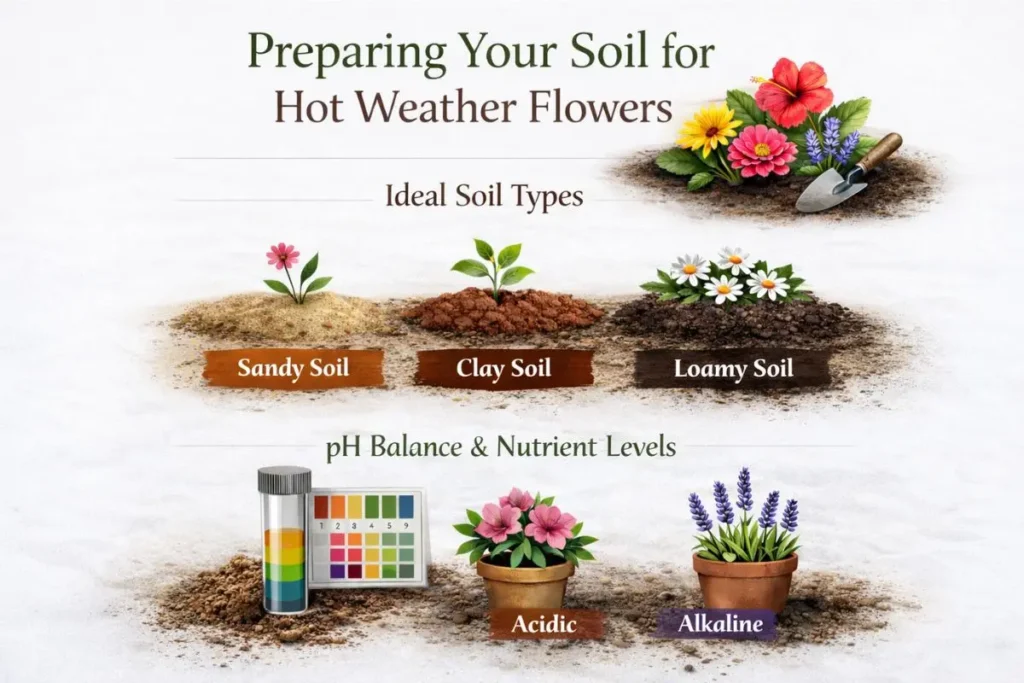
The secret to thriving flowers in the heat is in the soil. Flowers need well-draining soil that can retain enough moisture to keep their roots cool and hydrated. Here’s how to make your soil work harder for you.
Ideal Soil Types
- Sandy Soil: While it drains well, it doesn’t retain enough moisture. Add organic compost to help it hold onto water better.
- Clay Soil: Tends to hold water, but too much moisture can suffocate plant roots. Incorporating organic matter will improve drainage.
- Loamy Soil: The gold standard for most flowers! It retains moisture while allowing for good drainage. Adding compost or organic fertilizers will keep it nutrient-rich.
pH Balance and Nutrient Levels
Most flowers do well in slightly acidic to neutral soil (pH 6.0 to 7.0). If you’re unsure about your soil’s pH, consider getting a test kit from your local garden center. For plants like azaleas, the soil should be more acidic, while others like lavender prefer alkaline soil.
Planting Flowers: Best Practices for Hot Weather
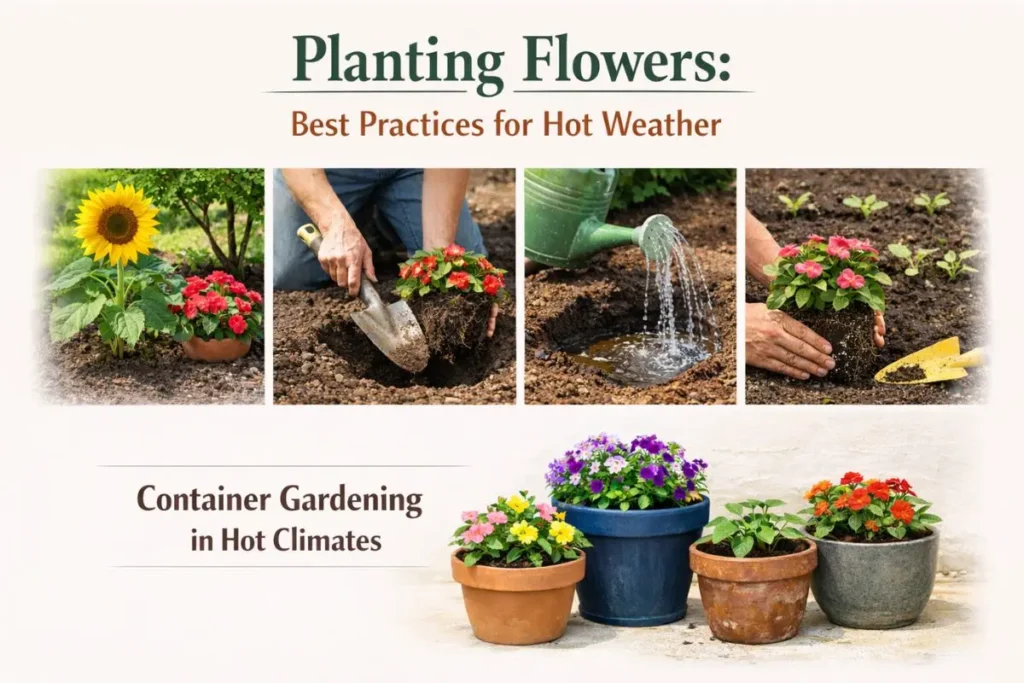
Once your soil is prepared, it’s time to plant. Hot weather can stress plants out, so it’s crucial to follow the right planting techniques.
Step-by-Step Guide to Planting Flowers
- Choose the Right Spot: Some flowers need full sun to thrive, while others perform better in partial shade. For example, sunflowers love full sun, but begonias do better with a little afternoon shade.
- Dig the Right Hole: The hole should be about twice the size of the root ball to give the roots enough space to grow.
- Water Before Planting: Water your flowers well before planting. This will reduce transplant shock and give the roots a good start.
- Proper Depth: Plant the root ball level with the soil surface. If you plant too deep, the plant may struggle to grow.
- Spacing: Ensure there’s adequate space between plants for air circulation. This will help prevent diseases and encourage healthy growth.
Container Gardening in Hot Climates
If you’re growing flowers in pots or containers, choose ones with good drainage. Clay pots are beautiful but tend to dry out quickly, so make sure to check the moisture levels regularly. Also, larger containers retain moisture better and provide more space for root growth.
The Importance of Sunlight and Watering in Hot Weather
Hot weather means more sun, which your flowers need — but overexposure can quickly dehydrate them. Here’s how to balance their need for sunlight with the requirement for regular watering.
Sunlight Requirements
Most flowers thrive in full sunlight, typically around 6-8 hours of direct light a day. However, some heat-sensitive varieties may need shade during the afternoon, when the sun is at its strongest. For example, impatiens do well with morning sunlight but can get scorched by the intense afternoon heat.
Watering in Hot Weather
During hot spells, watering is crucial to your flowers’ survival. Here’s how to make sure your flowers stay hydrated without overwatering:
- Seedlings: Water lightly every day to keep the soil moist, but not soggy. Seeds need consistent moisture to sprout.
- Established Plants: As the plants grow, water deeply once or twice a week. You want the moisture to reach the roots (around 6-8 inches deep).
- Mature Plants: For most perennials and annuals, deep watering once a week should be enough. Check if the soil feels like a wrung-out sponge — moist but not waterlogged.
Watering Tips
- Water early in the morning or late in the evening when the temperatures are cooler. This minimizes evaporation and ensures your flowers get the most out of each watering session.
- Water deeply, but less frequently. This encourages the roots to grow deeper into the soil, making the plant more drought-resistant in the future.
Fertilizing Flowers for Maximum Growth
Hot weather can sap the nutrients in your soil quickly, so it’s important to fertilize your flowers properly to give them the nutrients they need.
Organic vs. Synthetic Fertilizers
- Organic Fertilizers: Compost and natural fertilizers are great for hot-weather flowers. They provide slow, steady nutrition without the risk of burning your plants.
- Synthetic Fertilizers: These give plants a quick nutrient boost but must be applied carefully to avoid over-fertilizing. Choose a balanced fertilizer with equal parts nitrogen, phosphorus, and potassium (NPK).
How to Fertilize
- Before Planting: Mix compost into the soil before planting to ensure a strong foundation for your flowers.
- During the Growing Season: Fertilize every 4-6 weeks to keep your flowers healthy and blooming.
Mulching and Soil Management for Hot Weather
One of the simplest yet most effective ways to protect your flowers in hot weather is by using mulch. It helps retain moisture, keeps soil temperature stable, and prevents weed growth.
Best Mulching Practices
- Apply a 2-3 inch layer of organic mulch (such as bark, straw, or shredded leaves) around your flowers.
- Make sure the mulch doesn’t touch the plant stems to prevent rot.
Pruning & Shaping Your Flowers
Pruning is an essential task to keep flowers healthy and encourage continuous blooming, especially in hot weather.
Pruning Techniques
- Deadheading: Remove dead or faded flowers regularly. This helps the plant direct its energy into new growth and blossoms.
- Cutting Back: Prune away any dead or damaged growth to encourage healthy new shoots.
- Support for Taller Plants: Use stakes or cages for plants like roses and peonies, which can get heavy with blooms and may flop over in high winds.
Seasonal Care: Adapting to Changing Conditions
Summer Care
- Provide Shade: Use shade cloth or plant taller plants to protect more delicate varieties during the hottest parts of the day.
- Check Soil Moisture: Keep the soil consistently moist but never waterlogged.
Fall and Winter
- Prepare for Cold: As temperatures drop, prune back any dead foliage and cover your plants with protective layers if necessary.
- Adjust Watering: Reduce watering in cooler months, but make sure the soil doesn’t dry out completely.
Avoiding Common Mistakes in Hot Weather Gardening
- Overwatering: It’s easy to overcompensate during hot weather. Always check the soil moisture before watering to avoid waterlogging.
- Too Much Fertilizer: Over-fertilizing can burn your flowers. Stick to the recommended amounts and schedule.
- Not Considering Microclimates: Not all parts of your garden are the same. Pay attention to which areas get more sun or shade and plan your planting accordingly.
Protecting Flowers from Pests & Diseases
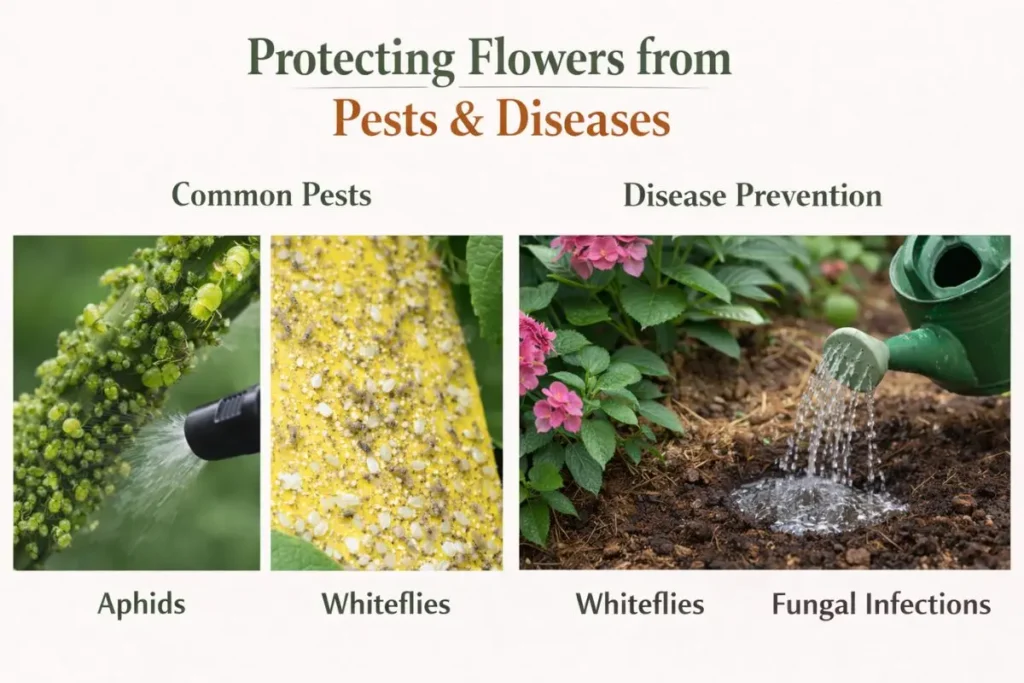
Pests and diseases are more common in hot weather, so keep an eye on your plants.
Common Pests
- Aphids: These tiny bugs can stress your plants by sucking out their sap. Spray them off with a mix of water and dish soap.
- Whiteflies: Use yellow sticky traps to capture them or apply neem oil for effective control.
Disease Prevention
- Fungal Infections: Water at the base of the plant, avoiding wetting the leaves. This helps prevent fungal diseases like powdery mildew.