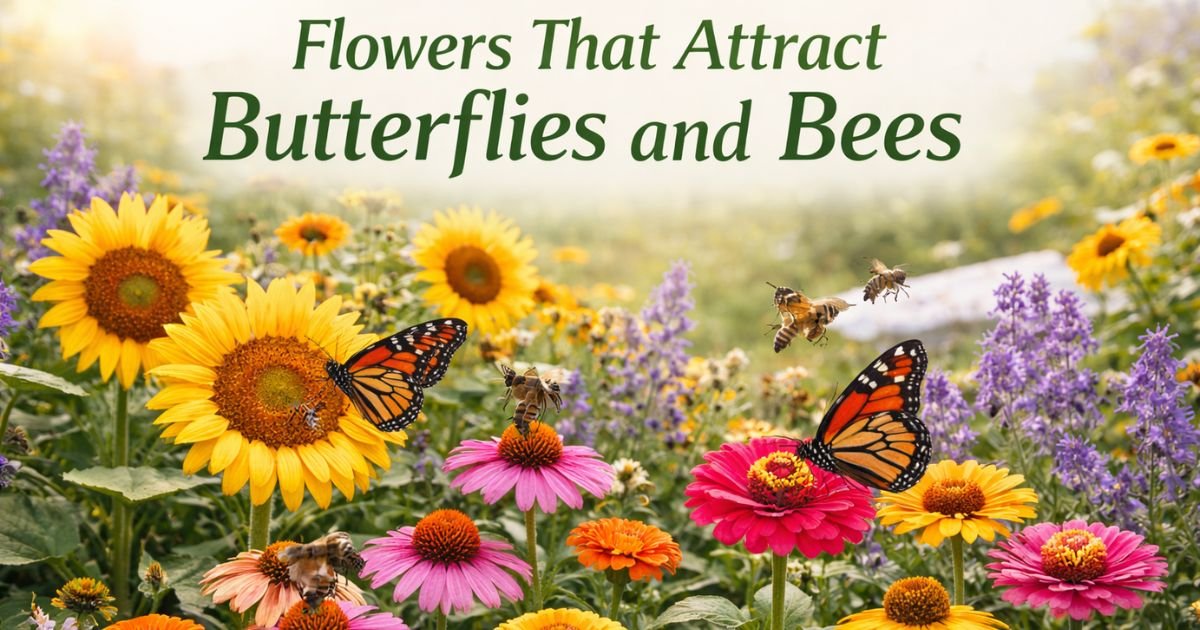
A beautiful garden isn’t just about aesthetics — it’s about creating a thriving ecosystem that supports local wildlife. If you want to make your garden a haven for butterflies and bees, planting the right flowers is the key. These pollinators not only enhance the beauty of your garden but also help your plants grow and flourish. This guide will walk you through everything you need to know about planting flowers that attract butterflies and bees — from choosing the right varieties to providing the best care.
Why Butterflies and Bees Matter in Your Garden
Imagine stepping into your garden, where the air buzzes with the sound of bees and butterflies flitting from flower to flower. These delightful creatures don’t just add life to your space — they’re essential for the health of your garden. Bees are the primary pollinators for many flowers, while butterflies also contribute to pollination. By planting flowers that attract these insects, you’ll create a more sustainable, vibrant garden. Plus, you’ll enjoy their beauty up close.
Choosing the Right Flowers:
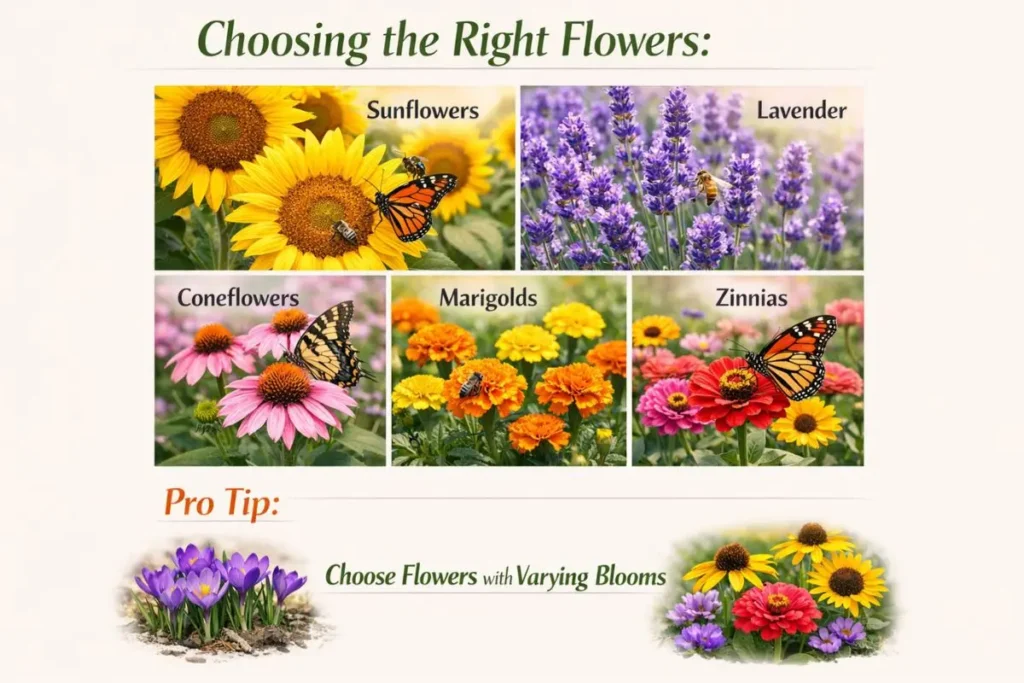
When selecting flowers to attract butterflies and bees, it’s important to consider the plants’ nectar and pollen production. Pollinators are drawn to plants that provide a consistent, rich source of food. Here are a few popular flower types that will draw bees and butterflies to your garden:
- Sunflowers: Known for their large, vibrant blooms, sunflowers are a favorite of both bees and butterflies.
- Lavender: This fragrant herb not only attracts pollinators but also repels pests.
- Coneflowers (Echinacea): These hardy perennials offer nectar for butterflies and seeds for birds.
- Marigolds: Bright and cheerful, marigolds are easy to grow and beloved by pollinators.
- Zinnias: Their vibrant colors are irresistible to butterflies, and they’re easy to grow from seed.
Pro Tip:
Choose Flowers with Varying Blooms
To keep your garden attractive to pollinators throughout the seasons, plant flowers that bloom at different times. Early spring flowers like crocuses and primroses will attract bees waking from hibernation, while summer bloomers like sunflowers and coneflowers will keep the pollinators coming back.
Best Climate for Pollinator-Friendly Flowers
The ideal climate for growing flowers that attract bees and butterflies largely depends on your region, but most of these plants thrive in temperate to warm climates. Here’s how you can make your garden more attractive to pollinators, no matter where you live:
- Warmer Regions: If you live in a hot climate like India or Pakistan, choose drought-tolerant flowers like lantana, marigold, and zinnia. These plants can handle the heat and provide nectar in abundance.
- Cooler Climates: For colder regions, consider planting perennials like lavender, echinacea, and milkweed, which will thrive in full sun but need a little extra protection from winter frost.
Create Microclimates in Your Garden
In any climate, you can improve the success of your plants by identifying the unique conditions in your garden. Some areas may get more sun, while others are more sheltered. Plant heat-loving flowers in full sun and shade-tolerant varieties in cooler, shaded areas.
Preparing the Soil:
The right soil is essential for healthy plants. If your flowers are healthy and thriving, they’ll be more appealing to pollinators. Here’s how to prepare the soil for your flowers:
- Well-Drained Soil: Most of the flowers that attract pollinators prefer well-drained, loamy soil. If your soil is too compact or sandy, you can improve it by adding compost or organic matter.
- pH Balance: Aim for a slightly acidic to neutral pH, around 6.0 to 7.0, which is ideal for most plants.
- Soil Amendments: Add compost to enrich the soil with nutrients. This helps improve the soil’s structure, making it easier for roots to grow and flowers to thrive.
Soil Preparation Tip:
If your soil tends to stay too wet, add organic material like compost or sand to improve drainage. Well-drained soil is crucial for preventing root rot and ensuring healthy, happy plants.
Planting Your Pollinator-Friendly Flowers
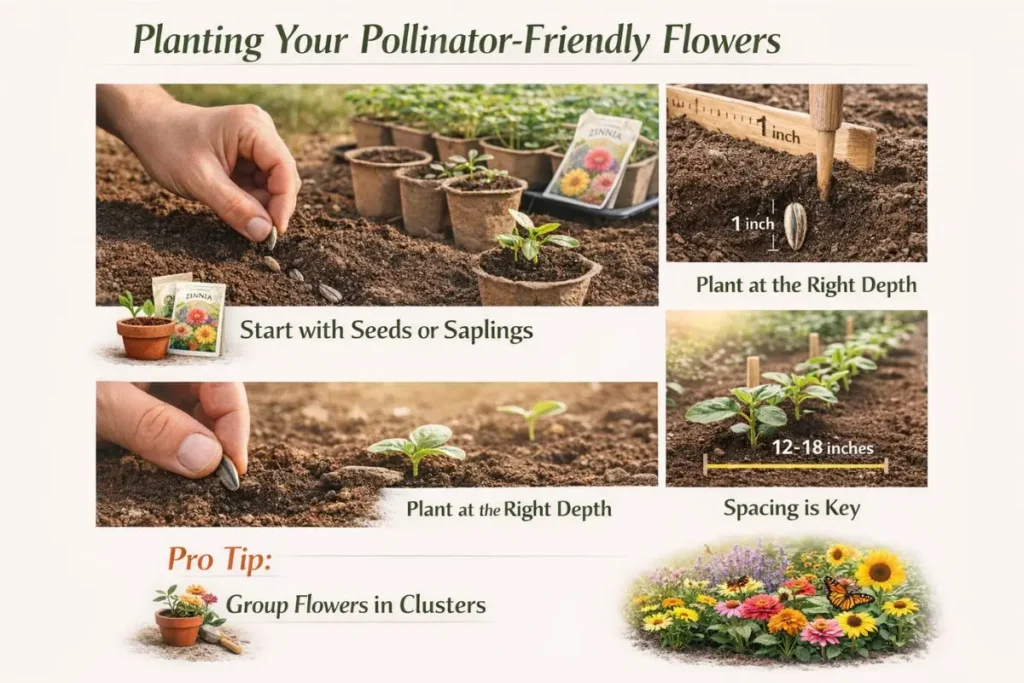
When it comes to planting flowers that attract butterflies and bees, following the correct steps ensures success. Here’s your planting guide:
- Start with Seeds or Saplings: Many flowers like sunflowers, marigolds, and zinnias can be started from seeds. For perennials like lavender and echinacea, start with saplings or cuttings.
- Plant at the Right Depth: Plant seeds about twice their size deep into the soil. Larger plants like sunflowers need a depth of about 1 inch, while smaller flowers like forget-me-nots should be planted shallower.
- Spacing is Key: Give each plant enough space to grow. This is important to prevent overcrowding, which can limit air circulation and encourage pests. Sunflowers, for example, should be spaced about 12-18 inches apart.
Pro Tip:
Group Flowers in Clusters
Instead of planting flowers individually, create clusters of the same species. Pollinators are more likely to visit a group of flowers in close proximity, which boosts their efficiency in pollinating your garden.
Sunlight & Watering
Pollinator-friendly flowers need plenty of sunlight and the right watering routine. Here’s how to keep them hydrated and happy:
- Sunlight: Aim for at least 6 hours of sunlight per day. Flowers like lavender and sunflowers thrive in full sun, while others like fuchsias prefer partial shade.
- Watering: Water your plants deeply but infrequently. Let the soil dry out slightly between waterings. For instance, water the plants deeply, ensuring the moisture reaches the roots. The soil should feel like a “wrung-out sponge” — not too wet but never completely dry.
Watering Tip:
A drip irrigation system is perfect for delivering water directly to the roots. This method ensures that your flowers get the right amount of moisture without the risk of over-watering.
Fertilizing Your Flowers
Pollinators love healthy, vibrant flowers, so providing the right nutrients is key. Here’s how to fertilize your plants:
- Choose Organic Fertilizers: Organic options like compost, worm castings, or fish emulsion are slower-acting and better for the environment.
- When to Fertilize: Apply fertilizer in early spring when the plants are starting to grow. Avoid over-fertilizing, as too many nutrients can lead to excessive foliage growth and fewer blooms, which is less appealing to pollinators.
Fertilizing Tip:
Over-fertilizing can lead to leggy, weak plants that are less attractive to pollinators. Follow the recommended doses, and always feed during the growing season, not during flowering.
Mulching & Soil Management:
Mulch helps retain moisture, keeps weeds at bay, and provides nutrients. Here’s how to use it effectively:
- Apply Mulch: Spread a 2-3 inch layer of organic mulch around your flowers to keep the soil moist and cool. Materials like wood chips, bark, and straw work best.
- Weed Control: While mulch helps suppress weeds, you should still monitor for any aggressive weeds. Hand-pulling is the best solution for removing them without disturbing your flowers.
Mulching Tip:
When mulching, don’t pile it directly against the stems of your flowers. This can encourage rot. Keep the mulch a few inches away from the base of the plant.
Pruning:
Pruning is essential for keeping your flowers healthy and encouraging more blooms. Here’s how to prune:
- Prune After Blooms Fade: For most flowering plants, it’s best to prune after the blooms fade. This helps encourage new growth.
- Avoid Over-Pruning: Only remove dead or damaged growth. Over-pruning can harm the plant and reduce flower production.
Pruning Tip:
When pruning, always cut just above the leaf node. This encourages new shoots to grow from that point, ensuring a bushier, healthier plant.
Caring for Your Garden Year-Round
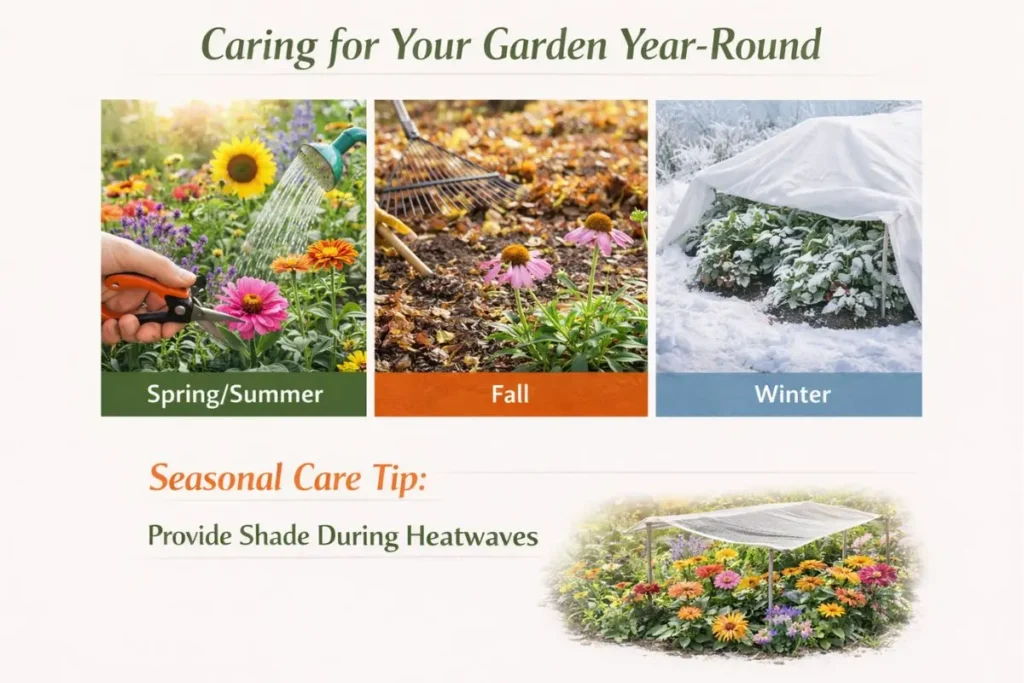
Your flowers will need different care throughout the year:
- Spring/Summer: Ensure your flowers get enough water and sunlight, and continue to deadhead spent blooms to encourage more flowers.
- Fall: Clean up fallen leaves and mulch to protect the roots from cold temperatures.
- Winter: Some flowers may go dormant, so reduce watering and stop fertilizing. Cover sensitive plants with frost cloth if necessary.
Seasonal Care Tip:
During extremely hot summer days, consider providing some shade for heat-sensitive plants. Shade cloth or a temporary cover can protect them from heat stress.
Common Mistakes to Avoid
Here are some common mistakes and how to avoid them:
- Mistake 1: Over-watering can cause root rot. Always check the soil moisture before watering.
- Mistake 2: Planting flowers too close together. Ensure adequate spacing to avoid overcrowding and poor air circulation.
Pollinator Pests and Diseases
Pollinators are susceptible to pests and diseases. Here are some things to watch for:
- Pests: Aphids, spider mites, and caterpillars can damage your plants. Use organic insecticidal soap or neem oil for control.
- Diseases: Fungal diseases like powdery mildew can harm flowers. Ensure good air circulation and remove affected leaves promptly.