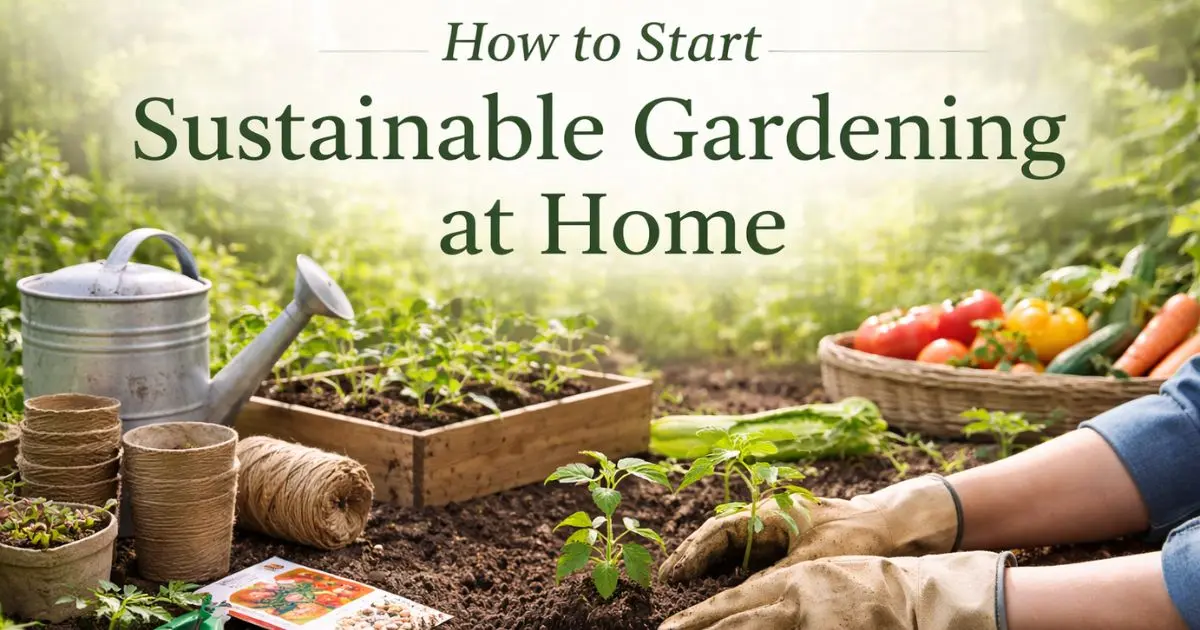
Sustainable gardening is more than just a trend—it’s an intentional way to harmonize with nature, reduce waste, and cultivate a healthy environment right in your backyard. Whether you’re a seasoned gardener or a beginner eager to grow your own eco-friendly garden, this guide will provide you with practical advice, expert insights, and actionable steps to create a garden that thrives sustainably. Let’s get started!
Why Choose Sustainable Gardening?
Sustainable gardening is about growing plants in ways that support both the environment and your local ecosystem. By focusing on sustainable practices, you reduce your carbon footprint, conserve resources, and grow healthier food. But it’s not just about the environment — it’s about quality, cost-efficiency, and health.
Why You Should Go Green:
- Conserve Resources: Use water and nutrients wisely, reducing waste.
- Support Local Wildlife: Encourage pollinators like bees and butterflies.
- Grow Healthy, Chemical-Free Produce: Enjoy fresh, homegrown food without pesticides.
- Long-Term Cost Savings: Organic methods reduce the need for expensive fertilizers and chemical treatments.
Understanding Your Garden’s Microclimate:
Before you start planting, it’s essential to understand your garden’s unique conditions. Every garden has a “microclimate”—a localized environment that can differ significantly from the overall climate of your region. Getting to know this will guide your plant selection and care.
Know Your Hardiness Zone
Each region falls into a hardiness zone, which defines which plants will thrive based on average minimum winter temperatures. For example, in hot regions like South Asia, you’ll likely grow tropical plants, while in cooler regions like northern Europe, hardy plants like lettuce and cabbages will do best.
Pro Tip:
Microclimates in your own backyard can differ from the general climate. A sunny corner of your garden may be several degrees warmer than other areas. Use this knowledge to place sun-loving plants in these spots and shade-tolerant plants in the cooler zones.
Preparing Your Soil Like a Pro:
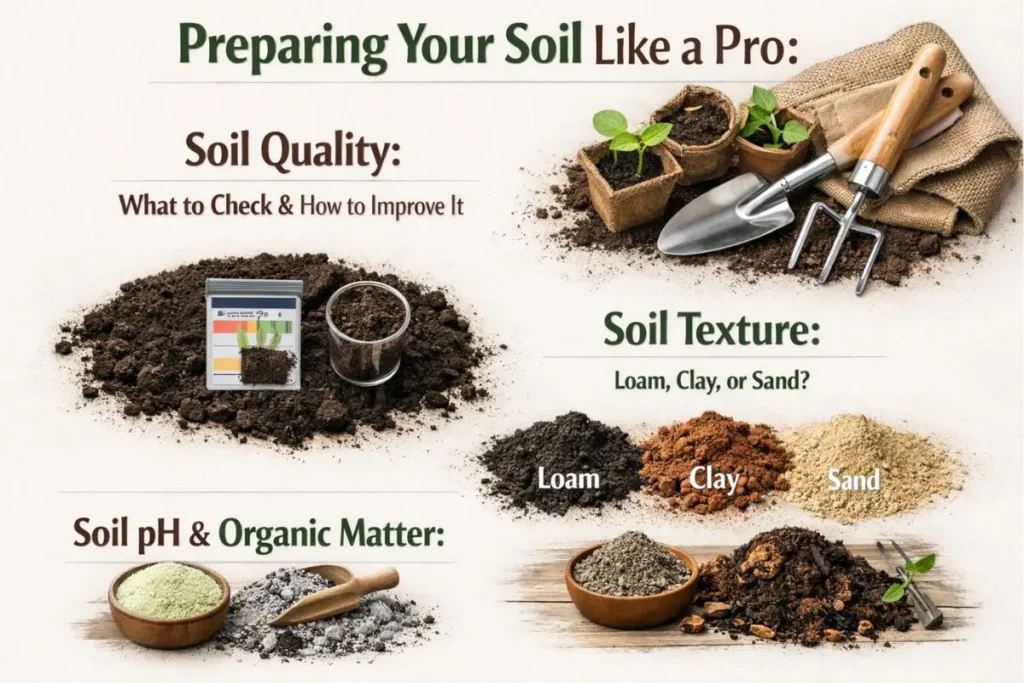
The secret to a thriving sustainable garden is healthy soil. It’s the lifeblood of your garden, affecting everything from water retention to nutrient supply. Thankfully, improving your soil can be simple with the right tools and techniques.
Soil Quality: What to Check and How to Improve It
- Soil Texture: Loam is the ideal soil type, as it’s well-draining and retains enough moisture. If you have clay or sandy soil, amend it with organic matter like compost to improve texture.
- Soil pH: Test your soil’s pH using a simple test kit. Most plants prefer slightly acidic soil (pH 6–7), but some, like blueberries, thrive in more acidic conditions.
Quick Fixes:
- For acidic soil: Add lime or wood ash to raise the pH.
- For alkaline soil: Add sulfur or peat moss to lower the pH.
Organic Matter:
Adding organic compost or well-rotted manure will improve your soil’s nutrient profile, enhance water retention, and encourage healthy root growth. Aim to mix organic matter into your soil every season.
Planting Made Easy:
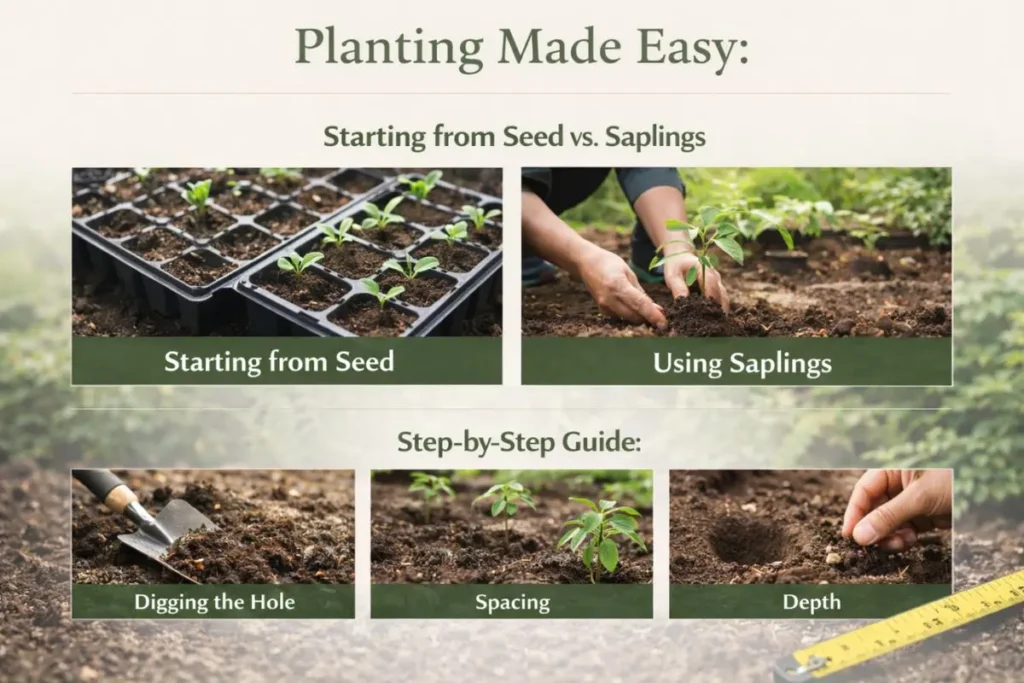
Getting your plants into the ground properly is essential for long-term success. Whether you’re starting from seed or using saplings, following the correct planting techniques ensures a strong foundation.
Starting from Seed vs. Saplings
- Starting from Seed: A more sustainable option, starting seeds indoors (or directly in the garden when temperatures allow) is an affordable way to get your garden growing. Use seed trays, good quality soil, and keep the seeds moist until they sprout.
- Using Saplings: If you want quicker results, buy young plants from a nursery. This can be helpful if you’re growing fruit trees or certain vegetables.
Step-by-Step Guide:
- Digging the Hole: Ensure it’s twice as wide as the root ball but no deeper.
- Spacing: Proper spacing between plants allows for air circulation and growth without competition for light and nutrients.
- Depth: Plant seeds at the recommended depth on the packet. For saplings, keep the root ball level with the soil surface.
The Golden Rule:
Allow space for each plant to grow, which will reduce the chances of disease and help each plant receive enough nutrients and water.
The Art of Watering and Sunlight:
Water and sunlight are two essential resources for plant health, and managing both can make all the difference. Here’s how to provide the right amount of both.
Sunlight: Getting It Right
- Full Sun Plants: Most vegetables need 6-8 hours of direct sunlight to grow strong. These include tomatoes, peppers, and squash.
- Partial Shade Plants: Leafy greens like spinach and lettuce prefer a few hours of direct sunlight, especially in warmer climates.
Watering Techniques:
- Seedlings: Water frequently to keep the soil moist but not soggy. A light watering daily should be enough, especially in the early stages.
- Mature Plants: Water deeply once a week to encourage deep root growth. Watering early in the morning or late in the evening minimizes evaporation and ensures water reaches the roots.
Pro Tip:
The soil should feel like a wrung-out sponge. It should be moist but not wet.
Fertilization and Plant Nutrition:
Plants, like us, need food to grow. While organic matter like compost will supply a good portion of nutrients, occasionally adding additional fertilizer might be necessary, especially for high-demand plants like tomatoes and cucumbers.
Organic Fertilizers: The Sustainable Option
- Compost: Enriches the soil with essential nutrients.
- Fish Emulsion or Seaweed Extract: Perfect for adding extra nitrogen and minerals.
- Bone Meal: Great for promoting strong root development.
Timing and Application
Apply fertilizers early in the morning, and avoid over-fertilizing, as this can lead to nutrient burn and negatively affect plant health.
Soil Care and Mulching:
Mulch is one of the simplest yet most effective ways to conserve water, regulate temperature, and suppress weeds.
The Magic of Mulch
- Moisture Retention: Mulch prevents water from evaporating, reducing your need to water as often.
- Weed Control: A 2-3 inch layer of mulch blocks sunlight, preventing weed growth.
- Temperature Regulation: Mulch keeps soil cooler in summer and warmer in winter.
Materials to Use:
- Organic Mulch: Grass clippings, straw, leaves, or wood chips.
- Inorganic Mulch: Gravel or rubber mulch can work but doesn’t improve soil fertility.
Seasonal Gardening:
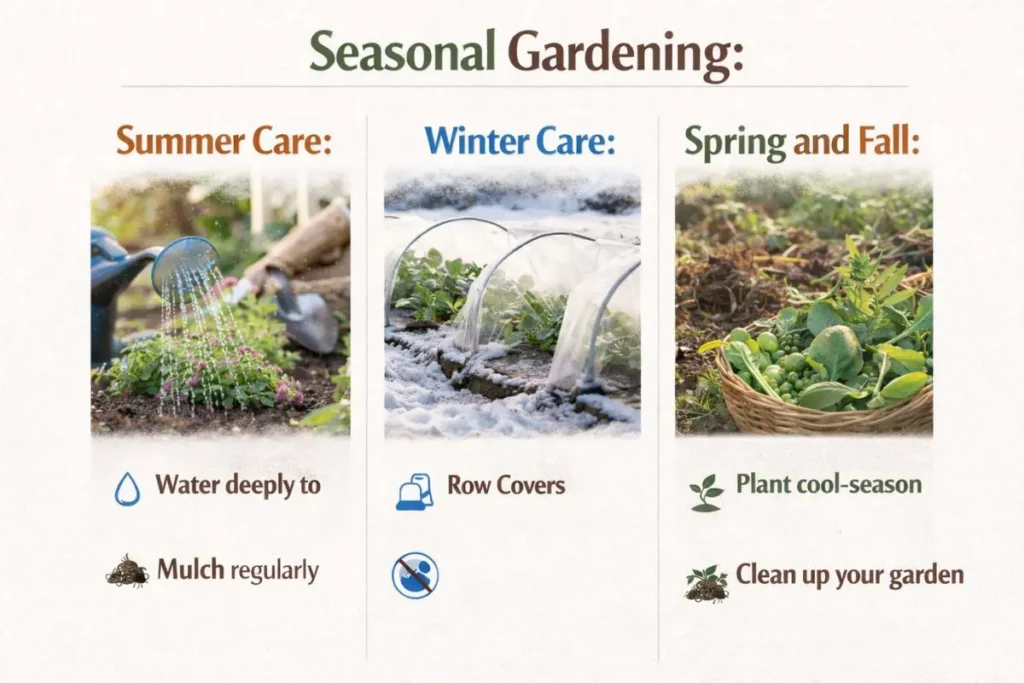
A sustainable garden thrives throughout the year if you take seasonal care into account. Each season requires different attention.
Summer Care:
- Water deeply to keep plants hydrated during dry spells.
- Mulch regularly to prevent the sun from drying out the soil.
- Monitor pests like aphids, which thrive in heat.
Winter Care:
- Protect your plants with row covers or cloches if you live in a cold climate.
- Don’t overwater during the dormant season.
- Plan for the next season by adding compost and improving the soil.
Spring and Fall:
- Plant cool-season vegetables in early spring (spinach, peas).
- Clean up your garden in the fall, removing spent crops and debris to prevent disease.
Common Gardening Mistakes and Myths
While gardening is incredibly rewarding, it’s easy to make mistakes. Here are a few common ones to avoid.
Common Mistakes:
- Overwatering: This can lead to root rot, which is often fatal for plants.
- Planting too deep: Ensure your plant is at the correct depth to avoid stunted growth.
- Ignoring soil health: Over-fertilizing or using too many chemicals can degrade the soil’s health over time.
Myths:
- “More sunlight always means better growth”: Some plants prefer partial shade. Don’t assume that all plants need direct sun.
- “Pruning too much won’t hurt the plant”: Over-pruning weakens the plant. Prune only when necessary and avoid removing healthy branches.
Dealing with Pests and Diseases:
Pests and diseases are a part of gardening, but you don’t need harsh chemicals to deal with them. Here’s what to do:
Common Pests:
- Aphids: Use neem oil or soapy water to control aphids naturally.
- Slugs: Diatomaceous earth works wonders for deterring slugs.
Common Diseases:
- Powdery Mildew: Improve air circulation by pruning dense areas.
- Root Rot: Ensure good drainage and don’t overwater.
Harvesting and Maintenance:
Harvesting the right way ensures your plants keep producing without being damaged. Handle produce gently to avoid bruising.
Best Harvesting Practices:
- Harvest in the morning when produce is freshest.
- Use sharp scissors or pruning shears to avoid tearing the plant.
For long-term care, check your plants regularly for pests, disease, or nutrient deficiencies. Rotate crops each season to prevent soil depletion.
Your Sustainable Garden Care Checklist
- Soil: Test pH, add compost.
- Watering: Water deeply, not frequently.
- Sunlight: Ensure 6-8 hours of sunlight.
- Pruning: Prune early, avoid over-pruning.
- Mulching: Apply mulch for moisture and weed control.
- Pests: Use organic remedies like neem oil.