Best this for Beginners to Grow This Season offers practical advice for new gardeners looking to add vibrant blooms to their gardens. This guide highlights easy-to-grow it that thrive in various climates, focusing on plants that are low-maintenance and resilient. It covers essential gardening tips, including soil preparation, planting techniques, sunlight, watering, fertilization, and common mistakes to avoid. Whether you’re planting in a backyard or on a terrace, this guide ensures that beginners can enjoy a colorful and thriving garden with minimal effort.
The Joy of Flower Gardening for Beginners
Best flower for Beginners to Grow This Season” provides practical tips for new gardeners, highlighting easy-to-grow, low-maintenance flowers that thrive in various climates. It covers essential gardening advice on soil, planting, sunlight, watering, and common mistakes to avoid, ensuring a vibrant, thriving garden with minimal effort.
Picking the Right Flowers:
The first step to successful flower gardening is choosing plants that thrive in your region. Each plant has its own unique requirements when it comes to sunlight, temperature, and water, so it’s essential to understand what your climate offers.
Know Your Climate Zone
Beginner-friendly often fall within certain climate zones. If you live in a warmer region like India or Pakistan, flowers that thrive in hot, sunny weather like marigolds, zinnias, and sunflowers are perfect choices. If your climate is cooler, consider flowers like pansies, primroses, and foxgloves, which tolerate colder conditions.
Tip: Pay attention to the microclimates in your garden—areas with more shade or sun. For example, like lavender and rosemary thrive in sunny spots, while begonias flourish in partial shade.
Preparing Your Soil
Soil is the lifeblood of your garden. Getting it right from the start ensures that your flowers have the nutrients they need to grow strong and healthy.
Choosing the Right Soil
Flowers generally thrive in well-drained, fertile soil. Aim for a soil pH between 6.0 and 7.0, which is ideal for most flowers. If your soil is too heavy (like clay), it can hold water and suffocate the roots.
Tip: If your soil doesn’t drain well, improve it by mixing in organic matter like compost or sand. If your soil is sandy, mix in some organic matter to help retain moisture and nutrients.
Drainage Is Key
Overwatering is one of the most common problems gardeners face. like sunflowers and marigolds need soil that drains quickly. To test drainage, dig a small hole, fill it with water, and observe how fast the water drains. If it doesn’t drain in a few minutes, you’ll need to improve the soil’s drainage before planting.
How to Plant Your Flowers: Step-by-Step Guide
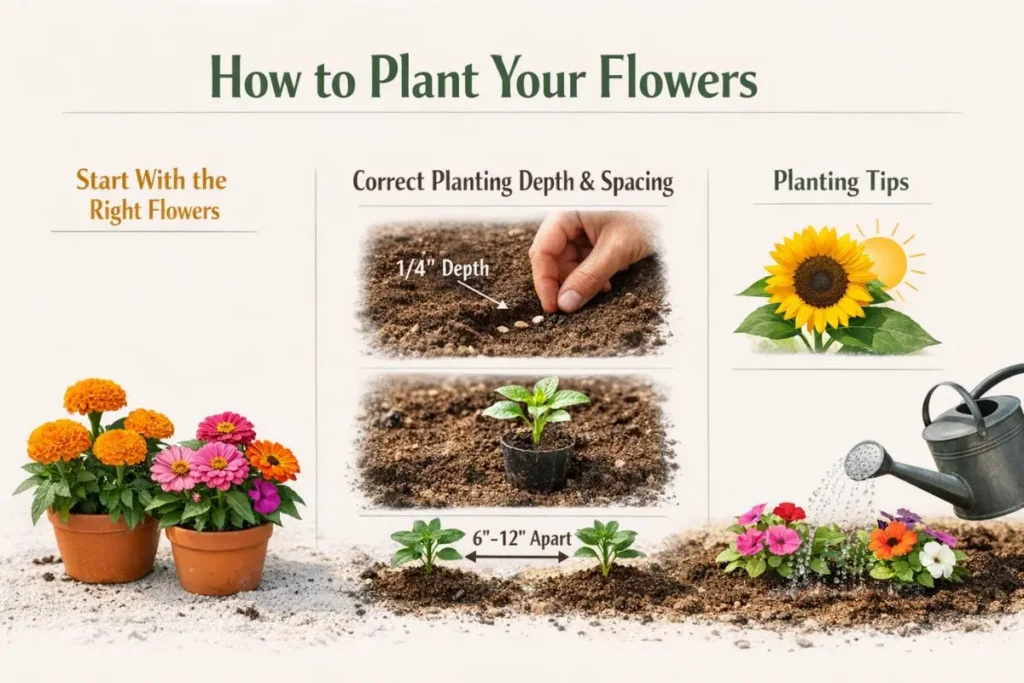
Now that your soil is ready, it’s time to plant. Follow these simple steps to ensure success:
Start With the Right Flowers
Opt for easy-to-grow flowers like marigolds, zinnias, and petunias. These this are tough, forgiving, and perfect for beginners.
Correct Planting Depth and Spacing
- Seeds: Plant seeds about 1/4 inch deep.
- Saplings: Plant saplings at the same depth they were in their original pots.
- Spacing: Space plants 6 to 12 inches apart, depending on their mature size.
Tip: Don’t overcrowd your plants. Flowers need room to grow and thrive.
Planting Tips
- Make sure you plant flowers in areas that match their sunlight needs. For sun-loving , like sunflowers, ensure they get at least 6 hours of direct sunlight each day.
- Water thoroughly after planting to help roots establish.
Watering and Sunlight:
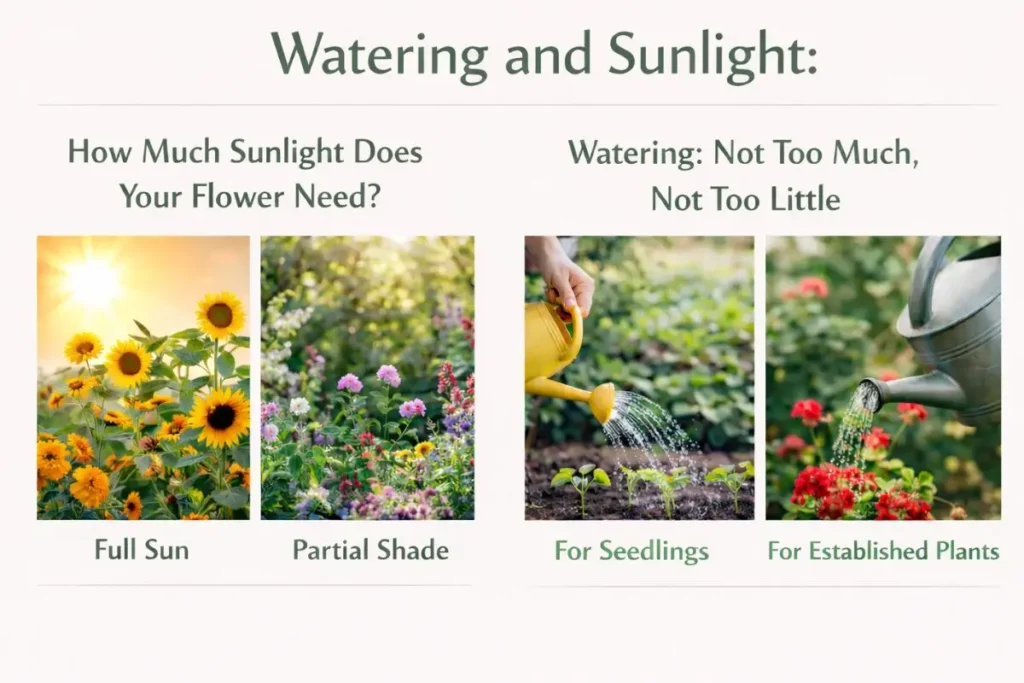
Water and sunlight are the two most important factors for growing it, so let’s break down exactly what your flowers need at different stages.
How Much Sunlight Does Your Flower Need?
- Full Sun: Flowers like sunflowers, marigolds, and zinnias need at least 6 hours of direct sunlight every day.
- Partial Shade: Flowers like begonias, impatiens, and foxgloves thrive in partial shade, where they get some protection from the afternoon heat.
Watering: Not Too Much, Not Too Little
Watering is a delicate balance—too much and you risk drowning your plants, too little and they’ll dry out.
For Seedlings: Water lightly every day, keeping the soil moist but not soggy.
For Established Plants: Water deeply about once or twice a week. Always check the soil by sticking your finger in. If it feels dry, it’s time to water.
Tip: Water in the early morning or late afternoon to avoid water evaporating in the midday heat.
Nutrition and Fertilization:
Plants need food to grow strong and produce those beautiful blooms. Fertilizing correctly is key to their success, but it’s easy to overdo it.
Organic vs. Synthetic Fertilizers
- Organic Fertilizers: Options like compost, fish emulsion, and well-rotted manure are great for providing a slow, steady supply of nutrients to your it.
- Synthetic Fertilizers: These are faster acting but need to be used carefully to avoid burning your plants.
Tip: Use a balanced 10-10-10 fertilizer every 4-6 weeks. Apply it in the early morning or late afternoon when plants are not stressed by the sun.
Mulch and Soil Management:
Mulching is an excellent practice to help keep your flowers healthy. It offers numerous benefits, from moisture retention to temperature regulation.
Why Mulch?
- Weed Control: Mulch helps prevent weeds from taking over your flower bed.
- Moisture Retention: Mulch keeps the soil moist during hot weather, which is essential for flowers like marigolds and sunflowers.
- Temperature Regulation: In winter, mulch helps protect roots from freezing.
Tip: Apply mulch around your flowers but avoid putting it too close to the stems. Aim for about a 2-inch layer.
Pruning and Training:
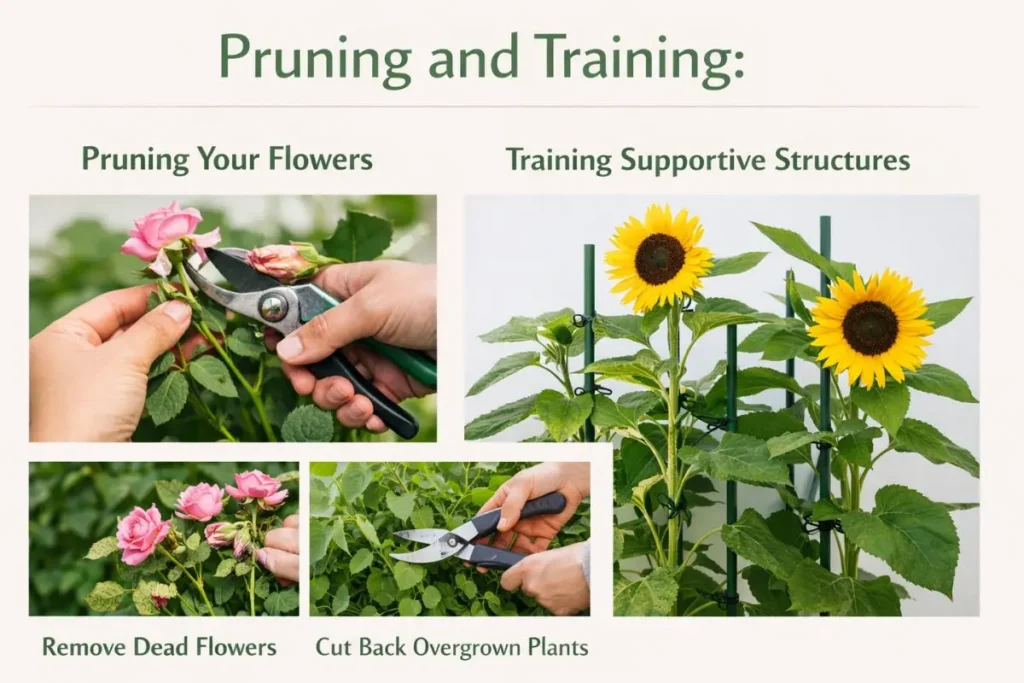
Pruning and training can help them grow stronger and bloom more profusely.
Pruning Your Flowers
- Remove Dead Flowers: Regularly deadhead your flowers by cutting off spent blooms to encourage new ones.
- Cut Back Overgrown Plants: Prune leggy growth to promote bushier, healthier plants.
- Training Supportive Structures
Tall like sunflowers may need stakes for support. Be sure to stake them early to prevent damage as they grow.
Seasonal Care: Adapting to Changing Weather
Your flowers will need different care throughout the year. Here’s a breakdown of what to do each season.
Summer Care
- Water regularly to prevent your flowers from drying out.
- Mulch around your flowers to help retain moisture.
Winter Care
- For flowers like pansies that can tolerate frost, use frost cloths to protect them during extreme cold.
- In colder climates, cover your flowers with plastic or fabric to help them survive the chill.
The Growth Timeline:
Here’s a simple guide to the growth cycle of your flowers:
- Month 1–2: Plant your flowers. Start seeds indoors if needed.
- Month 3–4: Watch as begin to sprout and establish roots.
- Month 5–6: Enjoy the first blooms and deadhead regularly to encourage more flowers.
- Month 7–8: Maintain your flowers, ensuring they’re getting enough water, nutrients, and support.
Common Mistakes and Myths:
Every gardener makes mistakes—especially beginners. Here are some common errors and how to avoid them:
Mistakes to Avoid
- Overwatering: Check the soil before watering. If it’s dry, water deeply; if it’s still moist, wait a few more days.
- Planting Too Deep: Don’t plant your flowers too deep—this stresses the roots and can hinder growth.
Myths to Watch Out For
- “Flowers can grow anywhere”: Flowers are picky about their soil and sunlight. Make sure you choose the right location for each plant.
- “Fertilize every day for best results”: Over-fertilizing can burn your plants. Stick to a schedule and use the correct dosage.
Dealing With Pests and Diseases:
While most are fairly resilient, pests and diseases can still cause problems. Here’s how to deal with them:
Common Pests
- Aphids: Small, green insects that suck sap from your plants. Use insecticidal soap or neem oil to treat aphid infestations.
- Slugs: These slimy creatures love to munch on flowers like hostas. Use beer traps or slug pellets to keep them away.
- Diseases to Watch For
- Powdery Mildew: A fungal disease that causes white, powdery spots on leaves. Improve air circulation and remove infected leaves to control this issue.
Harvesting and Long-Term Flower Care:
Once your flowers bloom, it’s time to enjoy the fruits of your labor. Here’s how to keep them flourishing:
Harvesting Tips
- Cut Flowers Early: For the freshest blooms, cut it early in the morning.
- Deadheading: Regularly remove spent flowers to keep your plants blooming.
Your Flower Gardening Quick Care Guide
- Soil: Use well-drained, nutrient-rich soil with a pH between 6.0–7.0.
- Watering: Water deeply, but don’t overdo it. Let the soil dry out between waterings.
- Sunlight: Make sure your flowers get enough light—6+ hours of sunlight for most varieties.
- Fertilization: Use balanced fertilizer every 4–6 weeks during the growing season.
- Mulching: Apply a 2-inch layer of mulch to conserve moisture and suppress weeds.
- Pruning: Remove dead flowers and prune for shape.
- Pests/Diseases: Keep an eye out for aphids, slugs, and mildew.
FAQs
1. What are the easiest flowers to grow for beginners?
Flowers like marigolds, zinnias, and sunflowers are perfect for beginners.
2. How do I know when to water my flowers?
Check the soil moisture with your finger. If it’s dry, it’s time to water.
3. Can I grow flowers in pots or containers?
Yes, many flowers, like petunias and marigolds, do well in containers. Just ensure proper drainage.