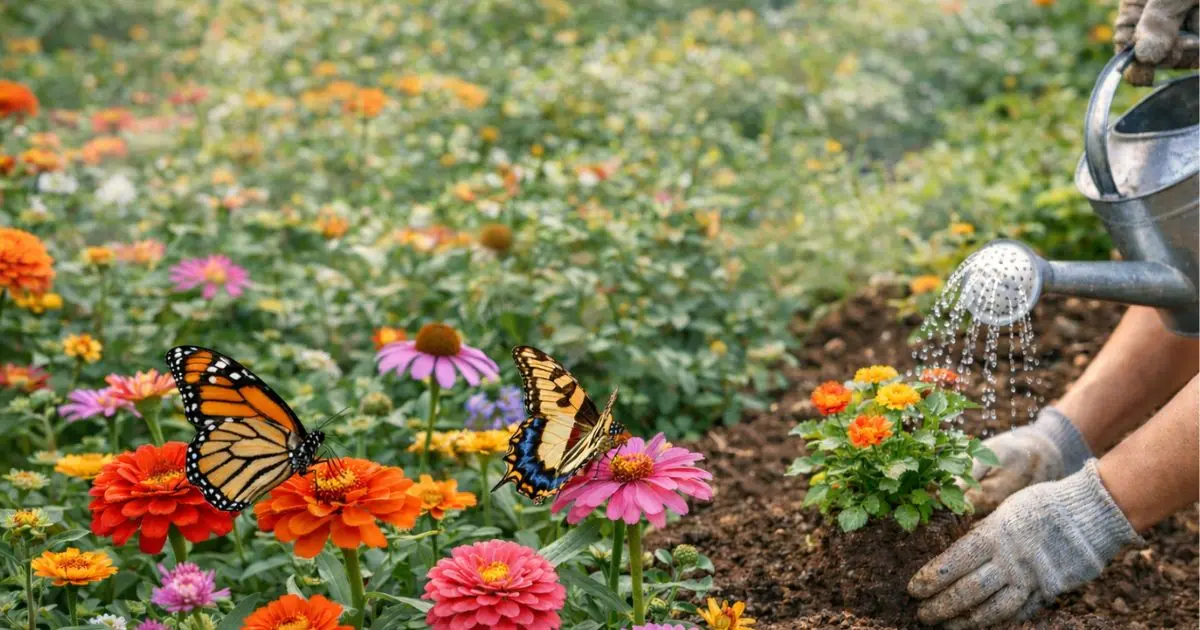
Creating a butterfly garden is a fantastic way to enhance the beauty of your backyard or terrace while supporting local wildlife. Butterflies are not just beautiful, but also essential pollinators for plants, making butterfly gardens an eco-friendly addition to your home. Whether you have a small garden or a larger yard, this expert guide will walk you through everything you need to know—from selecting the right plants to maintaining your garden year-round.
The Joy of Butterfly Gardens
A butterfly garden is more than just colorful flowers; it’s a habitat that supports the entire butterfly life cycle. These gardens provide food and shelter for caterpillars and butterflies, making them a great choice for eco-conscious gardeners. Beyond beauty, butterfly gardens help sustain declining butterfly populations by supporting biodiversity through butterfly-friendly plants and host species.
Key Benefits:
- Encouraging Pollinators: Butterflies help pollinate plants, which is essential for many garden species to reproduce.
- Aesthetically Pleasing: With their vibrant colors and delicate wings, butterflies enhance the natural beauty of your garden.
- Educational Value: Butterfly gardens provide a fantastic opportunity to educate children and the community about the wonders of nature.
Preparing Your Garden for Success
A butterfly garden thrives best in specific conditions. Understanding your garden’s microclimate will help you choose the best plants and give them the care they need to flourish.
Climate Zones and Regional Adaptability:
Butterfly gardens can be created in most parts of the world, but the plants you choose will depend on your region’s climate. In the United States, for instance, butterfly gardens are particularly successful in USDA zones 4–9. However, in warmer regions like India and Pakistan, tropical butterfly-friendly plants such as lantanas, hibiscus, and butterfly peas (Clitoria ternatea) are great options.
Microclimate Tips:
- Sunlight: Butterflies need warmth, so select a sunny area with at least 6 hours of direct sunlight.
- Sheltered Spots: While sunlight is important, strong winds can deter butterflies. A sheltered spot near a wall, fence, or hedge will keep them safe.
Example:
In a hot, tropical climate, plants like marigolds and zinnias can be used to attract butterflies, while in cooler climates, echinacea and milkweed are ideal.
Soil Preparation:
Soil quality is one of the most important factors for a successful butterfly garden. The right soil ensures healthy plant growth, which in turn attracts more butterflies.
Choosing the Right Soil:
- Soil Type: Aim for well-draining soil that’s rich in organic matter. Loamy soil, which combines sand, silt, and clay, works best for butterfly-friendly plants.
- pH Level: Most butterfly-attracting plants thrive in neutral to slightly acidic soil (pH 6–7). It’s essential to test your soil’s pH before planting, which you can easily do with a home test kit.
Adding Organic Matter:
Mix in compost, aged manure, or other organic amendments to improve the soil’s structure and nutrient content. Organic matter enhances water retention and provides essential nutrients to plants, encouraging strong, healthy growth.
Pro Tip:
If your soil is compacted or too clay-heavy, incorporate sand or organic compost to improve drainage. This prevents root rot and helps your plants thrive.
Planting Your Butterfly Garden: Step-by-Step Planting Guide
Now that you have the perfect conditions, it’s time to start planting your butterfly garden. Below is a detailed guide on how to plant your flowers and host plants.
Choosing Butterfly-Friendly Plants:
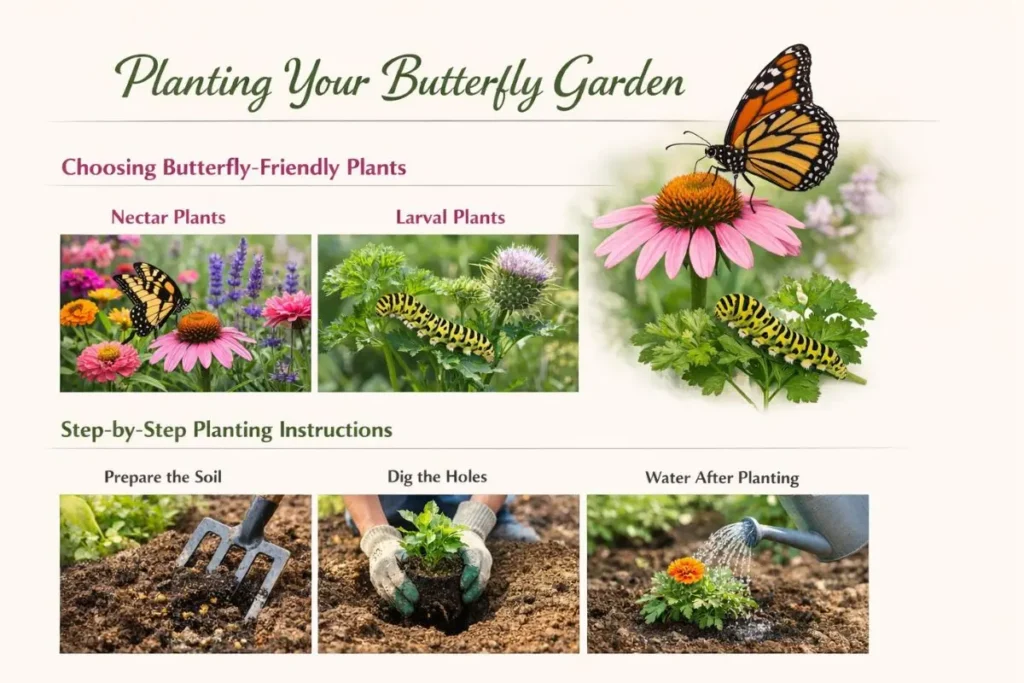
For a successful butterfly garden, you’ll need both nectar plants (for adult butterflies) and larval plants (for caterpillars). Here are some excellent choices:
- Nectar Plants: Zinnias, coneflowers, marigolds, lavender, and bee balm.
- Larval Plants: Parsley (for swallowtails), fennel (for caterpillars), and thistles (for painted ladies).
Step-by-Step Planting Instructions:
- Prepare the Soil: Use a garden fork to loosen the soil and incorporate compost.
- Dig the Holes: For each plant, dig a hole that’s about twice the size of the plant’s root ball. This will allow the roots to spread easily.
- Spacing: Ensure adequate space between plants to allow for growth. Leave about 6–12 inches depending on the mature size of the plant.
- Planting: Place the plant in the hole so that the top of the root ball is level with the soil surface. Gently firm the soil around the base of the plant.
- Water: Water deeply after planting, ensuring that the soil settles around the roots.
Tip:
If you’re planting seeds, follow the instructions on the packet for spacing and depth. Most seeds need to be planted about ¼–½ inch deep.
Sunlight and Watering:
Butterflies love sunlight, but each plant has its own needs. Here’s how to give your plants the best care.
Sunlight Requirements:
Butterfly plants thrive in full sun. Aim for at least 6 hours of direct sunlight each day to promote healthy blooming and attract butterflies. If you’re growing plants in a partially shaded area, opt for plants that tolerate some shade, such as foxgloves and begonias.
Watering:
- Seedlings: Water your seedlings regularly to keep the soil consistently moist, but not soggy. Watering daily is ideal until they are established.
- Mature Plants: Once established, water deeply once a week or when the soil feels dry an inch below the surface. During hot summer months, you may need to water more often.
Pro Tip:
Water your plants in the morning to prevent fungal growth and reduce evaporation.
Fun Fact:
Butterflies are attracted to moisture, so you may also see them basking on wet ground after a morning watering session.
Nutrition & Fertilization:
Fertilization helps your plants grow strong and produce plenty of nectar for butterflies. Here’s what you should know:
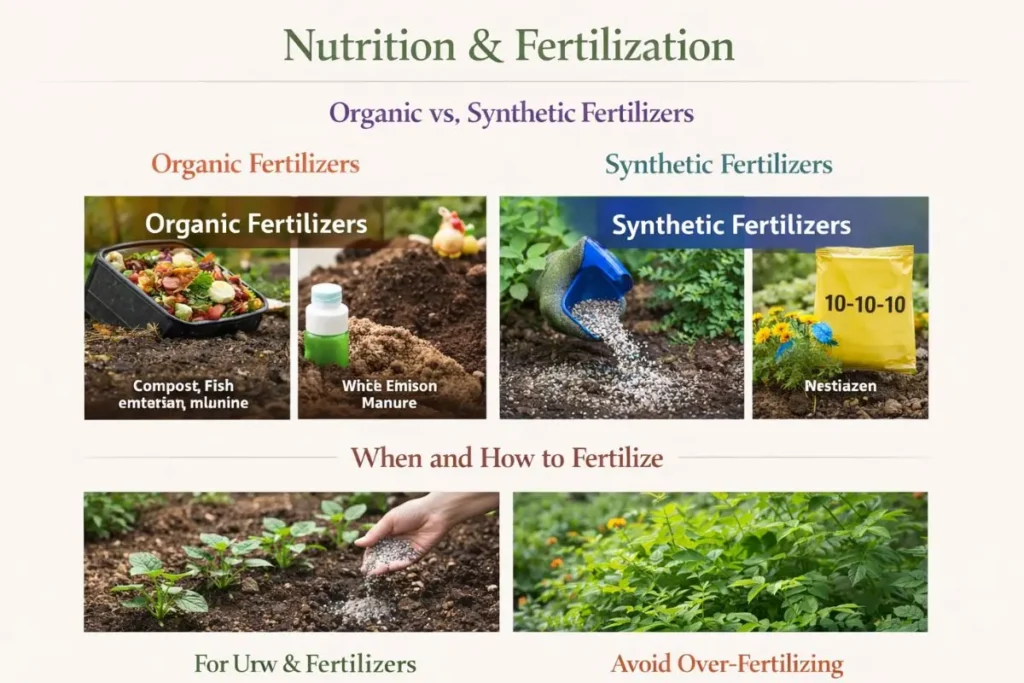
Organic vs. Synthetic Fertilizers:
- Organic Fertilizers: Compost, fish emulsion, and well-rotted manure are excellent natural fertilizers. These slowly release nutrients into the soil and are gentle on your plants.
- Synthetic Fertilizers: Balanced fertilizers, like a 10-10-10 formula, work quickly to provide nutrients but should be used cautiously.
When and How to Fertilize:
- For New Plants: Use a slow-release fertilizer in the spring to help them establish.
- For Established Plants: Apply fertilizer once or twice during the growing season, preferably in early spring and mid-summer.
Avoid Over-Fertilizing:
Too much fertilizer can encourage excessive leaf growth but result in fewer flowers and less nectar for butterflies. Stick to recommended dosages and always follow label instructions.
Soil and Mulch Management:
Proper mulch and soil management keep your garden healthy and thriving year-round.
Mulching:
- Benefits of Mulch: Mulch helps retain moisture, regulate soil temperature, and suppress weeds. Use organic mulch like wood chips, straw, or leaves around your plants.
- How to Apply: Spread a 2–3 inch layer of mulch around your plants, making sure not to pile it up around the plant stems, as this can lead to rot.
Weed Control:
Weeds can compete with your butterfly-friendly plants for water and nutrients. Pull weeds by hand or use an organic weed barrier beneath your mulch to prevent them from growing.
Seasonal Care:
Butterfly gardens require different care at different times of the year. Here’s how to stay on top of seasonal tasks:
Summer:
During hot months, ensure your plants are adequately watered. If you’re in a dry region, consider adding a garden umbrella or shade cloth to protect plants from intense midday sun.
Fall:
In fall, clean up any dead plant material and prepare your garden for the cooler months. You can add a layer of mulch to protect the roots from frost.
Winter:
If you live in a cold climate, consider protecting your plants with frost cloth or row covers. Many butterfly plants can survive winter if mulched properly.
Mistakes & Myths:
Here are some common mistakes and myths to avoid when planning your butterfly garden:
- Myth: Butterflies only need nectar-rich flowers.
- Fact: You also need host plants (like milkweed or parsley) to support caterpillars.
- Mistake: Using chemical pesticides.
- Fix: Avoid pesticides that harm butterflies. Use organic methods like neem oil or hand-picking pests.
Pests & Diseases: How to Handle Common Issues
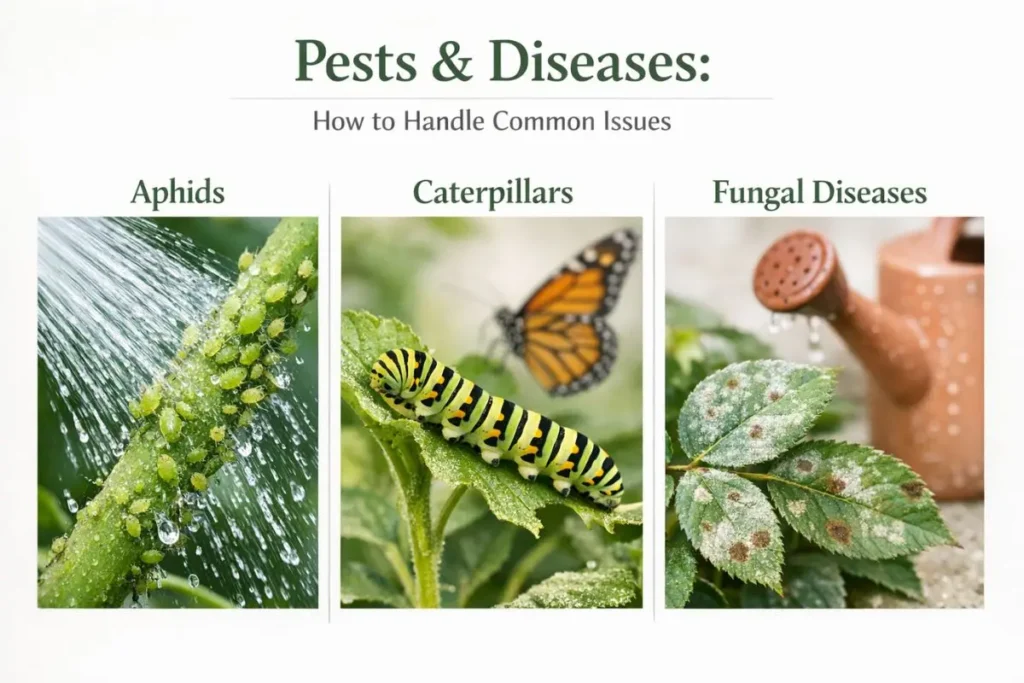
- Aphids: Small, soft-bodied insects that suck plant sap. Use a strong stream of water to dislodge them or apply insecticidal soap.
- Caterpillars: While caterpillars may damage leaves, they’re part of the butterfly life cycle. If the damage is severe, remove them by hand.
- Fungal Diseases: Over-watering can lead to fungal issues. Ensure your garden has good drainage and avoid overhead watering during rainy weather.
Harvesting & Long-Term Care:
Once your plants begin to bloom, you’ll enjoy plenty of butterflies visiting your garden. For long-term success, keep an eye on plant health and clean up regularly to prevent pests.
Flower Care:
- Deadheading: Remove spent flowers to encourage more blooms.
- Collecting Seeds: Save seeds from your best-performing plants for next season.