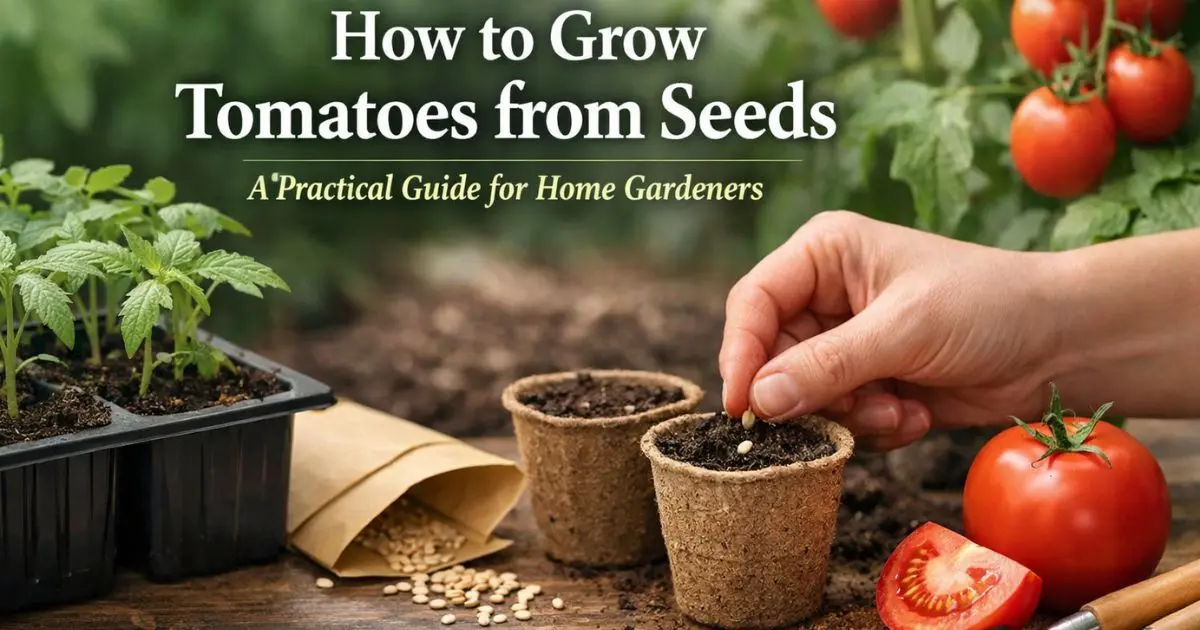
Nothing quite beats the taste of a homegrown tomato, plucked fresh from your backyard or terrace garden. Whether you’re growing them in the soil or a container, tomatoes offer a fantastic journey for any gardener. Starting from seed gives you more control, the ability to select your favorite varieties, and the pure satisfaction of watching a tiny seed sprout into a fruitful plant.
In this guide, I’m going to share everything you need to know about growing tomatoes from seed, including practical tips from my years of experience. Whether you’re a seasoned gardener or just starting out, this step-by-step approach will have you planting, nurturing, and harvesting with confidence.
Why Grow Tomatoes at Home?
Tomatoes are a favorite for good reason. Not only do they add flavor to your meals, but they’re incredibly versatile and easy to grow at home. They’re rich in vitamins and antioxidants, making them a healthy addition to your garden and diet.
A Home Gardener’s Dream:
Growing tomatoes from seeds is about more than just the harvest. It’s the joy of nurturing your plants, selecting unique varieties, and being part of every step. There’s nothing more satisfying than picking tomatoes you’ve grown yourself!
Ideal Tomato Growing Conditions:
Tomatoes are a warm-weather plant, but with a few adjustments, they can thrive in a variety of climates. Here’s what to keep in mind when selecting the best environment for your tomatoes.
What Climate Does Your Tomato Love?
- Warmth is Key: Tomatoes grow best in temperatures between 70°F and 85°F (21°C to 29°C). If you’re growing them outdoors, aim for a climate with these consistent temperatures.
- Best Regions for Tomatoes: USDA zones 10 to 11 are the most ideal, but tomatoes can be grown successfully in many parts of the world, including regions like India, Pakistan, and parts of Southeast Asia. They love sun, so make sure they get plenty of it!
- Hot, Dry Areas: If you’re in a very hot region, such as parts of India or Pakistan, tomatoes can benefit from partial shade during the hottest parts of the day to avoid sunburn and wilting.
Pro Tip:
In places where the sun is relentless, such as the Middle East or South Asia, it’s a good idea to provide some shade for your tomatoes during peak afternoon heat. You can achieve this with shade cloth or planting tomatoes in spots with morning sun and afternoon shade.
Setting Up the Soil:
Tomatoes like rich, well-draining soil that can provide plenty of nutrients. Let’s talk about how to prepare your soil to ensure your plants thrive.
The Perfect Soil for Tomatoes
- Loamy & Well-Draining Soil: Your soil should have a good balance of sand, silt, and clay for proper drainage. This ensures that water doesn’t pool and cause root rot.
- pH Balance: Tomatoes prefer slightly acidic soil with a pH between 6.0 and 6.8. To adjust your soil’s pH, you can add lime to raise the pH or sulfur to lower it.
- Enrich with Organic Matter: Mixing compost into your soil not only boosts nutrients but also helps retain moisture. If you’re working with poor soil, amend it with organic matter like compost, leaf mold, or manure.
Tip:
If you’re starting your seeds indoors, use a seed-starting mix that’s light and fluffy. Once your seedlings are ready for the outdoors, make sure you acclimate them slowly to their new home by hardening them off before transplanting.
Step-by-Step: Planting Your Tomato Seeds Like a Pro
Starting from seed gives you the most control over your plant’s development. Here’s your step-by-step guide to starting tomatoes from seed:
Planting Tomato Seeds:
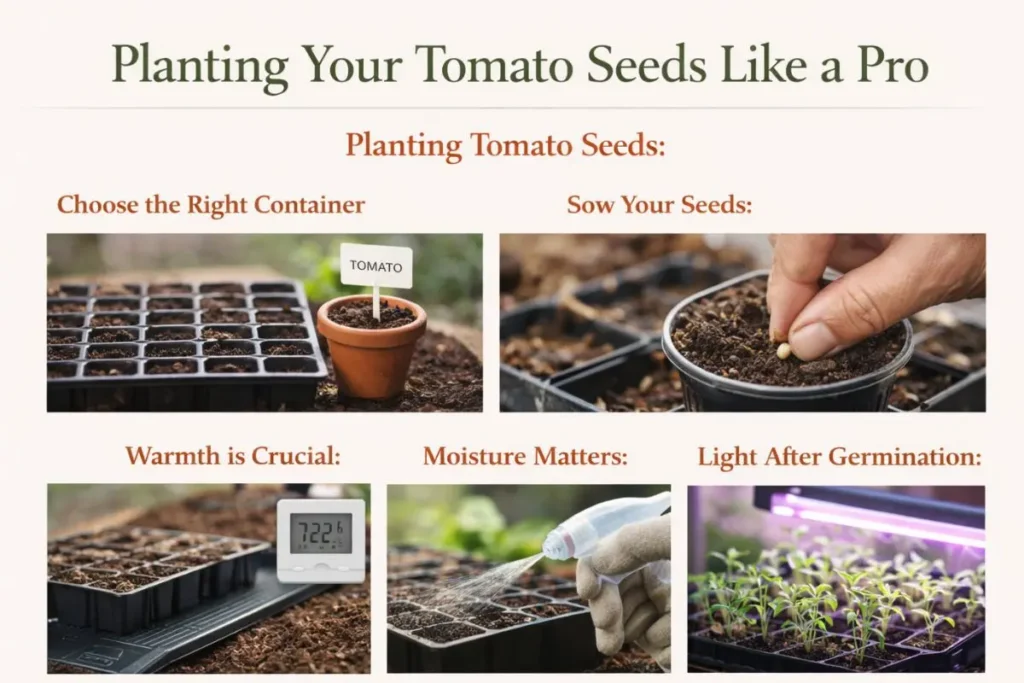
- Choose the Right Container: Select small pots or a seed tray with drainage holes. Avoid using deep containers unless necessary, as tomato seeds don’t need much depth to start.
- Sow Your Seeds: Plant each tomato seed about 1/4 inch deep (roughly 6mm) into the soil. Cover them lightly and water gently.
- Warmth is Crucial: Tomatoes need warmth to germinate. Keep the pots in a warm place, ideally between 70°F and 80°F (21°C – 27°C). A heat mat can be helpful in colder climates.
- Moisture Matters: Keep the soil moist, but don’t let it become waterlogged. Water gently with a misting bottle to avoid displacing the seeds.
- Light After Germination: Once your seedlings sprout (in 5-10 days), move them to a location with 6-8 hours of sunlight. If you’re growing indoors, consider using a grow light.
Tip:
Once the seedlings have their first true leaves, it’s time to transplant them into larger pots so they can grow strong before heading to the garden.
Sun and Water:
Tomatoes are sun-loving plants, but they also have specific water needs. Understanding these basics will help you keep your plants happy and healthy.
The Sun Tomato Plants Need
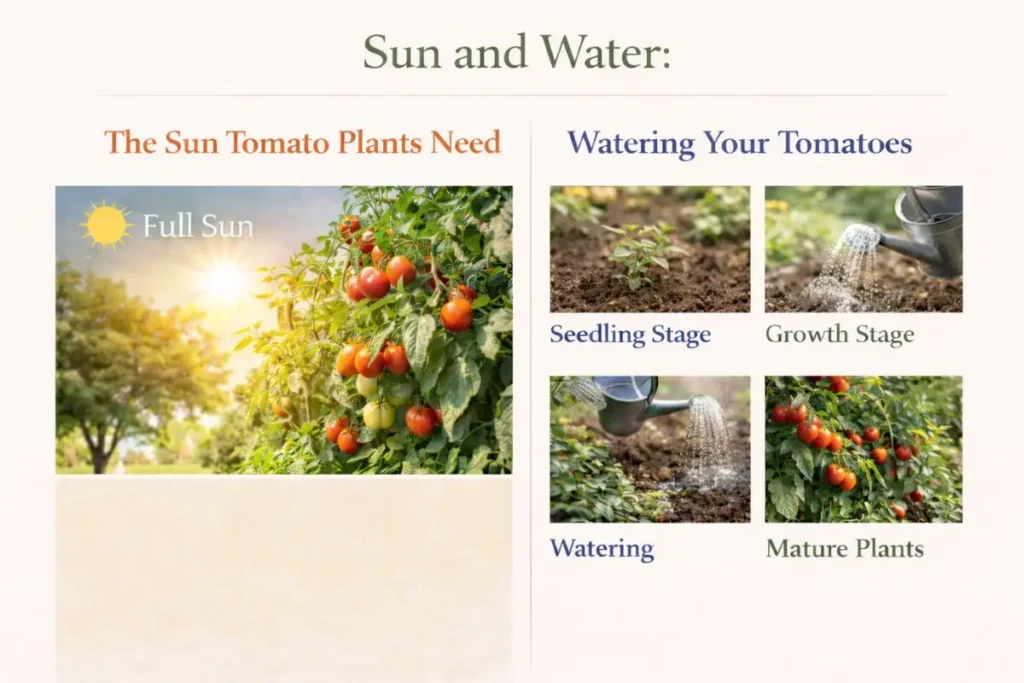
- Full Sun: Choose a spot with at least 6-8 hours of sunlight a day. The more sunlight your tomatoes get, the more fruit you’ll harvest.
- Heat Tip: In hot climates, afternoon shade can protect your tomatoes from the harshest rays, especially in regions like Pakistan or India where temperatures can soar.
Watering Your Tomatoes
- Seedling Stage: Keep the soil moist, but not soggy. Water around the base of the plant to avoid wetting the leaves.
- Growth Stage: Water deeply once or twice a week, aiming for about 1-1.5 inches of water per week. Make sure the water is evenly distributed around the base.
- Mature Plants: As your tomatoes mature, they will require regular, deep watering. Water when the soil feels dry to the touch, but never let it dry out completely.
Feeding Your Tomatoes:
Tomatoes are big eaters, so making sure they get the right nutrition is essential for a healthy, productive plant.
Types of Fertilizers: Organic vs. Synthetic
- Organic Options: Compost, fish emulsion, and worm castings are all excellent organic choices to feed your tomatoes. They release nutrients slowly and improve soil structure.
- Synthetic Fertilizers: If you prefer synthetic options, look for a balanced fertilizer with equal parts nitrogen (N), phosphorus (P), and potassium (K).
Fertilizing Schedule
- Start Feeding: Once your tomato plants develop their first true leaves, begin fertilizing every 2-3 weeks.
- Avoid Over-Fertilizing: Too much fertilizer can cause excessive leaf growth at the expense of fruit production. Use fertilizers according to package instructions.
Mulching & Moisture:
Tomatoes thrive when their roots stay cool and moist. Mulching is one of the best ways to maintain consistent soil moisture while also controlling weeds.
Mulch Like a Pro:
- What to Use: Organic mulches such as straw, grass clippings, or shredded leaves work great for tomatoes. They’ll help keep the soil moist and cool during hot weather.
- Weed Control: Mulch also prevents weeds from sprouting, ensuring that your tomatoes don’t have to compete for nutrients.
Pro Tip:
Apply a layer of mulch around the base of the plant, leaving a gap around the stem to prevent disease.
Pruning & Supporting:
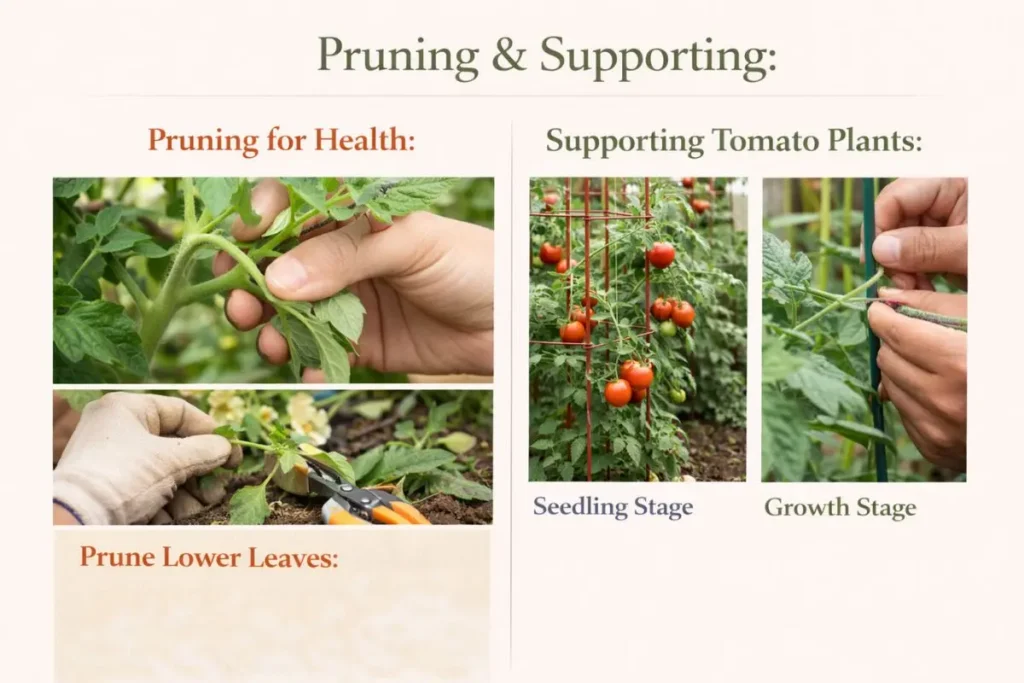
Properly pruning and supporting your tomato plants will encourage healthier growth and prevent disease. Here’s how to keep them in top shape:
Pruning for Health:
- Remove Suckers: Pinch off the small shoots that grow between the stem and branches. This helps the plant focus energy on fruit production rather than excessive foliage.
- Prune Lower Leaves: As the plant matures, remove any leaves that touch the soil. This minimizes the risk of soil-borne diseases.
Supporting Tomato Plants:
- Use Stakes or Cages: As your tomato plants grow, they’ll need support. Use stakes, cages, or even trellises to keep them upright and prevent them from sprawling.
- Tie Gently: Use soft garden twine or plant ties to secure the stems, ensuring you don’t damage the plant.
Pests & Diseases:
Tomatoes are prone to pests and diseases, but with early detection and action, you can protect your plants and ensure a healthy harvest.
Common Pests & How to Handle Them:
- Aphids: These tiny pests suck sap from your tomato plants. To control them, use insecticidal soap or introduce ladybugs.
- Hornworms: These large, green caterpillars eat your tomato leaves. Hand-pick them off or use a natural insecticide.
- Blight: A fungal disease that causes yellowing leaves. Remove affected leaves and increase airflow by pruning.
The Joy of Harvesting:
After months of care, it’s time to enjoy the fruits of your labor. Here’s how to tell when your tomatoes are ready:
- Color & Feel: Tomatoes should be deep red (or the color they’re meant to be) and slightly soft to the touch.
- Harvesting Technique: Use scissors or pruning shears to cut the tomatoes from the vine, leaving a small piece of stem attached to avoid damaging the fruit.
FAQ:
Q1: Can I grow tomatoes in a container?
Yes, tomatoes can thrive in containers, especially determinate varieties. Make sure your container has good drainage and enough space for the roots.
Q2: How can I tell if my tomatoes are over-watered?
If your tomato plants are wilting, turning yellow, or showing signs of root rot, they may be over-watered. Make sure the soil drains well and only water when it feels dry.
Q3: How do I prevent tomato blight?
To prevent blight, make sure your plants are well-spaced for good air circulation and avoid overhead watering. Remove infected leaves promptly.