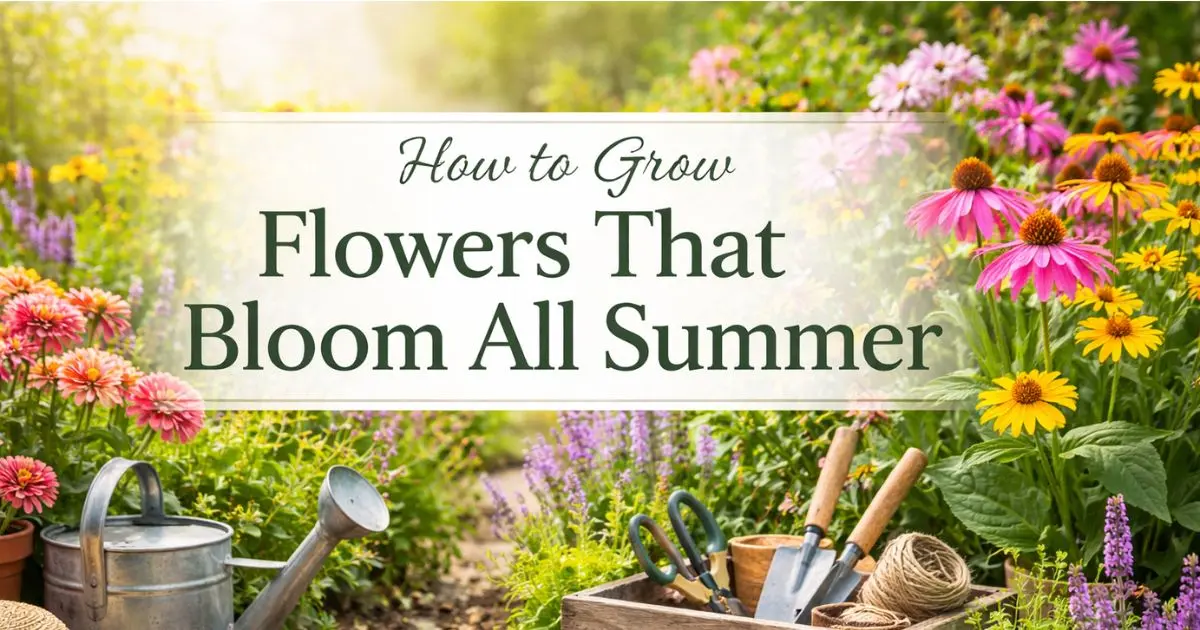
Imagine stepping into your garden every day to see vibrant, colorful blooms that last all summer long. Flowers that continuously bloom add so much life and personality to your outdoor space. This comprehensive guide will walk you through everything you need to know to achieve a garden filled with beautiful, blooming flowers, from planting to ongoing care. Get ready to transform your garden into a perennial paradise!
Why You Should Grow Summer-Blooming Flowers in Your Garden
Growing flowers that bloom all summer isn’t just about beauty. It’s about attracting pollinators, creating a serene outdoor environment, and reaping the rewards of your hard work throughout the warmer months. The right flowers, coupled with thoughtful care, can turn any space into a stunning floral display. So, whether you’re a seasoned gardener or a beginner, this guide is for you. Let’s dive into the practical steps to get your garden blooming non-stop.
Finding the Right Climate for Your Flowers
Best Climate Zones for Flower Growth
Before you start planting, you must consider your local climate. Flowers that bloom all summer thrive in different environments, so selecting varieties that suit your specific zone is crucial.
- Tropical & Warm Climates: Flowers like Sunflowers, Marigolds, and Zinnias thrive in regions with consistent sun and warm temperatures (perfect for climates like India or Pakistan).
- Cooler Regions: In cooler climates, look for flowers like Begonias, Petunias, and Geraniums. These varieties can withstand milder temperatures while still offering vibrant blooms throughout the summer.
If you’re unsure of your climate zone, check with local gardening centers or use climate zone maps to guide your plant choices.
Microclimates: A Garden’s Secret Weapon
A microclimate is a small, localized climate within your garden. The sun exposure of your garden’s specific areas (like a shaded corner or a sunny wall) can dramatically affect how plants grow. Keep an eye out for these microclimates and use them to your advantage. For example, heat-loving plants like marigolds will flourish in sunnier spots, while shade-tolerant varieties like Impatiens will do well under trees or in areas with partial shade.
Preparing the Soil:
The Key to Healthy Blooms Starts With Your Soil
The secret to flowers that bloom all summer long is healthy soil. Well-draining, nutrient-rich soil is essential for your plants to thrive.
- Loamy Soil: Ideal for most flowering plants. It retains moisture while allowing excess water to drain.
- Sandy Soil: Add organic matter to improve moisture retention and nutrient content.
- Clay Soil: Loosen it up with compost or organic material to improve drainage and root penetration.
Adjusting pH and Improving Drainage
Most flowers prefer soil with a pH between 6.0 and 7.0. You can test the soil with a pH kit. If needed, add organic compost to help balance the pH and improve drainage. Healthy soil not only supports the roots but helps retain the nutrients your plants need to produce beautiful blooms.
A Step-by-Step GuideHow to Plant for Success
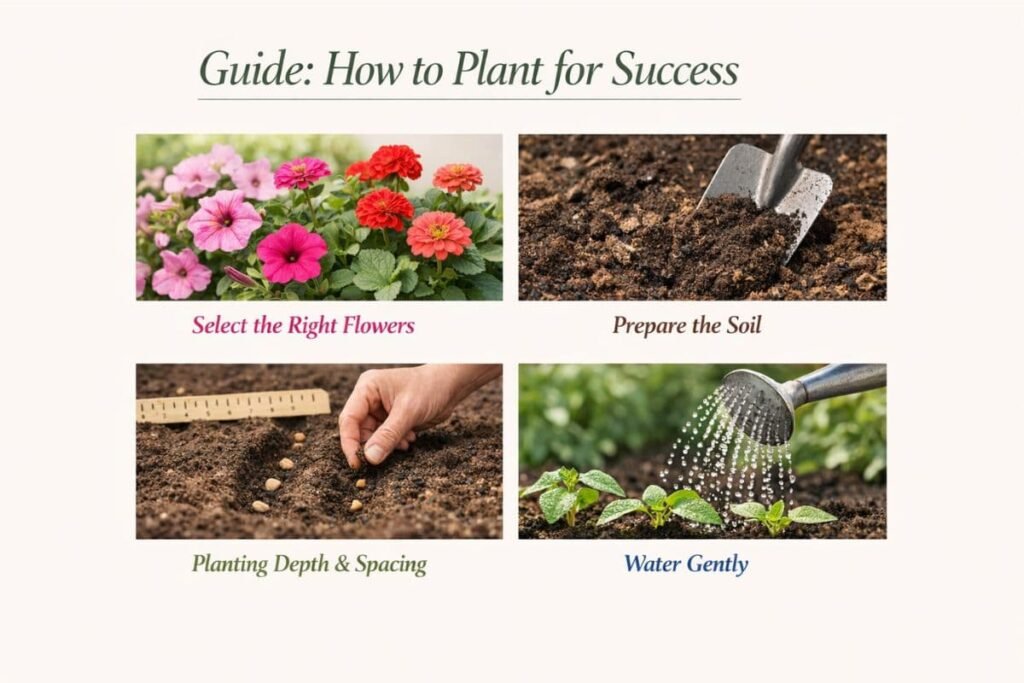
Planting flowers is more than just putting seeds or seedlings in the ground. Proper planting can set the stage for a season of stunning blooms.
- Select the Right Flowers: Choose flowers like Zinnias, Petunias, and Geraniums that are known to bloom all summer.
- Prepare the Soil: Loosen the soil to a depth of 4-6 inches and mix in compost to boost nutrients.
- Planting Depth & Spacing: Follow seed packet instructions on planting depth (typically 2-3 times the size of the seed) and space them adequately to prevent overcrowding.
- Water Gently: After planting, water gently to settle the soil around the roots. Be sure to keep the soil moist until your plants are established.
Getting the Right Amount of Sunlight and Water
Sunlight:
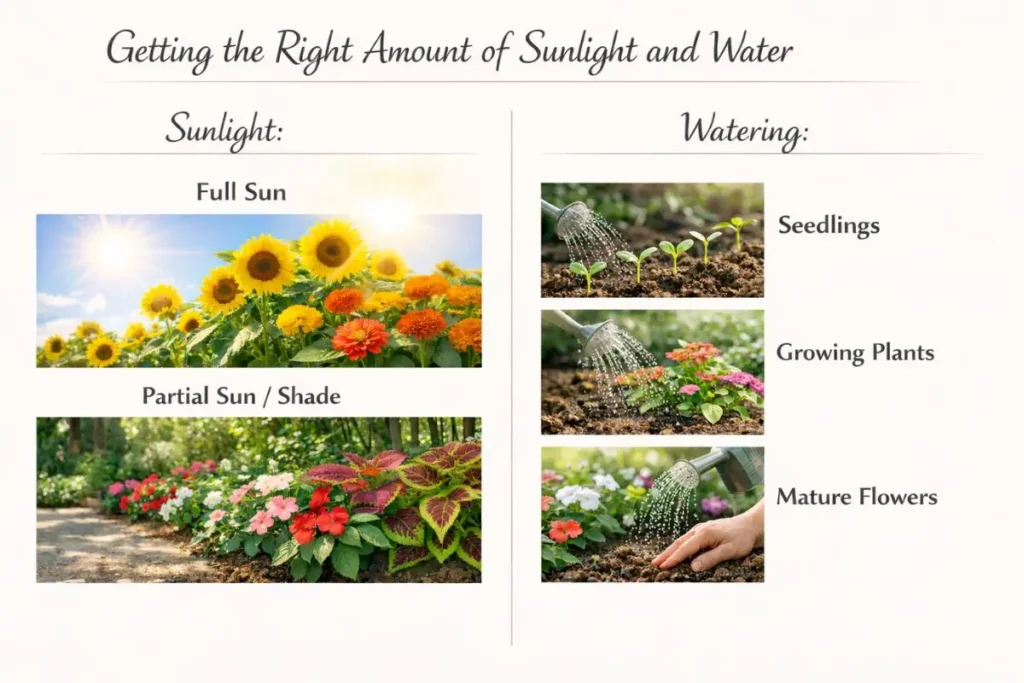
Your flowers need sunlight to thrive, but different varieties have different requirements. Most summer-blooming flowers need 6 hours of direct sunlight each day, so choose your planting spots accordingly.
- Full Sun: Plants like Sunflowers, Zinnias, and Marigolds need full sun to grow strong and produce abundant blooms.
- Partial Sun/Shade: If your garden has shaded spots, consider planting Impatiens, Begonias, and Coleus.
Watering:
While flowers need water, over-watering can be just as harmful as under-watering. Here’s a simple watering guide:
- Seedlings: Keep the soil moist, but not soggy. Water gently.
- Growing Plants: Water deeply 1-2 times a week, depending on rainfall and temperature.
- Mature Flowers: As the flowers establish themselves, reduce watering to encourage deeper root growth. The soil should feel like a wrung-out sponge.
Fertilizing for Long-Lasting Blooms
Choosing the Right Fertilizer
Feed your flowers regularly to ensure vibrant blooms throughout the season. There are two main types of fertilizers:
- Organic Fertilizers: Compost, well-rotted manure, or fish emulsion are all great organic options.
- Synthetic Fertilizers:
- Use balanced NPK fertilizers (with equal amounts of nitrogen, phosphorus, and potassium) to stimulate healthy growth.
Application Tips
- Timing: Apply fertilizer in the early spring when you plant and again every 6-8 weeks during the growing season.
- Avoid Over-Fertilizing: Too much fertilizer can cause plants to grow too quickly and produce fewer flowers. Stick to the recommended dosage.
Mulching and Soil Care
Mulching is your best friend when it comes to keeping your garden healthy throughout the summer. A 2-3 inch layer of mulch helps retain moisture, keep the soil cool, and suppress weeds.
- Organic Mulches: Use bark, straw, or grass clippings to mulch around your plants.
- Weed Control: Keep an eye on weeds, especially during the growing season. They compete for nutrients, so pull them out regularly or use a natural weed killer.
Pruning & Shaping Your Flowers for More Blooms
Pruning for Continuous Growth
Pruning may seem intimidating, but it’s an essential part of keeping your flowers healthy and productive.
- Deadheading: Regularly remove spent blooms to encourage new flowers to grow.
- Cutting Back: For plants like Petunias, trim them back by a third during the growing season to rejuvenate them and stimulate more blooms.
Seasonal Care:
Summer Care
- Watering: Continue watering regularly, especially during dry spells.
- Monitor Pests: Keep an eye on aphids, caterpillars, and slugs that might target your blooms.
- Winter Care
In colder regions, flowers may need extra protection in winter. Some plants can be grown as annuals, while others may need to be brought indoors.
A Timeline of Flower Growth:
Here’s a quick breakdown of what you’ll see as your flowers develop:
- Spring (Planting Time): Prepare your garden and get your flowers in the ground.
- Early Summer (Growth Stage): Flowers start to grow. Water regularly and ensure they get plenty of sun.
- Peak Summer (Full Bloom): Expect beautiful, vibrant blooms. Deadhead and trim to encourage even more flowers.
- Late Summer: Your flowers should continue blooming until the end of the season.
Common Mistakes
- Overwatering: Too much water can drown your flowers. Always check the soil moisture before watering.
- Incorrect Planting Depth: Ensure you plant your flowers at the correct depth for the best root development.
- Neglecting Deadheading: Without deadheading, flowers can stop producing new blooms.
Identifying Pests & Diseases:
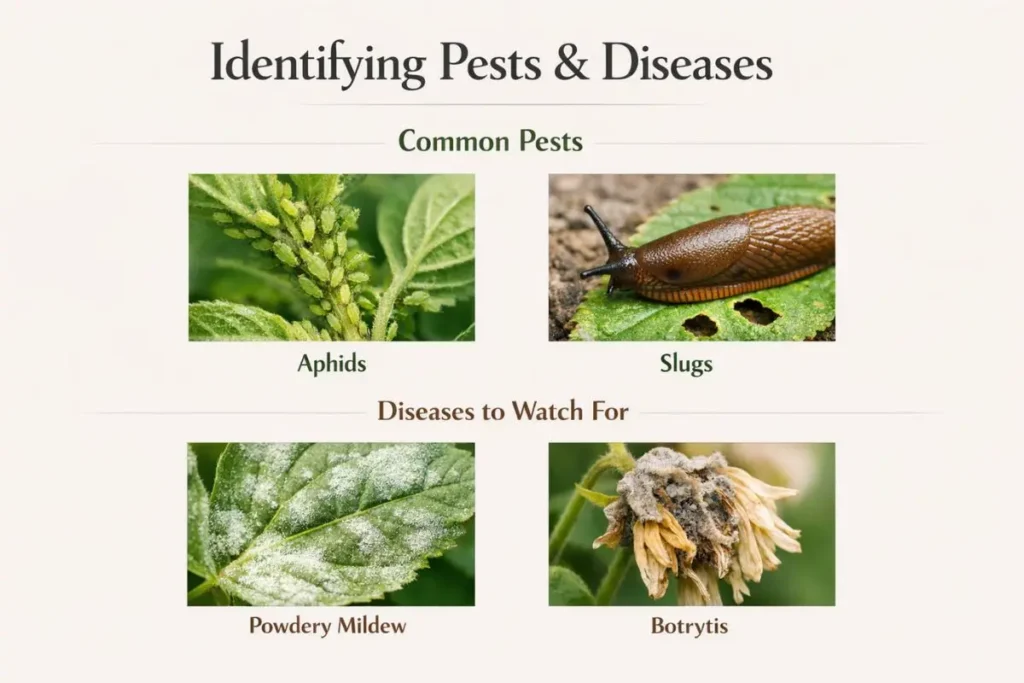
Common Pests
- Aphids: These tiny green insects suck sap from plants. Use neem oil or soapy water to get rid of them.
- Slugs: Slugs can leave holes in your leaves. Use copper strips or slug bait to keep them at bay.
Diseases to Watch For
- Powdery Mildew: Keep your flowers spaced well to prevent fungal diseases. Use fungicides if necessary.
- Botrytis: Remove affected plant parts immediately to prevent further spread.
How to Harvest & Maintain Your Flowers
Once your flowers have bloomed, you can cut them for bouquets or leave them in place for a continuous show of color. Regular maintenance like deadheading and trimming will keep them healthy and encourage more blooms next season.
FAQS
1. Which flowers bloom all summer long?
- Petunias, Zinnias, and Geraniums are excellent choices for non-stop summer blooms.
2. How often should I water my summer-blooming flowers?
- Water deeply 1-2 times a week, adjusting for rainfall.
3. Do I need to prune my flowers regularly?
- Yes, deadheading spent blooms encourages more flowers. Prune back leggy growth to stimulate new blooms.