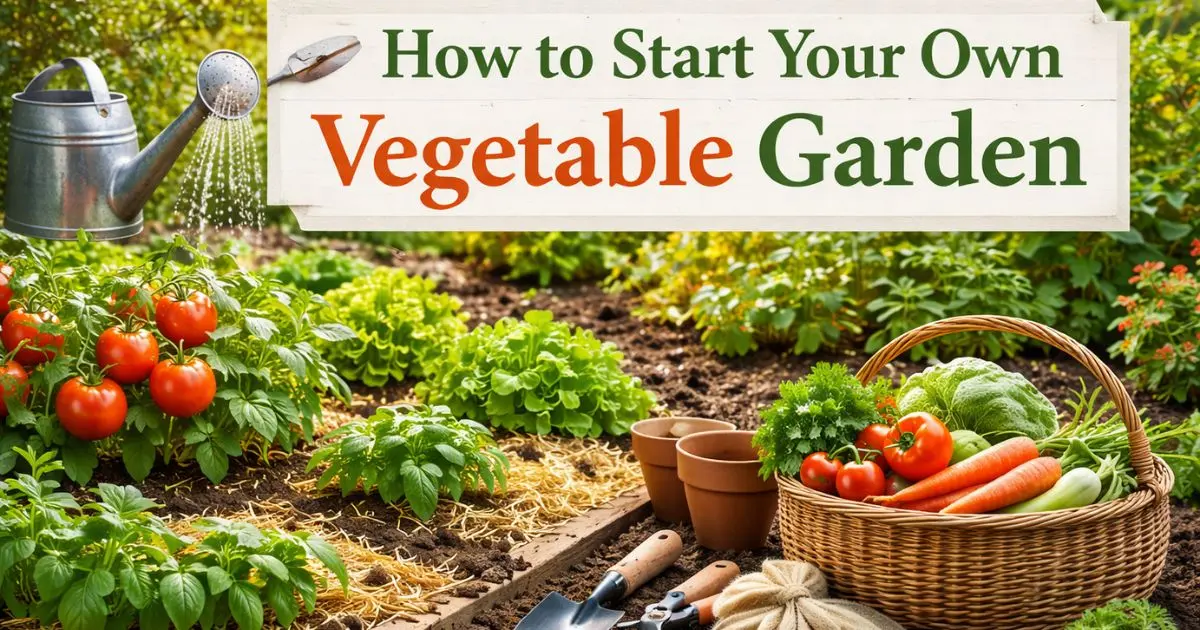
There’s something incredibly rewarding about growing your own vegetables. Not only does it bring fresh food to your table, but it also lets you connect with nature in a way that store-bought produce simply can’t match. If you’re just starting out, the process can seem intimidating, but I’m here to make it simple and enjoyable. Whether you’re gardening on a terrace, in a backyard, or in a small plot, this guide will provide you with all the steps to create a thriving vegetable garden.
Why Should You Grow Your Own Veggies?
Before we start planting, let’s talk about why you should even bother growing your own vegetables in the first place:
- Freshness at Your Fingertips: There’s nothing quite like the taste of homegrown veggies. Picking them fresh from your garden means they’re packed with flavor and nutrients.
- Save Money: Over time, your home vegetable garden can save you quite a bit on grocery bills. Plus, you only need a small space to grow a lot of food.
- Healthier Choices: You control the growing process, so you can avoid harmful pesticides and chemicals, ensuring that you’re eating wholesome, clean food.
- The Joy of Gardening: Growing your own vegetables gives you a deep sense of satisfaction and accomplishment. Watching them grow from seed to harvest is incredibly rewarding.
Which Vegetables to Grow:
Starting small is key when you’re new to gardening. Here are a few vegetables that are perfect for beginners:
- Tomatoes: A classic favorite for home gardens. They need plenty of sun and care, but the payoff is worth it.
- Lettuce: Grows fast and thrives in cooler weather. Perfect for your first harvest.
- Carrots: Super easy to grow and do well even in small spaces.
- Spinach: A cool-season plant that’s perfect for beginners and grows quickly.
- Cucumbers: They love the sun and grow rapidly, making them perfect for your garden.
Tip:
Start with just a few varieties of vegetables to avoid feeling overwhelmed. Once you feel confident, you can expand your garden.
Understanding Your Climate:
Every garden is unique because of its climate. What grows well in one region might not do so well in another. Here’s what you need to know:
Climate Zones
The success of your vegetable garden will largely depend on your local climate. For instance:
- Hot, sunny climates: Think about vegetables like tomatoes, peppers, and squash. These plants thrive in warm, sunny weather.
- Cooler climates: Vegetables like lettuce, carrots, and peas love the chill and don’t require as much sun.
- Microclimates
Even if your garden gets a lot of sun, certain areas (like shaded corners or spots near walls) may have different conditions. You can use these microclimates to your advantage:
- Shaded areas: Perfect for leafy greens like spinach or kale.
- Sunny spots: Ideal for crops like tomatoes, peppers, and cucumbers.
Soil Prep :
Healthy soil is the cornerstone of a successful garden. Here’s how to get it right:
Check Your Soil Type
- Loamy soil: The best soil for growing veggies, it’s well-draining and rich in nutrients.
- Clay soil: Dense and slow to drain, clay soil can be tough. Add compost to improve its texture and drainage.
- Sandy soil: Doesn’t hold nutrients well. You’ll need to amend it with organic material to make it fertile.
pH Balance
Most vegetables grow best in neutral soil (pH 6.0-7.0). You can easily test your soil’s pH with a simple kit, available at most gardening stores. If it’s too acidic (below 6), add lime; if it’s too alkaline (above 7), add sulfur.Amend the Soil
Add organic matter like compost, aged manure, or peat moss to improve your soil’s texture, retain moisture, and add nutrients.
Planting Your Vegetables: Step-by-Step
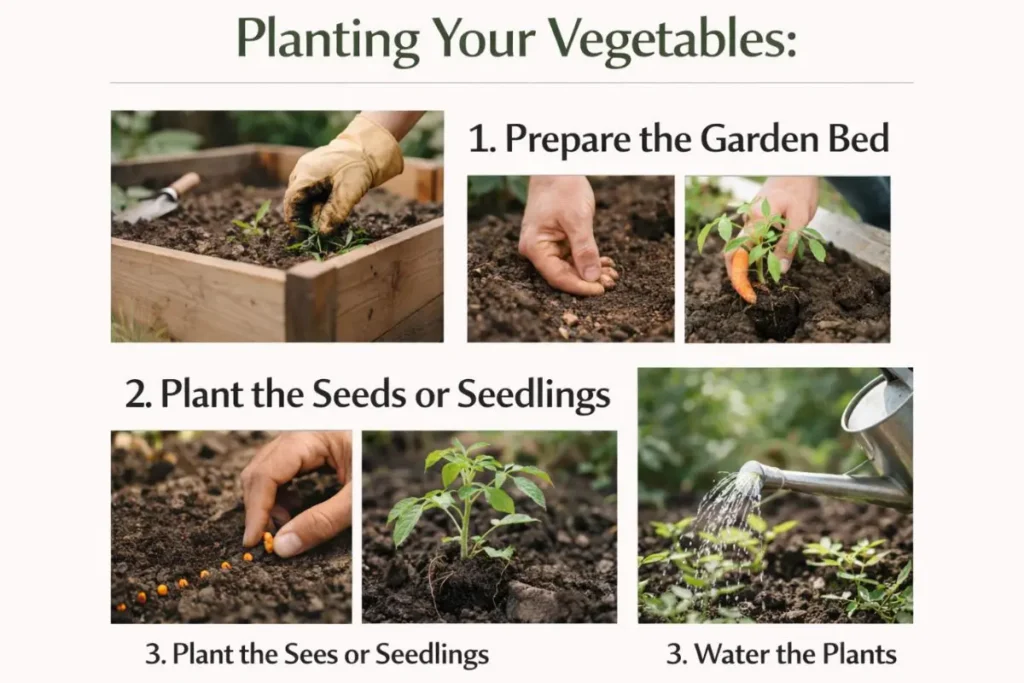
Now that your soil is ready, it’s time to plant. Here’s a quick guide for planting success:
1. Prepare the Garden Bed
Clear the area of any weeds or debris. If you’re working with a small space, consider creating raised beds or container gardens. This helps improve drainage and keeps the plants more organized.
2. Plant the Seeds or Seedlings
Follow the planting instructions for each plant. For example:
- Carrots: Sow seeds 1/4 inch deep and space them about 1–2 inches apart.
- Tomatoes: Dig a hole deep enough to bury the stem up to the first set of leaves. Space them about 18 inches apart.
3. Water the Plants
After planting, water your vegetables gently. Seedlings need moisture to establish their roots, but be careful not to drown them.
Sunlight & Watering:
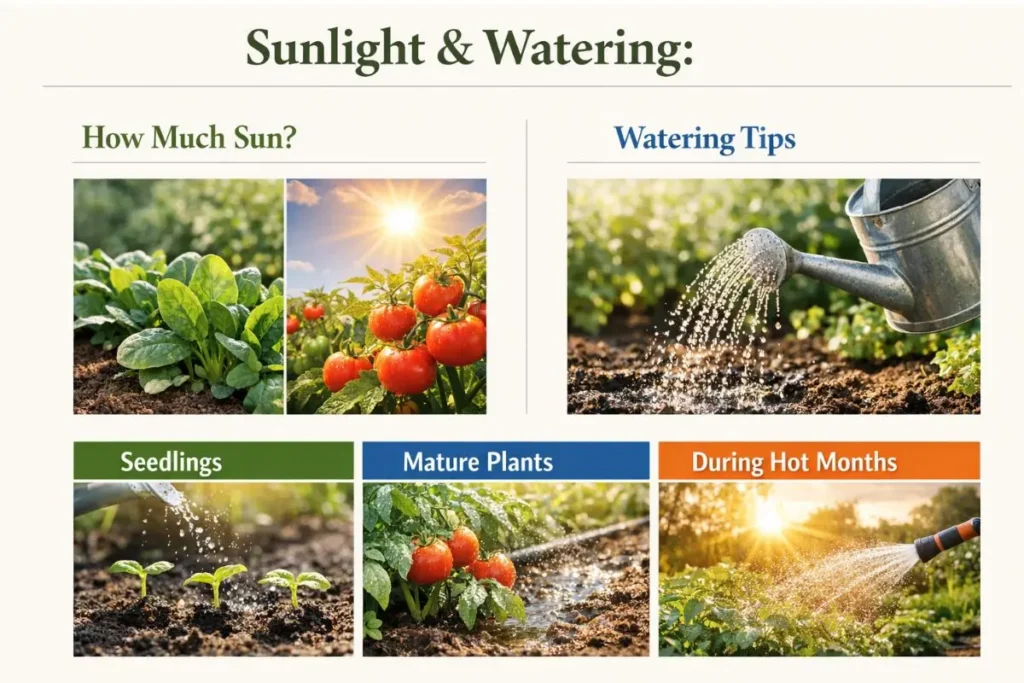
How Much Light Do Your Plants Need?
Most vegetables need around 6-8 hours of direct sunlight each day to thrive. For leafy vegetables like spinach, partial sun will work just fine. For fruiting vegetables like tomatoes, peppers, and cucumbers, they need full sun to grow strong.
Watering Tips
- Seedlings: Keep the soil moist, but not soaked. Water them every day until they are established.
- Mature Plants: Water deeply 1–2 times a week, depending on the temperature and rainfall.
- During Hot Months: Water early in the morning or late in the evening to avoid evaporation.
Tip:
Always feel the soil before watering. If it feels dry a couple of inches down, it’s time to water.
Fertilization and Nutrition
Organic vs. Synthetic Fertilizers
- Organic Fertilizers (like compost or organic liquid fertilizers) are slow-release, meaning they provide nutrients over time and improve soil health.
- Synthetic Fertilizers work fast but don’t improve the soil. They are effective for short-term results but might harm the long-term soil quality.
Fertilization Schedule
- Vegetable Garden Start: Fertilize with a balanced fertilizer when planting, then every 4–6 weeks during the growing season.
Weed and Pest Control:
Mulch to Keep Weeds in Check
After planting, cover the soil with a layer of organic mulch (like straw or shredded leaves). Mulch keeps the soil moist, suppresses weeds, and improves soil quality as it decomposes.
Pest Prevention
- Aphids: These tiny pests love to munch on plants. Spray them off with water or use insecticidal soap.
- Slugs and Snails: These pests love damp areas. Set up beer traps or place crushed eggshells around your plants to deter them.
Tip: Always check for pests regularly, especially after rain.
Seasonal Tips:
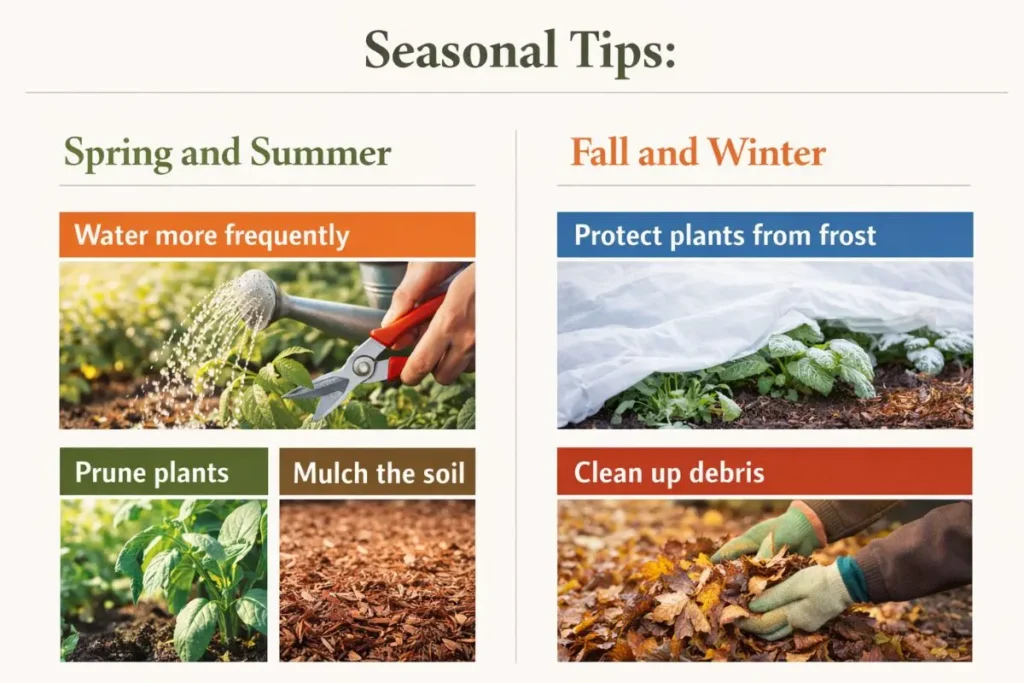
Spring and Summer
- Water more frequently: Especially during hot weather.
- Prune plants: Trim off any dead or damaged leaves to encourage healthy growth.
- Mulch the soil: This helps retain moisture and suppress weeds.
Fall and Winter
- Protect plants from frost: Cover them with a frost cloth or move containers indoors during cold snaps.
- Clean up debris: Remove fallen leaves and dead plants to prevent diseases.
Common Mistakes to Avoid
1. Overwatering:
Plants need water, but too much can drown their roots. Always check the soil before watering.
2. Planting Too Close Together:
Crowded plants compete for water and nutrients, leading to poor growth. Make sure to follow the spacing guidelines for each vegetable.
3. Using the Wrong Fertilizer:
Using a high-nitrogen fertilizer for plants like tomatoes can result in lush leaves but few fruits. Stick with balanced fertilizers for most vegetables.
FAQ:
1. How often should I water my vegetables?
Water deeply once a week, or more often during very hot weather. Always check the soil before watering.
2. Can I grow vegetables in containers?
Yes! Many vegetables, like tomatoes, lettuce, and herbs, do well in containers.
3. What’s the best time to plant vegetables?
The best time to plant depends on your local climate. Typically, you should plant in early spring after the last frost date.