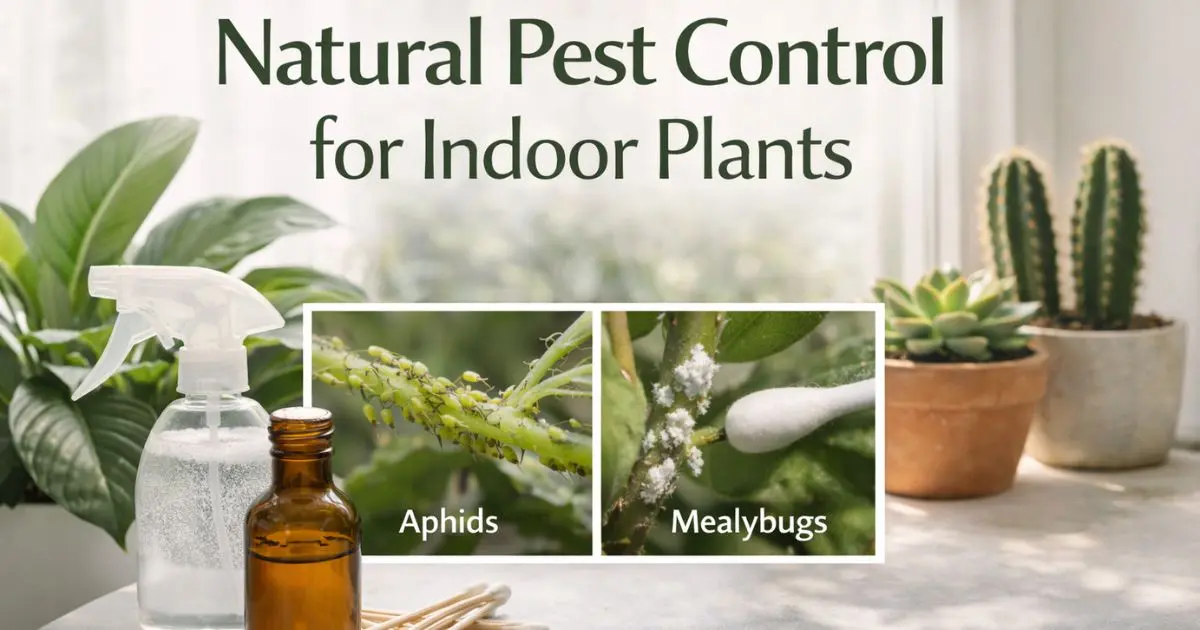
Caring for indoor plants can bring joy and beauty into your space, but it also comes with its own set of challenges—chief among them, pests. Whether it’s tiny aphids or stubborn mealybugs, pests can wreak havoc on your beloved plants. Fortunately, you don’t need chemical pesticides to keep your garden healthy and thriving. This guide provides simple, natural solutions to help you control pests in your indoor garden.
Understanding Indoor Plant Pests
Indoor plant pests are more than just a nuisance. Left unchecked, they can cause damage to your plants, affecting their health, growth, and overall vitality. Identifying pests early is crucial—once you know what you’re dealing with, you can act quickly to save your plants.
For example:
- Aphids, those small green or black insects, feast on plant sap, weakening the plant.
- Mealybugs appear as cotton-like clusters and target stems and leaves.
- Fungus gnats, which look like tiny flies, thrive in overly wet soil.
Luckily, there are plenty of natural, safe ways to control them—let’s dive into the steps you can take.
Creating the Perfect Indoor Garden Environment
The best way to prevent pests is to ensure your indoor garden is as healthy and thriving as possible. Here’s how you can create an environment that naturally deters pests.
Ideal Climate for Indoor Plants
Indoor plants thrive in stable, controlled environments. Most plants prefer warm and humid conditions, but some varieties may do better in drier spots.
For example:
- Tropical plants like ferns and orchids love high humidity, making them ideal for bathrooms or kitchens.
- Succulents and cacti, on the other hand, prefer drier air and cooler temperatures.
Creating a stable environment minimizes stress on plants and helps keep pests at bay. Try grouping your plants together to increase humidity or using a humidifier if your home tends to be dry.
Creating Microclimates
In homes with fluctuating humidity (like those with air conditioning), you may need to help plants adjust. Create small microclimates by placing plants close together or using a humidity tray—a shallow container filled with pebbles and water placed under the plants.
Healthy Soil, Happy Plants
Good soil is the foundation of a thriving indoor garden. The right soil can help your plants grow strong, resist pests, and thrive for years.
The Right Soil Mix
Indoor plants need soil that is well-draining yet able to retain moisture. Look for a potting mix that includes a blend of perlite, peat moss, and compost. For example, orchids require a special orchid mix that helps with airflow to the roots.
If your soil becomes compacted, it can create a breeding ground for pests, so be sure to loosen it every few months.
pH and Organic Amendments
Plants prefer soil that is slightly acidic to neutral (pH 6-7). Test the pH of your soil periodically, and amend it with organic compost to improve nutrient content and help your plants thrive. This healthy soil also naturally resists pests.
Simple Steps to Planting Success
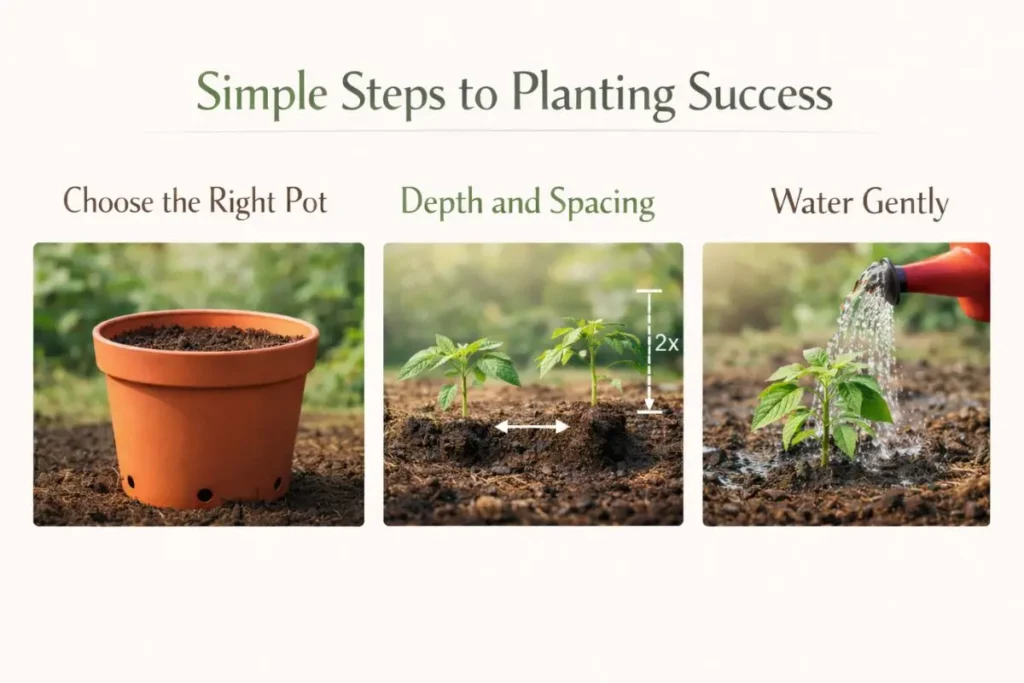
Proper planting techniques are essential for strong, healthy plants. Here’s a simple breakdown of how to give your plants the best start.
- Choose the Right Pot: Make sure it has drainage holes to prevent water from pooling at the bottom. Excess water attracts pests like fungus gnats.
- Depth and Spacing: Follow the planting instructions for your specific plant. As a general rule, plant seeds or seedlings at a depth of twice the size of the seed or root ball.
- Water Gently: After planting, water the soil gently to settle it around the roots. Avoid flooding the soil, which can attract pests.
Getting Sunlight and Watering
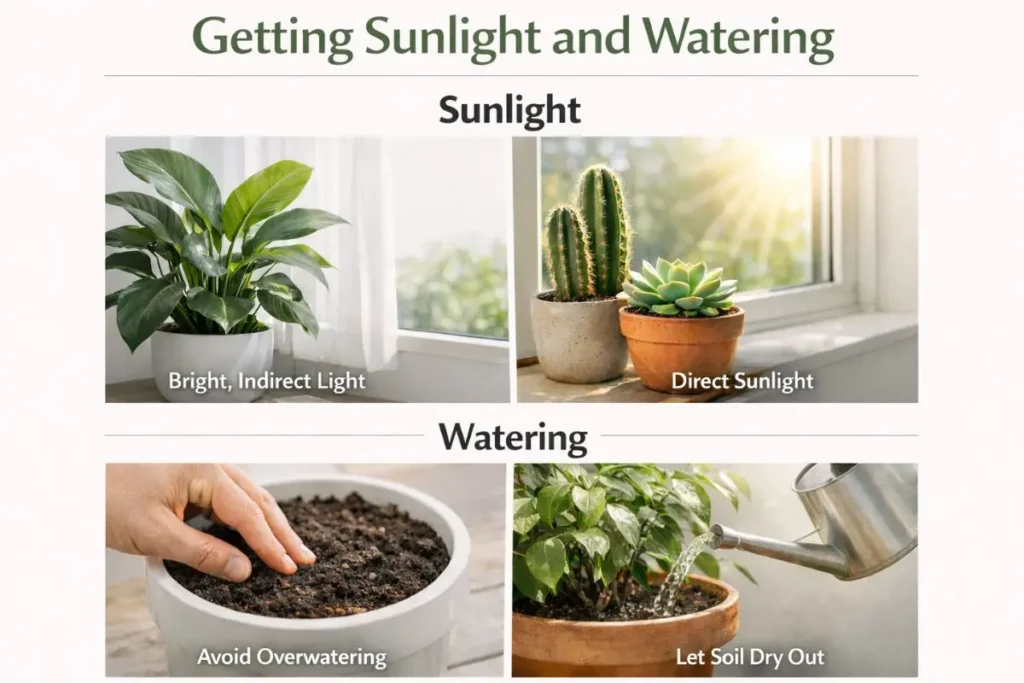
Lighting and watering can make or break your plants. Proper care keeps pests in check by maintaining a strong, healthy plant.
Sunlight:
Each plant has different sunlight requirements:
- Tropical plants need bright, indirect light.
- Succulents prefer direct sunlight.
If your plants aren’t getting the right light, they may become stressed and more susceptible to pests. Make sure they’re placed in an area where they can thrive.
Watering:
Overwatering is one of the most common mistakes gardeners make, and it can lead to a host of pest problems. Ensure your soil dries out between waterings, and use well-draining pots.
- Seedlings need constant moisture, but mature plants prefer slightly drier conditions.
- Test the soil by feeling it—if it’s damp but not soggy, it’s time to water.
If you notice fungus gnats, it’s likely that you’re watering too much.
Organic Fertilization:
Healthy, nourished plants are naturally more resistant to pests. Here’s how to feed your plants the right way.
Organic Fertilizers for Natural Growth
Use organic fertilizers like compost, fish emulsion, or worm castings to provide your plants with balanced nutrients. These fertilizers nourish the plant and help build its natural defenses.
Be careful not to over-fertilize, as this can make plants more vulnerable to pests. Always follow the manufacturer’s instructions for dosage and application.
Mulching and Soil Management
Mulch helps regulate temperature, retain moisture, and prevent weeds—plus, it can help keep pests at bay.
Types of Mulch
- Organic mulch like leaves, straw, or bark decomposes over time, enriching the soil with nutrients.
- Inorganic mulch such as gravel works well for succulents and other dry-loving plants.
Add mulch around the base of your plants to keep soil moisture consistent and minimize the risk of pests like root rot.
Pruning and Training for Healthy Growth
Regular pruning keeps your plants healthy and less inviting to pests by removing dead or diseased parts that could harbor insects.
Pruning Tips
- Prune away dead leaves regularly to prevent rot and disease.
- Trim away excess growth that could crowd the plant and reduce airflow.
- Use clean, sharp tools to avoid spreading disease.
Training Plants for Better Airflow
Supporting your plants—especially vines and tall plants—helps them stay upright and healthy. This ensures that they get the light and airflow they need to resist pests.
Seasonal Care for Long-Term Success
Seasonal changes can affect your indoor plants’ pest susceptibility. Here’s how to adjust care for the different seasons.
Summer Care
In summer, when temperatures rise, be mindful of heat stress. Avoid direct sunlight on plants that aren’t used to it, and increase humidity for tropical plants. Don’t forget to check for pests like spider mites that thrive in dry heat.
Winter Care
In winter, when many plants go dormant, reduce watering. Keep plants away from cold drafts, as extreme cold can weaken them and make them more vulnerable to pests.
Rainy Seasons
During rainy seasons, humidity rises, which can encourage pests like mealybugs. Keep plants in a well-ventilated area, and avoid letting water pool around the roots.
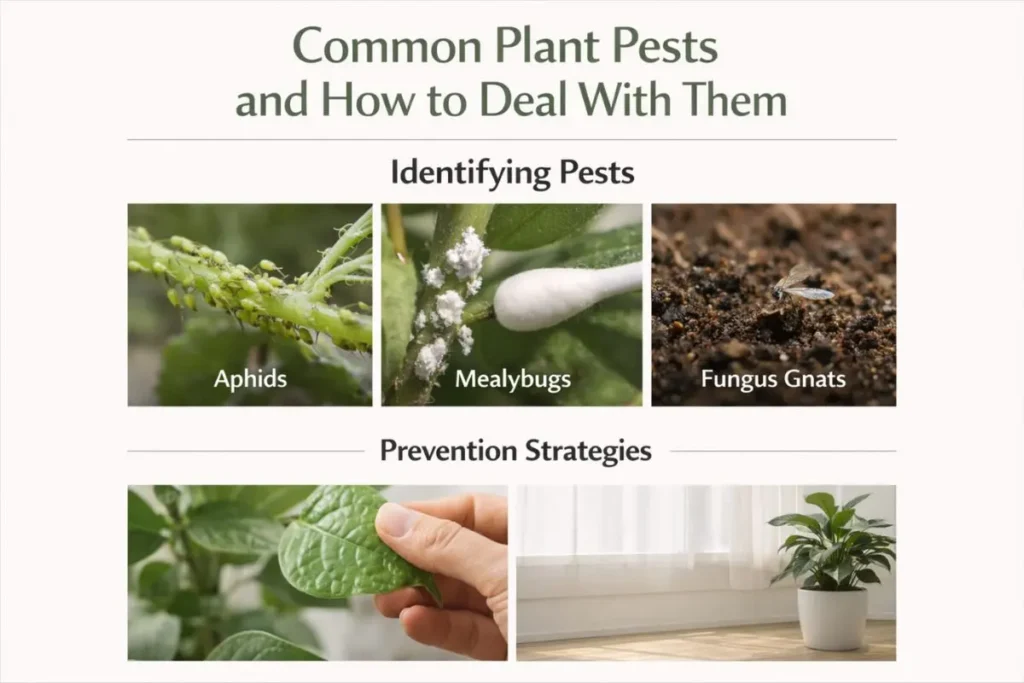
Common Plant Pests and How to Deal With Them
Identifying Pests
It’s crucial to identify pests early to manage them effectively. Here are a few common pests and their natural remedies:
- Aphids: Look for clusters of tiny, green or black bugs on the stems. Remedy: Spray with soapy water.
- Mealybugs: These pests leave behind a cotton-like substance. Remedy: Dab the bugs with rubbing alcohol using a cotton swab.
- Fungus Gnats: These small flying pests live in moist soil. Remedy: Let the soil dry out between waterings.
Prevention Strategies
- Inspect your plants regularly for any signs of pests.
- Isolate new plants for a few weeks before introducing them to avoid bringing in pests.
Harvesting and Maintaining Long-Term Plant Health
Regular maintenance is key to long-term plant success. For flowering plants, be sure to cut flowers at their peak to encourage more blooms. For fruits and vegetables, harvest when they are ripe to prevent attracting pests.
Long-Term Care
To keep your plants healthy long-term:
- Rotate plants every few months to prevent pest build-up.
- Refresh the soil periodically to maintain nutrient levels and prevent pests.