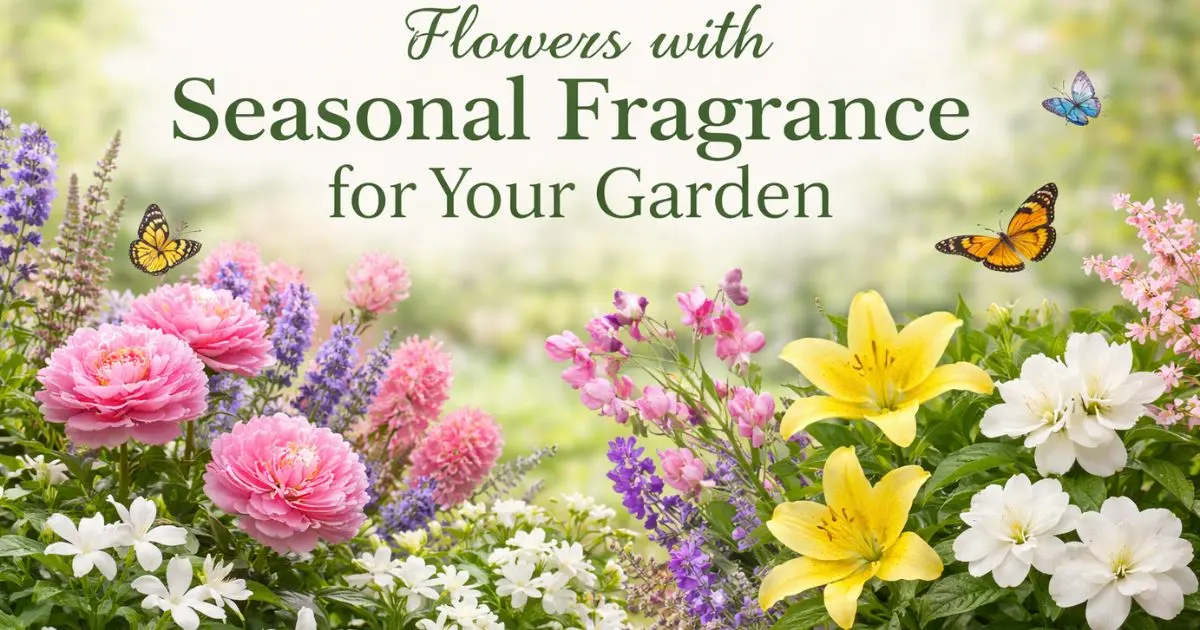
Magine stepping into your garden and being greeted by a burst of delightful fragrances that change with each season. The power of scent is not just for the perfume industry—your garden can become a sensory journey through the year with the right fragrant flowers. Whether you’re an experienced gardener or just starting out, this guide will show you how to create a garden full of seasonal scents that not only look beautiful but also fill your space with natural, fragrant aromas all year round.
Why Fragrant Flowers Are a Must Have in Your Garden
Fragrant flowers do more than just enhance your garden’s beauty—they bring an added layer of sensory joy. Seasonal blooms provide fresh scents throughout the year, attracting pollinators like bees, butterflies, and hummingbirds, while creating a tranquil, aromatic atmosphere. With these flowers, your garden becomes a living, evolving space, offering delightful fragrances that change with the seasons. Let’s explore how you can grow these seasonal scents in your own backyard or terrace.
Crafting the Perfect Garden for Scented Flowers
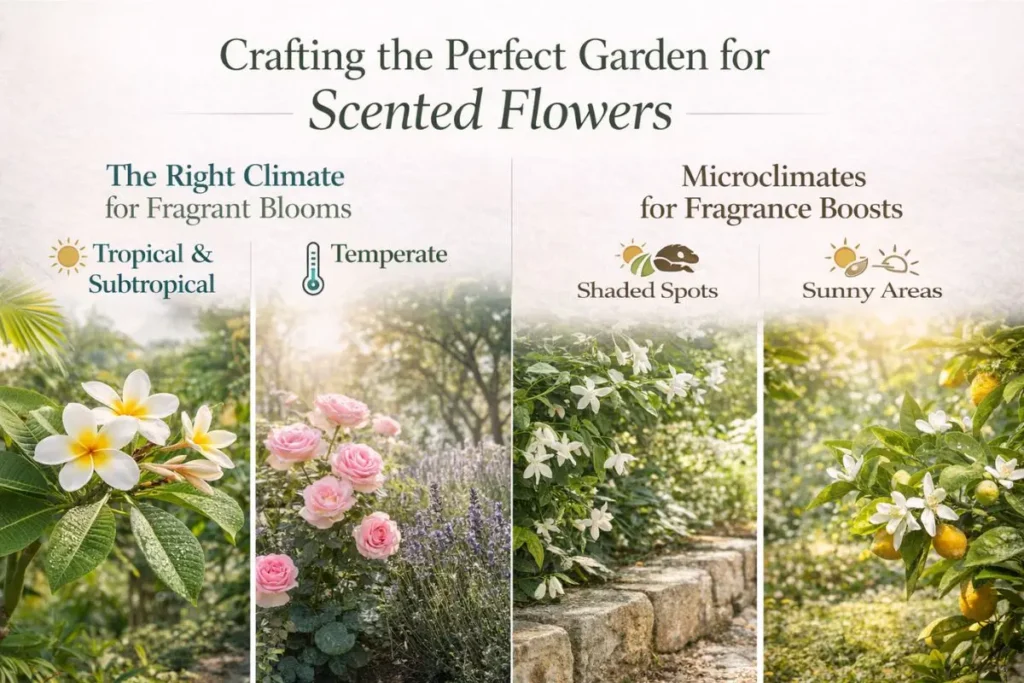
Before you start picking flowers, it’s essential to understand the climate and growing conditions for seasonal fragrant flowers. These blooms are all about timing, temperature, and the right care. Let’s explore how to create the perfect environment for them.
The Right Climate for Fragrant Blooms
Fragrant flowers are versatile, but they do require certain environmental conditions to shine. Here’s how the climate impacts your flowers:
- Tropical & Subtropical Areas: Ideal for flowers like frangipani and plumeria, which thrive in the warmth and humidity.
- Temperate Climates: Flowers such as roses and lavender are perfect for cooler regions with distinct seasons.
- Arid Climates: Even in drier conditions, you can grow fragrant jasmine and citrus blossoms with a little extra care.
By knowing the climate preferences of each flower, you can ensure your garden is set up for success, regardless of where you live.
Microclimates for Fragrance Boosts
Creating microclimates within your garden is another great way to support different flowers. For example, shaded spots work well for plants that need cooler conditions, while sunny areas provide the warmth needed for more delicate flowers. Understanding these microclimates will allow you to grow a variety of scented flowers throughout the year.
Seasonal Fragrant Flowers
Each season offers its unique fragrances, and by planting the right flowers, you can enjoy a garden that smells amazing from spring to winter. Here’s your seasonal guide to the best fragrant blooms.
Spring Awakening:
Spring is all about new growth and renewal, and what better way to celebrate than with flowers that greet the season with an unforgettable fragrance?
Lilac (Syringa vulgaris)
- Why It’s Special: Lilacs are the epitome of spring fragrance—sweet, floral, and refreshing.
- Best Growing Conditions: Full sun and well-drained soil.
Care Tips: Prune after blooming to encourage fresh growth and a better shape.
Hyacinth (Hyacinthus orientalis)
- Why It’s Special: Hyacinths pack a punch with their strong, sweet, and intense fragrance.
- Best Growing Conditions: Plant the bulbs in well-drained soil with full sun.
Care Tips: Water well after planting, then allow the soil to dry out slightly between waterings.
Summer Bliss:
Summer is the time when your garden comes alive, and fragrant flowers are at their peak. These beauties will make sure your garden smells as good as it looks.
Jasmine (Jasminum)
- Why It’s Special: Jasmine’s exotic, sweet scent fills the evening air.
- Best Growing Conditions: Full sun and well-drained soil.
Care Tips: Prune regularly to maintain shape and encourage new growth.
Lavender (Lavandula)
- Why It’s Special: Lavender’s refreshing, herbal scent is both calming and energizing.
- Best Growing Conditions: Full sun and slightly alkaline, well-drained soil.
Care Tips:Prune back after flowering to keep the plant compact and encourage new blooms.
Autumn’s Aroma:
As the weather cools, certain flowers continue to bloom, providing fragrance during the fall. These are perfect for extending your garden’s sensory journey.
Sweet Alyssum (Lobularia maritima)
- Why It’s Special: This flower’s light, honey-like fragrance is perfect for fall.
- Best Growing Conditions: Thrives in full sun to partial shade.
Care Tips: Deadhead regularly to keep the blooms coming all season.
Winter Jasmine (Jasminum nudiflorum)
- Why It’s Special: Unlike most jasmine varieties, this one blooms in the cooler months, offering a gentle scent.
- Best Growing Conditions: Full sun or partial shade in well-drained soil.
Care Tips: Winter jasmine is low maintenance but should be pruned after blooming to maintain shape.
Winter’s Charm:
Even in winter, you can have fragrant flowers in your garden. These hardy plants will fill the air with sweetness during the colder months.
Witch Hazel (Hamamelis)
- Why It’s Special: Witch hazel’s spicy, floral fragrance can brighten up any winter day.
- Best Growing Conditions: Full sun or partial shade in well-drained soil.
Care Tips: Minimal maintenance, but be sure to water it during dry spells.
Paperwhite Narcissus (Narcissus tazetta)
- Why It’s Special: These flowers offer a bold, sweet fragrance that can fill your garden even in winter.
- Best Growing Conditions: Full sun and well-drained soil.
Care Tips: Plant in fall, and water sparingly until blooms appear.
Planting and Caring for Fragrant Flowers
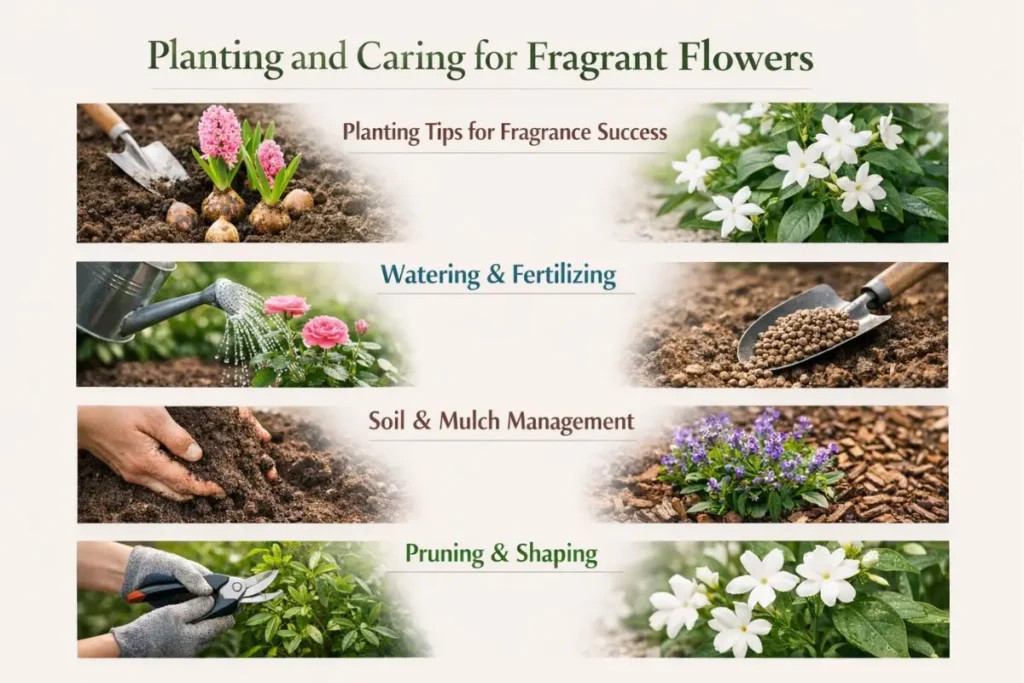
Caring for your fragrant flowers requires more than just planting them—here’s a guide on how to give them the best possible environment for success.
Planting Tips for Fragrance Success
- Choose the Right Location: Make sure to plant your fragrant flowers in locations that match their sunlight and temperature preferences. Some need full sun, while others thrive in partial shade.
- Correct Planting Depth: For bulbs, like hyacinths, plant at a depth of 2-3 times the size of the bulb. For shrubs like jasmine, follow the planting instructions for depth based on root ball size.
- Proper Spacing: Fragrant flowers often need space for air circulation, which helps prevent disease and pest problems. Make sure to leave enough room between each plant.
Watering and Fertilizing
- Watering: Most fragrant flowers prefer consistent moisture. Water when the soil feels dry to the touch, but avoid over-watering, which can lead to root rot.
- Fertilizing: Use organic fertilizers, such as compost or fish emulsion, to promote healthy growth. Avoid over-fertilizing, as this can lead to excessive foliage growth at the expense of fragrance.
Soil and Mulch Management
- Soil: Ensure that the soil is rich, well-drained, and slightly acidic to neutral for most fragrant flowers. Amend the soil with compost for added nutrients.
- Mulch: Apply organic mulch to retain moisture and suppress weeds. This is especially useful in hot summer months to keep the roots cool.
Pruning and Shaping
Prune your fragrant flowers to remove spent blooms and encourage new growth. For shrubs like jasmine, pruning after blooming will keep the plant healthy and compact. Always use clean, sharp pruning tools to prevent disease.
FAQS
1. Can I grow fragrant flowers in pots?
Yes! Many fragrant flowers, like lavender and jasmine, grow beautifully in pots. Just ensure the pot has proper drainage and enough sunlight.
2. How do I make sure my flowers bloom with fragrance?
To get the best fragrance, plant your flowers in the appropriate climate, give them enough sunlight, and avoid over-watering or over-fertilizing.
3. Are fragrant flowers difficult to care for?
Not at all! With the right care, most fragrant flowers are quite easy to maintain. Just be sure to follow planting, watering, and pruning guidelines.