
Protecting young garden plants from wind is crucial for their healthy growth. Wind can cause wind damage to seedlings, uproot plants, and dry out soil, leaving your garden vulnerable. In this guide, we’ll share expert tips on how to safeguard your young garden plants from wind, including practical advice on creating windbreaks for plants, preparing soil for plants, staking plants for wind resistance, and proper watering techniques. Whether you’re gardening on a terrace or in a backyard, these strategies will help protect plants from wind, strengthen their roots, and promote healthy growth throughout the seasons.
The Wind’s Hidden Threat to Your Garden
As gardeners, we know the joy of watching young plants thrive, but wind can quickly turn that excitement into frustration. Strong gusts can uproot seedlings and break tender stems, stunting growth or even killing plants. Whether on a terrace or in a backyard, you can protect your plants from wind damage with a few simple, practical strategies. Let’s explore how to fortify your garden and help your plants thrive, no matter the weather.
Why Wind Is So Hard on Young Plants
Young plants have delicate roots and stems, making them more susceptible to wind damage. Wind can dry out soil, break branches, and harm the plant’s structure. In areas with strong winds, like coastal or monsoon regions, creating a wind-friendly environment is essential for their health. Let’s explore ways to protect your plants.
Creating the Right Environment:
Windbreaks: Natural Protection for Your Plants
One of the most effective ways to protect young plants is by using windbreaks. These are barriers, either natural or man-made, that reduce wind speed and protect your plants.
- Hedges and Shrubs: Plant tall, bushy shrubs or hedges around your garden to slow down wind. Think of them as your garden’s bodyguards, shielding your plants from harsh gusts.
- Walls or Fences: If you have a wall or fence in your garden, use it to your advantage. Position your young plants just on the leeward side to provide them with some natural shelter from the wind.
Positioning Plants Smartly
In addition to physical barriers, consider where you place your plants. For example, putting your plants closer to taller trees or even against walls can reduce wind exposure. Think of it like setting your plants in a cozy corner away from the draft!
Soil That Works
Healthy Soil Is Your First Line of Defense
To thrive, plants need strong, well-anchored roots. The best way to ensure your young plants can handle the wind is to make sure they’re planted in soil that helps them develop strong, deep roots.
- Choose Well-Drained Soil: Loamy soil is your best bet for growing plants that are both healthy and strong. It drains well and keeps your plant roots well-aerated, preventing them from becoming too waterlogged.
- Balance the pH: Most plants prefer neutral soil. Use a pH testing kit to check the soil’s acidity and adjust accordingly.
Enrich the Soil with Organic Matter
Mix compost or organic matter into your soil to improve its texture and nutrient content. Healthy soil will encourage strong root development, which helps young plants hold their ground during windstorms.
How to Plant for Stability
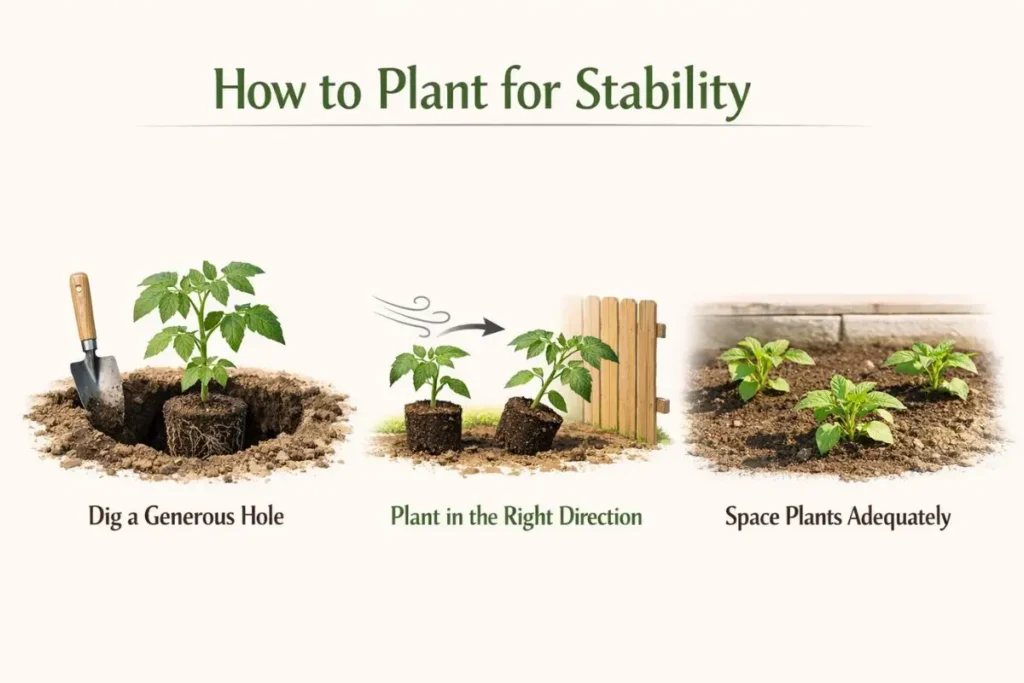
When planting your young plants, positioning them correctly can help ensure they grow stable and strong:
- Dig a Generous Hole: Make the hole at least twice the size of the root ball. This gives the roots ample space to spread and become established.
- Plant in the Right Direction: If you’re growing plants that are prone to toppling over, position them in the direction opposite the prevailing wind. If planting near a fence or wall, position them where they get the most shelter.
- Space Plants Adequately: Avoid overcrowding. When plants are too close together, they can become weak and spindly, making them more vulnerable to wind damage.
Nurturing Your Plants
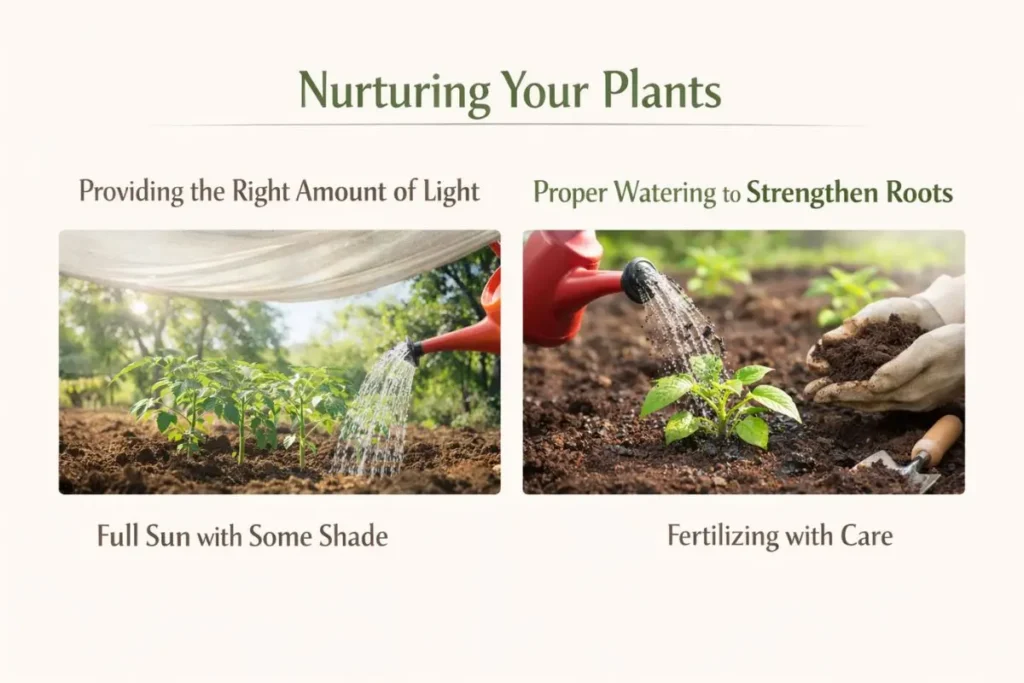
Providing the Right Amount of Light
- Full Sun with Some Shade: While most young plants need full sunlight, they can also benefit from shade during the hottest part of the day. Use shade cloth or plant taller trees nearby for filtered sunlight.
Proper Watering to Strengthen Roots
- Water Deeply, Not Frequently: Water your plants deeply but infrequently. This encourages roots to grow deeper into the soil, which helps anchor them. The soil should feel like a wrung-out sponge, not too dry but not soaking wet.
Fertilizing with Care
Fertilize your plants with organic fertilizers like compost or well-rotted manure. Over-fertilizing can make plants more susceptible to wind damage, so go light on the feed.
Covering the Soil
The Magic of Mulch
Mulch is a garden superhero—it not only helps retain moisture and keep weeds at bay, but it also stabilizes the soil temperature, making it easier for your plants to establish strong roots.
- Types of Mulch: Shredded bark, straw, or leaves are great choices for mulching. They help keep the soil moist and cool, especially on windy days when the air is dry.
How to Mulch Like a Pro
Spread a 2-3 inch layer of mulch around your plants, keeping it a few inches away from the stems to prevent rot. Make sure the mulch is evenly spread for the best effect.
Wind-Proofing with Pruning and Training Techniques
The Art of Pruning
Pruning isn’t just about making your plants look pretty—it helps them grow stronger. By removing dead or weak branches, you ensure that the plant focuses its energy on healthy growth. A well-pruned plant is better able to resist the wind.
- Prune Regularly: Remove any damaged or weak branches early in the growing season. If you’re growing a tall plant, prune it in such a way that it has a strong, central leader stem.
Supporting Tall Plants with Stakes
For taller plants, using stakes can help prevent them from being knocked over by the wind. Use soft ties to secure the plant gently to the stake, ensuring it remains upright without damaging the stem.
Seasonal Care
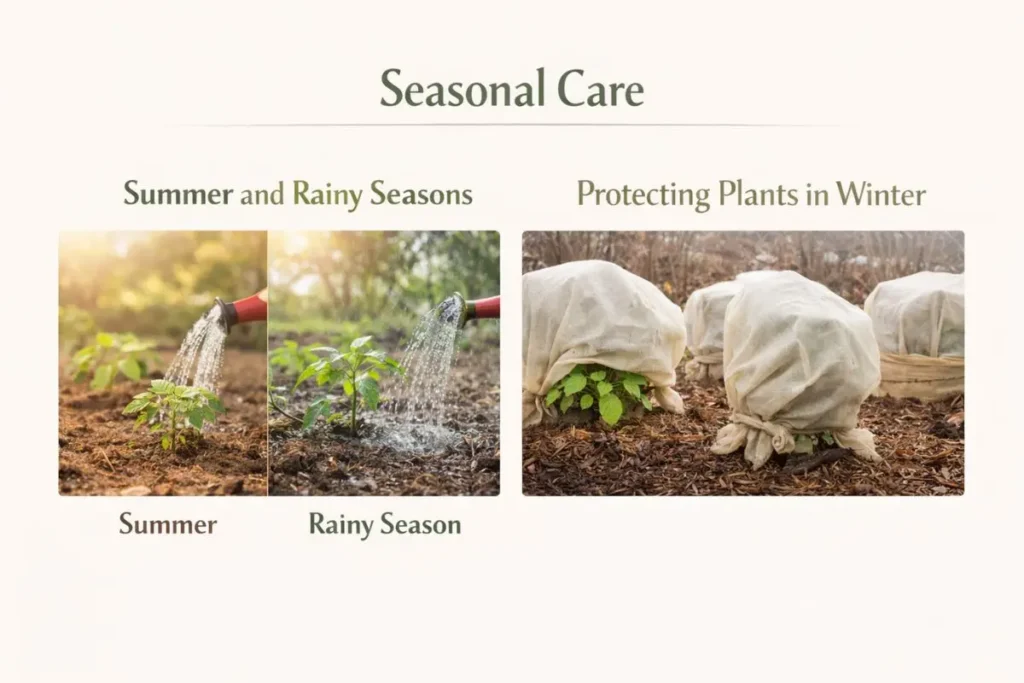
Summer and Rainy Seasons
- Summer: Winds can dry out the soil and stress your plants. Water more frequently but make sure not to overwater.
- Rainy Season: After heavy rain, check for erosion or soil compaction around the roots. Add mulch if needed to keep the soil in place.
Protecting Plants in Winter
Cold winds can dry out your plants, so it’s important to cover them with frost cloths or burlap. Ensure that the soil around your plants is well-mulched to provide extra protection from the cold.
What to Expect
- First Few Months (Seedling Stage): Provide lots of protection—windbreaks, shelter from the sun, and regular watering. Plants are still establishing their root systems.
- Months 4-6: As your plants start to grow stronger, you can start training and pruning them for better wind resistance.
- Months 7-12: Your plants should now have more developed roots and stronger stems, ready to withstand more wind exposure.
Common Mistakes
- Overwatering: This is a common mistake that weakens the roots. Always test the soil before watering to ensure it’s not too wet.
- Ignoring Windbreaks: Even if you’re in a sheltered area, always have some form of wind protection, like a hedge or wall.
Pests, Diseases, and Wind
Wind can carry pests and diseases, so regularly inspect your plants for signs of damage. A simple check for wilting or discoloration can help you catch problems early.
Organic Pest Control
If you find pests, use natural remedies like neem oil or insecticidal soap. Avoid harsh chemicals that could harm beneficial insects and the environment.
Harvesting
As your plants mature, you’ll need to adjust your care routine accordingly. Keep an eye on weather conditions, especially during strong winds, and be ready to protect your plants when necessary.
FAQ:
Q1: How can I tell if my plant is being affected by wind?
Look for broken stems, bent branches, or dried leaves. These are clear signs that the wind is causing stress.
Q2: Do I need to protect plants from wind in mild climates?
Even in mild climates, young plants can benefit from wind protection, especially during early growth stages.
Q3: How do I protect plants on a windy terrace?
Use containers with heavy bases, position plants near windbreaks, and consider using plant covers or shade cloth.