If you’ve ever dreamed of growing your own delicious grapes, you’re not alone. Grapevines are not only rewarding to cultivate but also provide an abundance of fruit that can be used for snacking, winemaking, or even making homemade grape jam. Growing grapes in your backyard is entirely possible, even for beginners. Let’s explore the step-by-step process to help you succeed in turning your garden into a fruitful grapevine haven.
Why Grapes are the Perfect Plant for Your Backyard
Grapes are versatile, resilient, and relatively easy to grow. What makes them so appealing is that they’re perfect for smaller spaces, whether you have a spacious backyard or a cozy terrace. Grapevines not only provide you with fresh, juicy fruit, but they’re also beautiful and can add a touch of elegance to your garden. With a little patience and the right care, you’ll enjoy a rewarding harvest for years to come.
The Ideal Environment for Growing Grapes?
Grapes thrive in warm climates, but the good news is they can be grown in a wide range of zones. Grapes do best in USDA hardiness zones 7-10, but you can still grow them if you live in a hotter region like India or Pakistan with a bit of care. Grapevines love heat, but they also need a balance of sunlight and protection from extreme elements, especially in regions with intense summer heat.
For hot climates, planting your grapevines in areas with some afternoon shade can prevent the vines from overheating. If you live in a cooler region, choose grape varieties that can handle cooler temperatures without compromising fruit quality.
What Climate Do Grapes Need?
Grapevines are adaptable and can thrive in microclimates within your backyard. You might not have an ideal vineyard setting, but with a little creativity, you can transform your space. For example, planting your grapevine near a south-facing wall or fence can create a warm microclimate that helps the vine grow better and produce more fruit.
Preparing the Perfect Soil for Grapes
Grapevines aren’t fussy, but they do best in loamy, well-draining soil. The ideal soil should have a slightly acidic to neutral pH between 6.0 and 6.5. If your soil is too heavy or clayey, simply mix in compost or sand to improve its structure and drainage. Well-drained soil is essential because grapevines don’t like their roots sitting in water for too long.
Organic Additions: Boosting Soil Health
Before planting, enhance the soil with plenty of organic matter, such as compost or well-rotted manure. This not only provides nutrients but also helps maintain proper moisture levels, especially during dry spells. If you’re unsure about your soil’s pH, a simple test kit will tell you what adjustments are needed.
Choosing the Best Planting Method
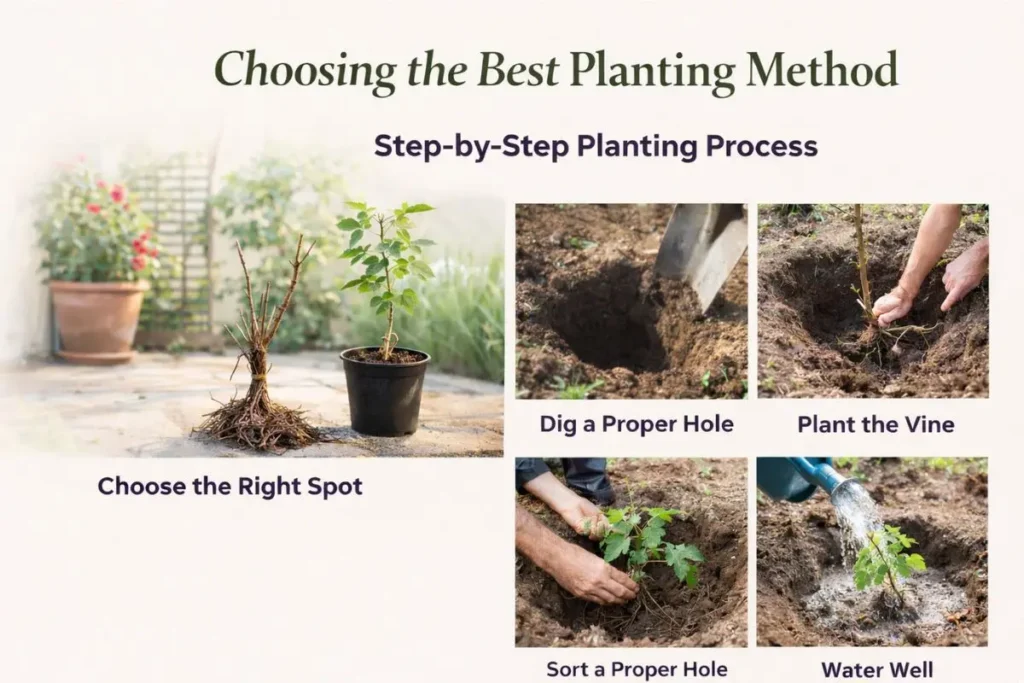
While starting from seeds is possible, it’s more common and easier for beginners to plant bare-root vines or buy young saplings from a local nursery. These options ensure that your vine is already established and ready to grow.
Step-by-Step Planting Process
- Choose the Right Spot: Your grapevine needs at least 6 hours of sunlight each day, so pick a sunny location in your garden. Grapes can also be grown on trellises or arbors to give them plenty of vertical space to climb.
- Dig a Proper Hole: Dig a hole that’s twice the size of the root ball. This gives your vine enough room to spread its roots and establish itself in the soil.
- Plant the Vine: Gently place the vine in the hole, ensuring the roots are spread out. Position the vine so the bud union (where the rootstock meets the grapevine) is slightly above the soil surface to avoid rot.
- Water Well: After planting, give your vine a deep watering to settle the soil around the roots. Keep the soil moist for the first few weeks as the plant establishes itself.
Space Your Vines
If you’re planting multiple vines, space them about 6-8 feet apart to allow for proper airflow and room for growth.
Sun and Water:
Sun Requirements:
Grapevines are sun-lovers. They thrive in locations with full sun exposure. Ensure your plants get at least 6 hours of direct sunlight per day for strong growth and healthy fruit production.
Watering:
Proper watering is essential for grapevines, but over-watering can be harmful.
- For Young Vines: Keep the soil consistently moist until the vine becomes established. You don’t want it soggy, just damp like a wrung-out sponge.
- For Mature Vines: Once the vine is established, water it deeply but less frequently. Grapevines have deep roots that prefer infrequent, thorough watering to promote strong root systems.
Feeding Your Vine: Organic vs. Synthetic
Grapevines are low-maintenance when it comes to fertilization, but regular feeding will help them grow healthy and produce abundant fruit.
- Organic Fertilizers: Compost is the best choice for feeding grapevines. It’s natural and provides all the nutrients they need without risking over-fertilizing.
- Synthetic Fertilizers: If you prefer synthetic options, apply a balanced fertilizer (like 10-10-10) in early spring to jump-start growth. Be careful not to overdo it—too much fertilizer can cause excessive leafy growth at the expense of fruit production.
Mulching and Soil Care
Mulch: Grapevine’s Best Friend
Mulching is a great way to help retain moisture, regulate soil temperature, and suppress weeds. Apply 3-4 inches of organic mulch like straw, wood chips, or shredded leaves around the base of your vine. Just make sure the mulch doesn’t touch the vine itself, as it can lead to rot.
Weeds and Moisture Control
Mulch also helps control weeds, which compete for nutrients and water. It’s an easy, low-maintenance solution to keep your grapevine healthy.
Pruning and Training Your Grapevine
Pruning is one of the most important tasks for grapevines. Prune your vine in late winter or early spring, before the buds start to swell. Remove any dead or damaged wood and trim back any overcrowded branches to improve airflow.
Training Your Vine
Training your grapevine to grow up a trellis or arbor is key to getting the most out of it. As the vine grows, gently tie it to the support structure to encourage vertical growth. This allows the plant to get more sunlight and makes harvesting easier.
Seasonal Care:
Winter Care:
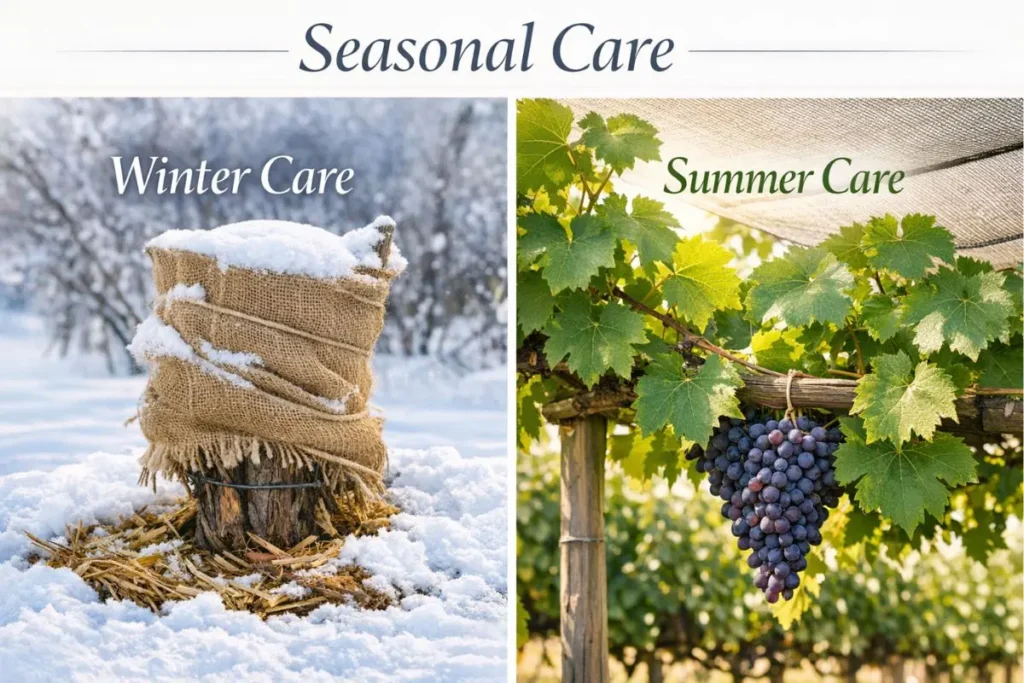
If you live in a cold climate, you’ll need to protect your grapevine during the winter. After the plant goes dormant, cover the base with mulch and protect the vine with burlap or other insulation materials to shield it from freezing temperatures.
Summer Care:
During the hot months, ensure your vine gets enough water and consider shading it from the harshest afternoon sun. Grapevines can also benefit from additional support if the fruit becomes too heavy.
Grapevine Growth Timeline
- Year 1: Expect your grapevine to grow and establish its roots.
- Year 2: Your vine may start producing some fruit, but it will still be in its growth phase.
- Year 3-4: By now, you should see more consistent fruit production, but thinning bunches will help them grow better.
- Year 5: Your vine should be well-established and yielding a good harvest.
Common Mistakes and Misconceptions
Mistakes to Avoid
- Over-Watering: Grapevines prefer deep watering less frequently. Avoid soggy soil!
- Pruning Too Much: Cutting back too much can reduce fruit production. Focus on removing dead or diseased wood.
Myths About Grapevines
- Myth 1: Grapevines are hard to grow — In reality, they’re relatively easy if you stick to the basics.
- Myth 2: Grapes need constant attention — Once established, grapevines are fairly low-maintenance.
Grapevine Pests and Diseases
While grapes are generally healthy, they’re not immune to pests and diseases.
- Aphids: These tiny pests can be controlled with insecticidal soap or a strong water spray.
- Powdery Mildew: This fungal disease thrives in humid environments. Prevent it by ensuring good airflow and avoiding overhead watering.
Harvesting Your Grapes
When your grapes are ready, harvest them gently to avoid damaging the vine. Use garden shears to cut clusters of grapes from the vine. Be careful not to tug on the vine, as this can damage the plant.
Long-Term Care for Grapevines
To keep your grapevine healthy, prune it regularly, water deeply, and protect it from extreme temperatures. Your grapevine will reward you with bountiful harvests for many years to come.
FAQs
Q1: Can I grow grapes in containers?
Yes! Use a large pot with good drainage, and ensure it gets plenty of sunlight.
Q2: How long does it take for grapes to produce fruit?
Grapevines typically begin producing fruit in their second or third year.
Q3: Do I need multiple grapevines for pollination?
Most grapevines are self-pollinating, but planting more can help improve yields.
By following these simple steps and tips, you’ll have your very own grapevine producing delicious fruits in no time. Happy gardening!