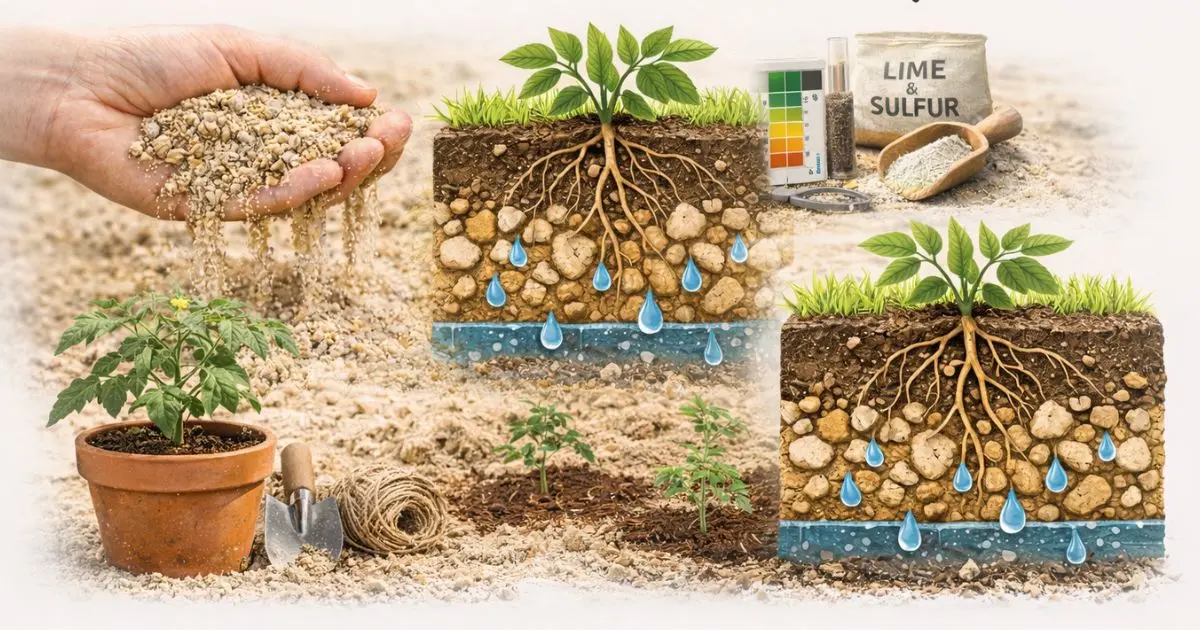
If you’ve ever found yourself battling dry, crumbly, or fast-draining soil in your garden, chances are, you’ve encountered sandy soil. While sandy soil has its benefits, like excellent drainage and warmth, it can also make growing plants a bit tricky. So, what should you do when your garden soil is too sandy? This guide is packed with actionable, experience-driven advice on how to work with — and improve — your sandy soil so that your garden thrives.
Understanding Sandy Soil
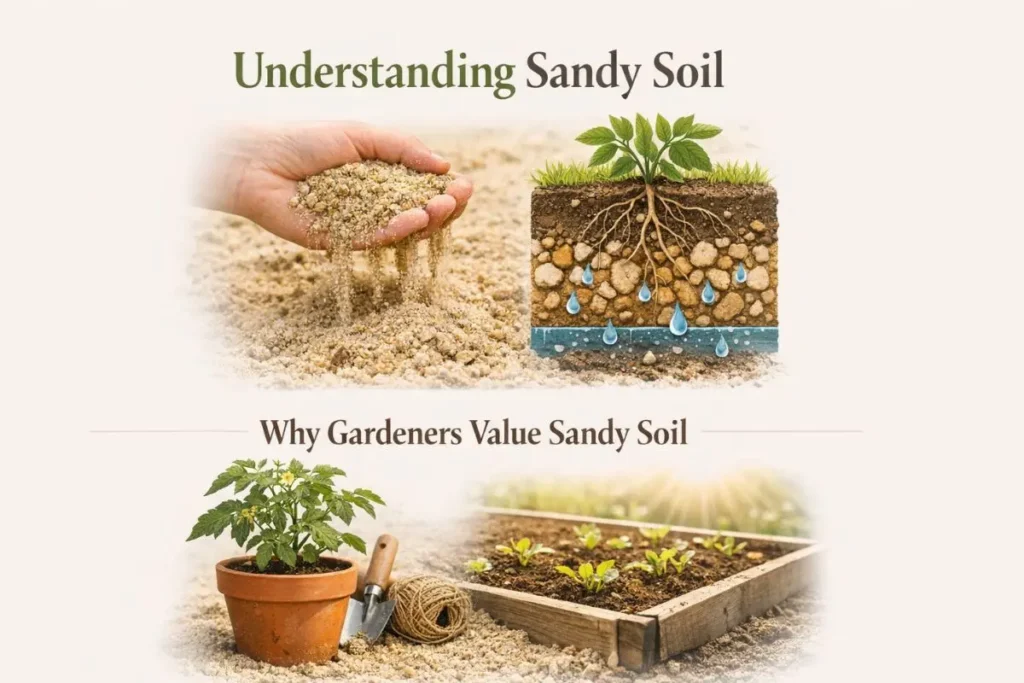
Sandy soil is made up of large particles that create lots of air space between them. This gives it excellent drainage properties, meaning water flows right through it. While this can be great for some plants (especially those that hate “wet feet”), it can also pose problems for others. Plants that love moisture and nutrients may struggle in sandy soil, as it often doesn’t hold onto water or nutrients very well.
Why gardeners value sandy soil:
- It warms up quickly in the spring, helping you get a jumpstart on the growing season.
- It’s easier to work with, especially in the early stages, because it’s loose and doesn’t compact easily.
However, if you’re finding that your plants aren’t thriving, it’s time to learn how to improve the soil and create a more balanced growing environment.
Does Sandy Soil Suit Your Garden?
Sandy soil is great for certain climates, especially those that are dry and sunny. If you live in an area with high heat or drought, sandy soil is your ally. However, it requires a bit more care in climates with heavy rains or high humidity, as it drains moisture quickly.
- Perfect Climate Match: If you’re in a region with hot summers or dry conditions, sandy soil works wonders. It helps to prevent waterlogging while ensuring that the soil doesn’t become too compacted or soggy.
- Microclimates to Consider: Whether you’re in a tropical region like India or Pakistan or a desert area, knowing how your garden’s microclimates behave is key. For example, if your garden experiences extreme weather shifts, adding organic matter can help stabilize the soil’s moisture levels.
Pro Tip:
For gardens that get full sun, sandy soil is ideal because it drains quickly and prevents water from staying too long around the plant roots.
Simple Steps to Improve Sandy Soil
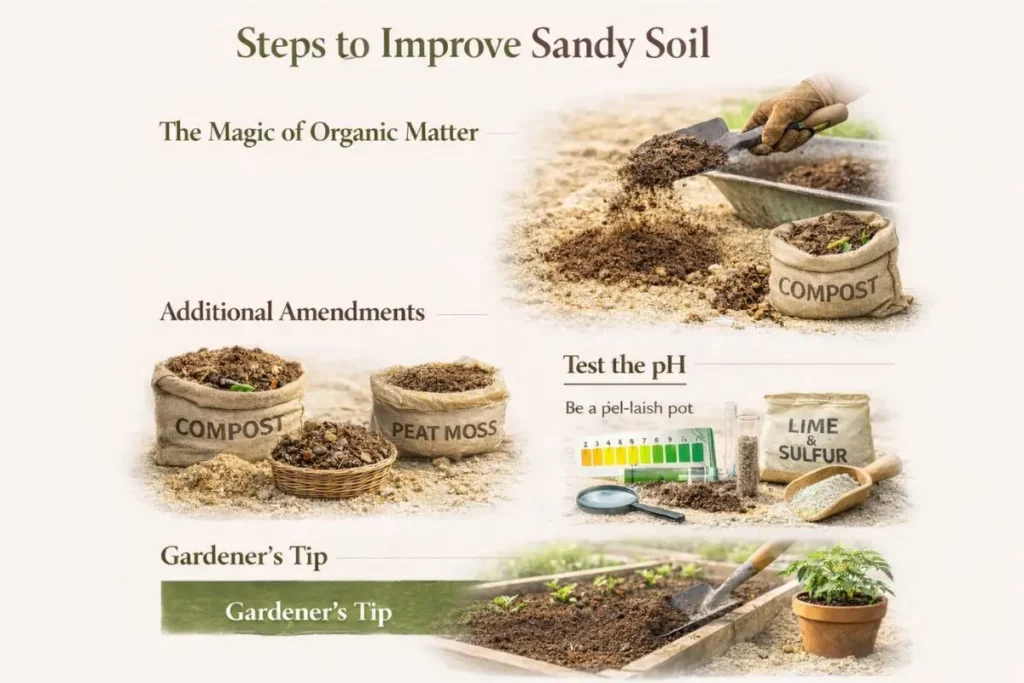
Sandy soil has a tendency to lack the nutrients and moisture retention your plants need. The solution? Add organic matter and other amendments that will work with your soil’s natural characteristics.
- The Magic of Organic Matter: To increase both nutrient content and water retention, start by adding compost, well-rotted manure, or garden waste. Organic matter binds soil particles together, making it easier for your plants’ roots to access the nutrients they need.
- Additional Amendments: Try coconut coir, peat moss, or shredded leaves. These materials help the soil hold water longer while improving its structure over time. Sandy soil can also be slightly acidic, so adding lime will balance the pH for most plants.
- Test the pH: Test your soil’s pH levels and add lime to raise the pH or sulfur to lower it, depending on what your plants need.
Gardener’s Tip:
A 2-3 inch layer of compost spread across your garden will dramatically improve soil quality.
Step-by-Step Guide to Planting in Sandy Soil
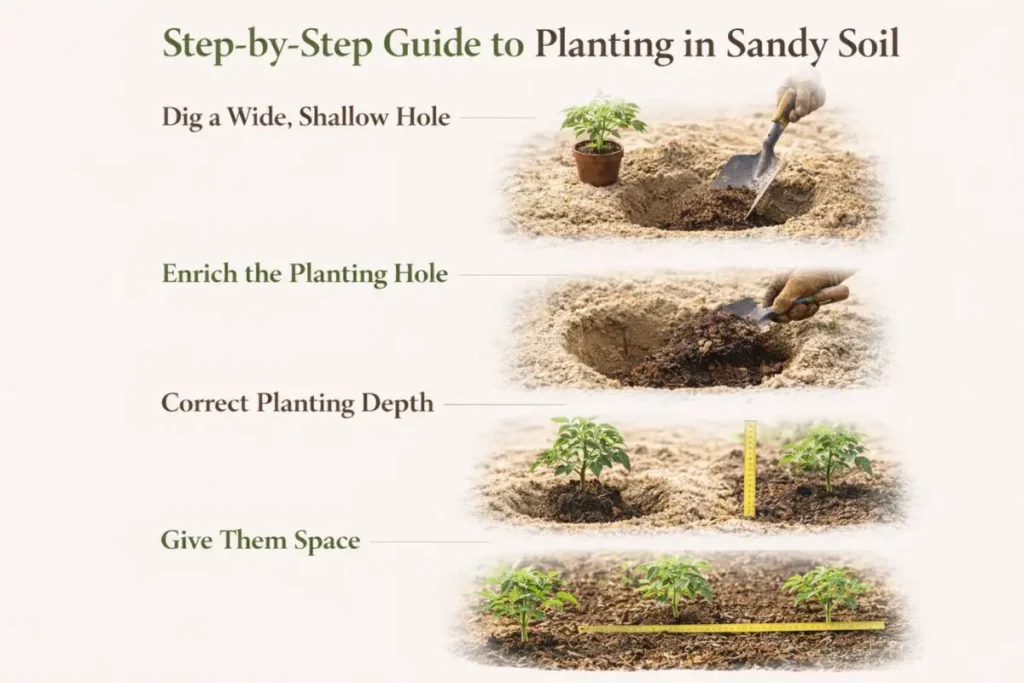
When planting in sandy soil, it’s important to give your plants the best start possible. Here’s how you can ensure a successful growing season.
- Dig a Wide, Shallow Hole: Since sandy soil drains quickly, you want to make sure your plants have enough space for their roots to spread out. Dig a hole that’s twice as wide as the plant’s root ball.
- Enrich the Planting Hole: Mix the soil with compost or organic material to provide essential nutrients right where the plant needs them most.
- Correct Planting Depth: Don’t plant too deep! Make sure the plant is at the same depth as it was in the pot. This ensures the roots can breathe and establish themselves quickly.
- Give Them Space: Follow the recommended spacing to give your plants enough room to grow. Sandy soil’s loose texture means roots need space to access both water and nutrients.
Watering & Sunlight
Sandy soil dries out quickly, so understanding how to water effectively is key to your plants’ success.
- Sunshine & Growth: Most plants thrive in full sun, but be mindful that plants sensitive to heat may need some protection. You can consider planting them in slightly shadier areas or providing shade during the hottest part of the day.
- Watering Guidelines: Since sandy soil doesn’t hold moisture well, deep watering is a must. Water deeply, but less frequently. Allow the top few inches of soil to dry out before watering again.
Gardener’s Tip:
After watering, use your fingers to check if the soil feels like a “wrung-out sponge.” This is an ideal moisture level for most plants.
Fertilizing Sandy Soil for Stronger Plants
Since sandy soil doesn’t retain nutrients as well as other types, it’s important to feed your plants regularly.
- Natural Fertilizers: Organic fertilizers like compost, worm castings, and fish meal can provide slow-release nutrients throughout the growing season. They are safer and more sustainable options for enriching your soil.
- Synthetic Fertilizers: If you opt for synthetic fertilizers, use a balanced formula (like 10-10-10). Apply fertilizer in early spring to kickstart the growing season and again in late summer for a second boost.
Tip:
Always follow the instructions on the fertilizer packaging. Over-fertilizing in sandy soil can lead to nutrient runoff and poor plant health.
Managing Soil & Mulch for Better Plant Health
Proper mulch and soil management are essential for maintaining healthy, well-nourished plants.
- Mulching: A good mulch layer (such as straw, wood chips, or grass clippings) helps retain moisture, keeps weeds at bay, and adds organic matter as it decomposes.
- Weed Control: Weeds thrive in loose, sandy soil. Mulch not only helps to prevent their growth but also prevents the soil from drying out too quickly.
Pruning & Training
Pruning is essential for maintaining plant health, especially in sandy soil, where moisture and nutrients may not be readily available.
- When to Prune: Trim dead or damaged growth regularly to prevent disease. For plants that need support, use stakes or trellises to keep them upright and healthy.
- Common Pruning Mistakes: Don’t over-prune. It’s easy to get carried away, but remember, cutting too much can stress the plant. Always leave enough foliage for the plant to photosynthesize and grow.
Seasonal Care:
Every season brings its own set of challenges and opportunities for your garden. Here’s how to adapt to different weather conditions.
- Spring/Summer Care: Water your plants deeply, and don’t forget to check moisture levels often. If it’s too hot, add an extra layer of mulch to keep soil temperatures moderate.
- Fall/Winter Care: In colder climates, protect sensitive plants with additional mulch or row covers. Add compost to the soil to improve its structure for the next growing season.
Mistakes to Avoid:
- Overwatering: Sandy soil dries out fast, but that doesn’t mean it needs constant watering. Stick to a routine of deep watering and check moisture levels frequently.
- Under-Fertilizing: Because sandy soil lacks nutrients, don’t forget to fertilize regularly. Failure to do so can leave your plants struggling to grow.
Pests & Diseases
Sandy soil may attract pests due to its loose texture, but you can manage this with simple strategies:
- Beneficial Insects: Ladybugs and lacewings can help control aphids and other pests.
- Organic Remedies: Neem oil, diatomaceous earth, and insecticidal soap are great organic options for keeping pests in check.
Maintaining Your Garden’s Health for Years to Come
Once your plants are established, continue to care for them with regular watering, periodic fertilization, and seasonal pruning. Be sure to monitor the soil’s health, adjusting your watering and fertilization schedules as needed.
FAQ:
- How do I know if my soil is too sandy?
If your soil drains quickly, feels dry, or has a gritty texture when you rub it, it’s likely sandy. - Can I grow vegetables in sandy soil?
Yes! Vegetables like tomatoes, cucumbers, and peppers can thrive in sandy soil with proper amendments. - What type of mulch is best for sandy soil?
Organic mulches like straw, shredded leaves, or wood chips are ideal for sandy soil.