It has been a beloved hobby for generations, but in today’s fast-paced world, it’s easy to feel like we need to rush through every task. That’s where slow gardening comes in—a refreshing approach to gardening that encourages you to slow down and savor the process. It’s all about enjoying the journey and embracing a mindful connection with your garden. In this blog post, we’ll explore the concept of slow gardening, why it’s a great way to garden, and how you can master it at your own pace.
What is Slow Gardening?
Definition and Concept
Slow gardening is more than just a trend; it’s a lifestyle choice. It’s about focusing on the process rather than the outcome, taking time to enjoy every moment spent in the garden. This approach challenges the common rush for instant results in favor of patience, mindfulness, and sustainability. Slow gardening encourages gardeners to work with nature, not against it.
Benefits
- Stress Reduction: Gardening at your own pace promotes relaxation and reduces stress.
- Connection with Nature: It fosters a deeper connection to the plants and the environment around you.
- Sustainability: Slow gardening encourages eco-friendly practices like organic gardening, composting, and water conservation.
Why Choose Its
Escape the Rush: The Antidote to Fast-Paced Living
In a world that moves at lightning speed, slow gardening provides a much-needed escape. By taking your time in the garden, you can leave behind the pressures of daily life and find solace in nature. Here’s how slow gardening can help you slow down:
- Mindfulness: Focus on the present moment, the sound of the wind, the rustling leaves, and the rhythm of watering your plants.
- Patience: Slow gardening teaches patience as you wait for your plants to grow, bloom, and flourish.
Cultivating a Deeper Connection with Your Garden
Slow gardening is not about checking tasks off a list. Instead, it’s about cultivating a relationship with your plants. You’ll notice how each one responds to the environment, how the seasons shape the growth, and how the soil changes over time. This deeper connection brings a sense of joy and accomplishment that can’t be measured in inches or pounds.
The Environmental Impact
In addition to personal benefits, slow gardening also contributes to environmental sustainability. By using fewer chemicals, planting native species, and composting, slow gardeners help the planet by reducing their carbon footprint.
- Eco-Friendly Practices: Choose organic fertilizers and pest control.
- Biodiversity: Native plants create a habitat for local wildlife.
How to Get Started
Setting Realistic Expectations and Goals
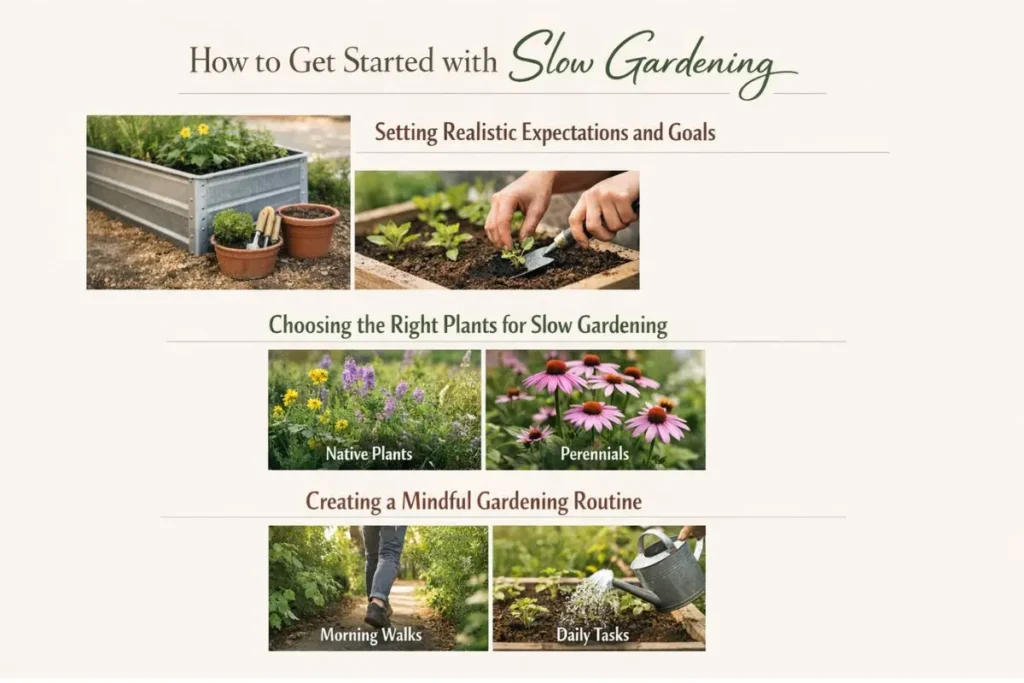
The key to slow gardening is setting achievable goals that allow you to move at your own pace. Start small—focus on a few plants or a single garden bed, and gradually expand as you gain confidence. Remember, slow gardening isn’t about perfection; it’s about enjoying the experience.
Choosing the Right Plants
When selecting plants for your garden, look for species that thrive in your climate and require minimal intervention. Perennials, native plants, and hardy vegetables are great choices. These plants are well-suited for slow gardening because they grow steadily, require less maintenance, and provide lasting beauty year after year.
- Native Plants: These plants are adapted to your local climate, requiring less water and care.
- Perennials: These plants return year after year, reducing the need for replanting.
Creating a Mindful Gardening Routine
Set aside time each day or week to engage in your gardening practice. Here are some ideas to get started:
- Morning Walks: Start the day by walking through your garden, checking on your plants, and making mental notes.
- Daily Tasks: Water, prune, or weed a little bit each day instead of overwhelming yourself with large tasks.
Techniques for Mastering Slow Gardening
Companion Planting and Its Role
Companion planting involves pairing plants that work well together to enhance each other’s growth. This technique is beneficial in slow gardening because it reduces the need for chemical pesticides and fertilizers. For example:
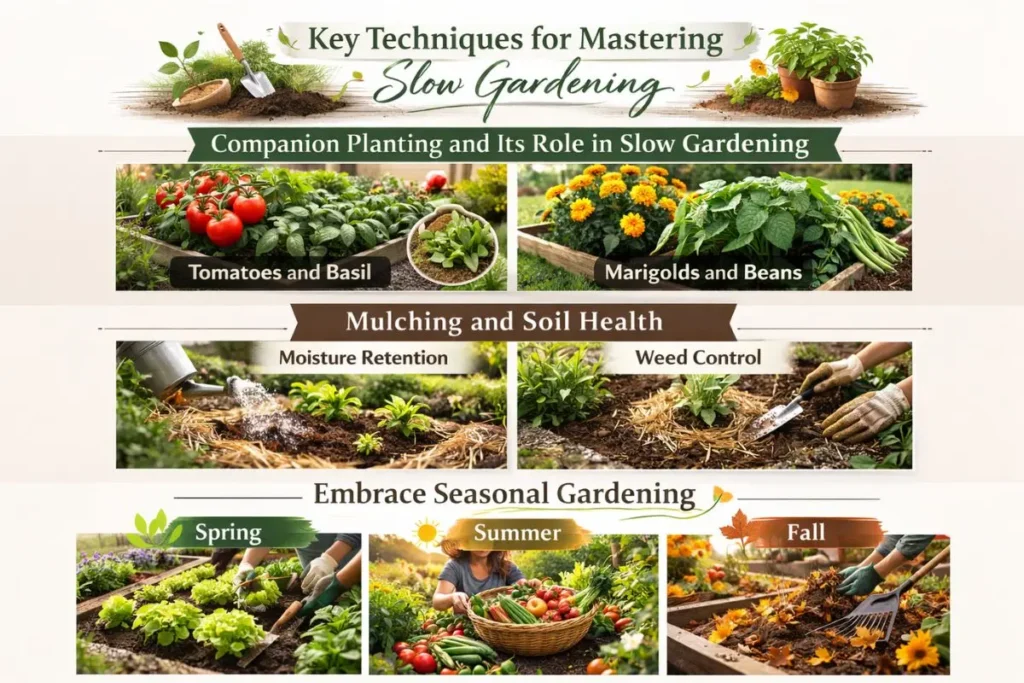
- Tomatoes and Basil: Basil repels pests that harm tomatoes.
- Marigolds and Beans: Marigolds help protect beans from aphids.
Mulching and Soil Health
Healthy soil is essential for slow gardening. Mulching helps maintain moisture, reduce weeds, and improve soil fertility. Here’s why mulching matters:
- Moisture Retention: Mulch prevents water from evaporating too quickly, which is especially important during dry spells.
- Weed Control: Mulch acts as a barrier, preventing weeds from sprouting.
Embrace Seasonal Gardening
Working with the seasons rather than rushing against them is a cornerstone of slow gardening. Here’s how you can align your gardening tasks with the changing seasons:
- Spring: Plant cool-weather crops like lettuce and spinach.
- Summer: Harvest your bounty and take time to care for your plants.
- Fall: Focus on cleaning up and preparing your garden for winter.
Tools and Resources You Need
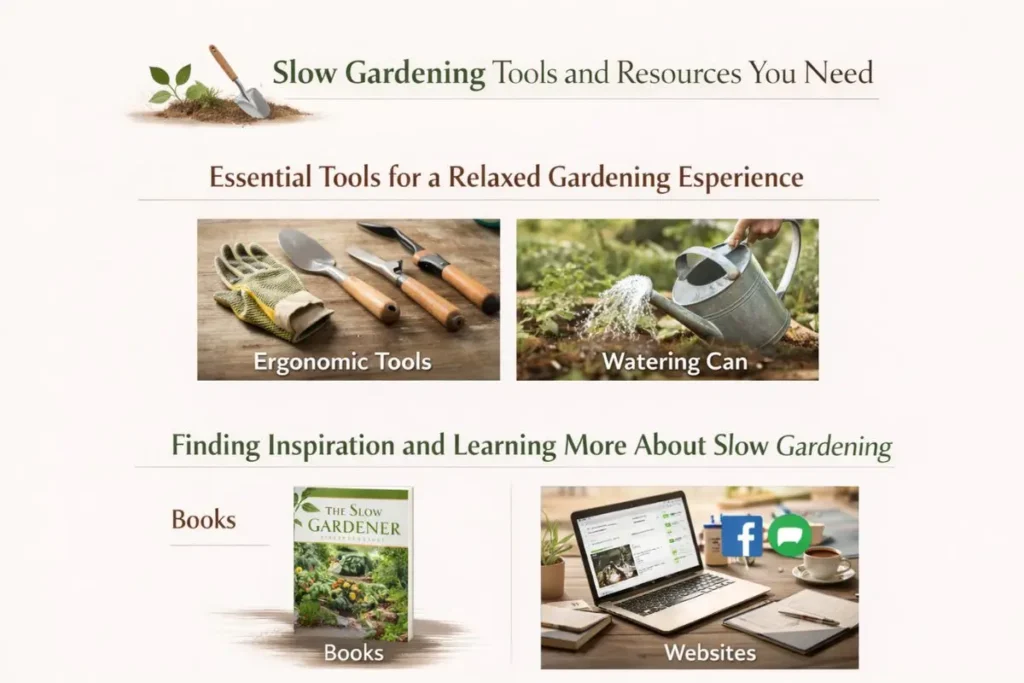
Essential Tools for a Relaxed Gardening Experience
While slow gardening doesn’t require a lot of fancy equipment, there are a few essential tools to make your experience more enjoyable:
- Ergonomic Tools: Choose tools that are easy on your hands, such as padded handles and lightweight materials.
- Watering Can: A simple, well-designed watering can ensures you water your plants gently and effectively.
Finding Inspiration and Learning
To fully embrace, find inspiration from books, websites, and communities. Here are some great resources:
- Books: “The Slow Gardener” by Wendy Hogg.
- Websites: Join forums and social media groups to connect with like-minded gardeners.
Overcoming Challenges
Dealing with Patience and Expectations
One of the biggest challenges is learning to be patient. In a world that often values speed, it’s hard to let go of expectations for quick results. Here are some tips for overcoming this challenge:
- Celebrate Small Wins: Enjoy the little changes in your garden, like the first bud or the new leaf.
- Practice Gratitude: Focus on the joy that gardening brings, regardless of the size of your harvest.
Weather and Other Environmental Factors
Sometimes, slow gardening requires you to adapt to the elements. Here are some strategies to help you cope with weather changes:
- Use Row Covers: Protect plants from unexpected frosts or extreme heat.
- Water Wisely: Use rain barrels or drip irrigation to conserve water.
Maintaining Consistency in a Busy Lifestyle
Slow gardening doesn’t require hours of work every day. Here’s how to maintain consistency:
- Schedule Garden Time: Treat gardening like any other appointment in your calendar.
- Involve Family: Make gardening a family activity to share the joy and work together.
The Joy of Slow Gardening
Personal Stories and Testimonials
Take inspiration from real-life who have embraced this mindful approach. Here’s a story from Anna, a gardener in Florida:
“I started three years ago, and it’s completely changed how I view my garden. It’s not about getting everything perfect—it’s about enjoying the growth process. My garden has flourished in ways I never expected!”
How Can Bring Your Community Together
Slow gardening doesn’t have to be done alone. Many communities have embraced this approach, creating neighborhood gardens where everyone can take part. Here’s how:
- Garden Clubs: Join a slow gardening club to share tips and enjoy gardening with others.
- Community Gardens: Many towns and cities now have spaces where you can participate in slow gardening alongside others.
Slow Gardening and the Future:
Why is Becoming a Growing Trend in the USA
The trend towards it is picking up momentum in the USA, as more people recognize the benefits of this mindful approach. Factors like the desire for sustainable living, mental health awareness, and a love for nature all contribute to its growth.
How You Can Contribute to the Movement
Get involved in the movement by:
- Starting Your Own Garden: Even a small space can be the perfect place to practice slow gardening.
- Sharing Your Journey: Share your experiences online or with friends to inspire others to slow down and embrace gardening at their own pace.