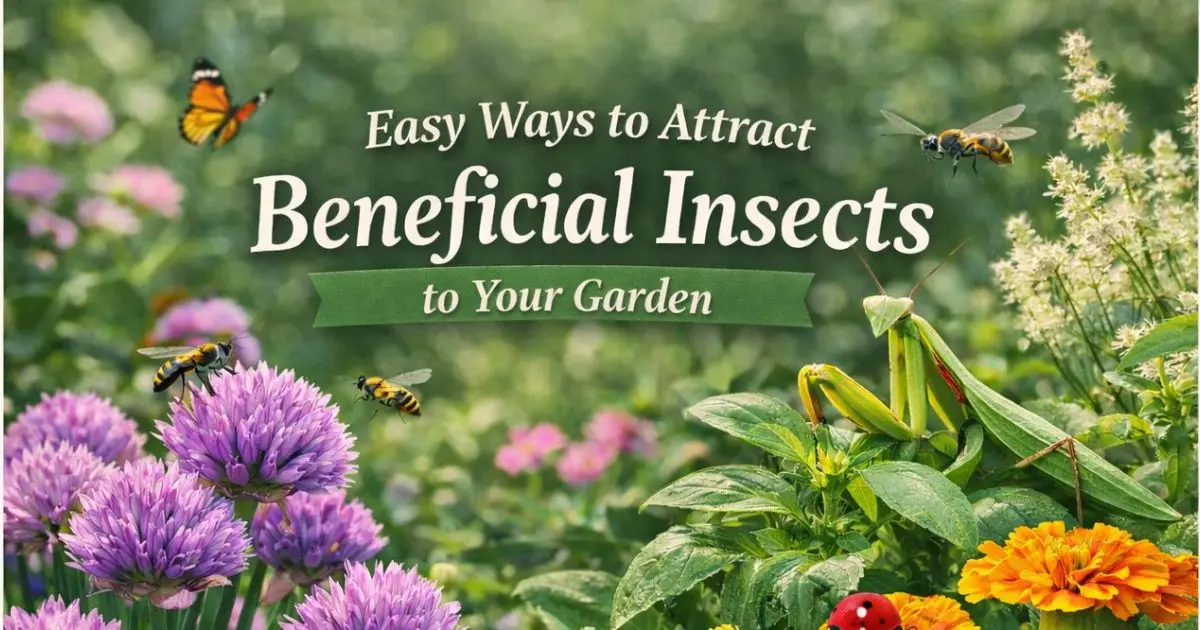
Attracting beneficial insects to your garden is a natural and effective way to boost plant health, reduce pests, and promote a thriving ecosystem. Easy Ways to Attract Beneficial Insects to Your Garden offers simple yet impactful strategies to invite helpful insects like pollinators, predators, and parasitoids into your garden. By planting the right flowers, herbs, and shrubs, providing water and shelter, and avoiding harmful pesticides, you can create an environment that supports biodiversity and encourages a healthy, low-maintenance garden. Learn how to enhance your garden’s health with the help of nature’s own pest controllers and pollinators, making your gardening experience more sustainable and rewarding.
Why Beneficial Insects Matter in Your Garden
If you’re looking to cultivate a thriving, organic garden without the use of harmful pesticides, then attracting beneficial insects is one of the best ways to go about it. These insects are nature’s very own pest control and pollination service providers, playing an indispensable role in ensuring your garden stays healthy, productive, and eco-friendly.
By inviting beneficial insects into your garden, you’re essentially setting the stage for a natural balance that fosters biodiversity. These tiny “garden helpers” can make a world of difference in creating a sustainable, low-maintenance garden. Let’s explore easy ways to attract beneficial insects to your garden and how to harness their power for a more resilient space.
What Are Beneficial Insects and Why Are They Important?
What Are Beneficial Insects?
Beneficial insects are those that bring value to your garden ecosystem by offering services such as pest control, pollination, and decomposition. There are three main categories:
- Pollinators: Bees, butterflies, and moths that help fertilize plants.
- Predators: Insects like ladybugs, lacewings, and predatory beetles that control pests.
- Parasitoids: Wasps that parasitize harmful insects, preventing them from becoming a nuisance.
Why Are They Important?
These insects are key to the health of your garden. Here’s why they matter:
- Pollination: Pollinators like bees increase crop yields and promote biodiversity by spreading pollen.
- Natural Pest Control: Beneficial predators, such as ladybugs, naturally control pests like aphids and scale insects.
- Soil Health: Earthworms and decomposing insects break down organic matter, enriching the soil with nutrients essential for plant growth.
By incorporating these beneficial insects into your garden, you reduce the need for synthetic chemicals, making your garden healthier for both you and the environment.
Best Plants to Attract Beneficial Insects
Flowers that Attract Pollinators
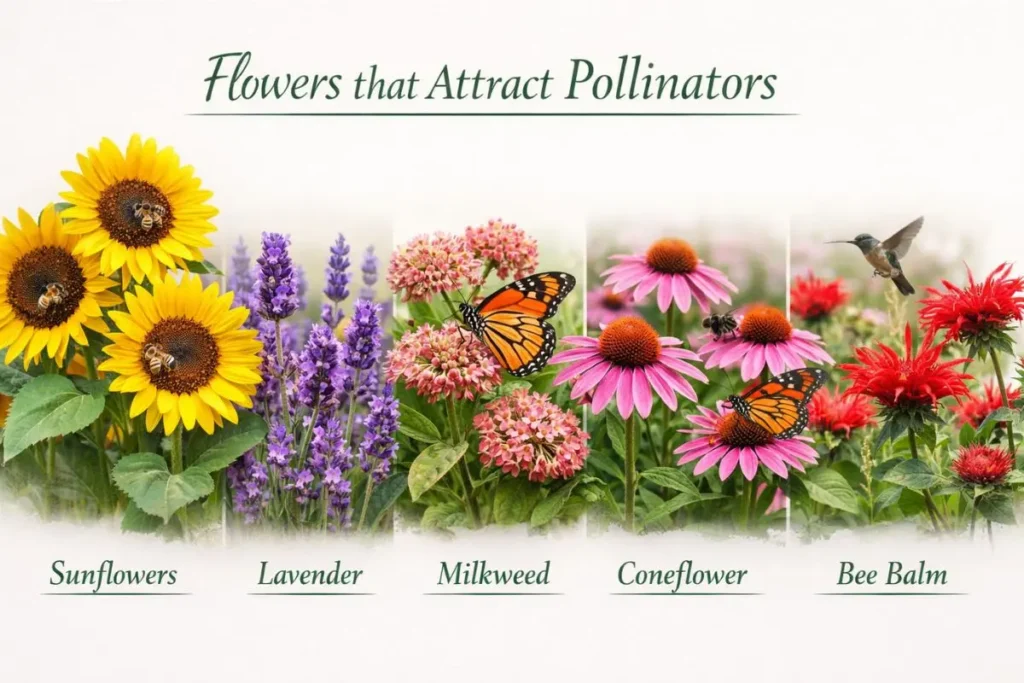
Pollinators are essential for the health and productivity of your garden, especially when it comes to fruit and vegetable crops. These flowers are ideal for attracting bees, butterflies, and moths, ensuring that your plants receive the pollination they need for maximum yield.
Sunflowers: With their large, bright blooms, sunflowers are a magnet for bees, drawing them in with their abundant nectar and pollen
Lavender: This fragrant herb not only adds beauty and scent to your garden but also attracts bees and butterflies, who are drawn to its aromatic flowers.
Milkweed: Known as a favorite of monarch butterflies, milkweed provides nectar for pollinators and serves as an essential host plant for monarch caterpillars to lay their eggs.
Coneflower (Echinacea): The vibrant flowers of coneflower attract a variety of pollinators, including bees and butterflies, with their rich nectar.
Bee Balm (Monarda): Bee balm is especially attractive to bees, butterflies, and hummingbirds, thanks to its brightly colored flowers and ample nectar supply.
These flowers not only enhance the visual appeal of your garden but also support the health of local pollinator populations, making them a must-have for any eco-friendly gardener.
Plants that Attract Predators
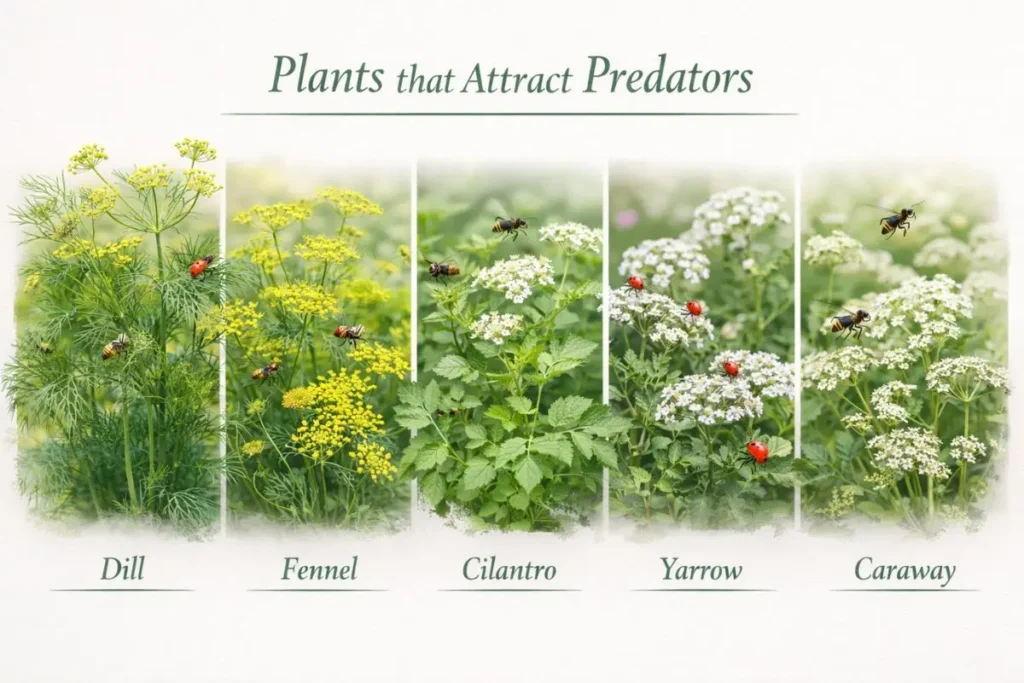
Predators play a key role in keeping harmful pests in check, reducing the need for chemical pesticides. By planting the right species, you can draw in beneficial insects like ladybugs, lacewings, and predatory beetles, ensuring that your garden remains pest-free in a natural, sustainable way.
Dill: This aromatic herb is not only great for culinary use but also attracts beneficial predators like ladybugs and lacewings, which are essential for aphid control.
Fennel: Fennel’s feathery leaves and yellow flowers are a magnet for predatory insects, especially hoverflies, which feed on aphids and other garden pests.
Cilantro: Cilantro serves as a great plant for attracting parasitic wasps, which help manage pest populations by laying eggs in harmful insects.
Yarrow: Yarrow’s small, clustered flowers attract beneficial insects like ladybugs and parasitic wasps, which target aphids and other destructive pests.
Caraway: Known for its aromatic seeds, caraway attracts predators like hoverflies, which are key in controlling pest populations such as aphids and scale insects.
These plants help support a natural pest control system in your garden, providing a safe and eco-friendly way to keep unwanted pests at bay.
Best Plants to Attract Beneficial Insects
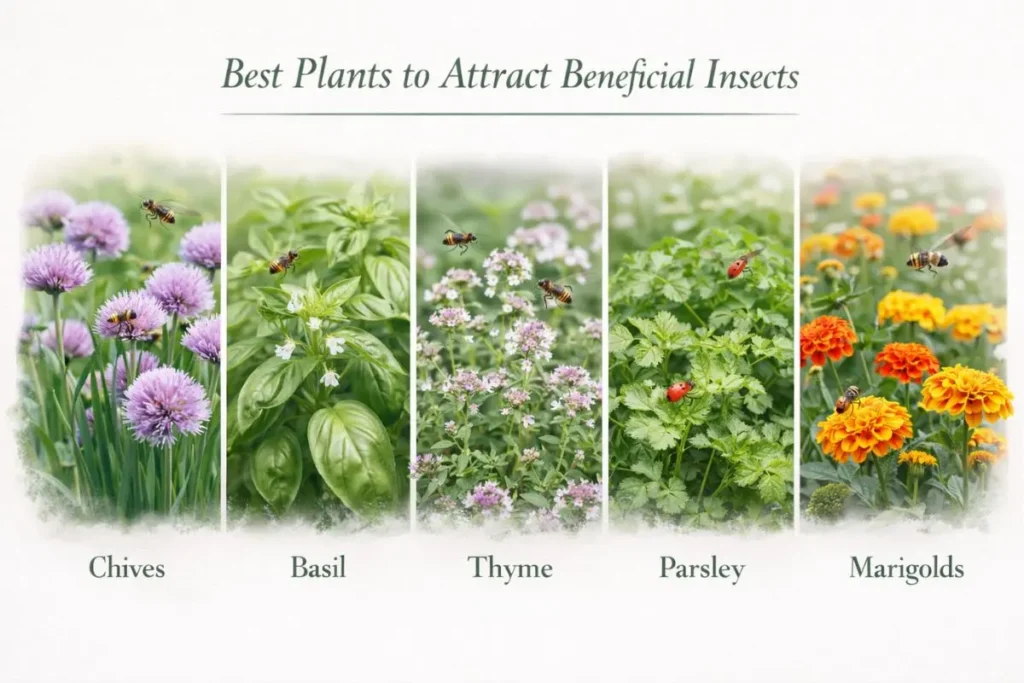
To create a garden that supports a thriving ecosystem, it’s important to plant species that attract beneficial insects. These plants provide nectar, pollen, and shelter for various beneficial insects, including pollinators, predators, and soil enrichers, all of which contribute to a healthier garden.
Chives: Chives are a great source of nectar for bees and butterflies, and their purple flowers also attract other beneficial insects like predatory wasps and hoverflies.
Basil: This herb not only adds flavor to your dishes but also attracts hoverflies, which feed on aphids and other harmful pests in your garden.
Thyme: Thyme’s tiny flowers are a great source of nectar for bees and other beneficial insects, making it an excellent plant for attracting pollinators and pest control agents.
Parsley: Parsley is a favorite for ladybugs, which help keep aphid populations under control, and its bright green leaves serve as a safe space for these helpful insects to thrive.
Marigolds: Marigolds are well-known for their ability to attract a wide range of beneficial insects, including ladybugs, predatory beetles, and pollinators, while also repelling harmful pests like nematodes.
How to Create a Habitat for Beneficial Insects
Creating the right environment for beneficial insects requires more than just planting the right plants. You need to provide water, shelter, and nesting sites to keep these insects thriving year-round.
Provide Water Sources
Insects, like all living creatures, need water to survive. Here’s how to create water sources in your garden:
- Place shallow containers with water around your garden.
- Birdbaths are great, but ensure the water level is not too deep. Adding small stones or pebbles can create safe landing spots for insects.
Provide Shelter and Nesting Sites
Insects need safe places to shelter, rest, and nest, especially during winter months. You can provide shelter by:
- Bee Hotels: These structures give solitary bees a place to lay their eggs.
- Insect Hotels: A DIY insect hotel can be created with wooden pallets, twigs, and straw for a variety of insect species.
- Leaf Litter: Simply leaving leaves on the ground provides a natural overwintering habitat for insects like ladybugs and ground beetles.
Avoiding Harmful Pesticides and Chemicals
While chemical pesticides can kill pests, they often also harm beneficial insects. Here’s why you should avoid them:
- Chemical Pesticides Kill Beneficial Insects: These chemicals not only target pests but also destroy the natural predators and pollinators you want to protect.
- Organic Alternatives: Instead of pesticides, consider using neem oil, insecticidal soap, or companion planting to deter pests.
- Encourage Natural Predators: Birds, frogs, and other wildlife can help keep pests under control without harming beneficial insects.
Companion Planting to Support Beneficial Insects
What Is Companion Planting?
Companion planting is the practice of planting certain plants together to benefit each other. Some plants attract beneficial insects, while others can repel harmful pests.
Examples of Effective Companion Planting
- Marigolds with Tomatoes: Marigolds attract predatory insects and repel aphids, while also attracting pollinators to your tomatoes.
- Basil with Peppers: Basil repels mosquitoes and flies, while attracting beneficial insects like hoverflies.
- Cabbage with Dill: Dill attracts parasitic wasps that target cabbage pests.
How to Make Your Garden More Attractive to Pollinators
Plant a Diverse Range of Plants
Pollinators love variety. The more diverse your garden, the better it will be for attracting different types of beneficial insects. Consider planting:
- Early Bloomers: Flowers that bloom early in the season offer food for pollinators as they emerge.
- Late Bloomers: Flowers that bloom late provide food during the fall when other nectar sources are scarce.
Consider Planting Native Plants
Native plants are best suited for attracting local pollinators and maintaining a healthy garden ecosystem. They provide the best food sources for native insects and are low-maintenance:
- Coneflower (Echinacea)
- Purple Aster
- Black-eyed Susan
Maintaining a Balanced Garden Ecosystem
Healthy Soil for a Healthy Garden
Soil health is vital for attracting beneficial insects. Healthy, well-aerated soil encourages earthworms and other decomposers, which in turn enrich the soil for plants and insects.
- Add compost to boost soil nutrients.
- Use mulch to conserve moisture and maintain soil temperature.
- Avoid synthetic fertilizers that can harm soil organisms.
Encouraging Biodiversity
Biodiversity is key to maintaining a balanced garden ecosystem. To support beneficial insects, try:
- Avoiding monocultures: Grow a variety of plant species to ensure a constant food supply for pollinators and predators.
- Varying bloom times: This ensures that beneficial insects have something to feed on throughout the growing season.