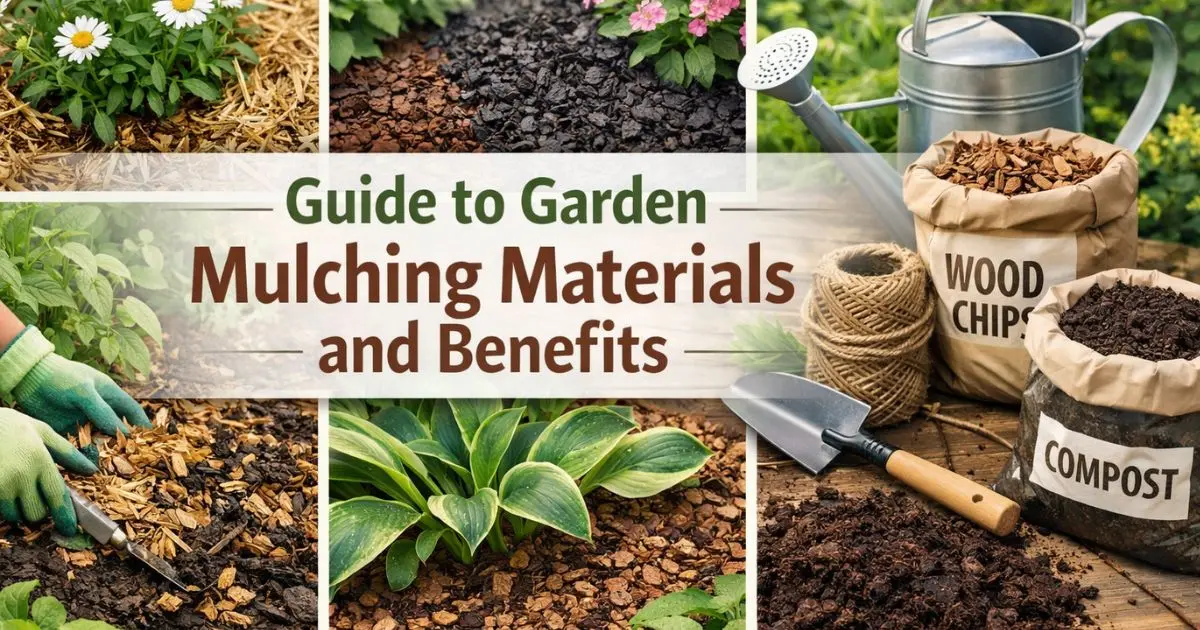
You’ve ever struggled with keeping your garden lush and healthy, you might be overlooking one key step: mulching. Think of mulch as your garden’s secret weapon, keeping moisture locked in, protecting roots, and even improving the soil. Whether you’re a beginner or have some gardening experience, this guide will show you how to choose the right mulch and use it effectively, helping your plants flourish year-round.
Let’s dive into the world of garden mulching, where practical tips meet expert advice to ensure your plants thrive.
What Is Mulch and Why Is It Essential for Your Garden?
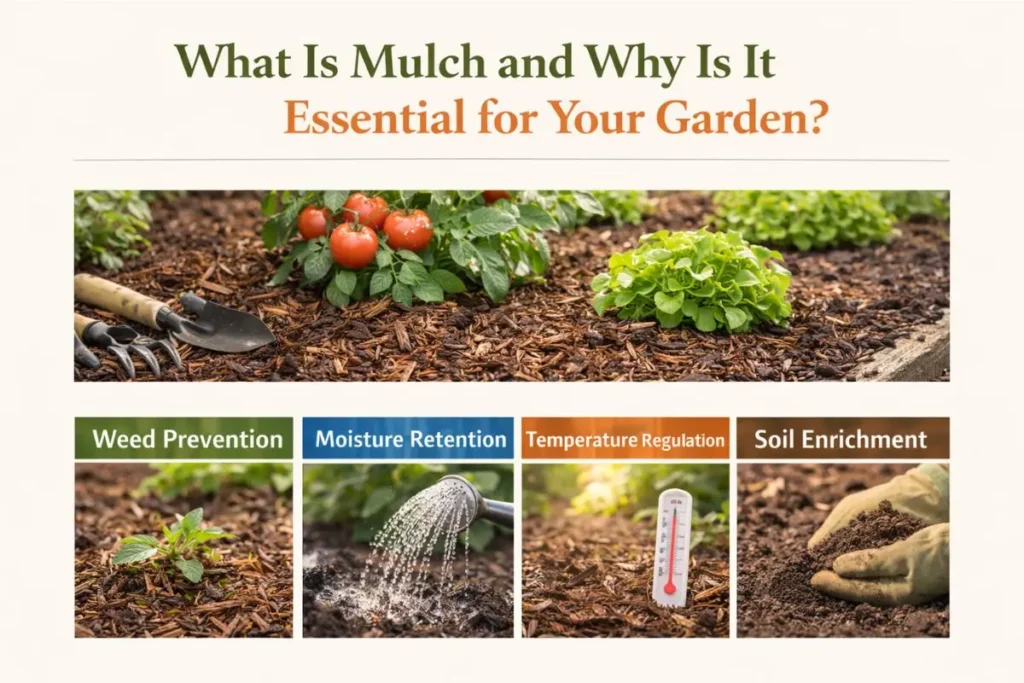
At its core, mulch is a material spread over the soil around your plants. It serves a variety of important functions, from keeping weeds in check to maintaining moisture. But the benefits of mulch don’t stop there:
- Weed Prevention: Mulch acts as a natural barrier to weed growth, saving you time and effort.
- Moisture Retention: By covering the soil, mulch keeps water from evaporating too quickly, ensuring your plants stay hydrated.
- Temperature Regulation: It insulates plant roots from extreme heat or cold, creating a stable environment for growth.
- Soil Enrichment: Organic mulches break down over time, feeding the soil and improving its structure.
Real-World Example:
Think of mulch as a protective layer for your plants, much like how a cozy blanket keeps you warm at night. For gardeners in hot climates, mulch helps keep the soil cool, reducing the need for constant watering.
The Right Mulch for Your Garden:
When it comes to mulching, not all materials are created equal. You’ll encounter two main categories: organic and inorganic mulches. Let’s break them down to see which one works best for your garden.
Organic Mulches: Natural and Nutrient-Rich
Organic mulches are plant-based materials that break down over time, enriching your soil. They’re fantastic for flower beds, vegetable gardens, and any place where improving soil health is important.
- Benefits: Adds organic matter to the soil, helps with moisture retention, and suppresses weeds.
- Drawbacks: Needs to be replenished annually as it decomposes. Over time, organic mulches might attract pests like slugs.
Top Organic Mulches:
- Wood Chips: Slow to break down, perfect for garden beds and perennial plants.
- Shredded Leaves: Available for free in the fall, great for vegetable gardens.
- Straw: Excellent for vegetable patches, especially during the growing season.
- Grass Clippings: Rich in nitrogen, great for garden beds but should be used in thin layers.
Inorganic Mulches:
Inorganic mulches like gravel or plastic don’t break down and can last for years. They’re ideal for places where you want to reduce weed growth without improving the soil.
- Benefits: Low-maintenance and durable.
- Drawbacks: Doesn’t improve soil health or add nutrients.
Top Inorganic Mulches:
- Gravel: Perfect for paths or around plants that don’t need rich soil.
- Landscape Fabric: Great for under mulch or gravel to prevent weeds while letting water pass through.
Which One Should You Choose?
- For flower and vegetable beds: Organic mulches are your best bet for improving soil health.
- For paths or weed control: Inorganic mulches like gravel work wonders for low-maintenance areas.
Mulching for Success: Step-by-Step Instructions
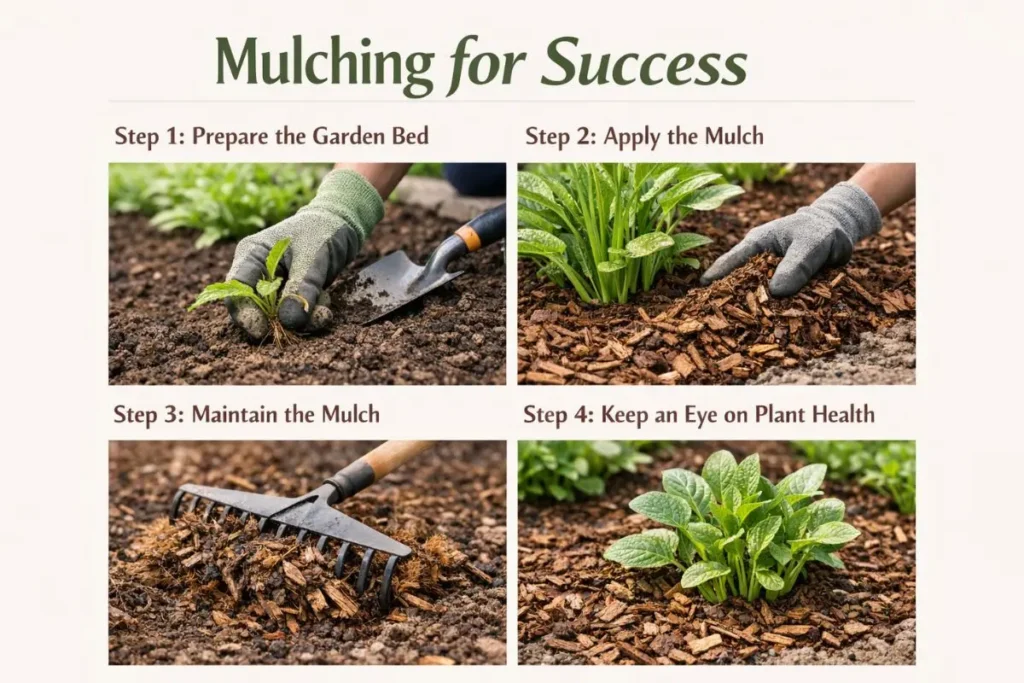
Now that you know what mulch is and why it’s essential, it’s time to talk about how to use it. Follow these simple steps to make mulching a seamless part of your gardening routine.
Step 1: Prepare the Garden Bed
Before laying down mulch, you need to get the soil ready:
- Weed the area: Remove any weeds to prevent them from growing under the mulch.
- Water the soil: Ensure the soil is moist before applying mulch. Mulch traps moisture, so it’s important to hydrate the soil first.
Step 2: Apply the Mulch
- How much mulch?: Aim for a 2–4 inch layer of mulch. Too much can suffocate your plants, while too little won’t be effective.
- Leave space around plant stems: When applying mulch, make sure to leave a gap around plant stems to prevent rotting.
Step 3: Maintain the Mulch
- Replenish annually: Organic mulches break down, so top them up every year.
- Fluff the mulch: After watering or rainfall, fluff the mulch to prevent it from compacting.
- Step 4: Keep an Eye on Plant Health
Mulch isn’t a “set it and forget it” job. Check regularly to ensure it’s doing its job:
- Are weeds popping up? You might need to add more mulch.
- Is the soil staying moist? Adjust the thickness of the mulch if necessary.
Benefits You’ll Notice in Your Garden
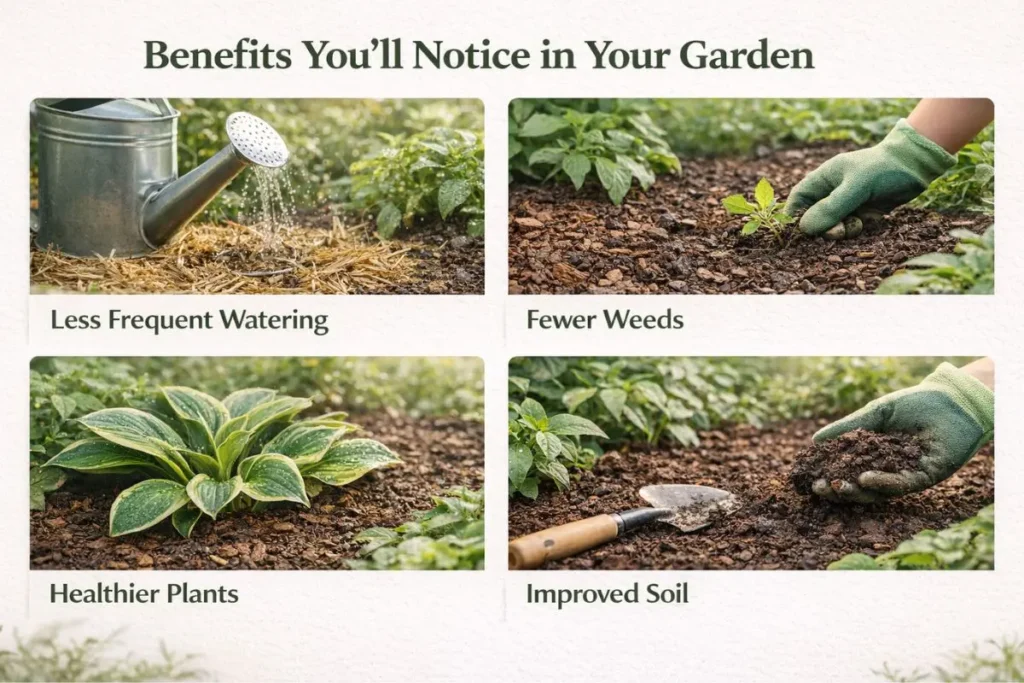
Once you start mulching, you’ll quickly see the difference. Here’s how your garden will thank you:
- Less Frequent Watering: Mulch locks in moisture, reducing your need to water as often. It’s like having a natural irrigation system.
- Fewer Weeds: A thick layer of mulch prevents weeds from sprouting, which means less weeding for you.
- Healthier Plants: Mulch helps maintain a stable temperature for your plants’ roots, promoting better growth.
- Improved Soil: Organic mulches add nutrients to the soil as they decompose, making it richer and healthier over time.
Common Mulching Mistakes
Even though mulching is easy, there are a few common mistakes to watch out for:
- Piling mulch against plant stems: This can lead to rot. Always leave a gap around the base of your plants.
- Not watering before mulching: Mulch helps retain moisture, but if the soil is dry, it won’t help much. Always water before applying mulch.
- Using too much mulch: A thick layer may suffocate your plants. Stick to 2–4 inches.
Mulch Myths Debunked
Let’s clear up some misconceptions about mulching:
- “Mulch attracts pests.”
Fact: Mulch can attract pests if it’s too thick or wet, but when used correctly, it helps keep your plants healthy by retaining moisture and reducing weed pressure. - “You don’t need to mulch in winter.”
Fact: In colder climates, mulch can actually help protect your plants from freezing temperatures. A layer of mulch insulates the roots and prevents the soil from freezing too quickly. - “Mulch will just decompose and disappear.”
Fact: Organic mulches decompose slowly, so they’ll continue to benefit your garden for a long time.
FAQ:
1. How do I know if I’m using enough mulch?
Apply a 2–4 inch layer. If the soil underneath feels dry, add more mulch to help retain moisture.
2. Can I use mulch on top of weeds?
Yes, but it’s better to remove weeds first. Mulch will help prevent new weeds from sprouting, but it won’t get rid of existing ones.
3. Should I use mulch around all my plants?
Mulch is great for most plants, but sensitive ones like tomatoes need to be mulched carefully. Leave space around their stems to avoid rotting.