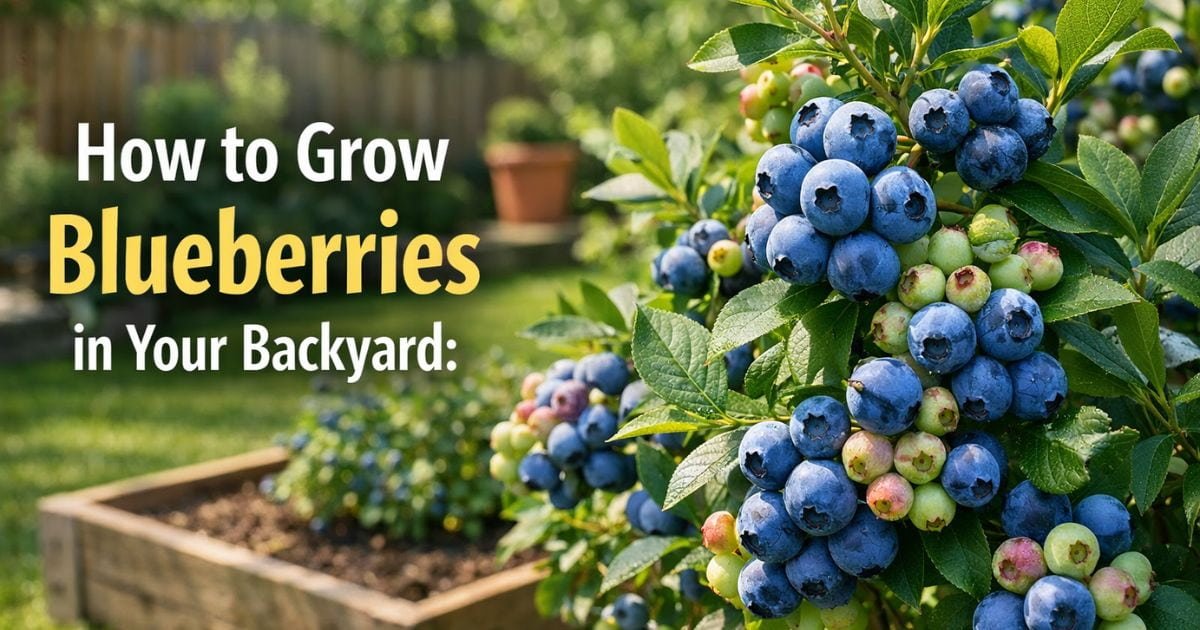
Blueberries are more than just delicious – they’re packed with health benefits! Growing them in your own backyard can be a satisfying and rewarding experience. This easy-to-follow guide will walk you through everything you need to know about planting, caring for, and harvesting blueberries. From the perfect location to troubleshooting common issues, let’s dive into how to grow blueberries in your backyard and enjoy fresh, homegrown fruit.
Why Grow Blueberries in Your Backyard?
Blueberries are not only tasty but also one of the healthiest fruits you can grow. Here’s why you should consider growing them in your backyard:
- Health Benefits: Rich in antioxidants, vitamins, and fiber, blueberries are well-known for improving heart health and reducing inflammation.
- Easy to Grow: Blueberries are surprisingly easy to maintain once they’re established.
- Year-Round Beauty: These plants offer year-round appeal – vibrant flowers in the spring, delicious fruit in the summer, and stunning autumn foliage.
Whether you’re growing them for their health benefits, their taste, or simply to beautify your backyard, blueberries are a fantastic choice!
Choosing the Right Variety of Blueberries for Your Backyard

Not all blueberry varieties are the same. Depending on your climate and space, some may be a better fit than others. Here’s how to choose the right one:
Types of Blueberries
- Highbush Blueberries
- Ideal for cooler climates, Highbush blueberries grow 4-6 feet tall and are the most common variety found in U.S. backyards.
- Produces large, sweet berries.
- Lowbush Blueberries
- Great for colder areas or ground cover. Lowbush blueberries grow low to the ground and yield smaller, but sweeter fruit.
- Best suited for colder regions, including northern states.
- Rabbiteye Blueberries
- Best for warmer southern climates. This variety is heat-tolerant and thrives in the southern U.S..
- They are disease-resistant and yield high quantities of berries.
Climate Considerations
Your region plays a large role in determining the right variety:
- Northern U.S.: Opt for Highbush varieties.
- Southern U.S.: Go for Rabbiteye varieties.
- Cold climates: Consider Lowbush blueberries for a cold-hardy option.
How to Prepare Your Backyard for Blueberries
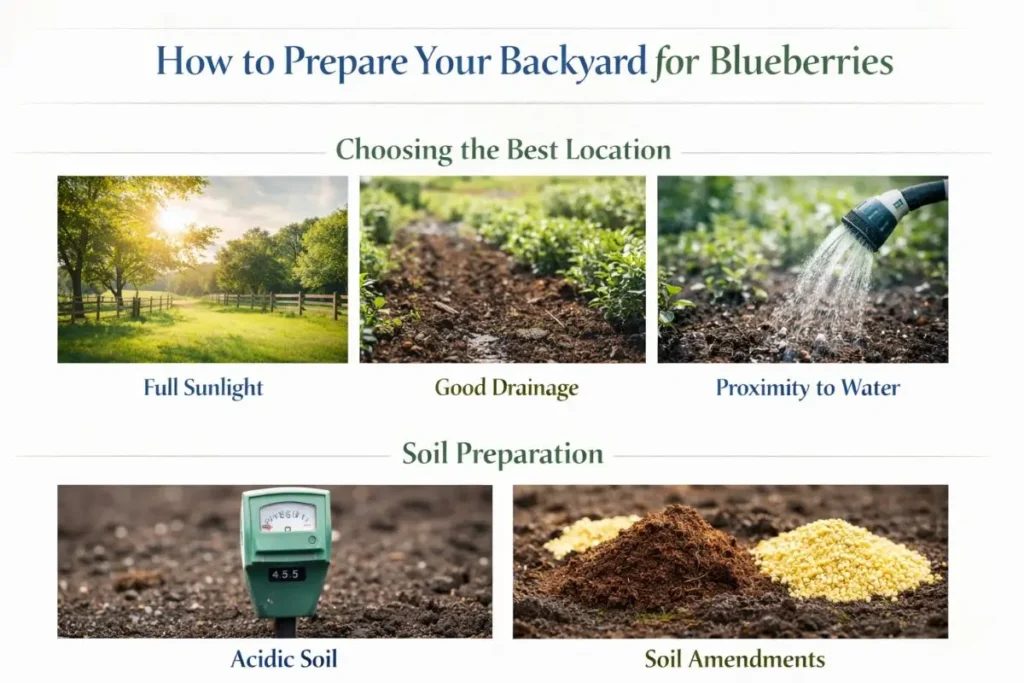
To ensure your blueberries thrive, it’s essential to prepare the right location and soil. Follow these steps to set up your space:
Choosing the Best Location
- Full Sunlight: Blueberries need at least 6 hours of sunlight each day to grow properly.
- Good Drainage: Make sure the area has well-drained soil, as blueberries do not like “wet feet” (soil that stays too soggy).
- Proximity to Water: Blueberries require consistent moisture, so plant them near a water source for convenience.
Soil Preparation
- Acidic Soil: Blueberries thrive in acidic soil with a pH of 4.5-5.5. Test your soil’s pH to make sure it’s in the right range.
- Soil Amendments: Add peat moss, compost, or sulfur to make the soil more acidic and rich in organic matter.
Planting Blueberries:
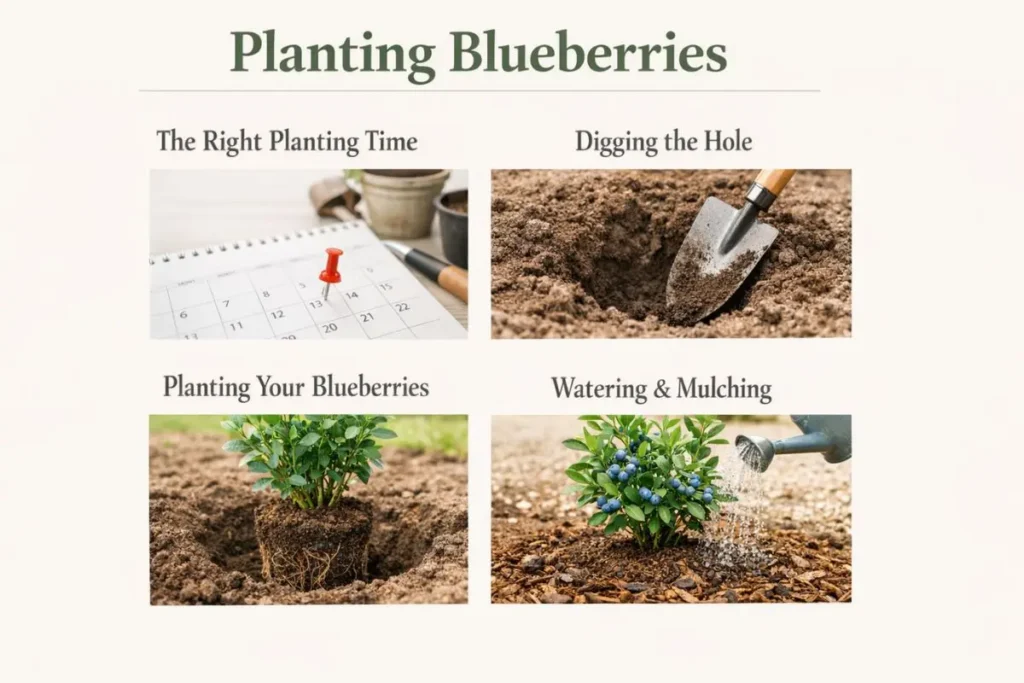
Now that your space is ready, it’s time to plant those blueberries! Here’s how you can plant them correctly:
The Right Planting Time
- Best Planting Time: For optimal growth, plant blueberries in the spring (after the last frost) or fall (before the first frost).
Digging the Hole
- Hole Size: Dig a hole that’s twice as wide as the root ball but only as deep as the plant’s container. Blueberries have shallow roots, so don’t bury them too deep.
Planting Your Blueberries
- Planting Depth: Make sure the top of the root ball is level with the surrounding soil. Avoid planting too deep as this can hinder growth.
- Spacing: Plant your blueberries about 4-5 feet apart to give each bush plenty of room to grow.
Watering and Mulching
- Watering: After planting, water the blueberries thoroughly. This helps settle the soil and removes any air pockets around the roots.
- Mulching: Apply mulch around the base of the plant to retain moisture and keep the soil temperature consistent.
Caring for Blueberries in Your Backyard
Once your blueberries are planted, you need to provide ongoing care to ensure healthy growth and a bountiful harvest.
Watering Needs
- Consistent Moisture: Keep the soil consistently moist, but not soggy. Water deeply during dry periods.
- Avoid Overwatering: Blueberries are susceptible to root rot, so ensure the soil is well-draining.
Fertilizing
- When to Fertilize: Fertilize in the spring, just before new growth begins. Use an organic fertilizer like fish emulsion or one specifically designed for acid-loving plants.
- Avoid Over-fertilizing: Too much fertilizer can harm the plants, so follow the manufacturer’s instructions.
Pruning
- Best Time to Prune: Prune blueberries in early spring before new growth starts.
- Pruning Tips: Remove dead or weak branches, and cut back any crossing branches to improve airflow.
Dealing with Pests and Diseases
Blueberries are generally pest-resistant but can still fall victim to a few common issues. Here’s how to deal with them:
Common Pests
- Aphids and blueberry maggots are common pests.
- Solution: Use organic pest control methods such as neem oil or insecticidal soap.
Common Diseases
- Powdery mildew and root rot are potential diseases to watch for.
- Solution: Ensure good soil drainage and avoid overcrowding plants to reduce the risk of disease.
Harvesting Blueberries
There’s nothing quite like harvesting fresh, homegrown blueberries. Here’s how to get the best yield:
When to Harvest
- Blueberries are ripe when they are completely blue and easily come off the plant with a gentle pull.
- Harvest in the summer, depending on the variety and your local climate.
How to Harvest
- Hand-picking: Gently pick the berries without bruising them. If you have a lot of berries to harvest, consider using a berry comb or a gentle hand rake.
Post-Harvest Care
- Storing Blueberries: Freshly picked blueberries should be stored in the fridge. They can last up to two weeks in a sealed container.
Tips for Extending the Blueberry Harvest Season
To enjoy blueberries for an extended period, here are some tips:
- Plant Multiple Varieties: By planting a mix of early and late-season varieties, you can extend the harvest season by several weeks.
- Covering Plants: If you live in an area prone to frost, use blueberry covers to protect your plants during the colder months.
Troubleshooting Common Issues with Blueberry Plants
Not everything will go smoothly, but here are some solutions to common problems:
Why Aren’t My Blueberries Growing?
- Soil pH may not be acidic enough. Test and amend if needed.
- Lack of sunlight can stunt growth. Ensure your plants get enough sun.
Improving Yield
- Pruning regularly and fertilizing in the spring will help increase the yield.
- Ensure proper spacing and good airflow around the plants.