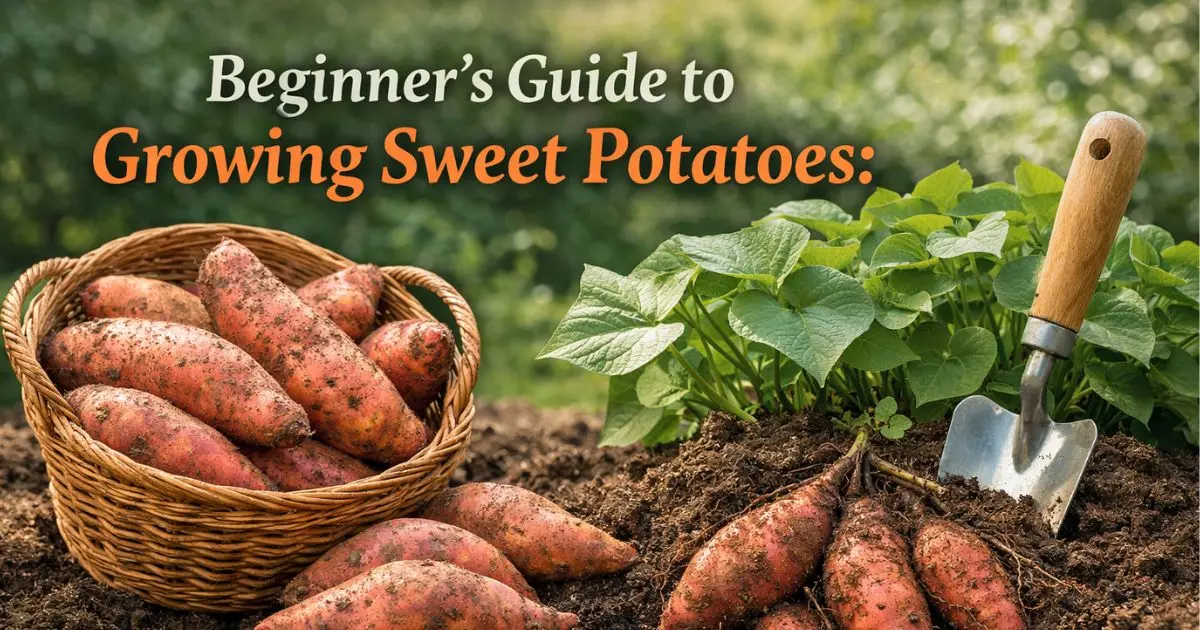
Sweet potatoes are a delicious and nutritious crop to grow at home. If you’re new to gardening or just starting out, sweet potatoes are an excellent choice. Not only are they easy to plant and maintain, but they also provide a bountiful harvest with minimal effort. In this comprehensive guide, we’ll walk you through the entire process—from planting your first sweet potato to harvesting and storing them, with plenty of tips and tricks to ensure your success.
What Are Sweet Potatoes?
Sweet potatoes are often confused with yams, but they are quite different. Sweet potatoes (Ipomoea batatas) belong to the morning glory family, while yams are from the lily family. Understanding the difference is crucial when planting and selecting the right variety for your garden.
Nutritional Benefits
Sweet potatoes are packed with essential nutrients, making them an incredibly healthy food option. They are high in Vitamin A, Vitamin C, and potassium, all of which are vital for maintaining good health. These nutrients help in maintaining healthy vision, boosting immunity, and supporting heart health.
Uses in Cooking
Sweet potatoes are incredibly versatile in the kitchen. They can be:
- Roasted, mashed, or baked.
- Used in savory dishes like casseroles, soups, and fries.
- Transformed into sweet desserts, like pies, muffins, or even sweet potato fries.
Due to their versatility, They are a popular choice in various cuisines around the world.
Why Grow Sweet Potatoes?
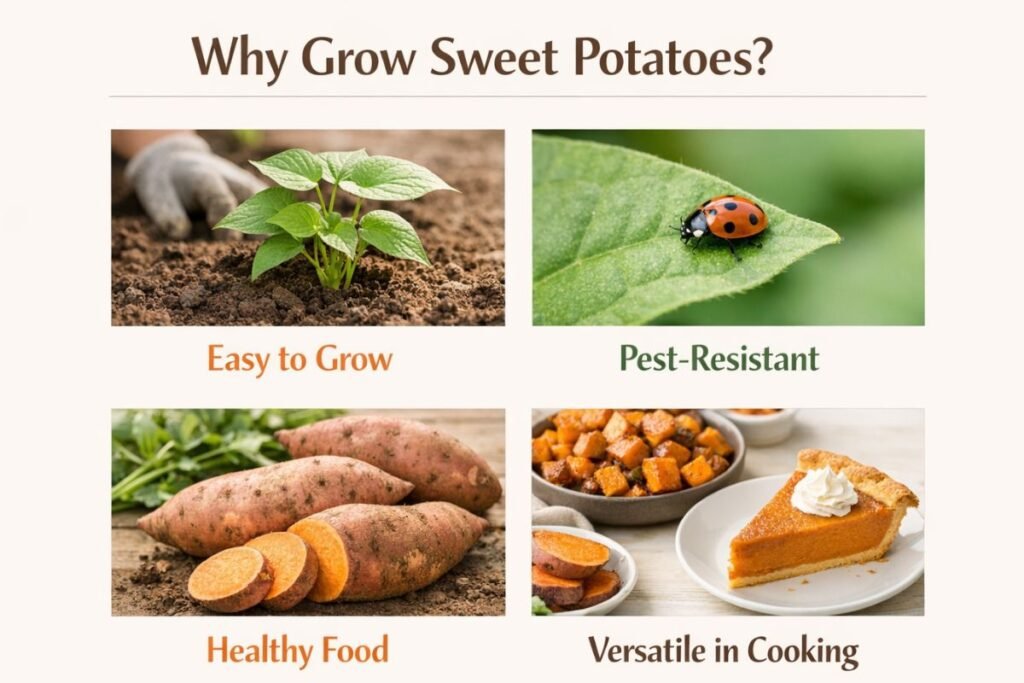
Growing this is not just fun, but also incredibly rewarding. Here’s why:
- Easy to Grow: Sweet don’t require much maintenance. With minimal attention, they thrive in the right conditions.
- Pest-resistant: Sweet potatoes naturally resist pests like aphids and weevils, making them easier to grow without constant pesticide use.
- Healthy Food: They’re rich in fiber, vitamins, and minerals. Including its in your diet can help with digestion and boost overall health.
- Versatile in Cooking: From savory dishes to sweet desserts, there are countless ways to enjoy its
Growing its at home can also save you money and give you access to fresh produce all year long.
Choosing the Right Variety of Sweet Potato
Choosing the right variety of this is important for a successful harvest. Different types of sweet potatoes thrive in different climates, so it’s essential to pick one suited to your local growing conditions.
Popular Sweet Potato Varieties
- Beauregard: Known for its smooth skin and orange flesh, this variety is a favorite among gardeners. It’s disease-resistant and matures quickly.
- Jewel: With a creamy texture and rich flavor, Jewel sweet potatoes are perfect for baking and mashing.
- Covington: A variety that boasts a deep orange color and firm texture. It’s widely grown due to its resistance to disease and excellent flavor.
If you live in a cooler climate, choose a variety that matures faster. In warmer climates, you have the flexibility to grow a wider range of varieties.
Preparing Your Garden for Sweet Potatoes
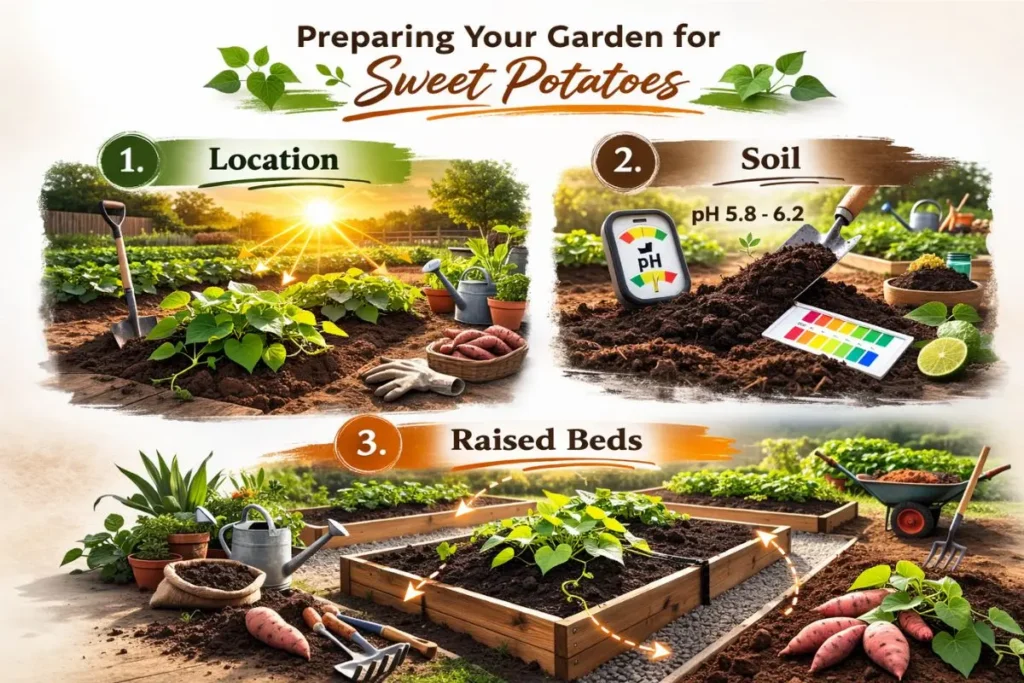
Proper preparation of your garden will set the stage for a successful sweet potato crop. Follow these steps for the best results:
1. Location
They need full sunlight to grow well. Choose a spot that gets at least 6-8 hours of direct sunlight each day.
2. Soil
Sweet potatoes thrive in well-drained soil with a slightly acidic pH range of 5.8 to 6.2. Amending your soil with organic compost will help improve texture and fertility.
If you have heavy or clay soil, consider using raised beds to provide better drainage and root development.
How to Plant Sweet Potatoes
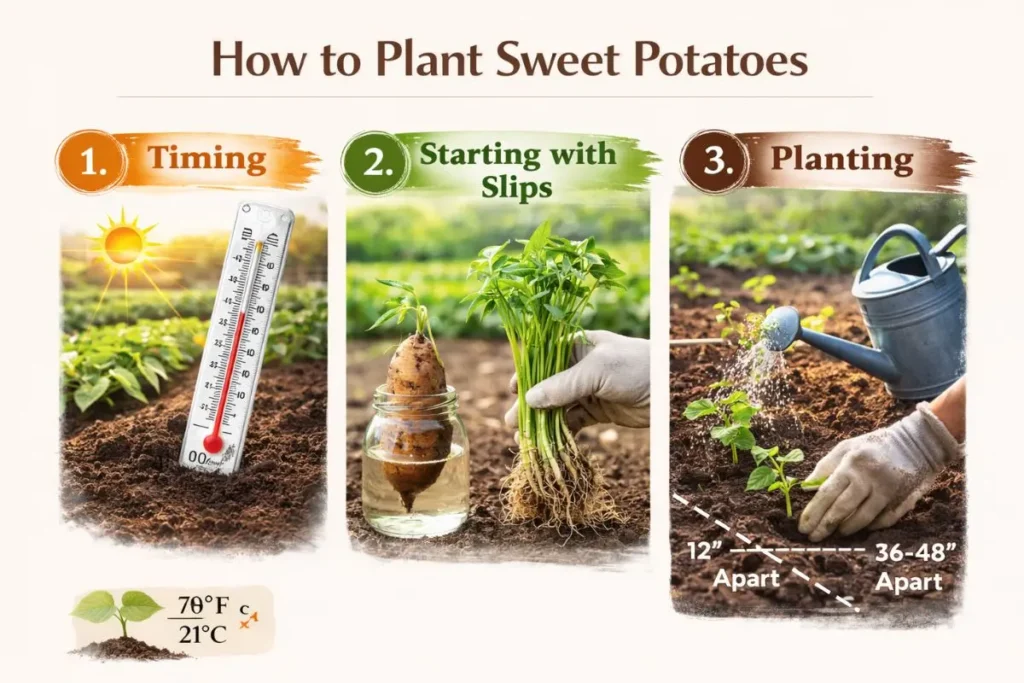
Planting sweet potatoes may seem intimidating at first, but it’s actually quite simple. Here’s a step-by-step guide to get you started:
- Timing: Sweet potatoes should be planted after the last frost when the soil temperature has reached about 70°F (21°C).
- Starting with Slips: You can grow sweet potatoes from slips, which are sprouted shoots that grow from the sweet potato itself. You can purchase these or create your own by placing a sweet potato in water to sprout.
- Planting:
- Place slips about 12 inches apart in rows that are 36-48 inches apart.
- Gently bury the slips, leaving the leaves above the soil surface.
- Water the slips thoroughly after planting to help them settle into their new environment.
Take about 90 to 120 days to mature, depending on the variety and growing conditions.
Caring for Sweet Potatoes During the Growing Season
After planting, it’s essential to give the care they need to grow strong and healthy:
- Watering: Sweet potatoes prefer deep watering but don’t like soggy soil. Water them once a week, ensuring the soil is moist but not waterlogged.
- Fertilizing: Fertilize with organic compost or a balanced fertilizer. You can fertilize once at planting time and again every 6 weeks.
- Mulching: Apply a layer of mulch around the plants to help retain moisture, prevent weed growth, and regulate soil temperature.
Managing Pests and Diseases in Your Sweet Potato Garden
Although sweet potatoes are relatively resistant to pests, you may still face challenges. Here are some common pests and diseases to look out for:
- Sweet Potato Weevils: These pests can damage the roots, causing them to rot. Rotate crops to prevent infestations and remove any infected plants immediately.
- Aphids: Aphids are tiny insects that can weaken plants. Use natural predators like ladybugs or apply soapy water to manage them.
- Fungal Diseases: Ensure proper spacing and air circulation between plants to reduce the risk of fungal infections. If necessary, use organic fungicides to control diseases.
Harvesting Sweet Potatoes
Knowing when to harvest sweet potatoes is crucial for a successful crop:
- Timing: Harvest in late summer or early fall, after the vines start to die back. You’ll want to leave them in the ground for as long as possible to ensure they grow to their full potential.
- Signs of Readiness: Dig around the roots gently. If they are the right size and color, they are ready to be harvested.
- Tools: Use a spade or garden fork to lift the sweet potatoes, being careful not to damage them.
Storing and Preserving Your Harvested Sweet Potatoes
Once harvested, it’s important to store sweet potatoes correctly to maximize their shelf life and flavor.
- Curing: After harvest, cure sweet potatoes by placing them in a warm, humid area (85°F or 29°C) for about 10 days. This helps to improve their flavor and texture.
- Storage: After curing, store your sweet potatoes in a cool, dry place (around 55°F or 13°C). Avoid refrigerating them as this can affect their taste and texture.
Common Issues for Sweet Potato Growers
Sometimes, things don’t go as planned. Here are some common issues and how to fix them:
- Small or Deformed Roots: This can happen due to overcrowding or insufficient sunlight. Make sure to plant sweet potatoes with enough space and ensure they get adequate sunlight.
- Yellowing Leaves: Yellow leaves can be a sign of nutrient deficiencies or overwatering. Check your soil’s drainage and consider adding fertilizer.
Sweet Potato Growing Tips for Success
Here are some expert tips to help you get the best results from your sweet potato crop:
- Grow in Containers: If you’re short on space, grow sweet potatoes in large containers or pots.
- Crop Rotation: Avoid planting sweet potatoes in the same spot every year. Rotate crops to keep the soil healthy.
- Start with High-Quality Slips: Always use healthy slips to ensure strong, healthy plants.