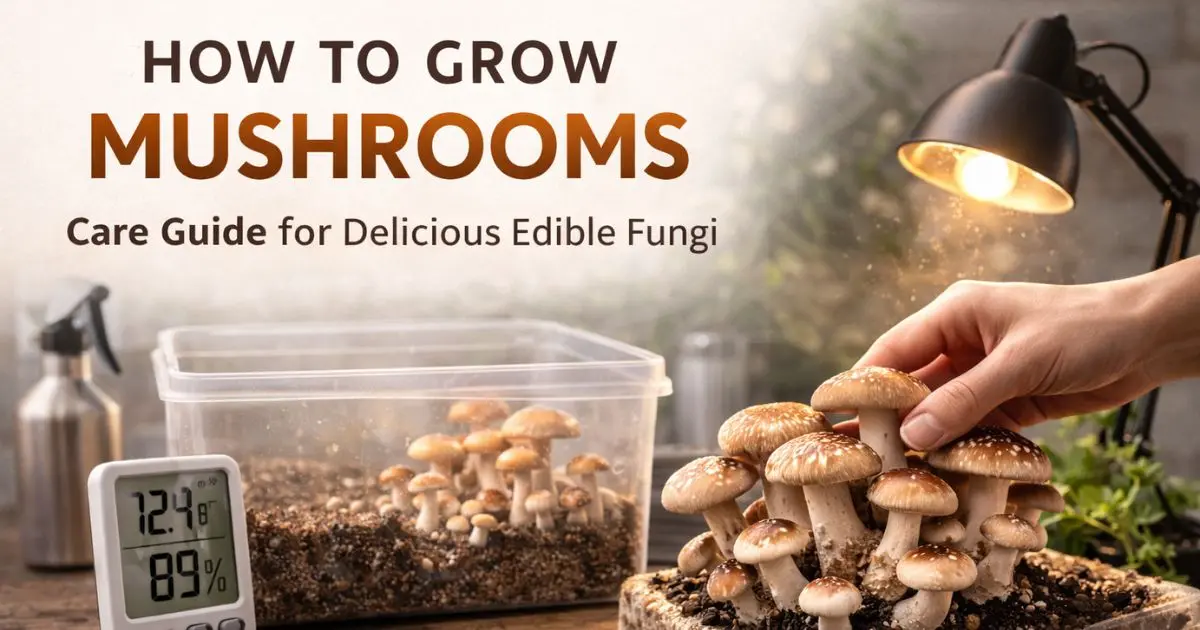
Growing this at home is an exciting and rewarding experience that offers numerous benefits. Not only can you enjoy fresh, delicious fungi in your meals, but you can also save money and have a fun gardening hobby. This guide will walk you through the entire process of growing mushrooms at home, from selecting the right variety to harvesting your first batch of mushrooms. Let’s dive in!
Why Grow Mushrooms at Home?
Mushrooms are a great addition to your garden or kitchen. Here’s why:
- Cost-effective: Buying fresh mushrooms at the store can get expensive, especially if you use them often. Growing them at home is a cheaper option.
- Sustainability: Homegrown mushrooms are a sustainable way to enjoy fresh produce without relying on store-bought items.
- Easy to grow:They can thrive in small spaces, such as kitchens or basements, and don’t require much attention once you get started.
Types You Can Grow at Home
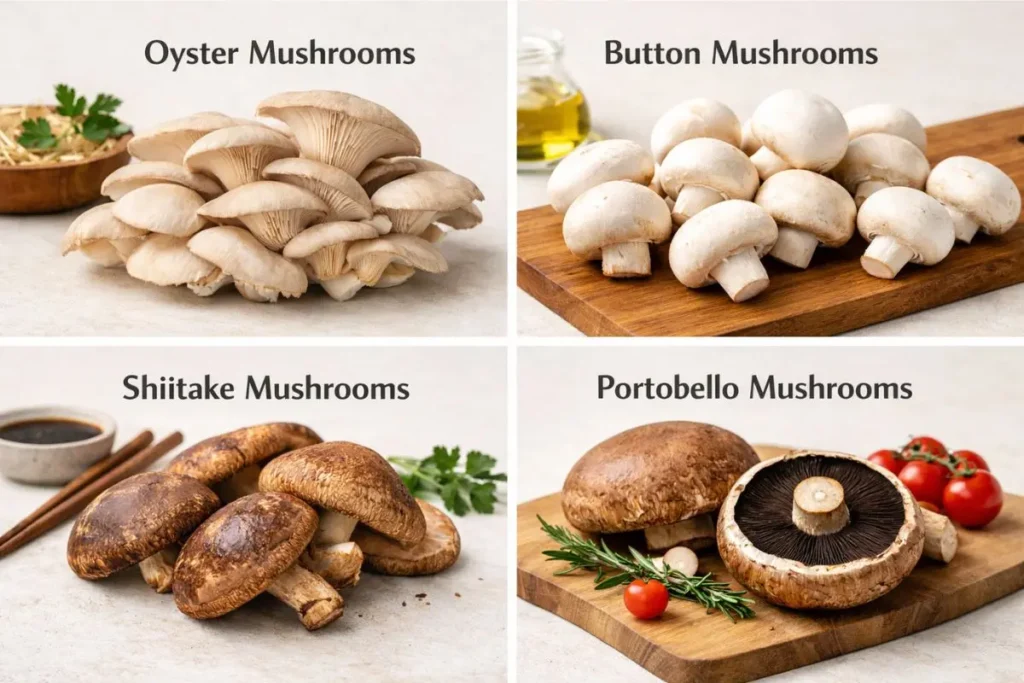
There are many different types of mushrooms you can grow, each with its own unique taste and care requirements. Here are a few popular ones to consider:
1. Oyster
- Beginner-friendly: They grow quickly and require minimal care.
- Flavor: Mild and delicate, perfect for stir-fries, soups, and salads.
2. Button
- Classic choice: These are the mushrooms you often see in grocery stores.
- Flavor: Mild and versatile, great for salads, pizzas, and pasta.
3. Shiitake
- Rich flavor: These have a strong, earthy taste.
- Use: Excellent in Asian dishes like soups and stir-fries.
4. Portobello
- Large and meaty: These are perfect for grilling or stuffing.
- Flavor: Rich and hearty, ideal for burgers and vegetarian dishes.
Choose a variety that fits your space, experience level, and cooking preferences. Oyster mushrooms are great for beginners, while shiitake and portobello offer richer flavors for more experienced growers.
Understanding Conditions
To grow healthy, it’s essential to create the right environment. Mushrooms thrive in specific conditions, including temperature, humidity, and light.
Temperature, Humidity, and Light
- Temperature: Most they grow well in temperatures between 55–75°F (13–24°C). Shiitake mushrooms prefer slightly cooler conditions, while oyster mushrooms thrive at warmer temperatures.
- Humidity: Mushrooms love high humidity. Aim for around 80–90% humidity for optimal growth. You can achieve this by misting the growing area or using a humidity tent.
- Light: Unlike plants,they don’t need direct sunlight. They prefer indirect light or even complete darkness during the growing phase.
Indoor vs. Outdoor Growing
- Indoor growing: Perfect for those with limited outdoor space. Use a grow kit or create your own setup using containers, substrates, and a humid environment.
- Outdoor growing: Ideal if you have a garden. It can be grown directly in the ground or in shaded spots, such as under trees.
How to Prepare Growing Space
Creating the right environment for mushroom cultivation is key to success. Here’s what you’ll need:
Choosing Containers and Substrates
- Containers: Use containers like buckets, trays, or plastic bags. Ensure they have proper ventilation to allow airflow while preventing contamination.
- Substrates: They need a growing medium, such as:
- Straw
- Sawdust
- Coffee grounds
- Wood chips
Setting up a Clean Environment
Cleanliness is crucial when growing mushrooms. Wash your containers and tools thoroughly, and try to maintain a sterile environment to prevent contamination.
Step-by-Step Guide
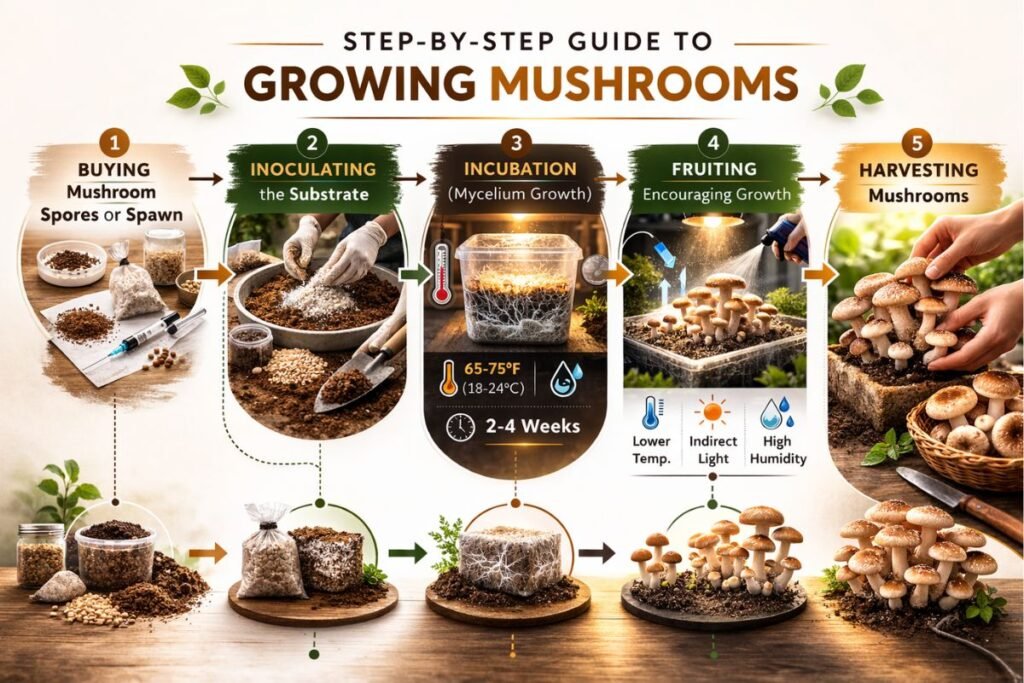
Let’s break down the process of growing mushrooms into simple steps:
1. Buying Mushroom Spores or Spawn
- Spores vs. spawn: Spores are like mushroom seeds, while spawn is the material where the spores have already grown. Spawn is easier to handle for beginners.
- Where to buy: You can purchase high-quality spawn from gardening stores or online suppliers.
2. Inoculating the Substrate
- Inoculation is the process of adding spawn to your substrate. This is where is start their growth cycle.
- How to inoculate:
- Mix spawn into your substrate thoroughly.
- Pack the mixture into containers or trays and place it in a dark, warm area.
3. Incubation: The Key to Mushroom Growth
- During the incubation phase,they develop mycelium, which are the roots of the mushroom.
- Conditions: Keep the temperature around 65–75°F (18–24°C), and maintain high humidity.
- Duration: This phase takes about 2-4 weeks, depending on the mushroom variety.
4. Fruiting: Encouraging Mushrooms to Grow
- Once the mycelium has fully colonized the substrate, it’s time to transition the setup to fruiting conditions.
- Temperature: Lower the temperature slightly and introduce indirect light.
- Humidity: Continue to keep the humidity high, and mist the substrate to keep it moist.
5. Harvesting Mushrooms at the Right Time
- Mushrooms are ready to be harvested when the caps have fully opened but haven’t started to release spores.
- How to harvest: Gently twist and pull the mushrooms from the substrate. Avoid cutting them to keep the growing area clean.
How to Care
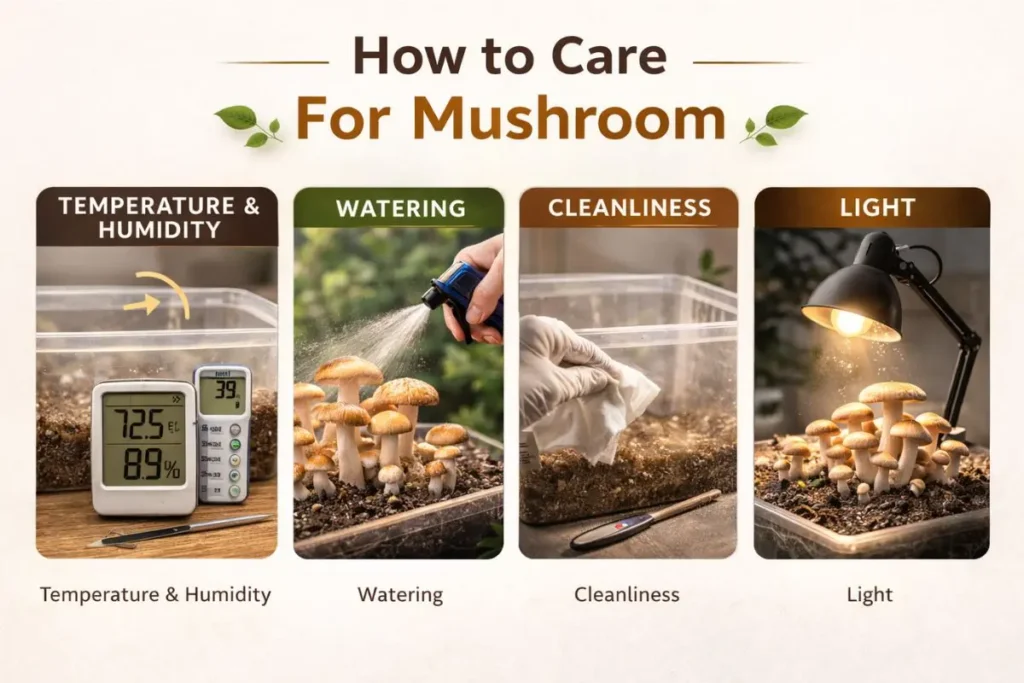
Once its start growing, it’s essential to continue providing proper care. Here’s what you need to do:
- Monitor temperature and humidity: Mushrooms need a stable environment. Check the temperature and humidity regularly to make sure they’re within the ideal range.
- Watering: Mist your growing medium lightly but frequently to keep it moist. Avoid overwatering, as it can lead to mold growth.
- Cleanliness: Ensure the growing area remains clean. Contamination can quickly ruin your crop. Sterilize your tools, containers, and the environment regularly.
- Light: Once the fruiting phase begins, provide indirect light to encourage proper growth.
By keeping an eye on these factors, you can ensure that is grow healthy and strong.
Common Mistakes
Even experienced growers make mistakes. Here are some common ones to avoid:
- Over-watering: Too much moisture can lead to mold. Mist the substrate lightly but consistently.
- Incorrect temperature or humidity: Always keep an eye on the environment. Too high or too low of either can stunt growth.
- Contaminating the substrate: Ensure everything, from containers to tools, is clean and sterile.
What to Do If Things Go Wrong
If you encounter problems, don’t worry! Here are some tips:
- Slow growth: If growing slowly, check the temperature and humidity. Make adjustments if necessary.
- Pests: If you notice pests, such as flies or insects, remove them manually and ensure your setup is sealed properly.
- Low yields: This could be due to improper substrate, insufficient light, or poor inoculation. Double-check your process.
How to Enjoy Your Freshly Grown Mushrooms
Now that you’ve grown your mushrooms, it’s time to enjoy them! Here are some ideas:
- Fresh in salads: Mushrooms add a delightful texture to any salad.
- In pasta or pizza: Sautéed mushrooms are a perfect topping for pizza or pasta dishes.
- Preserving mushrooms: You can freeze, dry, or pickle your mushrooms for later use.