
Imagine picking fresh, ripe strawberries from your own garden — the flavor is unbeatable! Whether you’re a beginner gardener or an experienced green thumb, growing strawberries at home can be both fun and rewarding. This guide will provide you with all the practical tips you need to grow your own sweet strawberries, no matter the size of your garden.
Why Sweet Strawberries?
Strawberries are one of those fruits that bring a sense of accomplishment to home gardeners. They’re relatively easy to grow, require little space, and can even be grown in containers. What makes them even more appealing is their sweet, tangy flavor, which is unmatched by store-bought versions.
Growing strawberries yourself also means you can choose the best varieties suited to your climate, and nothing beats the experience of picking fresh fruit straight from the garden. Plus, strawberries attract pollinators, so you’re helping the local ecosystem while enjoying your harvest!
Perfect Climate for Strawberry Success

Strawberries thrive in a temperate climate. They prefer cool temperatures, ideally ranging from 60°F to 80°F (15°C to 27°C). If you live in a warmer area, like parts of India or Pakistan, you can still grow strawberries, but you’ll need to choose varieties that can handle the heat.
Ideal Growing Zones
Strawberries grow best in USDA hardiness zones 3 to 10. For hot climates, choose heat-tolerant varieties like everbearing strawberries.
Creating Your Ideal Microclimate
In warmer regions, choose a spot that gets morning sun but is shaded during the hottest part of the day. If you’re planting in containers, you have the flexibility to move them to different spots as needed.
Setting Up the Soil:
Soil That Loves Strawberries
Strawberries prefer soil that’s light, well-drained, and rich in organic matter. If your soil feels dense or clay-like, it can hold too much water and lead to root rot. Loamy, well-aerated soil is ideal.
Perfect pH for Perfect Strawberries
Strawberries thrive in slightly acidic soil with a pH range of 5.5 to 6.5. If your soil is too alkaline, add a bit of sulfur or compost to bring the pH to the sweet spot.
Organic Matter for Healthier Soil
Mix in compost or well-rotted manure to enrich the soil. Organic matter not only provides essential nutrients but also improves drainage and helps the plants establish strong roots.
The Right Way to Plant
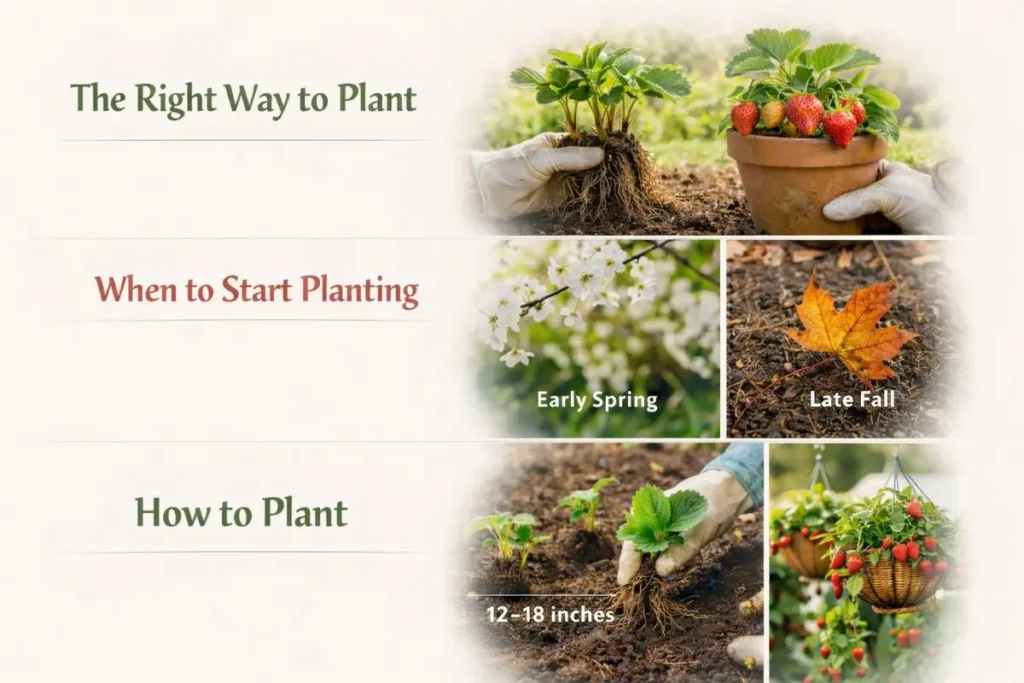
When to Start Planting
The best time to plant strawberries is early spring or late fall, depending on your region. Bare-root strawberries are great for spring planting, while potted ones can be planted anytime the ground is workable.
How to Plant: A Simple Step-by-Step Guide
- Spacing: Place your plants 12 to 18 inches apart to give them room to grow.
- Depth: The crown (where the roots meet the stem) should be just above the soil line. If planted too deep, the plant may rot.
- Spread Out the Roots: Gently spread the roots before covering them with soil to prevent clumping.
- Containers: If you’re using containers, ensure good drainage and use a quality potting mix. Hanging baskets are great for small spaces.
Sunshine & Water:
Sunlight: The Key to Sweet Fruit
Strawberries love the sun! They need at least 6-8 hours of direct sunlight each day. In hotter climates, some afternoon shade will protect them from the intense heat.
Watering: The Right Amount
Water is essential, but too much can be just as harmful as too little. Here’s a simple rule to follow:
- Seedlings: Keep the soil moist but not soggy.
- Mature plants: Water deeply once a week, or more often if it’s very hot. Aim for the soil to feel like a “wrung-out sponge” — moist but not soaking.
Mulching for Moisture Retention
Add mulch (straw, pine needles, or grass clippings) to help retain moisture, regulate soil temperature, and prevent weeds.
Fertilizing Your Strawberries:
How to Feed Your Strawberries Right
Strawberries are light feeders but benefit from a little boost.
- Early Spring: Use a balanced fertilizer (organic compost or fish emulsion works wonders).
- Post-Harvest: After your first harvest, apply a fertilizer to encourage the next round of fruit production.
Avoid Over-Fertilizing
Too much fertilizer can lead to lush foliage at the expense of fruit. Stick to the recommended dosage and don’t overdo it.
Mulching & Weed Control:
How Mulching Helps
Mulch is your secret weapon for keeping strawberries happy. It helps retain moisture, suppress weeds, and regulate soil temperature. Apply a 2-3 inch layer of mulch around your plants, but avoid covering the crowns.
Weed Control
Weeds compete with strawberries for nutrients, so keep them at bay. Mulch helps, but you’ll also need to pull weeds by hand or use a hoe.
Training & Pruning:
Pruning for Better Growth
Regular pruning helps keep your strawberries healthy. Remove dead leaves, trim away runners, and keep the plants tidy. Pruning encourages better airflow, reducing the risk of disease.
- Runners: Cut back runners to focus energy on fruit production. Don’t let the plant spread too far.
- Dead Leaves: Trim yellowing or dead leaves to keep the plant healthy.
Supporting Everbearing Varieties
If you’re growing everbearing strawberries, consider using stakes or small cages to keep the fruits off the ground, preventing rot and attracting pests.
Seasonal Care:
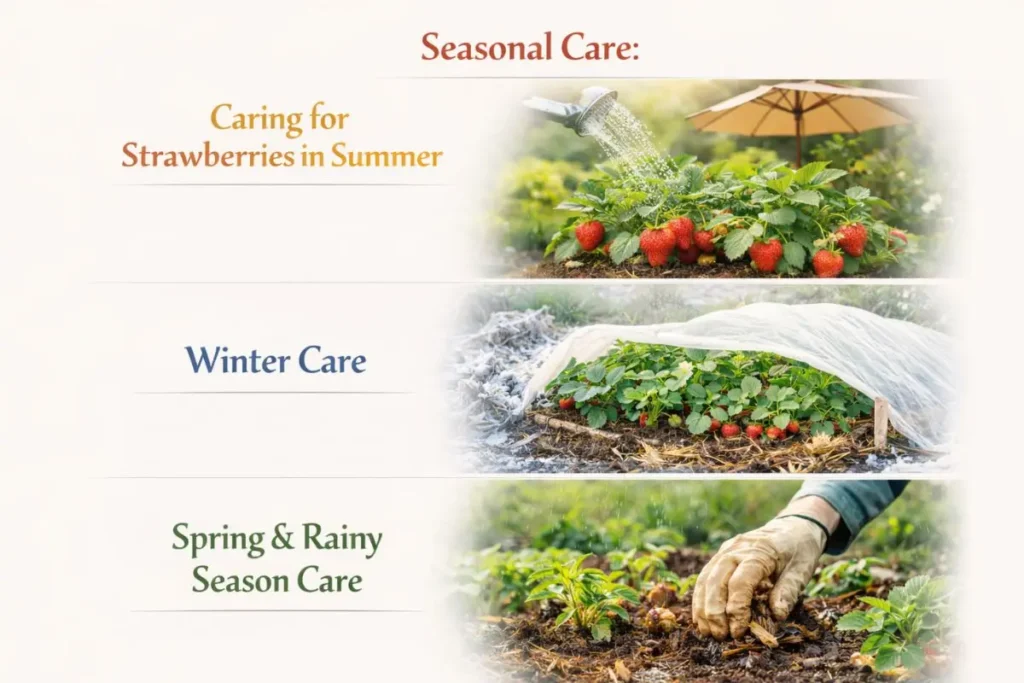
Caring for Strawberries in Summer
During the hotter months, ensure your strawberries get enough water and some afternoon shade to prevent sunburn.
Winter Care
In colder climates, strawberries can be vulnerable to frost. Use row covers or mulch to protect them in winter.
Spring & Rainy Season Care
As new growth starts in spring, clear away old mulch and dead leaves to let the plants breathe and thrive. Keep up with regular watering as the weather warms up.
Your Year with Strawberries
Here’s what you can expect as you grow strawberries through the seasons:
- Month 1: Plant strawberries. Focus on establishing strong roots.
- Month 3-4: Watch for new growth — flowers will soon follow!
- Month 6: First fruits appear. Enjoy your first harvest!
- Year 1: By the end of the year, your strawberries should be producing regularly.
Common Mistakes
Watch Out For
- Overwatering: Strawberries don’t like soggy roots. Be mindful of watering and avoid excessive moisture.
- Planting Too Deep: The crown should sit just above the soil. Planting too deep causes rot.
- Ignoring Runners: Letting runners take over can stunt fruit production. Cut them back regularly.
Debunking Myths
- Myth: Strawberries need constant fertilizing.
Fact: Over-fertilizing can harm your plants. A balanced approach works best.
Dealing with Pests & Diseases:
Common Strawberry Pests
- Aphids: Small bugs that suck sap from the plants. Use neem oil or insecticidal soap to control them.
- Slugs & Snails: They love strawberries! Place beer traps or use diatomaceous earth to deter them.
Diseases to Watch Out For
- Powdery Mildew: This fungal disease loves damp conditions. Improve airflow and remove infected leaves.
- Botrytis (Gray Mold): This can appear on fruit. Remove affected berries and improve spacing between plants.
Harvesting Strawberries:
Timing the Harvest
Strawberries are ready to harvest when they’re fully red. Gently pick the berries to avoid damaging the plant.
- Tip: Harvest in the early morning, when the berries are cool and firm.
Long-Term Care
After the harvest, prune away dead leaves and runners to prepare your strawberries for the next season. Keep them well-fed and watered to ensure ongoing production.
FAQs:
1. When should I plant strawberries?
Plant in early spring or late fall for the best results.
2. Can I grow strawberries in containers?
Absolutely! Containers work well, and you can move them around for optimal sunlight.
3. How often should I water my strawberries?
Water once a week or more frequently during hot weather. Ensure the soil is moist but not soaked.