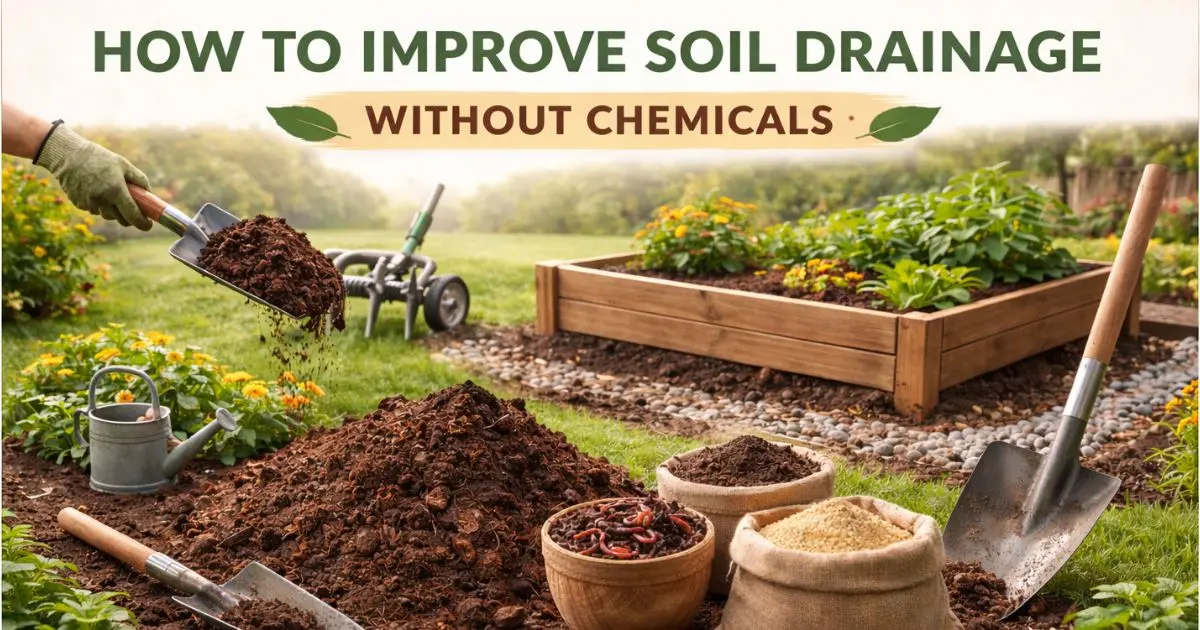
Soil drainage is a fundamental aspect of a healthy garden. It affects how water moves through the soil, ensuring plants get the right amount of moisture. When soil retains too much water, it can lead to root rot, stunted growth, and plant death. Fortunately, there are natural ways to improve soil drainage without chemicals. In this article, we’ll explore simple and eco-friendly methods to enhance drainage and support healthier plants.
Understanding Soil Drainage
Before diving into solutions, it’s important to understand what soil drainage is and why it plays such a crucial role in plant health.
What is Soil Drainage?
Soil drainage refers to the movement of water through soil. Well-draining soil allows excess water to flow through easily, while poorly draining soil traps water around plant roots, leading to waterlogging.
Why Proper Drainage is Crucial
- Prevents Waterlogging: Waterlogged soil suffocates roots, leading to poor plant health and diseases.
- Promotes Root Health: Healthy roots need oxygen, which is more abundant in well-draining soil.
- Encourages Better Plant Growth: Plants thrive in soil that balances moisture levels, providing enough water without drowning roots.
Signs of Poor Drainage
If your garden shows any of the following signs, you may have poor drainage:
- Puddles forming after watering
- Soggy or compacted soil
- Plants exhibiting yellowing leaves or wilting despite proper watering
Why Avoid Chemicals for Soil Drainage
While chemical products may promise quick fixes, they often cause more harm than good.
- Environmental Impact: Chemicals can leach into groundwater, harming surrounding ecosystems.
- Soil Organisms: Chemicals harm beneficial microbes, earthworms, and other organisms crucial for healthy soil.
- Temporary Solutions: Chemicals often offer short-term relief but require frequent reapplication, unlike natural methods that offer lasting improvement.
Choosing natural, chemical-free methods ensures long-term soil health, supporting a more sustainable garden.
Natural Ways to Improve Soil Drainage
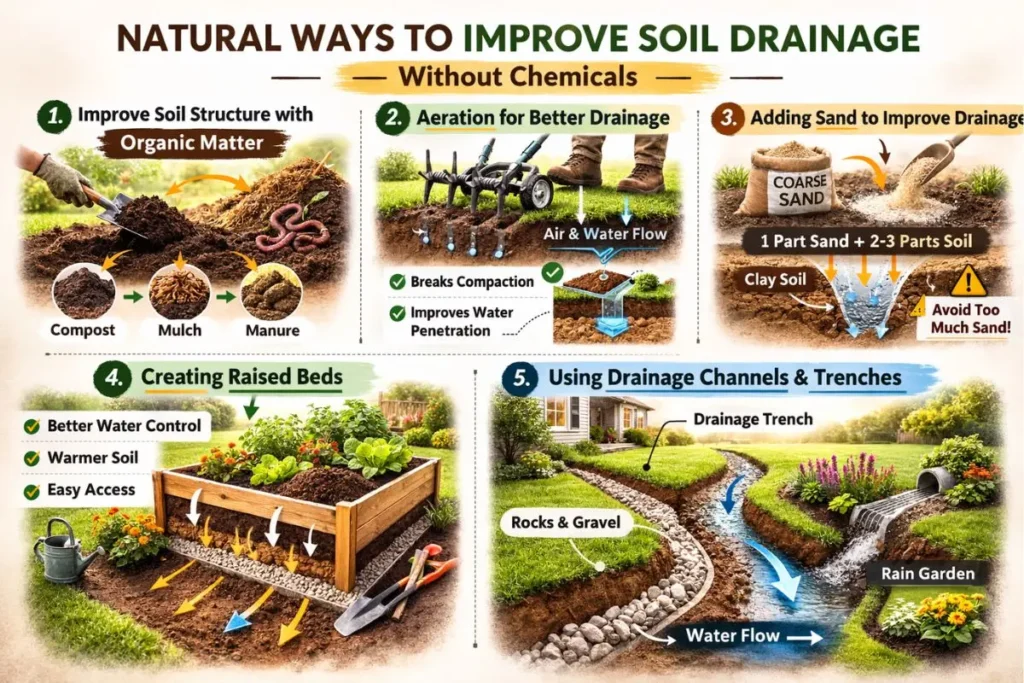
Now, let’s explore several natural methods to improve soil drainage without chemicals.
1. Improve Soil Structure with Organic Matter
Adding organic matter is one of the most effective and eco-friendly ways to improve soil drainage.
- How it works: Compost, mulch, or well-rotted manure help break up compacted soil, increasing the space between soil particles and allowing water to flow more freely.
- Benefits:
- Improves water movement through heavy, clay-like soil
- Increases nutrient availability
- Encourages the growth of beneficial soil organisms like earthworms
How to add organic matter:
- Spread a layer of compost, mulch, or manure over the soil surface.
- Lightly mix it into the top few inches of soil to improve its structure.
- Apply regularly to maintain healthy, well-draining soil.
2. Aeration for Better Drainage
Compacted soil is one of the main culprits of poor drainage. Aeration can help relieve compaction and improve water flow.
- How it works: Aerating your soil involves creating small holes or channels that allow air and water to penetrate deeper into the soil.
- Tools to use:
- Manual aerators for small gardens
- Lawn aeration machines for larger spaces
Steps for aeration:
- Use an aeration tool to create holes about 2 to 3 inches apart.
- Focus on areas with compacted soil or high foot traffic.
- After aerating, water the soil to help settle the air pockets and further improve drainage.
3. Adding Sand to Improve Drainage
For soils that are too dense, like clay, adding sand can significantly improve drainage.
- How it works: Coarse sand helps break up heavy, clayey soil, allowing water to flow more easily through it. However, it’s essential to use coarse sand as fine sand can worsen the problem.
- Caution: Be mindful not to add too much sand, as it can turn your soil into a concrete-like mixture if overdone.
How to add sand:
- Mix coarse sand with your clay soil at a ratio of 1 part sand to 2 or 3 parts soil.
- Ensure that you add enough sand to create a loose, well-draining mixture without going overboard.
4. Creating Raised Beds
Raised garden beds are a fantastic solution for improving drainage, especially in areas where soil is naturally heavy or poorly draining.
- How it works: Raised beds elevate your plants above the soil, reducing the chances of water pooling around the roots.
- Benefits:
- Better water control
- Warmer soil in the spring
- Easier access to plants for gardening
How to build a raised bed:
- Choose a sunny spot in your garden.
- Construct the bed with untreated wood, stones, or bricks.
- Fill it with a high-quality mix of soil and organic matter for optimal drainage.
5. Using Drainage Channels and Trenches
If you’re dealing with persistent waterlogging, creating drainage channels or trenches can help direct excess water away from your plants.
- How it works: Drainage trenches help to divert water away from low-lying areas and prevent it from collecting around plant roots.
- Steps for creating a drainage channel:
- Dig a shallow trench in areas where water tends to collect.
- Line the trench with rocks or gravel to promote smooth water flow.
- Use a slight slope to direct the water towards a nearby storm drain or rain garden.
How to Maintain Good Drainage Over Time
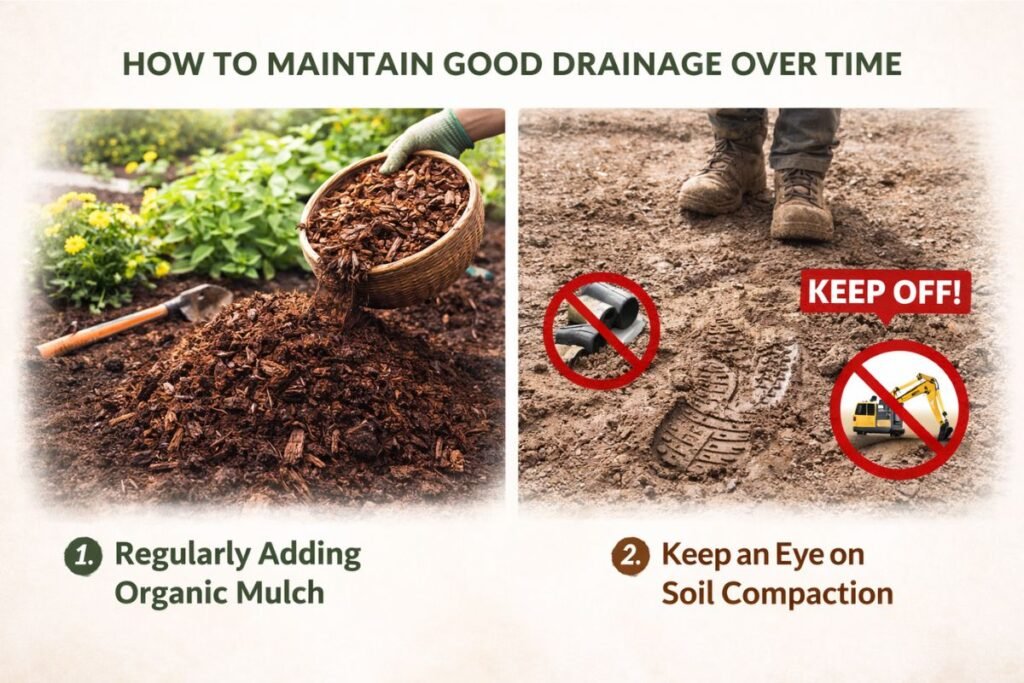
Maintaining good drainage over time is just as important as improving it in the first place. Follow these simple steps to ensure long-lasting results.
1. Regularly Adding Organic Mulch
Mulch is an excellent tool for preventing soil compaction and retaining moisture during dry periods. Over time, it decomposes, enriching the soil with organic matter that further improves drainage.
2. Keep an Eye on Soil Compaction
Soil compaction can undo all your hard work. Avoid walking on wet soil or using heavy machinery in your garden, as this can compress the soil and reduce drainage.
- Tip: Aerate or add more organic matter if you notice soil compaction.
Common Mistakes
While natural drainage solutions are effective, it’s easy to make a few common mistakes.
- Overusing sand: Too much sand can lead to dry, compacted soil that doesn’t drain properly.
- Neglecting slope: Proper slope is essential to direct water away from your garden. Without it, water may still pool around your plants.
- Using the wrong sand or soil type: Make sure to use coarse sand and avoid fine sand or clay mixtures that can worsen drainage.