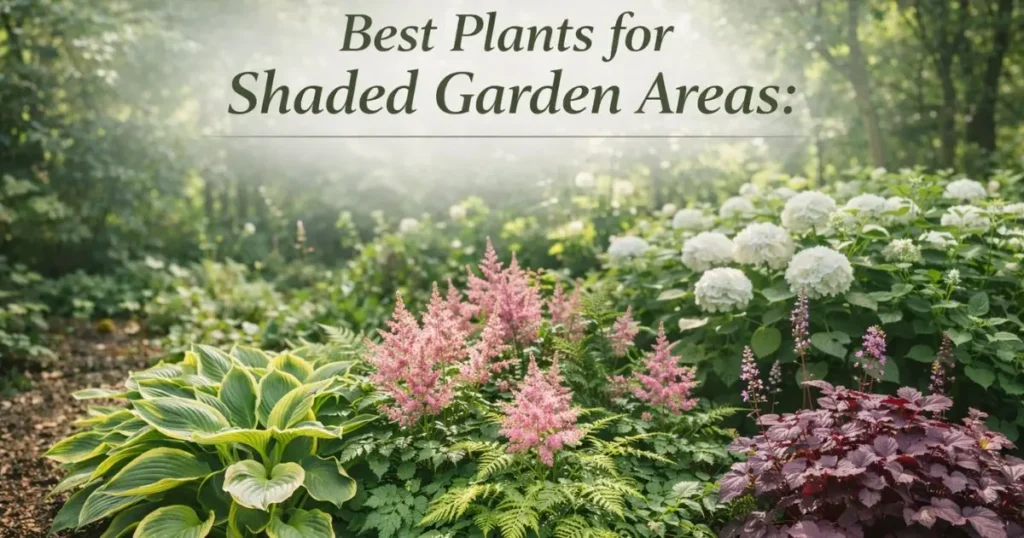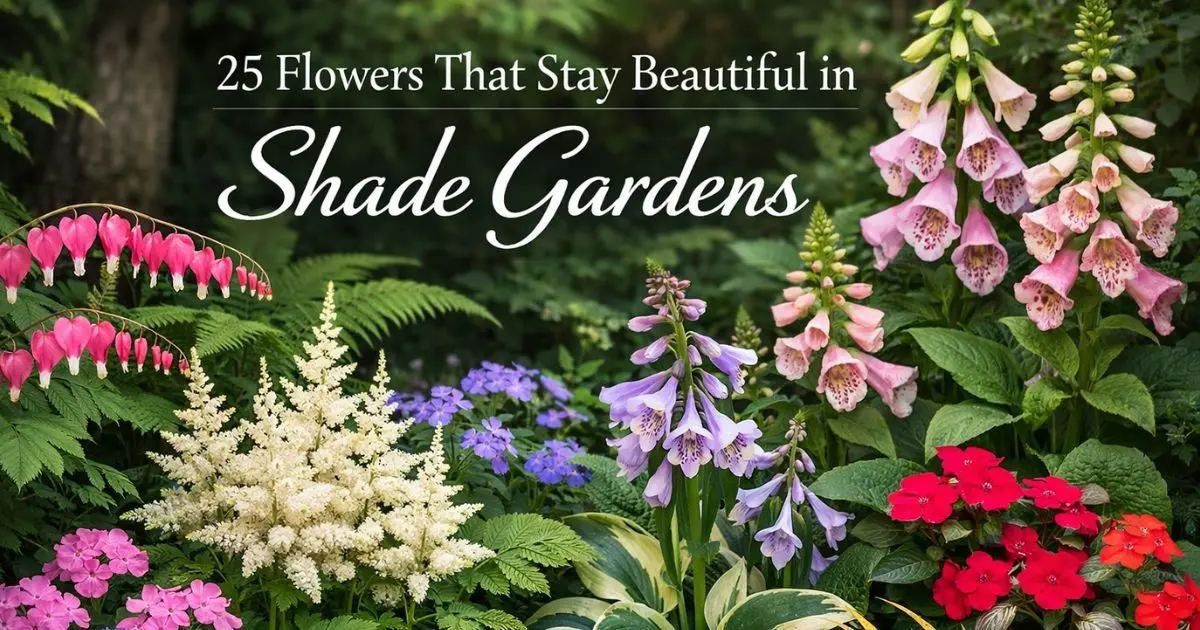
If you’ve ever struggled to bring life and color to a shady spot in your garden, you’re not alone. Shade gardens often seem like a challenge, but they hold a unique charm when planted with the right flowers. While sunny gardens tend to steal the spotlight, shady corners can be equally beautiful, creating a peaceful retreat with lush, vibrant blooms. The key is choosing flowers that thrive in low light—ones that not only survive but also flourish under those conditions.
In this guide, we’ll explore flowers that stay beautiful in shade gardens, including practical advice on climate, planting, soil, and long-term care, so you can create your very own shady sanctuary.
Why Shade Gardens Matter
Shade gardens might not get as much love as sun-filled gardens, but they offer something truly special. Imagine a cool, quiet nook surrounded by vibrant, soft blooms—without the blazing sun. This makes shaded areas perfect for creating relaxed, tranquil spaces that beckon you to slow down and enjoy nature at its finest. What’s even better is that some of the most unique flowers love the shade, offering colors and textures that are hard to find in brighter areas.
Beautiful Flowers in Shade Gardens:
1. Astilbe (Astilbe spp.)
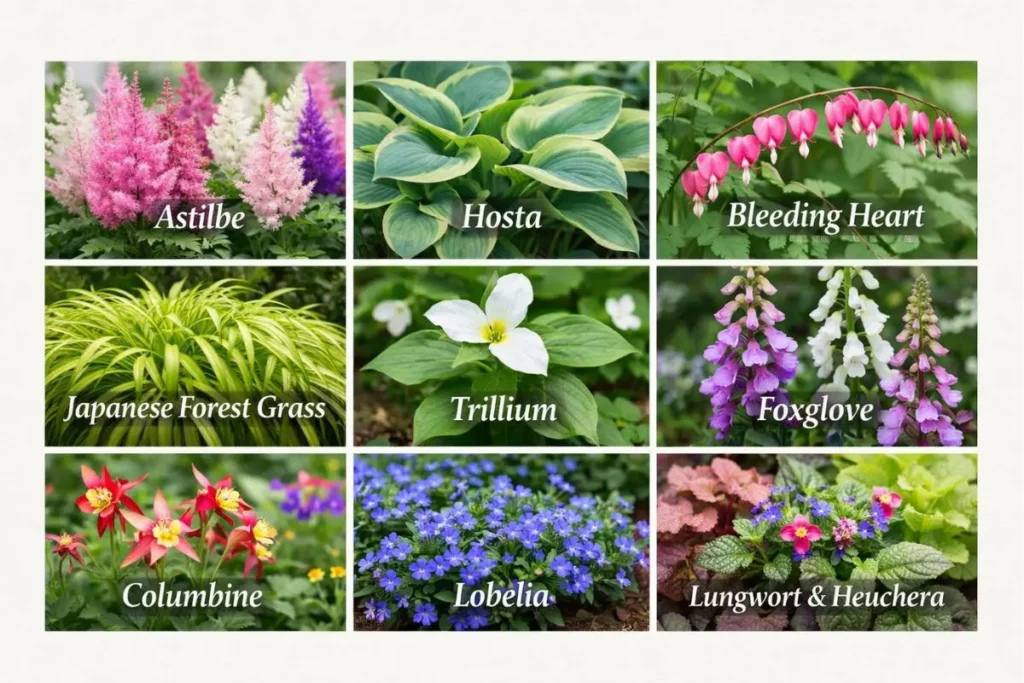
Astilbe, also known as false spirea, is a perennial plant that offers feathery plumes in shades of pink, red, white, and purple. This plant is perfect for moist, shaded areas and can add a soft texture to garden beds. Astilbe prefers moist, well-drained soil and thrives in full to partial shade, making it an excellent choice for woodland gardens.
Care tips: Astilbes need consistent moisture, especially during the growing season. Mulching around the base helps retain moisture and keep the roots cool.
2. Hosta (Hosta spp.)
Hostas are known for their impressive foliage, ranging from large, heart-shaped leaves to more finely textured varieties. While their flowers are subtle (usually white or lavender), their foliage steals the show. Hostas thrive in full to partial shade and are ideal for filling in shady borders or areas under trees.
Care tips: Hostas prefer rich, moist soil. Be cautious about slugs and snails, which love to feed on hostas. Using slug repellents or copper barriers can help protect the leaves.
3. Bleeding Heart (Dicentra spectabilis)
Bleeding Heart is a perennial that blooms in early spring, with drooping, heart-shaped flowers in pink or white. This flower adds an elegant, old-fashioned look to shade gardens. Its fern-like foliage makes it a great companion plant for other shade-loving flowers.
Care tips: Bleeding hearts prefer well-drained, slightly acidic soil. They are sensitive to overwatering, so make sure the soil is moist but not waterlogged.
4. Japanese Forest Grass (Hakonechloa macra)
Japanese Forest Grass is an ornamental grass known for its graceful, arching habit and striking golden or green foliage. It thrives in partial to full shade and is an excellent choice for adding texture and movement to a shaded garden.
Care tips: Japanese Forest Grass is relatively low-maintenance but benefits from regular watering. It grows well in humus-rich soil and should be protected from strong winds, which can damage its delicate stems.
5. Trillium (Trillium spp.)
Trilliums, also known as wood lilies, are a great choice for woodland gardens. These native plants produce striking three-petaled flowers in white, pink, red, or purple. Trilliums are best planted in well-drained, rich soil with plenty of organic matter.
Care tips: Trilliums are slow-growing and should not be disturbed once planted. They thrive in moist, shaded environments and can naturalize over time.
6. Foxglove (Digitalis purpurea)
Foxgloves produce tall, spiky flowers in various shades, from purple to pink to white. While they are more commonly found in sunny gardens, certain varieties will thrive in partial shade. Their tubular flowers attract pollinators, making them a great addition to wildlife gardens.
Care tips: Foxgloves prefer well-drained soil with a slightly acidic pH. Ensure they receive some sunlight, as too much shade can lead to leggy growth.
7. Columbine (Aquilegia spp.)
Columbines are known for their unique, spurred flowers that come in a wide range of colors, from blue and purple to red, yellow, and white. These flowers bloom in early spring and are a great addition to shaded areas.
Care tips: Columbines are drought-tolerant once established but prefer moist, well-drained soil. They do best in partial to full shade, especially in hotter climates.
8. Lobelia (Lobelia erinus)
Lobelia is a trailing or cascading flower that thrives in partial shade. It produces small flowers in vibrant shades of blue, purple, or white. It’s a fantastic plant for containers, hanging baskets, or as a ground cover in shaded areas.
Care tips: Lobelia requires regular watering and prefers soil that is consistently moist. In hot climates, providing some afternoon shade can help keep it thriving.
9. Lungwort (Pulmonaria spp.)
Lungwort is an early-blooming perennial that produces clusters of pink, blue, or purple flowers, along with attractive spotted or silvery foliage. It’s perfect for moist, shaded areas under trees or shrubs.
Care tips: Lungwort thrives in well-drained, humus-rich soil. It’s relatively low-maintenance, but it does require regular watering, especially during dry spells.
Beautiful Flowers in Shade Gardens:
10 Fuchsia (Fuchsia spp.)
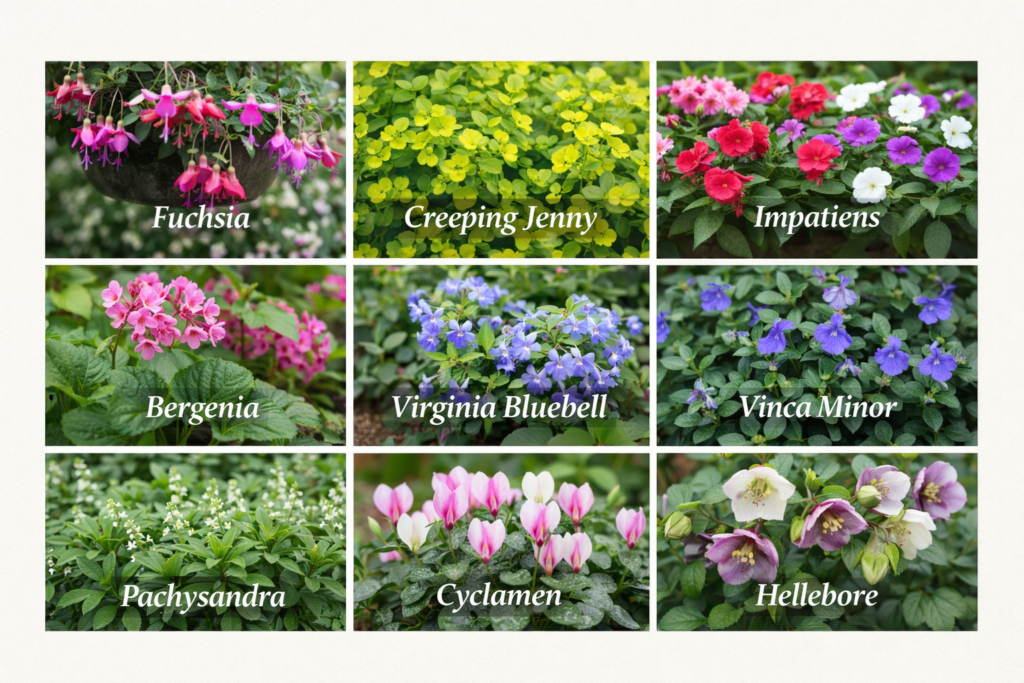
Fuchsia is an ideal choice for shade gardens, with its pendulous, tubular flowers in pink, red, or purple. Fuchsia is particularly well-suited for hanging baskets or containers, adding color and interest to shady patios or decks.
Care tips: Fuchsias prefer moist, well-drained soil. They are relatively low-maintenance but should be protected from frost in colder climates.
11 Creeping Jenny (Lysimachia nummularia)
Creeping Jenny is a low-growing ground cover that produces small, yellow flowers. It thrives in shaded areas and is perfect for filling gaps or draping over the edges of containers and hanging baskets.
Care tips: Creeping Jenny is very low-maintenance but benefits from regular watering during dry spells. It grows best in moist, well-drained soil.
12. Impatiens (Impatiens walleriana)
Impatiens are one of the most popular flowers for shaded areas, offering vibrant colors such as red, pink, purple, and white. These flowers thrive in full shade, making them perfect for garden beds or containers in dark corners.
Care tips: Impatiens require regular watering and need well-drained soil. They thrive in moist, fertile conditions and are ideal for filling in shady spots.
13 Bergenia (Bergenia spp.)
Bergenia, also known as Elephant’s Ears, produces clusters of pink, purple, or white flowers in early spring. The broad, leathery leaves add texture and interest to shady garden beds.
Care tips: Bergenia grows best in moist, well-drained soil. It’s relatively low-maintenance, but the plants do benefit from being mulched to help retain moisture and keep the roots cool.
14. Virginia Bluebell (Mertensia virginica)
Virginia Bluebells are a native spring ephemeral that bloom with clusters of delicate blue flowers. These plants are perfect for woodland gardens, as they bloom early in the season and die back after they’ve finished flowering.
Care tips: Virginia Bluebells prefer moist, well-drained soil and thrive in full to partial shade. They are great for naturalizing in woodland areas.
15 Vinca Minor (Periwinkle)
Vinca Minor, also known as periwinkle, is a fast-growing ground cover that produces small, blue or purple flowers in early spring. It is perfect for adding color to shaded areas and can quickly fill in empty spots in your garden.
Care tips: Vinca Minor prefers well-drained soil but is adaptable to a variety of conditions. It’s relatively low-maintenance and thrives in both full and partial shade.
16 Pachysandra (Pachysandra terminalis)
Pachysandra is an evergreen ground cover that thrives in shaded areas, producing small white flowers in the spring. It’s an excellent choice for filling in shady spots under trees and shrubs.
Care tips: Pachysandra requires regular watering but is quite drought-tolerant once established. It grows best in moist, well-drained soil.
17 Cyclamen (Cyclamen spp.)
Cyclamen is a charming plant that produces bright, reflexed flowers in shades of pink, red, and white. These flowers bloom in winter or early spring, making them perfect for adding color to the garden when few other plants are in bloom.
Care tips: Cyclamen prefer well-drained, humus-rich soil. They do well in full or partial shade and should be watered carefully, avoiding overhead watering that can cause the tubers to rot.
18 Hellebore (Helleborus spp.)
Hellebores, also known as Lenten Roses, are among the first flowers to bloom in the early spring. They produce nodding flowers in shades of white, pink, purple, and green and are perfect for shaded gardens.
Care tips: Hellebores prefer moist, well-drained soil and can tolerate a range of pH levels. They should be watered regularly but prefer not to sit in waterlogged soil.
Beautiful Flowers in Shade Gardens:
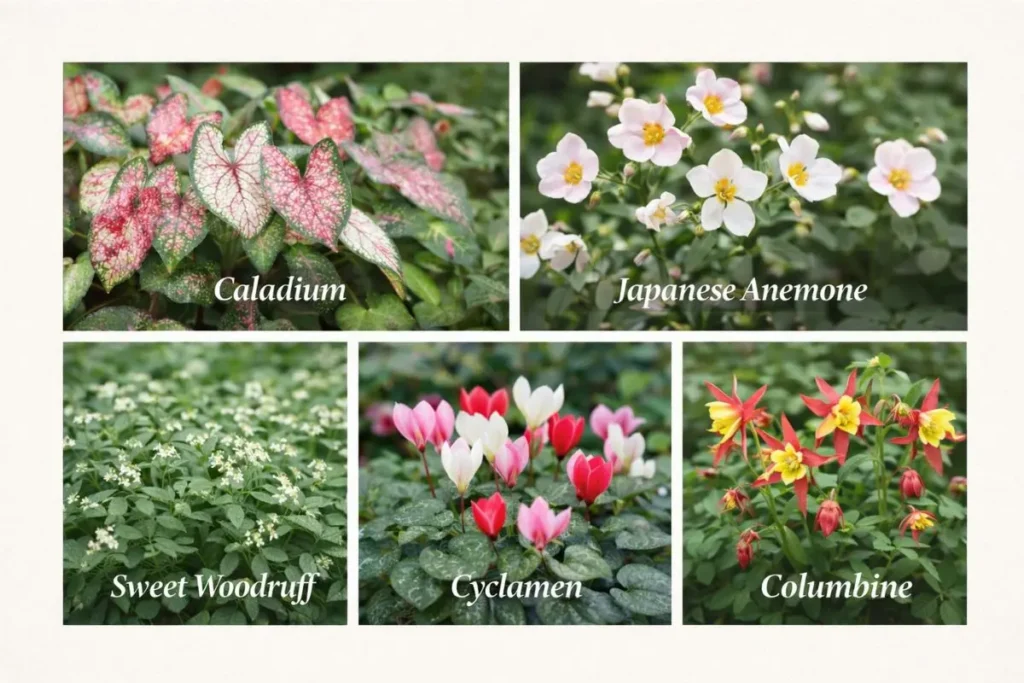
19 Caladium (Caladium bicolor)
Caladiums are prized for their colorful, heart-shaped leaves, which come in a variety of combinations, including red, pink, white, and green. These plants are ideal for shaded areas with moist, rich soil.
Care tips: Caladiums thrive in moist, well-drained soil and benefit from regular watering. They should be planted in partial shade and protected from direct sun, which can scorch their leaves.
20 Japanese Anemone (Anemone hupehensis)
Japanese Anemones are late-season bloomers, producing elegant flowers in shades of white, pink, or purple. These perennials are perfect for shaded garden spots and bring color to the garden when most plants have finished blooming.
Care tips: Japanese Anemones prefer moist, well-drained soil and partial shade. They are relatively low-maintenance but should be watered regularly during dry spells.
21 Sweet Woodruff (Galium odoratum)
Sweet Woodruff is a fragrant, ground-hugging perennial that produces small, white flowers in the spring. It thrives in shaded garden areas and adds a fresh, clean scent to your garden.
Care tips: Sweet Woodruff prefers moist, well-drained soil. It’s an excellent choice for ground cover in shady spots and is especially well-suited for woodland gardens.
22. Cyclamen (Cyclamen spp.)
Cyclamen flowers are delicate and come in a variety of colors, including red, yellow, purple, and white. They are ideal for shaded areas, and their unique flowers attract pollinators like bees and hummingbirds.
Best for: Partial shade.
23 Columbine (Aquilegia canadensis)
Columbine flowers are delicate and come in a variety of colors, including red, yellow, purple, and white. They are ideal for shaded areas, and their unique flowers attract pollinators like bees and hummingbirds.
Best for: Partial shade.
Beautiful Flowers in Shade Gardens:
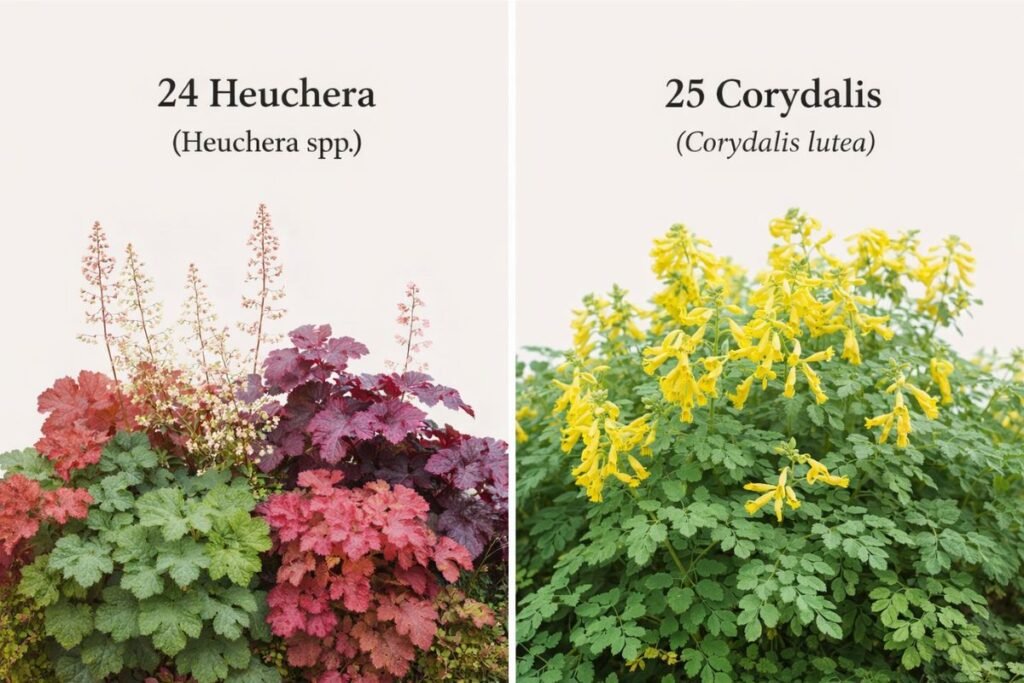
24 Heuchera (Heuchera spp.)
Also known as Coral Bells, Heuchera plants are prized for their colorful foliage, which can range from green to red to purple, depending on the variety. They also produce delicate flowers on tall spikes, usually in shades of white or pink.
Care tips: Heucheras prefer partial shade and well-drained, slightly acidic soil. They’re relatively drought-tolerant once established but benefit from regular watering in the summer.
25 Corydalis (Corydalis lutea)
Corydalis is a perennial with fern-like foliage and tubular flowers in shades of yellow or blue. It thrives in shady garden spots and is perfect for naturalizing in woodland gardens.
Care tips: Corydalis prefers moist, well-drained soil and partial to full shade. It can be drought-tolerant once established but should be watered regularly during dry spells.