Gardening is one of those timeless hobbies that not only connects you with nature but also rewards you with fresh, homegrown herbs and vegetables right at your doorstep. Whether you’re lucky enough to have a backyard or are working with a terrace garden, growing your own food is deeply satisfying. But where do you start? As a beginner, it can be a bit overwhelming to decide which plants to grow first.
This guide is here to help you start your journey in the garden, focusing on herbs and vegetables that are perfect for beginners. We’ll go beyond basic advice and provide practical, expert tips you can take straight to the soil.
Why Grow Herbs and Vegetables at Home?
There’s something incredibly rewarding about stepping outside and picking fresh herbs and vegetables right from your garden. Growing your own plants not only saves you money, but it also guarantees that you’re eating fresh, organic food. Whether you’re looking to enhance your meals with fragrant herbs like basil and rosemary or you want a steady supply of juicy tomatoes and crisp lettuce, growing your own food connects you to nature in a way store-bought produce never can.
And the best part? Most herbs and vegetables are surprisingly easy to grow—even for beginners. So, let’s get you started with the basics of growing the most beginner-friendly herbs and vegetables.
Best Herbs to Grow for Beginners
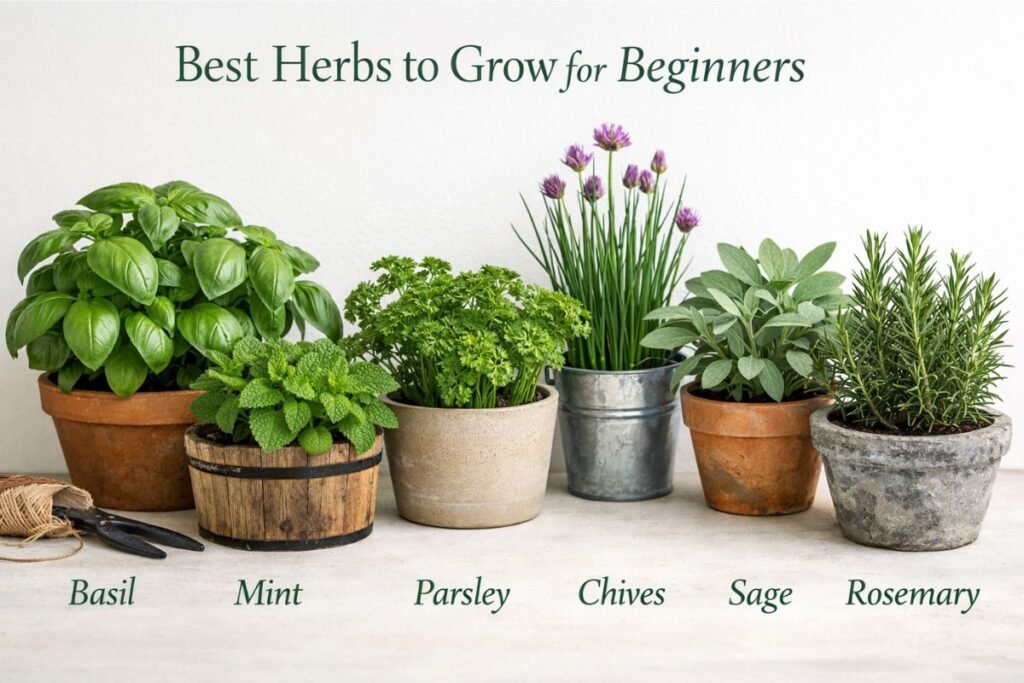
Herbs are some of the most beginner-friendly plants you can grow in your garden. They don’t require a lot of space or experience, and they thrive in various conditions. Here are six of the best herbs to start with:
1. Basil
Why Grow It: Basil is one of the most popular herbs in cooking, especially in Italian dishes. It’s perfect for beginners because it grows quickly and easily.
- Climate & Growing Conditions: Basil loves warm weather and requires full sunlight (6-8 hours a day). It thrives in temperatures between 70–90°F.
- Soil: Prefers well-drained, slightly acidic soil (pH 6.0–7.0).
- Watering: Water regularly, but ensure the soil is not soggy. Basil needs to dry out between waterings.
- Harvesting: Snip off leaves regularly to promote new growth and prevent flowering. Always cut above a leaf node.
2. Mint
Why Grow It: Mint is a hardy, aromatic herb that grows quickly. It’s perfect for adding fresh flavor to drinks, desserts, and savory dishes.
- Climate & Growing Conditions: Mint can tolerate partial shade, but it also does well in full sun. It grows best in cool to moderate climates.
- Soil: Prefers moist, well-drained soil.
- Watering: Mint likes its soil to stay consistently moist. Water regularly, especially during dry spells.
- Harvesting: Harvest the top leaves to prevent the plant from flowering. Mint grows vigorously, so frequent harvesting helps keep it in check.
3. Parsley
Why Grow It: Parsley is an easy-to-grow herb that adds a fresh taste to salads, sauces, and garnishes.
- Climate & Growing Conditions: Grows well in both cool and warm climates. It prefers full sun but can tolerate some shade.
- Soil: Prefers slightly acidic, well-drained soil.
- Watering: Keep the soil evenly moist, especially during hot weather.
- Harvesting: Harvest leaves as needed by cutting them at the base of the plant. Don’t remove more than one-third of the plant at once.
4. Chives
Why Grow It: Chives are another great herb for beginners. They have a mild onion flavor and are perfect for garnishing dishes.
- Climate & Growing Conditions: Chives thrive in full sun but can also tolerate partial shade. They grow well in cooler climates.
- Soil: Well-draining, fertile soil with a slightly acidic pH.
- Watering: Chives prefer consistent moisture but do not like to be waterlogged. Water regularly, especially when they are young.
- Harvesting: Snip the leaves when they’re about 6-8 inches long. Cut the leaves with scissors to avoid damaging the plant.
5. Sage
Why Grow It: Sage is a fragrant herb that is often used in cooking meats and sauces. It’s also a great ornamental plant.
- Climate & Growing Conditions: Sage prefers full sun and thrives in warm, dry climates.
- Soil: Well-drained, sandy or loamy soil with a slightly alkaline pH (6.0–7.0).
- Watering: Water sparingly. Sage doesn’t like to be too moist.
- Harvesting: Pick leaves anytime, but remove flowers to encourage leaf growth.
6. Rosemary
Why Grow It: Rosemary has a strong, pine-like flavor and aroma, perfect for Mediterranean cooking. It’s also a fragrant plant that adds beauty to your garden.
Harvesting: Snip branches from the plant as needed, but avoid cutting too much at once.
Climate & Growing Conditions: Prefers full sun and thrives in dry, hot climates.
Soil: Well-draining, slightly acidic to neutral soil (pH 6.0–7.5).
Watering: Rosemary is drought-tolerant, so water sparingly and only when the soil is dry.
Best Vegetables to Grow for Beginners
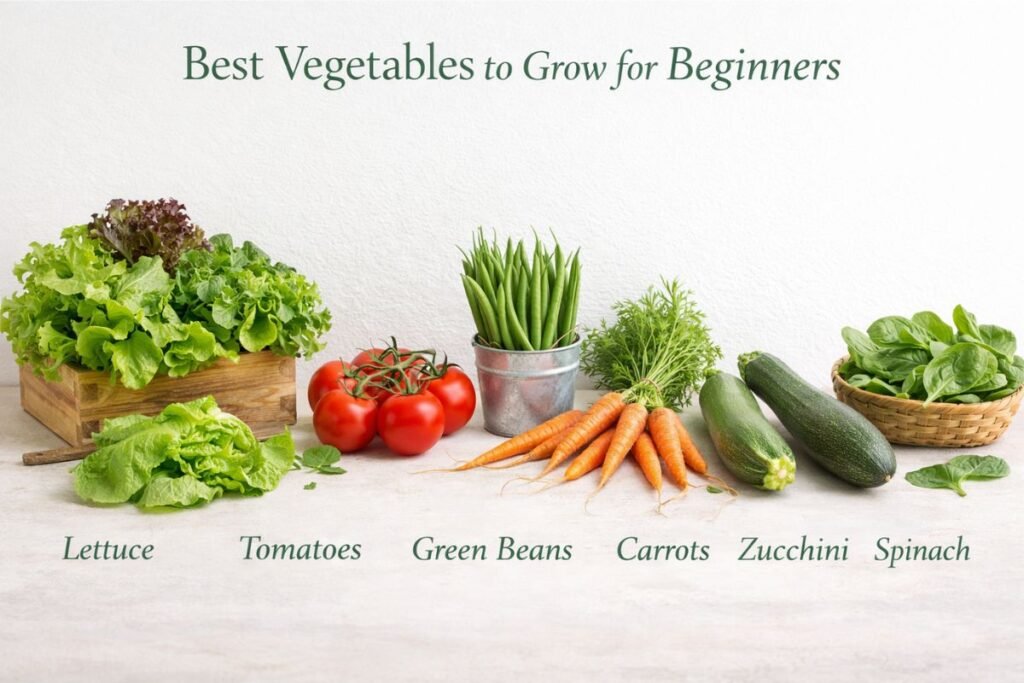
Vegetables can take a little more care than herbs, but many are still quite beginner-friendly. Here’s a list of six vegetables that are perfect for new gardeners.
1. Lettuce
Why Grow It: Lettuce is one of the easiest and fastest-growing vegetables. You can grow different varieties, including romaine, butterhead, and leaf lettuce.
- Climate & Growing Conditions: Lettuce thrives in cooler temperatures (50–70°F) and prefers partial shade during the hottest parts of the day.
- Soil: Prefers well-draining, fertile soil with a slightly acidic pH (6.0–7.0).
- Watering: Lettuce needs consistent moisture, but don’t let it sit in soggy soil.
- Harvesting: Harvest leaves when they’re young and tender. Snip the outer leaves, allowing the inner ones to continue growing.
2. Tomatoes
Why Grow It: Nothing beats the taste of a homegrown tomato. Tomatoes are one of the most popular vegetables to grow because they are versatile in the kitchen.
- Climate & Growing Conditions: Tomatoes need full sun (6-8 hours daily) and warm weather (70–85°F).
- Soil: Well-drained, slightly acidic soil (pH 6.0–6.8).
- Watering: Water deeply and consistently. Be careful not to wet the foliage, as this can lead to disease.
- Harvesting: Pick tomatoes when they are fully ripe, with a rich color and firm texture.
3. Green Beans
Why Grow It: Green beans are easy to grow and produce a high yield. They are perfect for small gardens or containers.
- Climate & Growing Conditions: Green beans prefer warm weather and need full sun.
- Soil: Well-drained, fertile soil with a pH of 6.0–7.0.
- Watering: Keep the soil evenly moist, but avoid letting it become soggy.
- Harvesting: Pick the beans when they’re young and tender. Don’t let them overmature, as they’ll become tough.
4. Carrots
Why Grow It: Carrots are a fun, easy vegetable to grow. They can be grown in containers or in the ground, and they’re perfect for small spaces.
- Climate & Growing Conditions: Carrots grow best in cooler temperatures (55–75°F) and need full sun.
- Soil: Loose, well-drained soil with a pH of 6.0–6.8.
- Watering: Keep the soil moist but not soggy. Carrots need a steady supply of water to develop properly.
- Harvesting: Harvest carrots when they reach about 1 inch in diameter. Gently pull them from the soil.
5. Zucchini
Why Grow It: Zucchini is a prolific plant that grows quickly and produces a large yield. It’s great for beginners because it requires minimal attention.
- Climate & Growing Conditions: Zucchini loves full sun and thrives in warm temperatures (70–85°F).
- Soil: Well-drained, fertile soil with a pH of 6.0–7.5.
- Watering: Water regularly, but avoid overwatering. Let the soil dry out a bit between waterings.
- Harvesting: Pick zucchini when they are small (about 6-8 inches long) to ensure tender, flavorful fruits.
6. Spinach
Why Grow It: Spinach is fast-growing and packed with nutrients. It’s perfect for gardeners who want to grow leafy greens with minimal fuss.
- Climate & Growing Conditions: Spinach thrives in cooler temperatures and prefers partial shade during hot weather.
- Soil: Rich, well-drained soil with a slightly acidic to neutral pH (6.0–7.0).
- Watering: Keep the soil consistently moist, especially during germination.
- Harvesting: Harvest leaves when they’re young and tender. Snip them from the base to encourage more growth.
Understanding the Ideal Climate for Your Garden
Knowing your garden’s climate is key to plant success. Some plants thrive in heat, while others prefer cooler conditions.
- Warm-Climate Plants: Vegetables like tomatoes, peppers, and herbs like basil do best in full sun and warm temperatures (70–90°F).
- Cool-Climate Plants: Lettuce, spinach, and cilantro enjoy cooler temperatures and grow best in spring or fall.
- Microclimates: Your garden may have different conditions in various spots. For example, a south-facing area may be perfect for heat-loving plants, while shaded corners work well for cool-weather crops.
Preparing Your Garden Bed or Pots
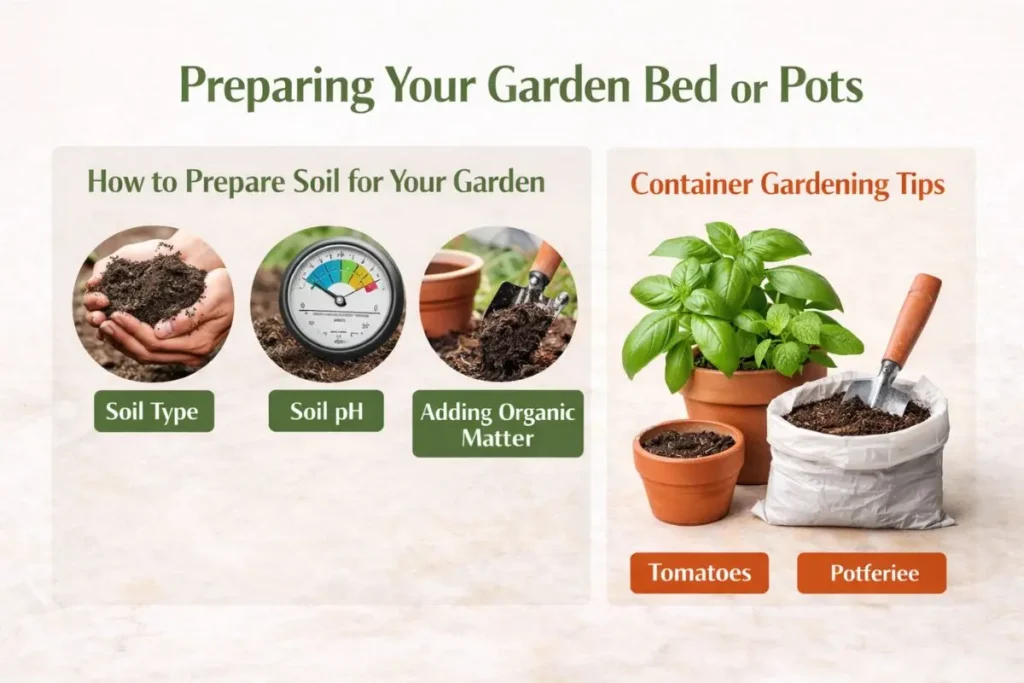
Healthy soil is the foundation of a thriving garden. Whether you’re planting in the ground or in containers, understanding soil preparation is key to success.
- Soil Type: Aim for loamy soil, which is well-draining and holds nutrients well. If your soil is too clay-heavy, amend it with organic material like compost to improve drainage. If it’s too sandy, add organic matter to improve moisture retention.
- Soil pH: Most herbs and vegetables prefer slightly acidic to neutral soil (pH 6.0–7.0). You can test your soil’s pH with a simple kit, or if you’re unsure, adding compost will usually help balance it.
- Adding Organic Matter: Incorporating compost or aged manure into the soil adds essential nutrients. This is especially important for herbs like basil and mint, which have a high need for nutrients.
Container Gardening Tips
If you’re working with limited space, containers can work wonders. Just make sure to choose a container that’s large enough for the plant’s root system and has good drainage. Use high-quality potting mix instead of garden soil, which can compact and prevent proper root growth.
How to Start Your Garden Right
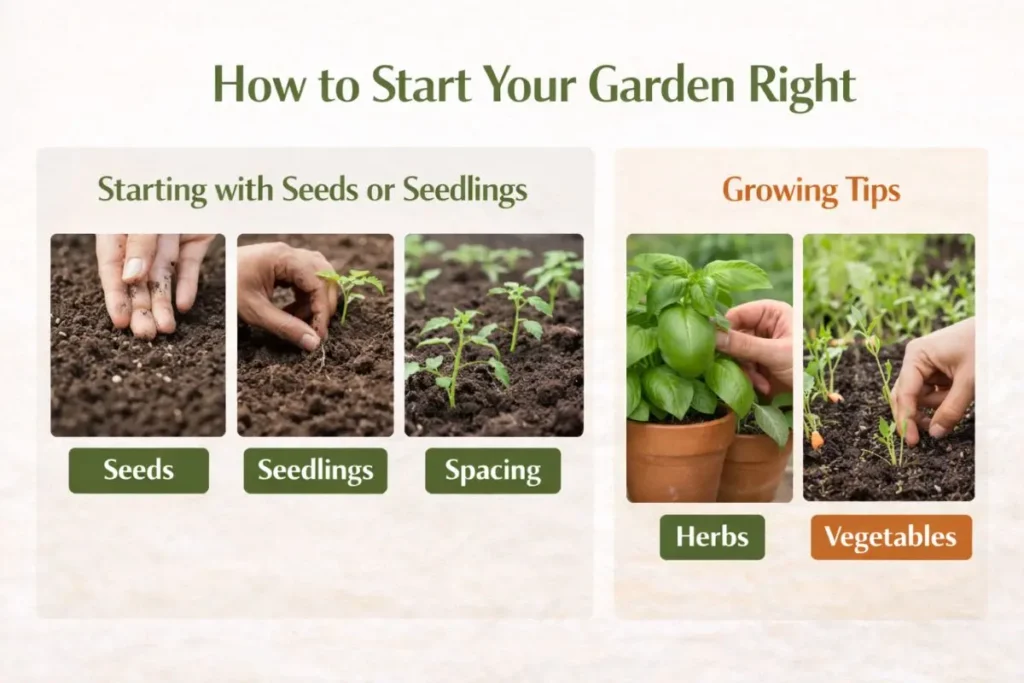
Starting with Seeds or Seedlings
- Seeds: For smaller plants like lettuce, spinach, and herbs like basil, plant seeds about ¼ inch deep and cover them lightly with soil. For larger plants like tomatoes, dig a hole about 1-2 inches deep and cover the seed.
- Seedlings: If you’re planting from young plants, dig a hole big enough for the root ball and gently place the plant in. Be sure the top of the root ball is level with the soil’s surface.
- Spacing: Don’t crowd your plants. Adequate spacing allows air to circulate, reducing the risk of disease. Tomatoes, for instance, need about 18 inches of space between each plant.
Growing Tips
- Herbs: Pinch back basil and mint regularly to keep them bushy and encourage more leaf growth.
- Vegetables: Thin out seedlings if they’re overcrowded, especially carrots and lettuce. Thinning allows the remaining plants to grow larger.
Giving Your Plants What They Need
To thrive, plants need more than just water and sunlight. Here’s how to provide them with the right nutrients:
Fertilizing:
- Organic Fertilizers: Use compost or organic matter to enrich the soil. These release nutrients slowly, feeding plants without harming them.
- Synthetic Fertilizers: Quick-release synthetic options are fine but use sparingly to avoid overfeeding.
- Timing: Fertilize in the spring and throughout the growing season, especially for heavy feeders like tomatoes.
Mulching:
Apply mulch to retain moisture, suppress weeds, and regulate soil temperature.
Nutrients and mulch are essential for strong plant health.Pruning & Training Your Plants for Better Growth
Pruning & Training Your Plants for Better Growth
Pruning:
- When to Prune: Prune plants during the growing season. Avoid cutting too much at once—remove no more than a third of the plant.
- How to Prune: Use sharp scissors or shears to trim stems and remove dead or damaged parts.
Training:
- Vines: Use stakes, trellises, or cages for climbing plants like tomatoes and beans to improve airflow and reduce disease.
- Shaping: Trim leggy plants to encourage compact growth and focus energy on productive parts.
Seasonal Care
Summer Care Tips
- Shade: Provide some afternoon shade for delicate plants.
- Watering: In hotter months, check your plants more frequently. You might need to water every day during the peak of summer.
Winter Care Tips
- Protection: For frost-sensitive plants like tomatoes, bring them indoors or cover them with frost cloths during cold spells.
- Watering: Reduce watering during the winter months, as plants tend to be dormant.
Common Mistakes
Gardening can feel like trial and error, but here are some common mistakes to watch out for:
- Overwatering: One of the biggest mistakes beginners make. Ensure the soil is slightly dry before watering again.
- Planting Too Close Together: Not leaving enough space can result in overcrowded, unhealthy plants.
Identifying and Dealing with Pests and Diseases
Even the best gardeners face pest problems. Here’s how to spot common issues and deal with them effectively:
- Aphids: These little pests suck sap from plants. Treat them with neem oil or an insecticidal soap.
- Powdery Mildew: If you see white, powdery spots on your plants, it’s likely mildew. Remove infected leaves and space out plants for better airflow.