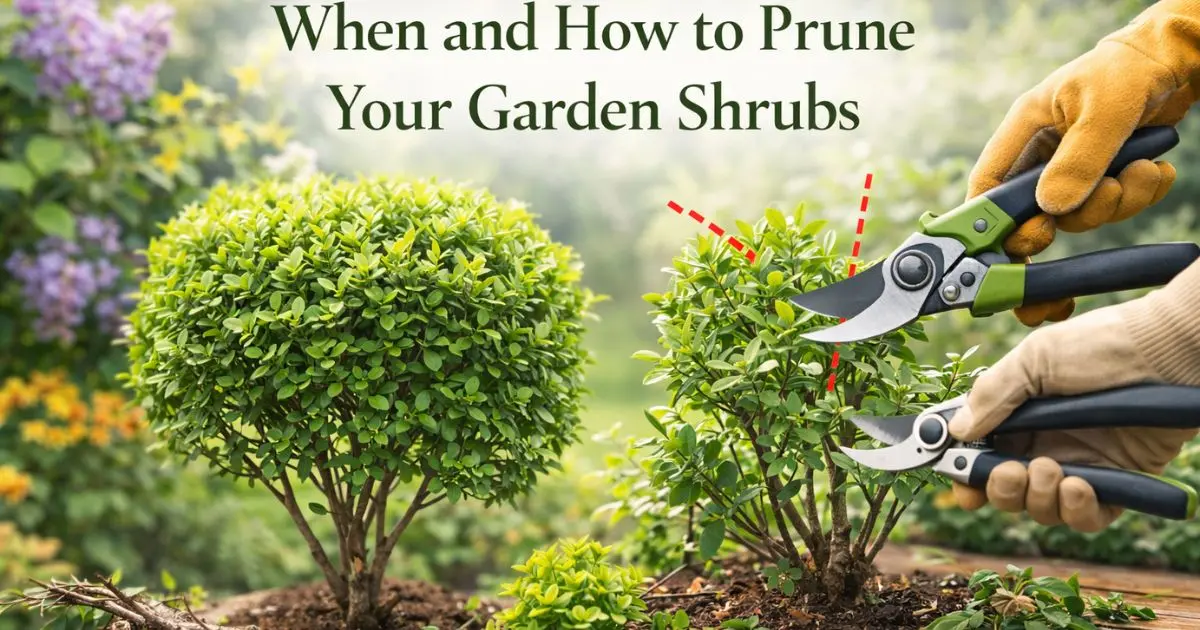
Pruning garden shrubs is one of the most satisfying and rewarding tasks you can do as a home gardener. With the right tools, timing, and technique, you can not only improve your shrub’s health and appearance but also boost its blooming potential and longevity. However, pruning can be intimidating if you don’t know when or how to do it. Luckily, as a seasoned gardener, I’m here to walk you through the entire process.
This guide will cover everything from the best time to prune to the different techniques and tools you’ll need. Whether you have a backyard garden or a small terrace, this practical, hands-on advice will help you become a pruning pro in no time.
Why Prune Your Shrubs?
Pruning isn’t just about making your shrubs look tidy—it’s about shaping their future growth. Think of pruning as a form of “plant surgery” that can encourage healthier growth, improve airflow, and even direct a plant’s energy toward more vibrant flowers or fruit. It’s a gardener’s way of keeping a shrub in tip-top shape.
For instance, with a little careful trimming, your rose bushes will bloom more abundantly, and your lilac will produce more aromatic flowers. Proper pruning also prevents diseases by improving air circulation and removing dead or diseased wood.
Pruning Based on the Seasons
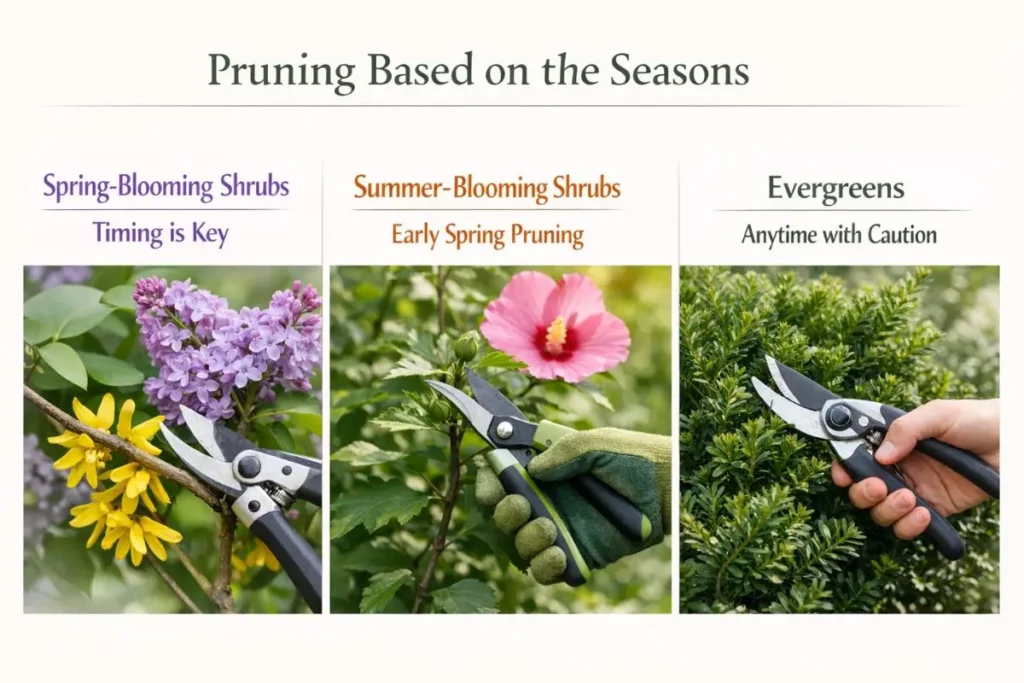
The timing of your pruning makes all the difference between success and failure. Each shrub blooms at different times, and pruning at the wrong time can cause damage. Here’s how to approach pruning depending on your shrub’s bloom time:
1. Spring-Blooming Shrubs: Timing is Key
Shrubs like lilacs, forsythia, and azaleas bloom on wood that was produced the year before. That means if you prune them too late, you might cut off next year’s flowers. The best time to prune these beauties is just after they bloom. This timing gives the shrub time to produce fresh growth for next year’s flowers.
2. Summer-Blooming Shrubs: Early Spring Pruning
Shrubs like hibiscus, butterfly bush, and rose of Sharon bloom on the new wood (growth that appears during the current season). These shrubs are best pruned in early spring, before any new growth begins. Cutting them back early ensures you get more vigorous new growth and abundant flowers in summer.
3. Evergreens: Anytime with Caution
Evergreens like boxwood and holly can be pruned year-round, though it’s best to prune them in early spring before new growth emerges. However, avoid heavy pruning in late fall or winter, as it may leave them vulnerable to cold damage.
Essential Tools for the Perfect Prune
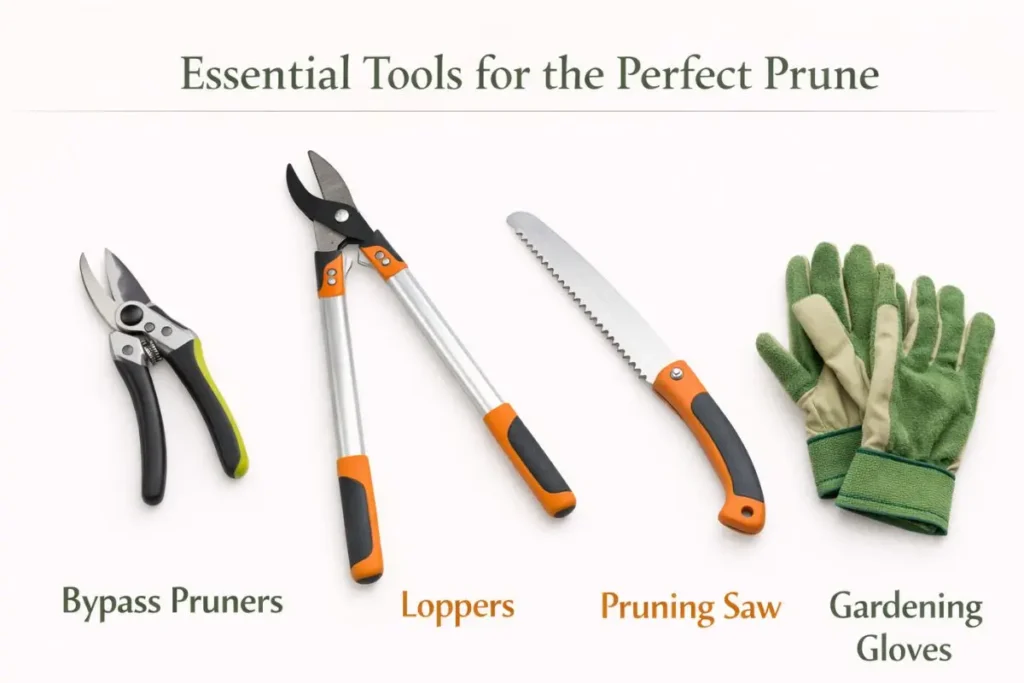
Pruning doesn’t need to be complicated, but having the right tools is crucial. Here’s what you’ll need:
- Bypass Pruners: These are your go-to tool for most shrubs. They have sharp blades that slide past each other like scissors, creating clean cuts.
- Loppers: These are used for thicker branches that pruners can’t handle (1–2 inches in diameter).
- Pruning Saw: For larger branches that need extra cutting power, a pruning saw is your best friend.
- Gardening Gloves: To protect your hands from thorns or sharp branches, gloves are a must.
With the right tools, pruning becomes an enjoyable task rather than a chore.
How to Prune Like a Pro: Step-by-Step
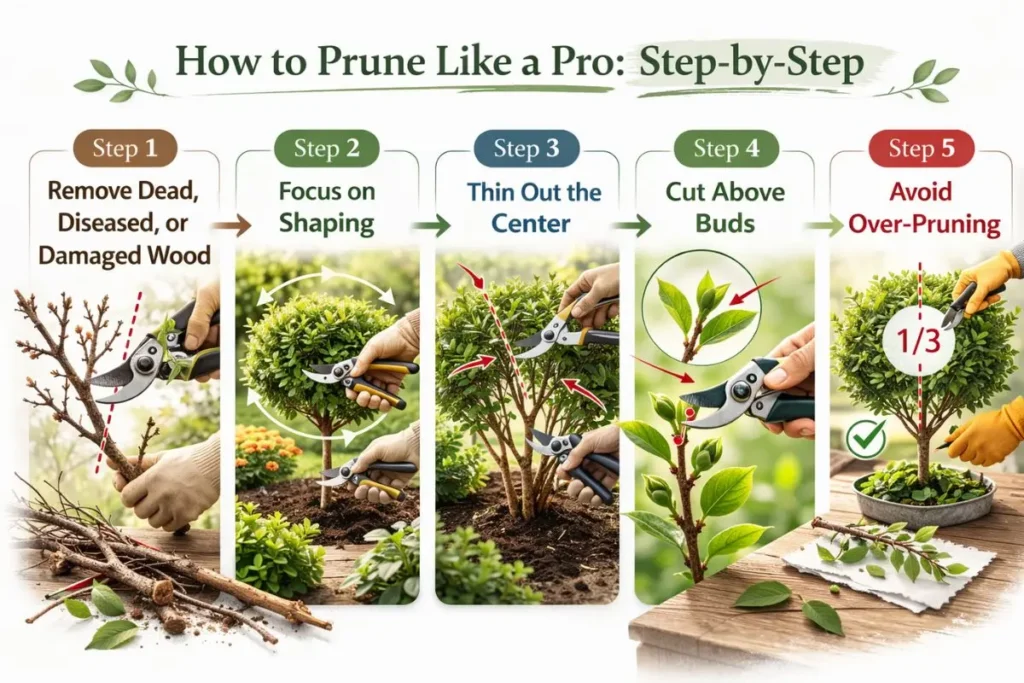
Now that you’re familiar with the timing and tools, let’s dive into how to prune your shrubs for the best results. Follow these steps to ensure your shrubs stay healthy and look their best:
Step 1: Remove Dead, Diseased, or Damaged Wood
Before you do any shaping or size reduction, it’s crucial to remove anything that’s dead, dying, or diseased. This will not only make your shrub look tidier but also help prevent the spread of diseases.
Step 2: Focus on Shaping
Next, you want to trim back any leggy or overgrown branches to shape your shrub. Take a step back to assess the overall look of your shrub. Aim to maintain a natural shape—don’t go overboard by making it too symmetrical or “boxy.” A rounded or slightly irregular shape is often best for most shrubs.
Step 3: Thin Out the Center
Shrubs with dense growth can benefit from thinning out some of the interior branches. This will increase airflow and allow sunlight to reach the inner parts of the plant. Cutting out a few of the older, thicker branches near the center is a great way to achieve this.
Step 4: Cut Above Buds
When pruning, always cut just above a healthy bud or side shoot. This will encourage the plant to grow outward and upward, rather than sprouting new shoots that grow in a weak or undesirable direction.
Step 5: Avoid Over-Pruning
Don’t get carried away! Removing too much foliage or cutting back too severely can stress your shrub. Stick to removing only one-third of the plant’s growth at a time to avoid overwhelming it.
Common Pruning Mistakes and How to Avoid Them
Even seasoned gardeners can make mistakes while pruning. Here are a few to watch out for:
Mistake 1: Pruning at the Wrong Time
Pruning at the wrong time can ruin your shrub’s ability to bloom. Spring-blooming shrubs should be pruned after they flower, while summer-blooming shrubs should be pruned before new growth begins in early spring.
Mistake 2: Cutting Too Much
Remember: less is more when it comes to pruning. Cutting more than one-third of your plant’s growth in one season can stress it out and make it susceptible to disease and pests.
Mistake 3: Not Using Sharp Tools
Dull tools can cause ragged cuts that open the door for disease. Always make sure your pruners, loppers, and saws are sharp before you start.
Seasonal Shrub Care
Different seasons demand different care for your shrubs. Here’s a breakdown of what to do during each time of year:
Spring: A Fresh Start
- Prune: Late winter to early spring is the best time to prune most shrubs.
- Water: As the weather warms up, increase watering to encourage new growth.
Summer: Keep Your Shrubs Thriving
- Water: Keep the soil moist, especially for newly pruned shrubs.
- Mulch: Mulching helps retain moisture and keep roots cool during hot months.
- Monitor for Pests: Summer is prime time for pests like aphids and spider mites. Keep an eye out and address issues early.
Fall: Prepare for Winter
- Prune Lightly: This is a good time for minor pruning, but avoid heavy cuts.
- Mulch: Add mulch around the base of your shrubs to protect roots from the cold.
Winter: Rest and Recover
- Check for Damage: Look for signs of winter damage, such as broken branches or excessive dryness.
- Avoid Pruning: Wait until spring for any major pruning. Cold weather can stress plants further.
Understanding Shrub Growth
Year 1: Establishing Roots
In the first year after planting, focus on establishing strong roots. Prune sparingly and remove any weak or broken branches. The goal is to allow your shrub to grow healthily and establish its root system.
Year 2–3: Shape and Size
By the second and third year, your shrub should have established a solid structure. Begin shaping it, but avoid over-cutting. You’ll start to notice more flowers or fruit during this period.
Year 4 and Beyond: Maintenance
As your shrub matures, focus on maintaining its shape, health, and flowering potential. Regular pruning of dead or diseased wood will keep it in top shape for years to come.
Dealing with Pests and Diseases
Even healthy shrubs can sometimes fall victim to pests or diseases. Here are some common issues to watch out for:
Pests:
- Aphids: Tiny green insects that cluster on leaves and stems. Use neem oil or insecticidal soap to remove them.
- Scale Insects: These pests attach themselves to the bark of shrubs. Remove them manually or use horticultural oil.
Diseases:
- Powdery Mildew: This fungal disease affects shrubs in humid conditions. Increase air circulation by pruning and remove any infected leaves.
- Rust: This fungal infection causes yellow spots on leaves. Prune away affected areas and ensure proper spacing between shrubs.
FAQs:
When should I prune my shrubs?
- Spring-blooming shrubs: Right after they bloom.
- Summer-blooming shrubs: Early spring, before new growth starts.
How much should I prune?
- Remove no more than one-third of the plant’s growth in a season.
Can I prune in summer?
- It’s best to avoid pruning during summer’s heat, but you can remove dead or diseased wood.
How do I shape my shrub?
- Trim back leggy branches and focus on thinning the center to allow light and air to reach the interior.